

If you're tired of waking up with a dry mouth or just feeling foggy and unrested, the right mouth tape can be a game-changer. The best mouth tape for sleeping isn't about brute force; it's about gentle persuasion. It needs a soft, hypoallergenic adhesive, comfortable flex, and a design that makes nasal breathing feel effortless. The goal isn't to seal your mouth shut, but to gently encourage it to stay closed, unlocking the incredible restorative power of breathing through your nose.
Why Mouth Taping Is Your Secret Weapon for Better Sleep

Waking up feeling like you barely slept, dealing with a scratchy throat, or having your partner complain about your snoring—it's frustrating. These common issues often point back to a single, overlooked culprit: breathing through your mouth at night. It seems harmless, but it quietly disrupts your body's natural rhythms, robbing you of the deep, restorative rest you need.
This is where mouth taping comes in. Think of it as a simple, non-invasive trainer for your body. It's not about force; it's about guidance. A small strip of specially designed tape over your lips gently reminds your jaw to stay in a closed, relaxed position. This encourages your body to do what it was designed to do all along—breathe through the nose.
This one small adjustment can lead to surprisingly big improvements in your sleep. Nudging your body back to nasal breathing helps with:
- Reduced Snoring: Snoring is often just the sound of tissues in your throat vibrating as air rushes past. Nasal breathing creates a smoother, quieter airflow, often quieting snores right away. For example, many partners report a dramatic reduction in snoring volume from the very first night of use.
- Improved Sleep Quality: Breathing through your nose activates the parasympathetic nervous system—your body’s “rest and digest” mode. This helps you fall asleep faster and stay in deeper, more restorative sleep stages for longer. You might notice you're no longer waking up multiple times throughout the night.
- Better Oral Health: A constantly open mouth is a dry mouth, which is a breeding ground for bacteria that cause bad breath and other dental problems. Keeping your mouth closed helps maintain a healthier oral microbiome. A practical benefit is waking up without that "fuzzy" feeling on your teeth.
A Growing Movement Toward Better Breathing
If you're just learning about this, you're not alone. The search for simple, effective sleep solutions has led to a massive shift. The global market for mouth-taping strips has exploded, valued at $430 million and on track to hit $1.12 billion by 2033. This surge isn't just a trend; it reflects a collective realization of just how powerful nasal breathing really is. You can explore more data on this growing trend to see why so many people are making the switch.
This guide will walk you through everything you need to know to find the best mouth tape for your needs. We'll cover the different types, the science behind why it works, and how to use it safely to transform your nights and energize your days.
Why Your Nose Is Your Secret Weapon for Better Sleep
Think of your body having two ways to take in air. One is a sophisticated, built-in purification system that filters, warms, and humidifies the air before it reaches your lungs. The other is a wide-open pipe that dumps raw, unfiltered air straight in. Your nose is the purifier; your mouth is the pipe.
Breathing through your mouth at night is like choosing the unfiltered pipe. It gets the job done, but it's messy and inefficient. Mouth tape is simply a gentle guide to encourage your body to use its high-performance nasal system all night long. The goal is to make nasal breathing your default, unlocking a cascade of benefits that mouth breathing just can't offer.
When you breathe through your mouth, you’re inhaling air that’s often cold, dry, and full of particles like dust and allergens. This can irritate your throat and lungs, leading to that all-too-familiar morning scratchiness and a much higher chance of snoring. It's a direct, disruptive path for air that bypasses all your body's natural defenses.
The Built-In Air Purifier and Humidifier
Your nasal passages are brilliantly designed to be your first line of defense. As air travels through your nose, it undergoes three critical transformations:
- It gets filtered: Tiny hairs called cilia, along with a thin layer of mucus, trap dust, pollen, and other airborne junk, keeping it out of your lungs. Think of this as your body's HEPA filter, especially useful during allergy season.
- It gets warmed: A rich network of blood vessels in your nasal cavity warms the air to your body temperature, preventing the shock of cold air from hitting sensitive airway tissues. This is why breathing through your nose in a cold room feels much more comfortable than gasping cold air through your mouth.
- It gets humidified: The mucous membranes add moisture, ensuring the air reaching your lungs is perfectly conditioned for optimal oxygen exchange. This natural humidifier helps prevent the dry mouth and throat so common with mouth breathing.
This whole process means the air arriving in your lungs is clean, warm, and moist. This reduces irritation and promotes smoother, quieter breathing. It’s a key reason why finding the best mouth tape for sleeping isn’t about forcing your mouth shut, but about helping your body use this far superior system.
When you breathe through your nose, you’re activating a sophisticated biological machine designed to protect your respiratory system. Mouth breathing bypasses this entire system, leaving your airways vulnerable.
Nitric Oxide: The Super Molecule You're Missing Out On
Beyond just filtration, nasal breathing has a hidden superpower: it dramatically increases your body's production of nitric oxide. This incredible molecule is produced in your sinuses and gets picked up by the air you inhale through your nose, playing a crucial role in your overall health.
Nitric oxide is a potent vasodilator, which is a fancy way of saying it helps relax and widen your blood vessels. This is especially important for your lungs, as it allows for much more efficient oxygen absorption into your bloodstream. In fact, studies show that nasal breathing can increase blood oxygenation by up to 10-15% compared to mouth breathing.
This boost in oxygen has a profound effect on your sleep quality. Better oxygenation helps your body and brain recover more effectively overnight, allowing you to cycle through deep and REM sleep stages more consistently. You can dive deeper into how this works by exploring The Power of Nasal Breathing. It all adds up to waking up feeling more refreshed and mentally sharp—just from switching to a better breathing channel.
Navigating the Different Kinds of Mouth Tape
Picking the right mouth tape can feel like a big deal, but it’s actually pretty straightforward. Not all tapes are the same, and what works best for you will come down to your skin type, whether you have facial hair, and what just feels comfortable. Think of it like finding the perfect pair of running shoes—a marathoner’s choice won’t be the same as a casual jogger’s.
You’ll find everything from simple porous paper tapes to more advanced silicone strips and hydrating gel tapes. Each one strikes a different balance between how well it sticks, how flexible it is, and how gentle it is on your skin. The goal is to find a tape that creates a good seal without causing any irritation, making sure your first go is a positive one.
It’s no surprise there are so many options popping up. Public interest in mouth taping has exploded, with search volume jumping by 133% in the last year alone, now hitting over 669,000 global searches every month. This isn’t some fringe trend anymore; it signals a real shift as people look for practical ways to sleep better and snore less. You can discover more about this growing health trend to see just how mainstream it’s becoming.
This flowchart breaks down the simple thought process for anyone considering mouth tape to encourage nasal breathing at night.
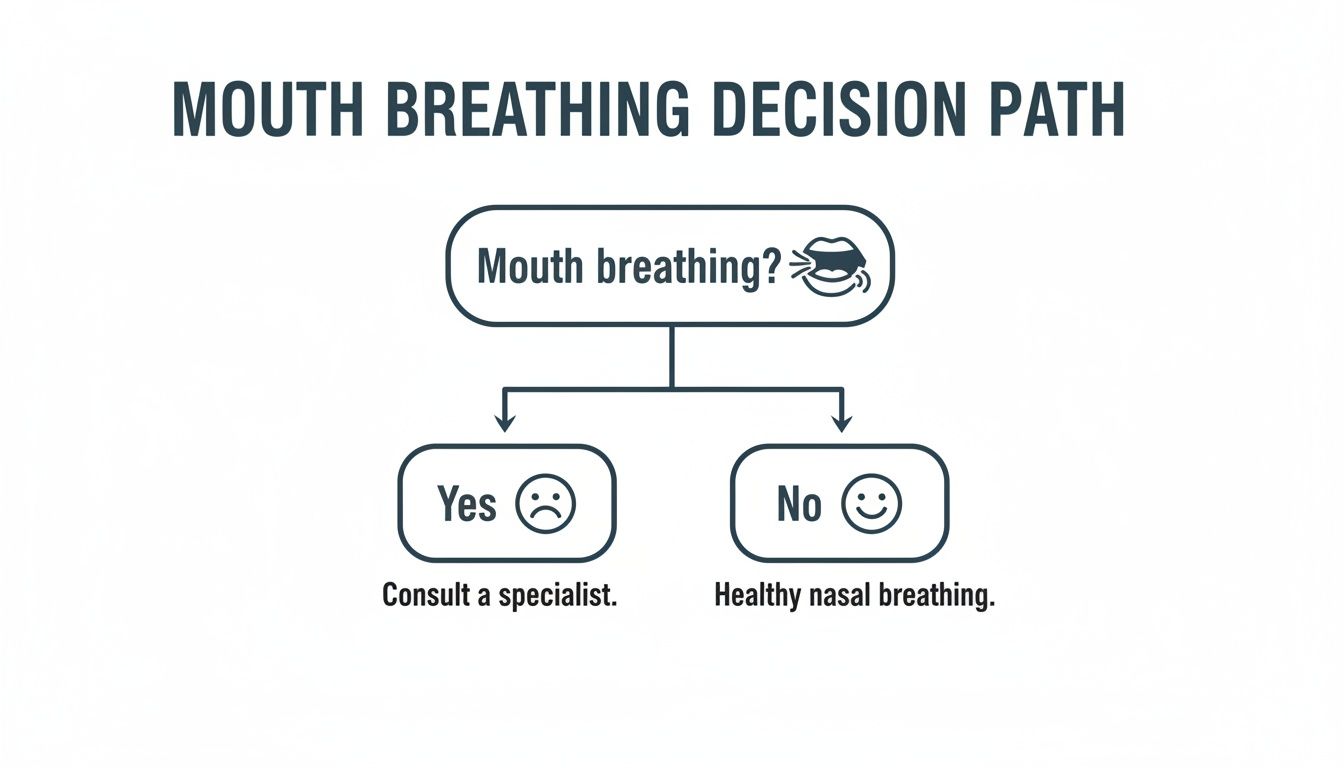
As you can see, the first step is simply figuring out if you’re a mouth breather. From there, you can take steps to correct it and unlock all the benefits that come with breathing through your nose.
To help you sort through the options, here’s a quick comparison of the most common materials you’ll find.
Comparing Common Mouth Tape Materials
A feature-by-feature comparison of popular mouth tape materials to help you find the best fit for your specific needs and comfort.
| Material Type | Key Benefits | Potential Drawbacks | Best For |
|---|---|---|---|
| Porous Paper/Fabric | Very affordable, widely available, and breathable material. Gentle adhesive is great for sensitive skin. | The hold can be too weak for some, especially those with facial hair, oily skin, or who toss and turn a lot. | Beginners, people on a budget, or anyone with very sensitive skin who wants to test the waters. Example: 3M Micropore Tape. |
| Silicone Strips | Specifically designed for sleep. Strong, hypoallergenic adhesive that’s also flexible and conforms to the face. | More expensive than basic paper tape. The stronger adhesive might feel intense for first-timers. | A wide range of users, including people with facial hair or those who found paper tape wasn't secure enough. Example: SomniFix Strips. |
| Hydrating Gel Tapes | Premium comfort with a gel-based adhesive that soothes and moisturizes the skin. Very gentle yet provides a reliable seal. | The highest price point of the three. May not be necessary for those without sensitive or dry skin. | Individuals with extremely sensitive or dry skin, or anyone who prioritizes a comfortable, irritation-free experience. Example: SleepHabits Tape. |
Ultimately, choosing the right material is what makes mouth taping a sustainable habit instead of a one-night experiment.
Porous Paper and Fabric Tapes
Often recommended for a first try, porous paper or fabric tapes (like micropore surgical tape) are the most basic option. They’re cheap, you can find them anywhere, and they usually have a gentle adhesive that’s easy on the skin. Their main selling point is breathability—the porous material lets a tiny bit of air through, which can help ease any feelings of claustrophobia for new users.
But that gentle hold can be a double-edged sword. While it’s great for sensitive skin, the adhesive might not be strong enough for everyone, especially if you have a beard or oily skin. It's not uncommon for these tapes to lose their grip if you move around a lot in your sleep.
Silicone and Flexible Strips
Silicone mouth strips are a big step up in both design and comfort. These are specifically engineered for sleeping, offering a much more flexible and form-fitting experience than a standard piece of paper tape. The medical-grade silicone adhesive is designed to be both strong and hypoallergenic, giving you a secure seal that moves with you.
This makes them a fantastic choice for a lot of people. Their stronger adhesion is especially helpful for anyone with a beard or mustache, as the flexible material can create a much better seal around facial hair. They cost more than paper tape, but their reliability and comfort often make the investment worth it.
The best mouth tape for sleeping should feel like it’s barely there. It needs to provide a secure seal that encourages nasal breathing without causing discomfort or irritation, allowing you to forget you’re even wearing it.
Hydrating Gel Mouth Tapes
At the premium end of the market, you’ll find hydrating gel mouth tapes. These are designed to do more than just encourage nasal breathing—they also soothe and moisturize the skin around your lips. The gel-based adhesive is incredibly gentle, making it the top choice for people with extremely sensitive or dry skin.
Tapes like these, such as the ones from SleepHabits, often include skin-friendly ingredients that prevent irritation and leave your skin feeling soft when you wake up. The adhesive gives you a reliable hold that’s still easy to peel off in the morning without any painful pulling or sticky residue. For those who put comfort and skincare on the same level as sleep quality, hydrating gel tapes deliver a superior experience.
What the Science Actually Says About Mouth Taping
Mouth taping has exploded on social media, and it’s easy to be skeptical. Is this just another wellness fad, or is there real science behind it? While the research is still growing, the early evidence points to some pretty compelling benefits for sleep quality and common issues like snoring.
The idea behind mouth taping isn't about forcing your mouth shut. It’s much simpler. It’s a gentle reminder for your jaw to stay closed, encouraging your body to use its natural and far more efficient breathing pathway: your nose. This small switch can make a surprisingly big difference once you’re asleep.
A Deeper Look at Your Sleep Architecture
One of the most promising areas of research is how mouth taping impacts our sleep architecture—the natural cycle of different sleep stages we go through every night. We all need deep, restorative stages like REM (Rapid Eye Movement) and slow-wave sleep to handle everything from memory consolidation to physical repair. If these stages are constantly getting interrupted, you can sleep for eight hours and still wake up feeling like you barely slept at all.
Mouth breathing is a notorious sleep disruptor. It often leads to a drier airway, snoring, and less stable breathing, all of which can easily pull you out of those crucial deep sleep stages. By promoting smoother, more consistent nasal breathing, the best mouth tape for sleeping helps protect this delicate cycle.
This is where the data starts to get interesting. A systematic review published in PLOS One pulled together several key findings, even while calling for more large-scale studies. One trial they reviewed found a significant increase in the percentage of REM sleep after participants started using mouth tape. Another study noted that scores on the Epworth Sleepiness Scale dropped significantly, meaning people felt less tired during the day. Snoring ratings also went down. You can read more about these sleep study findings and see how researchers are connecting the dots.
The goal of mouth taping isn't just to stop snoring; it's to support the very structure of your sleep, allowing your brain and body to complete the vital restorative processes they need each night.
What the Data Means for Your Daily Life
So, what does an increase in REM sleep or a lower snoring score actually feel like? It translates directly into how you function the next day. Here’s how the science connects to real-world improvements:
- Sharper Mental Clarity: REM sleep is prime time for your brain to process emotions and lock in memories. Getting more of it means you're far more likely to wake up feeling focused, mentally sharp, and emotionally balanced. For example, you might find it easier to solve a complex problem at work or remember names and faces.
- Less Daytime Grogginess: That drop in sleepiness scores is a big deal. It shows that better breathing at night directly leads to more energy during the day. This is the difference between needing three cups of coffee to function and feeling naturally alert after your morning alarm.
- A Quieter Bedroom: Lower snoring ratings are a clear win for everyone in the room. Less snoring is a direct sign of a more stable, less obstructed airway—a cornerstone of healthy sleep. A practical example is your partner no longer needing to wear earplugs to bed.
While scientists are still exploring the full picture, the evidence we have gives mouth taping a strong foundation. It’s shaping up to be a practical tool that supports the body’s innate ability to sleep well, simply by encouraging a better way to breathe. In fact, there are 5 surprising mouth taping benefits that go well beyond just a quieter night.
How to Use Mouth Tape Safely and Effectively
So you're ready to give mouth taping a shot. That's great. Getting the application right is the key to making this a comfortable, effective part of your nightly routine. Think of it like a little pre-sleep ritual. A few simple steps will ensure the tape sticks properly, feels secure, and comes off easily in the morning.
We’re aiming for a gentle, barely-there seal, not a lockdown.

Your Step-by-Step Guide to Applying Mouth Tape
Making this a consistent habit from night one will make all the difference. Follow these quick steps to get it right.
- Start with a Clean Slate: Wash and dry the skin around your lips. Any natural oils from your skin, moisturizer, or lip balm will prevent the adhesive from working as it should. Actionable Tip: Use a gentle facial cleanser or toner on a cotton pad to wipe the area for a perfect, oil-free surface.
- Apply Your Tape: Take one strip and place it horizontally across your closed, relaxed lips. Some people prefer a vertical application, running from the philtrum (the area under your nose) to just below your lower lip. Either way, the goal is to keep your lips gently together, not pursed or strained. Experiment: Try both horizontal and vertical placement for a few nights to see which one feels more natural and secure for you.
- Ensure a Comfortable Seal: Press down lightly on the tape for a few seconds to make sure it’s secure. The best mouth tape for sleeping will feel snug, but it should never feel restrictive. You're simply encouraging your mouth to stay closed, not forcing it shut.
Remember, this is about nudging your body toward nasal breathing. If you feel anxious or uncomfortable, just take it off. You can always try again tomorrow.
A Trick for Getting Comfortable
Let’s be honest, putting tape on your mouth for the first time feels a little strange. That's completely normal. Your brain needs a minute to get used to the new sensation. A great way to ease into it is with a quick daytime trial.
Wear the mouth tape for 20-30 minutes while you're awake and doing something relaxing, like reading a book or watching TV. This gives you a chance to get used to the feeling in a low-pressure situation.
This little trick helps desensitize you to the sensation, so by the time your head hits the pillow, it feels much more natural. It's a simple way to build confidence and overcome any initial hesitation.
Troubleshooting Common First-Night Issues
Even if you do everything right, you might hit a small snag on your first night or two. Don't worry—these are common and usually have a simple fix.
- The Tape Falls Off: If you wake up and the tape is stuck to your pillow instead of your face, the most likely culprit is either skin oil or a weak application. Solution: Double-check your skin prep. Make sure the area is totally clean and dry before applying. If you have facial hair, try a more flexible silicone or gel tape that can better conform to the contours of your face.
- Skin Irritation: Waking up with red or sensitive skin usually means one of two things: the adhesive is too aggressive for your skin, or you’re ripping it off too fast in the morning. Solution: Always peel the tape off slowly and gently. If irritation persists, switch to a hypoallergenic option like a hydrating gel tape, which is specifically designed for sensitive skin. You can also apply a tiny bit of moisturizer after removing the tape in the morning.
- Feeling Anxious or Claustrophobic: This is a mental hurdle more than anything. Remind yourself that you can easily open your mouth if you need to; the tape is designed to release with very little effort. Solution: Start with a smaller vertical strip or use a tape that has a small breathing vent. This can help ease that closed-in feeling while you adjust.
By addressing these minor issues head-on, you can dial in your technique and build a solid routine. The journey to better sleep is a process of small, consistent improvements.
Making Your Final Choice for the Best Mouth Tape
You’ve explored the science behind nasal breathing, weighed the different materials, and learned how to use mouth tape safely. Now it's time to put all that knowledge to work. Choosing the best mouth tape for sleeping isn't about finding a single "perfect" product; it's about finding the right one for your skin, your comfort, and your goals.
Think of it like finding the right tool for a specific job. You need a tape that’s so comfortable you forget it’s even there, yet effective enough to provide a gentle seal that guides you back to nasal breathing all night long. Armed with the right criteria, you can cut through the marketing noise and pick a product that will actually help you sleep better.
Your Final Decision Checklist
To make things simple, run any mouth tape you’re considering through this quick mental checklist. If a product ticks all these boxes, there's a good chance it's a quality option that will give you a positive experience.
- Gentle Yet Secure Adhesive: The glue needs to be strong enough to stay on all night but gentle enough that it won't irritate your skin when you peel it off in the morning. Look for medical-grade, hypoallergenic adhesives designed for skin contact.
- Breathable and Hypoallergenic Materials: The tape material itself has to be non-irritating. Options like porous fabrics, flexible silicone, or soothing gel strips are specifically designed to minimize the risk of rashes and reactions, especially for sensitive skin.
- Comfortable and Flexible Design: A stiff, rigid tape is a recipe for a restless night. The best designs are flexible and conform to the natural shape of your lips and face without feeling restrictive or claustrophobic.
A truly effective mouth tape works with your body, not against it. Its primary job is to provide a gentle cue for your jaw to remain closed, making nasal breathing the easiest and most natural option during sleep.
Empowering Your Purchase
You're now equipped to look past the hype and focus on the features that actually matter for a good night's rest. The difference between a frustrating experiment and a transformative sleep habit often comes down to choosing a product designed with user comfort and safety as the top priorities. A great tape promotes better breathing without causing skin problems or anxiety.
Investing in a quality product is an investment in your sleep and overall well-being. By focusing on gentle adhesion, skin-friendly materials, and a comfortable design, you set yourself up for success from the very first night. For those with sensitive skin who prioritize a soothing experience, you can learn more about our specially formulated hypoallergenic, hydrating mouth tape that meets these exact standards.
Of course, even after hearing about all the benefits, it’s totally normal to have a few questions. Let’s tackle some of the most common concerns people have before they try mouth tape for the first time. Getting these cleared up can help you feel confident you're doing it right.
Is It Safe to Use Mouth Tape Every Night?
For most healthy adults who can breathe clearly through their nose, using mouth tape every night is generally considered very safe. The whole point is to encourage your body's natural breathing pattern, not to force something unnatural.
The key is making sure you don't have significant nasal obstruction. If you're dealing with severe congestion, a deviated septum, or a diagnosed sleep disorder like sleep apnea, it's always best to chat with your doctor first. Actionable Insight: Before you even buy tape, try this simple test: close your mouth and breathe comfortably through your nose for a full minute. If you can't do this easily, address the congestion before trying mouth tape.
What Happens if My Nose Gets Blocked?
This is probably the number one question people ask. The good news is that quality mouth tapes are designed with this exact scenario in mind. The adhesive is just strong enough to keep your lips closed, but weak enough to break open with minimal effort.
A good mouth tape isn't a gag. It’s a gentle reminder. If your nose gets clogged and your body instinctively tries to open your mouth to breathe, the tape will give way instantly. Safety is built into the design.
If you want extra peace of mind, especially during allergy season or if you're getting over a cold, try pairing mouth tape with a nasal strip. The strip helps physically open your nasal passages, making nasal breathing that much easier and more reliable all night long.
How Long Does It Take to Get Used to It?
Like any new habit, there's a bit of an adjustment period, and it’s different for everyone. Some people feel the difference on night one and never look back. For others, it might take a week or two to feel completely comfortable.
Here’s a great little trick to make it easier: try wearing the tape for 20-30 minutes during the day while you’re doing something relaxing, like reading a book or watching TV. This gives your brain a chance to get used to the feeling in a low-stakes environment, making the transition to wearing it all night feel much more natural.
Ready to see what a night of true nasal breathing feels like? SleepHabits offers a specially formulated hydrating mouth tape designed for ultimate comfort and effectiveness.
Discover the SleepHabits Difference and Start Sleeping Better Tonight