

Yes, you can wear blue light glasses over contacts safely, and plano lenses are the simple non-prescription option if you already get your vision correction from contact lenses. The bigger sleep win usually comes from the wind-down ritual around the glasses, dimming screens, lowering stimulation, and easing your eyes out of work mode.
You're probably here because it's late, your contacts are still in, and your phone or laptop is still glowing. You want to know whether adding another layer of eyewear will help, or just become one more thing to manage before bed.
For many adults, that question sits right at the intersection of comfort, screen habits, and sleep hygiene. A consumer snapshot from The Vision Council found that 25% of consumers already used glasses or contact lenses that filter blue light, 55% were aware of blue light glasses, and 60% of non-users were interested in trying them, which shows the glasses-over-contacts setup is already a mainstream choice for screen-heavy evenings (The Vision Council snapshot). If you also want a practical companion guide for easing eye fatigue before bed, Simply Tech Today's eye strain tips are a useful place to start, alongside this screen-time-before-bed guide.
The Evening Screen Dilemma for Contact Lens Wearers
A familiar evening scene can make this question feel bigger than it is. Your contacts have been in since morning, the workday is done, and the last thing left is a little scrolling or one more episode. Then the practical question arrives. Should you add blue light glasses, or will another layer of eyewear just make the night more annoying?
The direct answer is yes, you can wear blue light glasses with contacts. In normal use, the combination is safe, and many people already choose some version of a blue-light-filtering setup for screen time. If you want a broader overview of evening screen habits, this screen-time-before-bed guide is a useful companion to the eyewear question.
Why the question feels more complicated at night
Evening is when contact lens wearers often notice screen discomfort most clearly. Eyes are already tired, blinking slows down, and the glow from a phone or laptop can feel harder to ignore. The concern is not only about vision, it is about whether one more step helps the body settle down before bed.
Blue light glasses sit over the contacts and do not change how the contact lenses fit when the glasses are chosen correctly. The two tools do different jobs, which is why the setup works in everyday use. The Eye Care Team explains that contact lenses handle the vision correction, while the glasses act as an external filter.
Practical rule: if your contacts already correct your vision, the blue light glasses should be a filter, not another prescription layer.
That separation matters for sleep hygiene. Many adults reach for blue light glasses because they want a more deliberate wind-down routine, and that routine often does more for bedtime than the filter alone. Lower screen brightness, fewer late-night notifications, and a quieter final hour usually support sleep more directly than relying on one product to do everything. For people who also want help with eye comfort, Simply Tech Today's eye strain tips give a practical place to start.
How Blue Light Glasses Work Over Contact Lenses
A simple way to picture the setup is as two separate layers with different jobs. Your contact lenses correct your vision, for example nearsightedness or astigmatism. Your blue light glasses sit over them and filter light from the outside, so they do not change how the contacts fit or how they correct your sight.
The optical roles are separate
That separation is what makes plano lenses useful. Plano means the lenses have no prescription power, so they can filter light without adding another vision correction on top of the one already in your contacts. In practical terms, the contacts are doing the correction, while the glasses are handling the light filter.
A window works much the same way. One layer clears the view, and the other changes the light passing through. If both layers are made correctly, they can be used together without interfering with each other.
For a closer look at how these lenses are marketed and described, SleepHabits explains the claimed benefits of blue light glasses.
What to order if you already wear contacts
If your contact prescription already gives you the correction you need, the glasses do not usually need a prescription too. For many people, a pair of plano blue light lenses is enough because the goal is filtering, not adding more optical power.
That keeps the setup simple. You do not want to stack two different corrections unless an eye care professional has told you that is the right choice. The best setup should feel like an easy part of your evening routine, something you can put on during screen time and remove at bedtime without extra hassle.
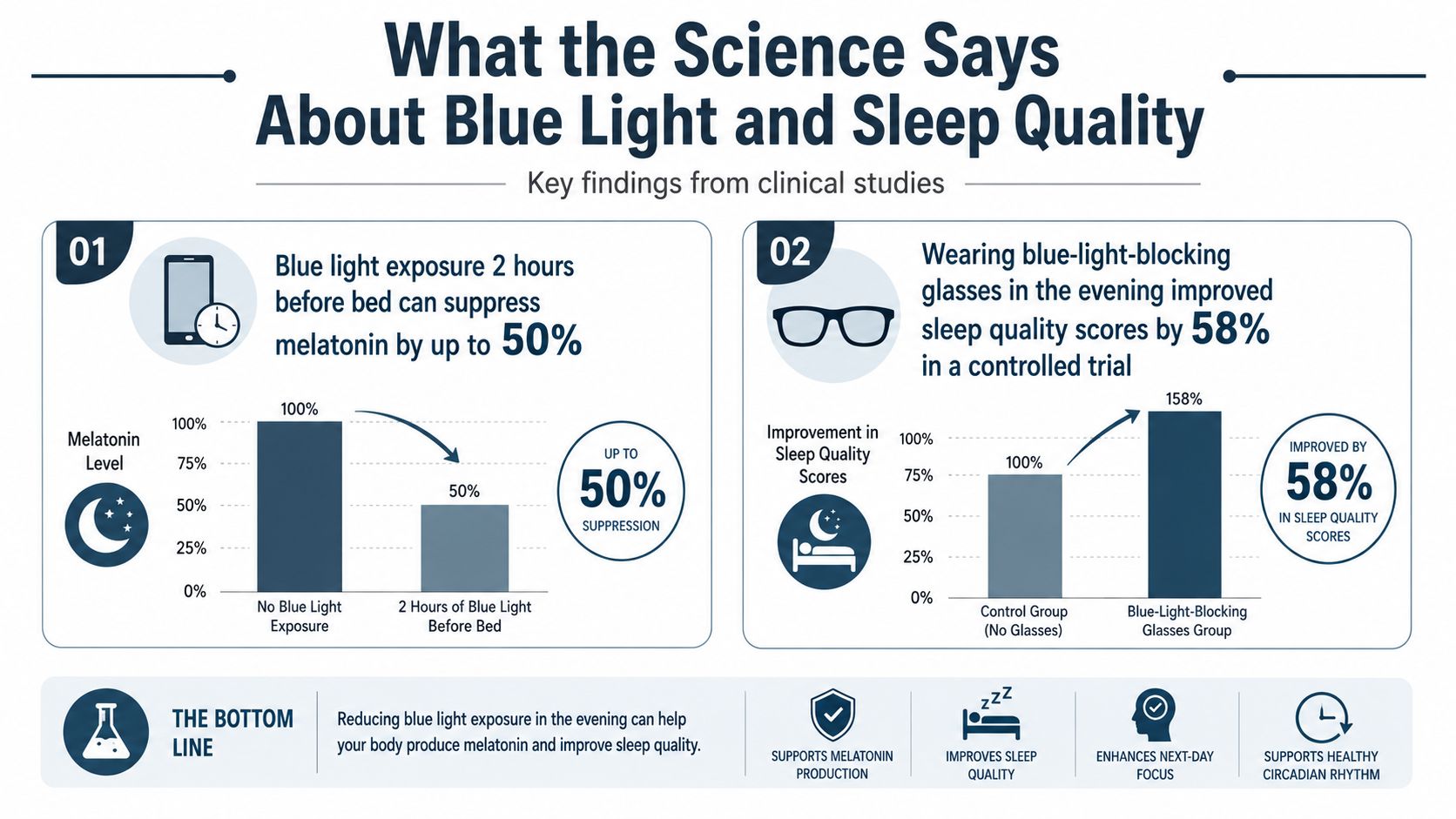
What the Science Says About Blue Light and Sleep Quality
The question sounds straightforward, yet the evidence is more restrained than the marketing. Blue light at night can matter for sleep, but that does not mean blue light glasses reliably solve sleep problems on their own.
A 2023 systematic review pooled 17 randomized controlled trials with 619 participants and found that blue-light filtering spectacle lenses probably make no difference to eye strain, visual performance, or sleep quality compared with non-filtering lenses. The American Academy of Ophthalmology also states that there is no scientific evidence that light from computer screens damages the eyes and does not recommend special eyewear for computer use. For a summary of those findings, Greenwich Eye discusses the research in the context of blue-light-blocking lens wearers.
What actually causes late-screen discomfort
For contact lens wearers, the more common problem during screen time is tear-film disruption from reduced blinking, not blue light exposure itself. That matters because it changes the target. If your eyes feel gritty or dry, the first place to look is blink habits, moisture, and how long you stay on screens without a break.
Blue light glasses can still be part of a healthy evening routine, but they're not a magic switch for sleep.
Some people still feel better when they put the glasses on, and that can make sense. The benefit may come from the larger routine, including a clear shift away from work, a dimmer screen, and a slower pace before bed. If you want to separate the product from the sleep habit itself, the SleepHabits' blue light glasses benefits page explains the claimed sleep role in that wider evening context.
Practical Tips for Wearing Blue Light Glasses With Contacts Comfortably
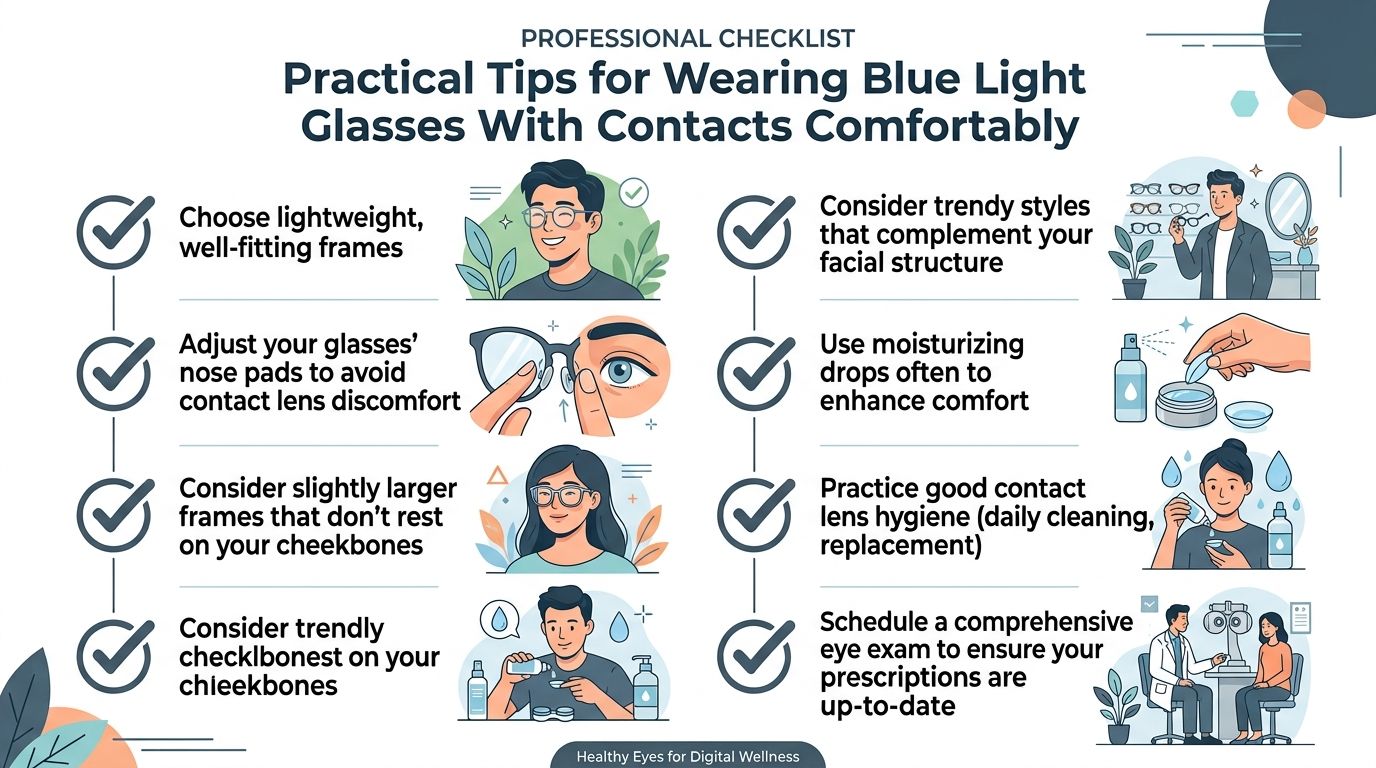
Comfort is what makes this setup usable night after night. If the glasses pinch, slide, or add glare, you'll stop wearing them, and the routine falls apart. The easiest wins are mechanical, not dramatic.
Small adjustments that make a big difference
- Choose lightweight frames. Heavier frames can feel more noticeable when you're already aware of your contacts.
- Use an anti-reflective coating. It can reduce glare from lamps, laptops, and TV screens, which helps keep visual fatigue from stacking up.
- Check the nose pads and temples. If the frame presses into your face, adjust the fit so you're not distracted by pressure while you're trying to relax.
- Blink on purpose. Screen use lowers blinking, which dries the tear film and makes contacts feel worse.
- Keep compatible lubricating drops nearby. A few drops can be a simple fix when dryness is the issue.
- Dim the screen and warm the display tone. The environment matters just as much as the glasses.
Those are the kinds of changes that support an evening routine without requiring a major overhaul. They also help separate genuine eye comfort from the assumption that the lenses themselves are supposed to do everything.
If your eyes feel dry before bed, treat that as a blink and tear-film problem first, not a blue-light problem.
You may also find it easier to make this routine stick if you link it to one other nighttime habit. For some people, that means putting the glasses on when the lights go down. For others, it means pairing screen reduction with a calming drink or a few minutes away from the phone entirely.
Alternatives to Blue Light Glasses for Contact Lens Wearers
Not everyone wants two things on their face at once. If that's you, the good news is that there are credible alternatives, and they work by changing either the lens, the device, or the room itself.
Some providers offer blue-light-filtering contact lenses as an upcharge, with filters built into specialized materials or additives. The filtering amount can vary a lot, and one eye-care source notes adaptive lenses may block about 15% indoors to over 50% outdoors, which shows the effect is not fixed and depends on the brand and lighting conditions (Nectar Sunglasses).
Two simpler options that don't add eyewear
- Screen settings and software. Night mode, warm display settings, and apps such as f.lux shift the color temperature of the device itself. They're free or already built in, but they only help if you turn them on.
- Ambient lighting changes. Warm lamps and lower overhead light can reduce the harsh contrast between your screen and the room. That often makes the whole evening feel calmer, not just your eyes.
If you're deciding between these options, think about friction. Blue-light contacts reduce the need for glasses, but they add cost and depend on the specific product. Software filters are convenient, but they require a habit. Ambient light changes are low-tech, but they may have the biggest impact on how your evening feels.
For readers comparing sleep tools more broadly, SleepHabits' red light glasses for sleep page is another useful contrast point, because it reinforces a larger truth, the ritual around bedtime often matters as much as the device.
Building a Complete Evening Wind-Down Routine for Better Sleep
Blue light management works best when it's part of a broader wind-down, not a standalone fix. The brain responds to cues, and a dimmer room, quieter habits, and less stimulation all tell your body the day is ending. That's the sleep value people often feel before they can explain it.
Nasal breathing also belongs in that routine. SleepHabits' Restore+ Magnesium Sleep Aid is a melatonin-free magnesium wind-down drink built around nitric oxide supporting ingredients, including magnesium, L-theanine, tart cherry, lemon balm, and glycine, and it's designed for a habit-based evening rhythm rather than a quick knockout approach.
A simple sequence that feels realistic
- Put on the glasses if you're still on screens. Use them as a cue that work mode is ending.
- Lower the lights in the room. Keep the environment consistent with sleep, not with productivity.
- Support nasal breathing. If mouth breathing is an issue, tools like mouth tape or nasal strips can make the transition to rest feel smoother.
- Choose one calming drink or ritual. A magnesium-based option can fit here if that suits your routine.
- Stop using your devices before you feel wiped out. The goal is to wind down before your brain gets overstimulated.
The strongest routine is the one you can repeat on ordinary weeknights.
That's why the glasses question matters, but only as part of a larger pattern. Blue-light glasses can mark the start of your evening slowdown, yet the deeper sleep signal comes from everything you do around them.
When to Consult an Eye Care Professional and Key Takeaways
If your eyes stay dry, irritated, or uncomfortable after you adjust your screen habits, schedule an eye care visit. The same advice applies if you keep getting blurry vision, recurring headaches, or the feeling that your contact prescription no longer matches what you need. If you are interested in blue-light-filtering contact lenses, a proper fitting is the right starting point.
The main takeaways are direct. Yes, you can wear blue light glasses with contacts, and plano lenses are the cleanest choice if you already rely on contacts for vision correction. The science does not show strong sleep benefits from blue-light filtering by itself, and the more dependable comfort gains usually come from dimming screens, blinking more, and reducing evening stimulation.
Sleep quality improves more reliably when the glasses become part of the routine, not the whole strategy. Use them as one signal that your evening is slowing down, then pay attention to how your eyes feel, how focused your mind stays, and how easily you settle once the screens go off. As noted earlier, the sleep benefit comes from the full pattern, while the glasses mainly fit inside that pattern.