

You wake to the alarm, reach for the glass on the nightstand, and notice that your tongue feels rough and your throat feels scratchy. The water helps briefly, but the parched feeling returns the next morning. That pattern can be frustrating, especially when you've already tried drinking more before bed.
The common causes for dry mouth at night usually involve two processes working together. Saliva production naturally falls during sleep, while mouth breathing can draw air directly across the tongue, gums, and palate. Nasal congestion, snoring, sleep apnea, medications, dehydration, caffeine, alcohol, and evening habits can all make that combination stronger.
Dry mouth, or xerostomia, is common rather than unusual. An epidemiology review estimates that it affects about 22% of the global population, with reported prevalence ranges of 10% to 26% in men and 10% to 33% in women (Sleep Foundation's review of dry mouth at night). The useful question isn't, “How can I drink more water?” It's, “Why is my mouth losing moisture while I sleep?” Once you identify the trigger, you can combine targeted changes instead of relying on one temporary fix.
Waking Up Parched and Wondering Why
Nighttime dry mouth often starts with a familiar sequence. You fall asleep feeling comfortable, then wake with sticky saliva, a coated tongue, chapped lips, or a throat that feels raw. You drink water, settle back down, and may repeat the cycle later. By morning, you're tired not only because your mouth feels uncomfortable, but because each awakening can interrupt continuous sleep.
The first distinction is between reduced saliva and increased evaporation. Your salivary glands release less fluid during sleep, so your mouth begins the night with a smaller supply of natural moisture. If your lips separate and you breathe through your mouth, moving air removes moisture faster. Either factor can cause dryness, but together they explain why the symptom is often much worse overnight.
Several suspects deserve attention:
- Mouth breathing: Your lips may fall open because of congestion, airway narrowing, habitual breathing, or snoring.
- Nasal blockage: Colds, allergies, swollen nasal tissue, or a structural obstruction can make nose breathing difficult.
- Sleep apnea: Repeated airway obstruction can encourage open-mouth breathing and may occur with loud snoring, gasping, or witnessed breathing pauses.
- Medications: Prescription and over-the-counter drugs can reduce saliva, with the effect becoming more obvious during sleep.
- Dehydration: Low fluid intake, alcohol, caffeine, sweating, or illness can leave less water available for saliva.
- Evening routines: Screens can delay winding down, while smoking, vaping, salty foods, and irritating oral products may worsen mouth discomfort.
Practical rule: If water helps for only a short time, investigate airflow and saliva production rather than adding more water at bedtime.
A dry bedroom can contribute, but it may not be the central problem. A humidifier can reduce evaporation, yet it won't correct a blocked nose, review a drying medication, or address possible sleep-disordered breathing. The most effective plan usually combines airway support, sensible hydration timing, medication review, and consistent oral care.
How Saliva and Breathing Change During Sleep
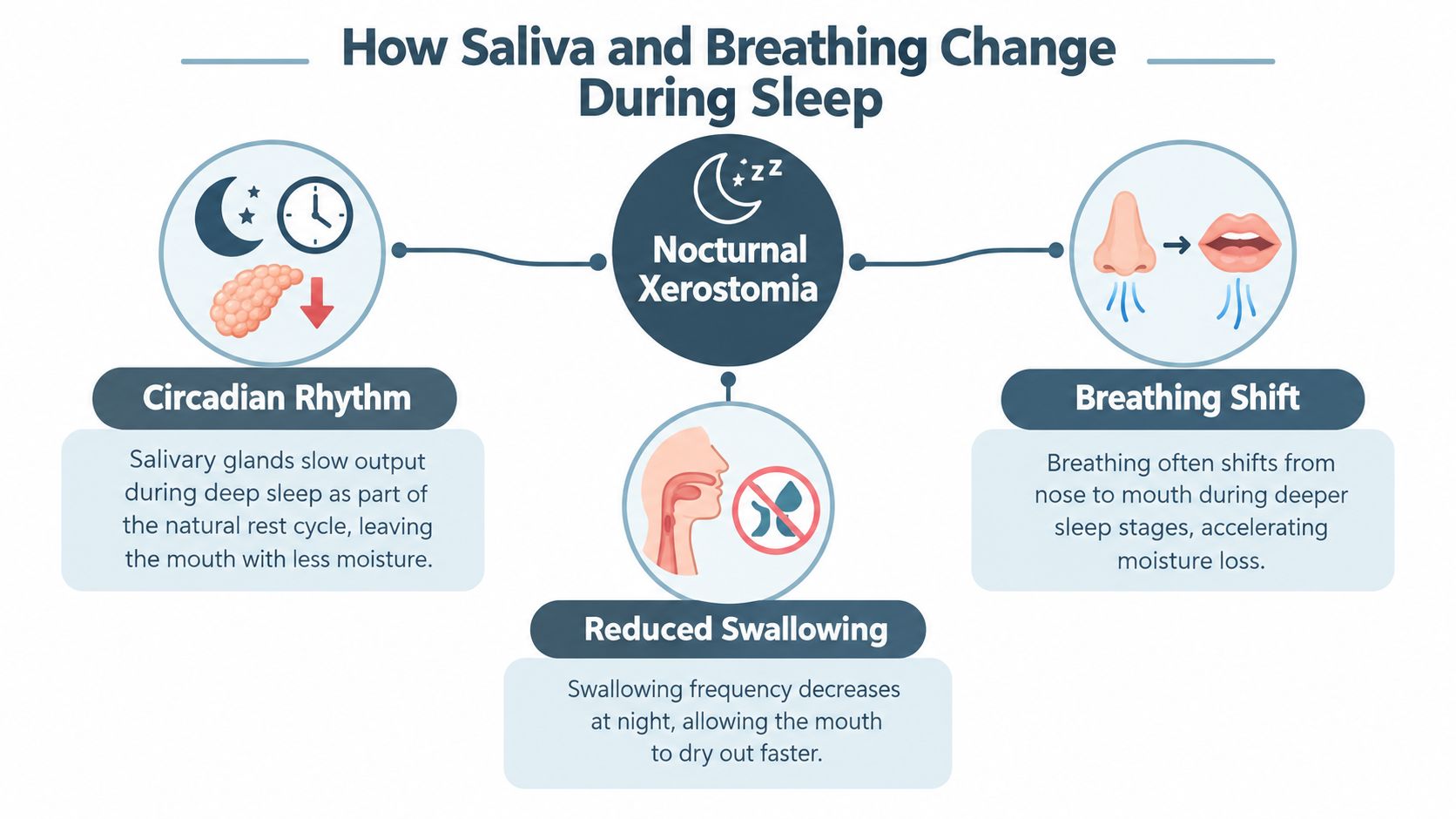
Saliva protects the mouth by keeping tissues moist and helping clear food particles and acids. During sleep, the salivary glands naturally slow their output as part of the body's rest cycle. Authoritative dental guidance notes that salivary flow reaches its lowest circadian levels during sleep, leaving less moisture available overnight (American Dental Association guidance on xerostomia).
Think of daytime nasal breathing as a built-in air conditioner. Your nose filters incoming air and helps warm and humidify it before it reaches the throat. When you breathe through your mouth, that conditioning step is bypassed. Room air moves directly over the tongue, gums, inner cheeks, and roof of the mouth, increasing evaporation.
The overnight moisture equation
The problem becomes clearer when you place the two changes side by side:
- Saliva falls: The glands provide less protective moisture during sleep.
- Mouth breathing increases airflow: Oral airflow carries moisture away from exposed tissues.
- Swallowing and movement decrease: You're less likely to sip, swallow, or consciously close your lips while asleep.
That's why “just drink more water” often misses the airway piece. Water can relieve the sensation temporarily, but it doesn't stop air from passing through an open mouth, and it doesn't restore the salivary rhythm that naturally changes during sleep. Nighttime dry mouth is often a moisture-balance problem, not a sign that you failed to hydrate.
The physiology isn't a personal failing. Your body is supposed to reduce salivary activity while you sleep. The practical task is to find out whether congestion, airway narrowing, medication effects, or evening habits are adding an avoidable source of moisture loss to that normal overnight dip.
Mouth Breathing, Snoring, and Nasal Blockage Overnight
The nose often loses the nighttime breathing contest for practical reasons. A cold can narrow the nasal passages, allergies can swell the tissue inside them, and a deviated septum can make one side feel persistently restricted. Lying down may make congestion more noticeable, particularly when allergic rhinitis causes the turbinates, the soft structures inside the nose, to swell.
When nasal airflow feels inadequate, the body may open the mouth to maintain breathing. That change can be subtle. You may not remember sleeping with your mouth open, but you might wake with a dry tongue, sticky saliva, throat irritation, or a pillow that shows signs of drooling. Snoring adds another clue because the soft tissues of the upper airway vibrate as air passes through a narrowed route.
Sleep apnea deserves special attention. The condition can encourage mouth breathing at night, and dry mouth may appear alongside loud snoring, gasping, or observed breathing pauses. Dry mouth alone doesn't diagnose sleep apnea, but persistent dryness paired with those airway signs warrants a clinical discussion rather than a product-only experiment.
A simple airway check
Try to identify the pattern before choosing a solution:
- Notice the timing: Is the dryness present every morning, or only during allergy season, illness, or particular sleeping positions?
- Check each nostril: Does one side feel chronically blocked even when you aren't sick?
- Ask a partner: Has anyone noticed snoring, choking sounds, gasping, or pauses in breathing?
- Test nasal support: A saline rinse or bedroom humidification may show whether nasal comfort changes the morning symptoms over several nights.
- Avoid forced mouth closure: Don't use mouth tape if you can't breathe comfortably through your nose, if your nose is blocked, or if you suspect untreated sleep apnea.
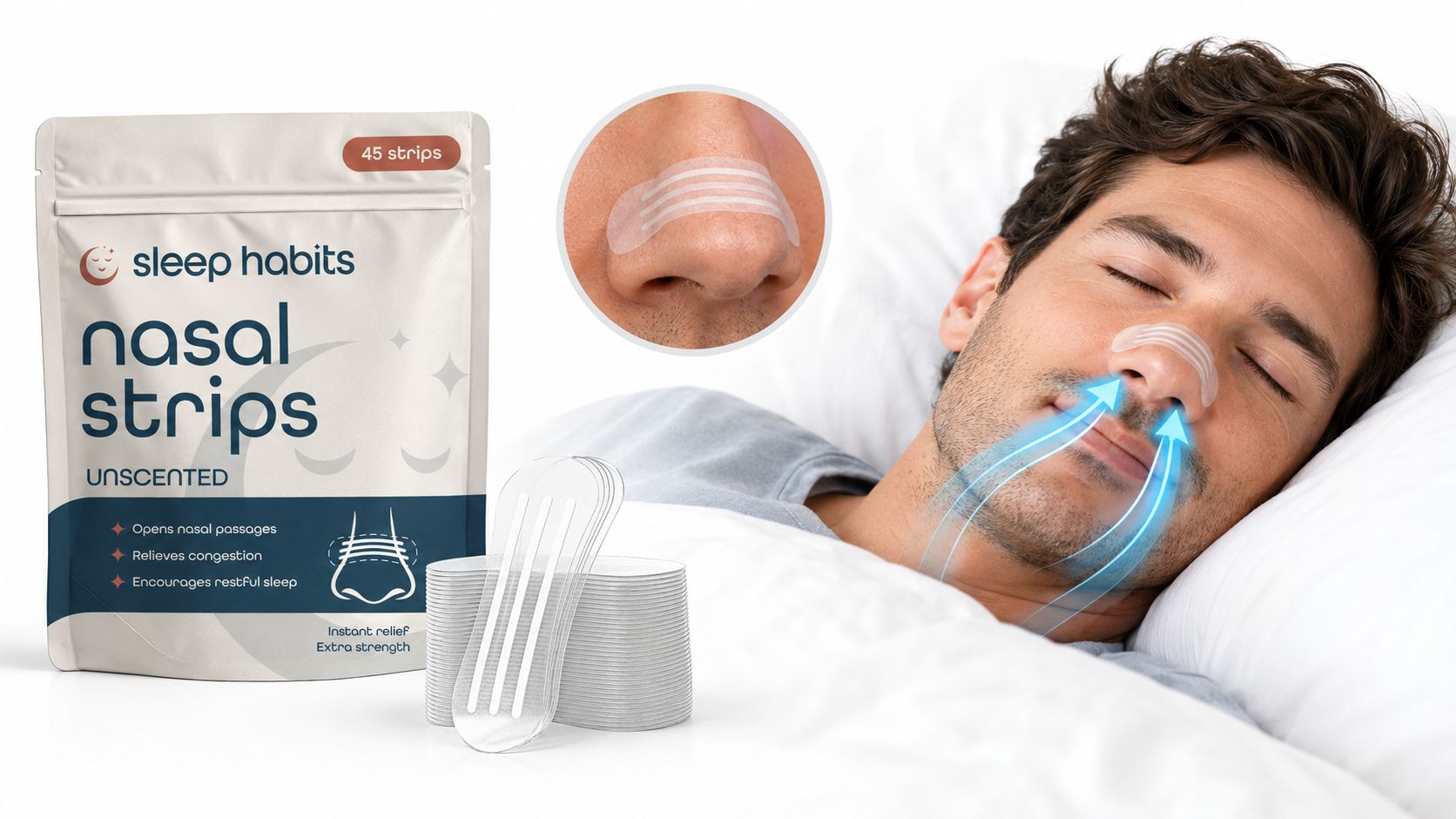
Nasal breathing and mouth breathing during sleep provides a useful framework for understanding why the airway matters. For external support, Transparent Nasal Strips are described as a way to improve airflow and support nasal breathing habits during sleep.
A dry mouth can also make the cycle feel self-reinforcing. Once the tissues become irritated, breathing and swallowing may feel less comfortable, while congestion continues to push you toward oral airflow. Finding the specific trigger, rather than treating every case as “dry air,” is the first step toward a targeted fix.
Medications, Dehydration, and Lifestyle Habits That Stack the Odds
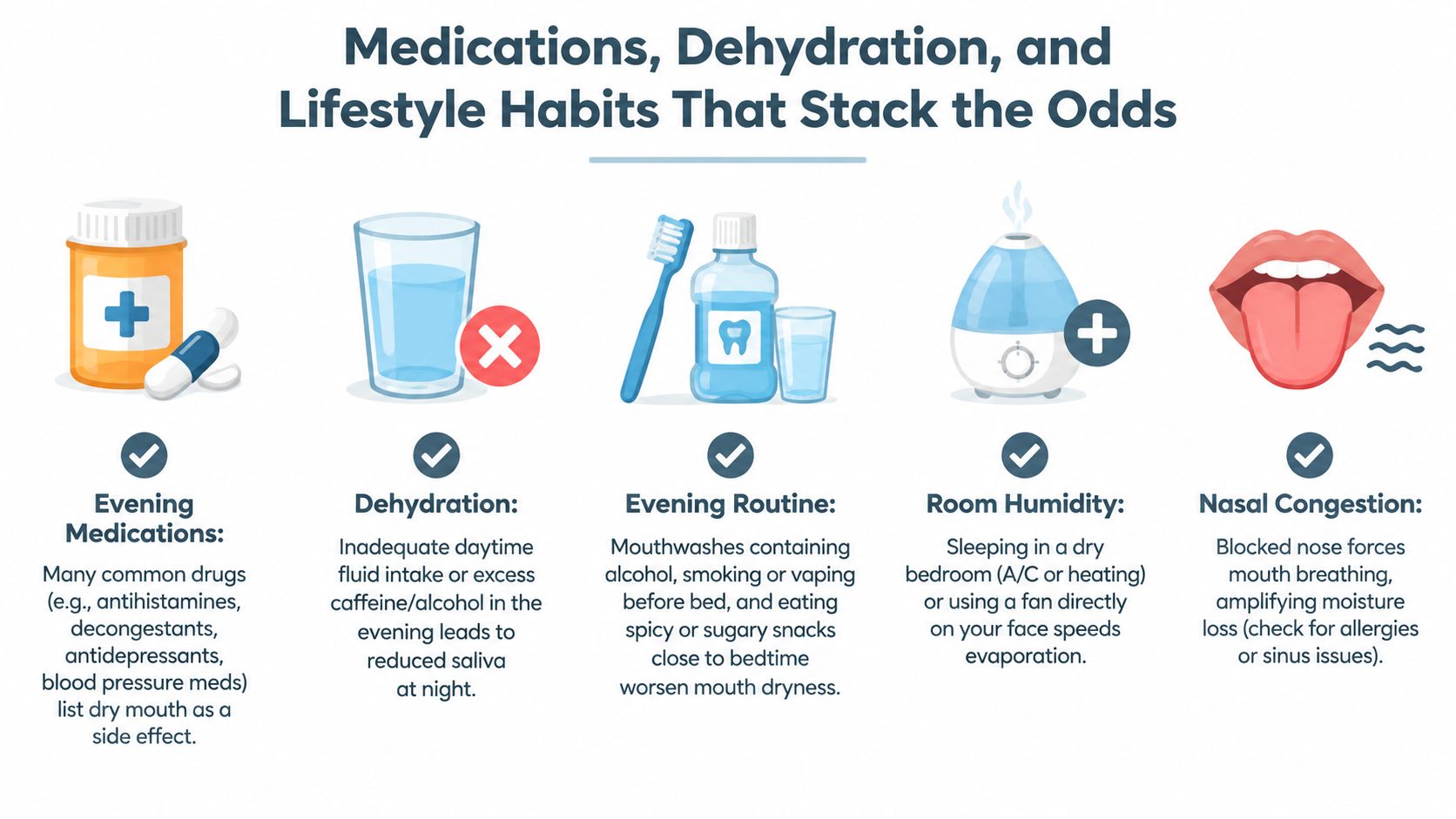
The hidden cause may be in the medicine cabinet or evening routine rather than the bedroom. Medications are the most established historical cause of dry mouth, and clinical references identify them as the most common cause of xerostomia, especially anticholinergics, antidepressants, muscle relaxants, antihypertensives, and many over-the-counter drugs (Merck Manual's clinical overview of xerostomia).
Hundreds of medicines can reduce salivary flow, including antihistamines, antidepressants, blood pressure medicines, diuretics, bronchodilators, and anti-anxiety agents (Cleveland Clinic's dry mouth guidance). The effect may become more noticeable at night because medication-related suppression overlaps with the natural sleep-related reduction in saliva.
Run this evening checklist
- Review the medication timeline. Did dryness begin after starting, increasing, or combining medicines? Don't stop a prescription on your own. Ask a prescriber or pharmacist whether timing, dosage, or an alternative class should be considered.
- Track evening diuretics and fluids. Medicines that increase urination can make nighttime fluid balance more challenging. A clinician can help you decide whether dosing timing is appropriate.
- Examine caffeine. Late caffeine may contribute to a restless routine and can encourage repeated sipping or bathroom trips. Try moving caffeinated drinks earlier and observe the difference.
- Limit alcohol near bedtime. Alcohol can promote airway relaxation and may make snoring or mouth breathing more likely. Keep it earlier in the evening rather than treating it as a sleep aid.
- Notice dinner composition. Salty or very dry meals can leave your mouth feeling parched. Add moisture-rich foods and avoid finishing the evening with highly irritating snacks.
- Simplify oral products. Smoking, vaping, and alcohol-containing mouthwashes can aggravate dryness. Choose an alcohol-free mouthwash and protect your regular brushing and flossing routine.
- Dim screens before bed. Screens don't directly remove saliva, but they can delay the wind-down routine, shorten sleep, and make late caffeine or snack habits more likely.
Dry mouth also affects the mouth's defenses. If you're dealing with coating, soreness, or recurring irritation, this resource on understanding thrush risk with dry mouth explains why reduced moisture can matter for oral comfort and hygiene.
A bedroom humidifier may help when heating, air conditioning, or a fan accelerates evaporation. Use this guide to choosing a humidifier for better sleep alongside airway and medication changes, not as a substitute for them. Small adjustments work best when each one targets a different contributor.
Putting It Together With a Practical Bedtime Routine
Before changing anything, imagine your usual evening. You drink caffeine late, have alcohol close to bed, lie down with a blocked nose, and wake several times with a dry mouth. Your response is to chug water at midnight, which may replace some fluid but doesn't address the airway pattern.
A more targeted routine might look like this:
- Earlier caffeine: Set a personal cutoff at 9 p.m. or earlier if late caffeine disrupts your sleep.
- Earlier alcohol: Keep alcohol to 7 p.m. rather than placing it close to bedtime.
- Nasal preparation: Use a saline nasal rinse before getting into bed, provided it's appropriate for you and prepared according to product directions.
- Bedroom moisture: Set a humidifier between 45 and 55 percent if that range suits your room and device guidance.
- Moderate bedside hydration: Keep water nearby, possibly with electrolytes if a healthcare professional has said they're suitable for you, but sip rather than repeatedly chugging.
- Position adjustment: Try side sleeping with gentle head elevation if lying flat worsens congestion or snoring.
- Mouth taping only when appropriate: Consider it only when nasal breathing is easy and there are no warning signs of untreated breathing problems.
This routine works because every step has a job. The caffeine and alcohol changes address evening habits, the rinse and position support airflow, humidification slows evaporation, and sensible hydration prevents the nightstand glass from becoming the only intervention.
Read this beginner's guide to mouth tape for sleeping before considering that option. Hydrating Mouth Tape is one product described as supporting quieter nights, oral care, and nasal-breathing habits, but it shouldn't be used to override nasal obstruction or unexplained breathing symptoms.
The target isn't a perfect night. It's fewer dry-mouth awakenings, steadier nasal breathing, and a routine you can repeat without turning bedtime into a complicated project.
Comparing the Evidence-Based Fixes Side by Side
No single remedy fits every pattern. Someone with medication-related xerostomia needs a medication review, while someone with a blocked nose may benefit more from allergy management or nasal support. The table below ranks practical options by how directly they address the suspected cause, not by a promise that one method will work for everyone.
Evidence-Based Fixes for Dry Mouth at Night
| Fix | Targeted Cause | Evidence Strength | Ease of Use | Time to Notice |
|---|---|---|---|---|
| Nasal rinsing | Congestion, mucus, allergy-related blockage | Good for nasal comfort when appropriate | Moderate | Often apparent across several nights |
| Mouth taping | Habitual open-mouth breathing with clear nasal airflow | Conditional, because safety depends on the airway | Moderate | May be noticeable quickly, but stop if uncomfortable |
| Humidifier use | Dry room air and faster evaporation | Supportive rather than corrective | Easy | May help during the first nights |
| Hydration timing | Low daytime intake and late-evening fluid imbalance | Foundational | Easy | Can improve comfort over several nights |
| Alcohol and caffeine limits | Evening dehydration, sleep disruption, airway relaxation | Good lifestyle strategy | Moderate | Often becomes clearer after a consistent trial |
| Medication review | Drug-related saliva suppression | Strong when timing and symptoms align | Requires clinician or pharmacist | Depends on a medically appropriate change |
| Allergy management | Swollen nasal tissue and seasonal congestion | Strong when allergy symptoms are present | Moderate | May take repeated use and clinical guidance |
| Positional therapy | Flat sleeping, snoring, and airway narrowing | Variable, depending on the cause | Easy to moderate | May change symptoms the same night |
Start with two or three interventions, not all of them. For example, a person with seasonal congestion might begin with saline rinsing and allergy management, while someone whose dryness began after a prescription change should prioritize a medication conversation.
The comparison also shows why drinking more water often feels incomplete. Hydration supports saliva, but it doesn't reopen a blocked nose or remove a medication's drying effect. Match the fix to the mechanism you can observe.
Mistakes to Avoid and When to See a Clinician
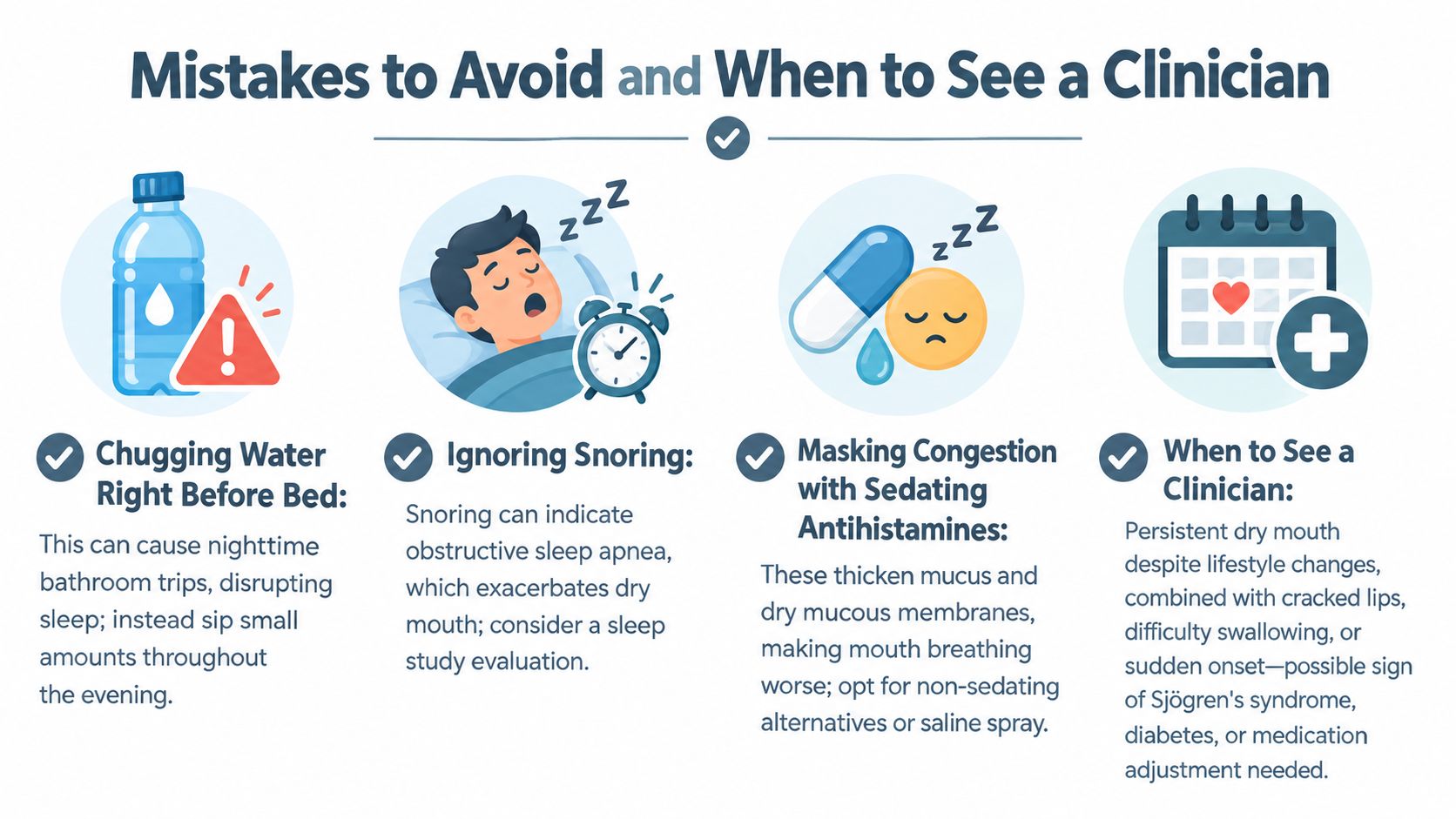
Some responses make sense at first but fail because they treat the symptom after the overnight process has already started. Chugging water right before bed may increase bathroom trips and fragment sleep, while doing little to prevent mouth breathing. Lozenges can make the mouth feel temporarily moist, but they won't correct a blocked nose, snoring pattern, or medication effect.
Sedating antihistamines can be another poor fit when congestion and dryness occur together. They may reduce allergy symptoms for some people, but medication-related drying can worsen the mouth, and sedation doesn't explain why you're breathing orally. Ask a clinician or pharmacist about suitable alternatives instead of changing medication independently.
Signs that deserve professional attention
Book an evaluation with a dentist, primary-care clinician, ENT, or sleep specialist if you have:
- Persistent symptoms: Dry mouth continues beyond a few weeks despite consistent lifestyle changes.
- Oral damage: You develop cracked lips, sores, burning, difficulty swallowing, rapidly worsening decay, or ongoing irritation.
- Airway warning signs: New snoring, gasping, witnessed breathing pauses, or severe morning headaches accompany the dryness.
- Whole-body symptoms: Excessive daytime thirst or dry mouth alongside symptoms that could suggest an underlying medical condition.
- Autoimmune clues: Dry mouth occurs with persistent dry eyes, joint symptoms, or other autoimmune concerns.
A clinician can review your medicines, examine your mouth, assess nasal structure, and decide whether sleep-disordered breathing needs investigation. Medication-related xerostomia is especially important to discuss because polypharmacy can stack drying effects, and the right response may involve a supervised adjustment rather than another bedside product.
Keep the nightly plan simple: support nasal breathing, distribute fluids through the day, moderate evening alcohol and caffeine, protect oral hygiene, and follow a consistent wind-down routine. If those steps don't change the pattern, persistent dry mouth is a reason to investigate, not a reason to keep adding more water.
SleepHabits offers educational sleep resources and tools such as nasal strips and hydrating mouth tape that focus on nighttime breathing and wind-down habits. Visit SleepHabits to explore practical options that may complement a clinician-guided plan for reducing mouth breathing and improving restorative sleep.