

Can a mineral help you sleep if you aren't low in it? That question cuts through much of the magnesium-for-sleep hype. You may be lying awake after another night of scrolling, remembering a friend who swears by magnesium glycinate, while a bottle sits unopened in your cabinet. The doubt is reasonable. The answer isn't a universal yes or no.
Magnesium can affect sleep, but its usefulness appears conditional. The person taking it, their magnesium status, the product's form, the elemental dose, and the reason for poor sleep all matter. For some people, it may shorten the time needed to fall asleep. For others, it may do little beyond causing stomach upset.
This guide examines the mechanism, clinical evidence, supplement forms, dosing choices, safety issues, and personal fit. The practical conclusion is simple: magnesium is better understood as a possible adjunct or deficiency correction than as a powerful sleeping pill.
Why You're Asking Whether Magnesium Affects Sleep
At midnight, the question usually feels less academic. You've tried to stop checking the clock, your mind keeps replaying tomorrow's tasks, and the magnesium supplement in the cupboard starts to look like a possible answer. A friend recommends glycinate because it “calms” them, while online advice makes nearly every form sound like the perfect sleep solution.
That makes the question legitimate, not naive. People want to know whether magnesium changes sleep itself, whether it only helps relaxation, and whether the benefit is large enough to notice. The research gives a more restrained answer than supplement marketing: some people may benefit, but the average effect is modest and the evidence has important limitations.
The most useful way to approach magnesium is to ask four questions:
- Mechanism: Could magnesium influence the brain pathways involved in sleep?
- Evidence: Have controlled trials shown better sleep, and how large was the change?
- Form: Does glycinate, citrate, oxide, or another form fit the goal and digestive system?
- Personal fit: Is there a plausible reason you might respond, such as low intake, older age, or a specific sleep problem?
The strongest available evidence doesn't support treating magnesium as a universal sedative. A 2021 systematic review and meta-analysis pooled three randomized controlled trials involving 151 older adults across three countries and found faster sleep initiation, but the reviewers rated the evidence low to very low quality and noted moderate-to-high risk of bias (systematic review and meta-analysis).
Practical expectation: Magnesium may make falling asleep easier for some people. It isn't a reliable substitute for diagnosing sleep apnea, treating restless legs, or using cognitive behavioral therapy for insomnia.
By the end, you should be able to decide whether a cautious trial makes sense, which questions to ask about a product, and when persistent insomnia deserves professional assessment rather than another supplement experiment.
How Magnesium Works in a Sleep-Deprived Brain
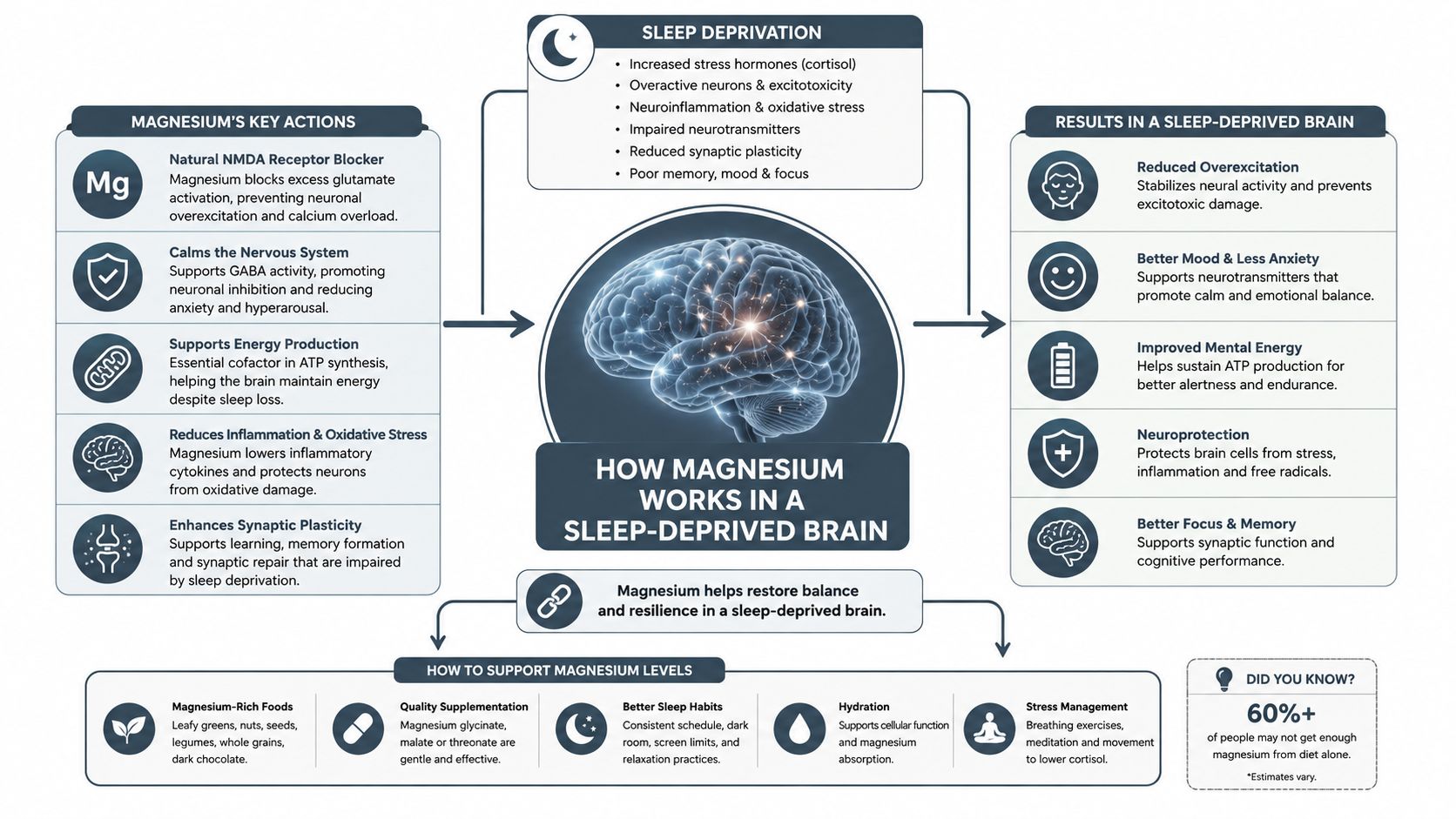
Could magnesium influence sleep by helping an overstimulated brain return to a calmer state? Several biological pathways make that possible, although a plausible mechanism does not establish meaningful benefit from a supplement. The effect depends on factors such as magnesium status, the sleep problem involved, and the form and dose used.
GABA and the brain's braking system
GABA is one of the brain's main inhibitory signals. It reduces neural activity as the nervous system shifts from alertness toward rest. Magnesium may support GABA-related calming by influencing GABA-A receptor activity.
A dimmer switch provides a useful comparison. GABA signals the brain to lower its activity, while magnesium may help that response proceed smoothly rather than leaving the system fully alert. The mineral does not function like a prescription sedative. It may support one part of the brain's existing braking network. Magnesium and GABA explains this relationship in more detail.
NMDA and excessive excitation
Glutamate helps the brain stay alert, learn, and process information, while NMDA receptors participate in that excitatory signaling. Under certain conditions, magnesium occupies the NMDA receptor channel and limits the passage of activating signals.
This may matter when neural activity remains high at bedtime. Repeatedly rehearsing conversations, planning tasks, or scanning for problems can reflect excessive arousal, but magnesium's receptor activity does not mean supplementation will quiet racing thoughts for everyone. The mechanism is biologically plausible, with the clearest rationale applying to people whose intake or magnesium status is inadequate.
Melatonin production
Magnesium acts as a cofactor in biochemical reactions involved in melatonin production. In one relevant step, the enzyme serotonin-N-acetyltransferase helps convert serotonin toward melatonin, the hormone that coordinates the body's timing of sleep. Magnesium helps that enzyme function, so low magnesium status could make the process less efficient.
This pathway does not show that every sleep problem results from a melatonin shortage. It also does not establish that taking more magnesium will raise melatonin enough to improve sleep. The proposed benefit is therefore conditional rather than universal.
Nitric oxide and circulation
Magnesium supports smooth-muscle relaxation and may influence nitric oxide signaling. These effects could affect vascular tone and circulation, including during the early part of the night, when deep sleep commonly becomes more prominent.
A product such as Restore+ Magnesium Sleep Aid combines magnesium with L-theanine, tart cherry, lemon balm, and glycine in a melatonin-free evening drink. Its formulation is intended to support a wind-down routine and nitric oxide-related circulation, but the presence of these ingredients does not establish that the product will improve sleep for every user.
Together, these pathways explain why magnesium might affect sleep. They do not identify the form, dose, or subgroup most likely to benefit, and they do not show that a biological effect will be large enough to matter in daily life.
What the Clinical Evidence Shows
Does magnesium improve sleep for everyone, or only under certain conditions? The answer depends on the population studied, the formula tested, the dose, and the way sleep was measured. A questionnaire score, time to fall asleep, wearable data, and total sleep time describe different parts of the same night, so they cannot be treated as interchangeable.
Earlier evidence from older adults and people with primary insomnia suggested a possible benefit, while also showing that the research quality was limited. The newer trials add useful context because they test different formulas and outcomes rather than repeating those earlier findings.
Newer research points to a modest, conditional benefit
A 2025 randomized, double-blind, placebo-controlled trial tested 250 mg elemental magnesium plus 1,523 mg glycine for 28 days in healthy adults with self-reported primary insomnia symptoms. Insomnia Severity Index scores improved more than placebo, but the effect was small, with Cohen's d = 0.2 (2025 randomized trial).
The formula included glycine, so the trial cannot show how much of the change came from magnesium itself. It supports a possible modest benefit from a combined evening formula, rather than establishing magnesium as a strong standalone insomnia treatment.
A 2024 crossover pilot trial using 1 g per day reported improvements in sleep duration, deep sleep, sleep efficiency, readiness, activity balance, and heart-rate-variability readiness (pilot trial). These findings broaden the question beyond insomnia questionnaires by including sleep and next-day recovery metrics. However, pilot research remains preliminary and requires confirmation in larger, independent trials.
| Study / Year | Population | Form & Dose | Sleep Outcome | Effect Size |
|---|---|---|---|---|
| 2021 systematic review | Older adults across three randomized trials | Oral magnesium, forms and doses varied | Faster sleep onset; total sleep time change not statistically significant | 17.36 minutes shorter sleep onset latency, 95% CI −27.27 to −7.44, p = 0.0006 |
| 2021 elderly insomnia trial | Elderly people with primary insomnia | Magnesium supplementation, trial-specific dose | Sleep time, efficiency, insomnia severity, onset latency, melatonin, and cortisol improved | Statistical significance reported, but no pooled effect size |
| 2024 pilot trial | Adults with nonclinical insomnia symptoms | 1 g/day magnesium | Sleep duration, deep sleep, efficiency, and recovery metrics improved | Statistical significance reported, no single pooled effect size |
| 2025 randomized trial | Healthy adults with self-reported insomnia symptoms | 250 mg elemental magnesium plus 1,523 mg glycine | Insomnia severity improved modestly | d = 0.2 |
The earlier review and elderly insomnia trial remain relevant as background, but their findings should be read with their limitations in mind. Differences in participants, formulations, doses, and outcome measures make it difficult to calculate one expected result for every magnesium user.
A practical interpretation is mild, situation-dependent benefit. Magnesium may be more useful for someone whose sleep difficulty overlaps with low intake, tension, or difficulty settling at night. The evidence is thinner for people seeking substantially longer or deeper sleep without another contributing problem. It should be viewed as a conditional tool, not a universal sleep pill or a replacement for treatment of persistent insomnia.
Choosing the Right Form for Sleep
The magnesium ion is the same mineral in every supplement. What changes is the carrier molecule attached to it, how the product behaves in the gut, how much elemental magnesium it supplies, and how well a person tolerates it.
That makes “best absorbed” an incomplete claim. A form that supports bowel regularity may be a poor choice for someone seeking a calm evening, while a gentler form may be more suitable for regular use even if it isn't marketed as the most powerful option.
| Form | Elemental Mg % | Bioavailability | GI Tolerability | Best Sleep Use Case |
|---|---|---|---|---|
| Glycinate | Varies by product | Often selected for a gentler, well-tolerated option | Generally considered gentler, but individual responses differ | Anxious or tense sleepers who also want glycine in the formula |
| Citrate | Varies by product | Commonly used when both magnesium intake and bowel regularity matter | More likely to loosen stools in sensitive users | Occasional constipation alongside mild sleep support |
| Oxide | Varies by product | Often less suitable when the goal is efficient magnesium repletion | More likely to cause laxative effects | Bowel regularity rather than a primary sleep goal |
| L-threonate | Varies by product | Chosen for a brain-focused product approach, with less total magnesium | Product and person dependent | People prioritizing cognitive calm |
| Malate | Varies by product | Product dependent | Usually judged by individual tolerance | Daytime fatigue or muscle-related discomfort that carries into evening |
Glycinate is often the practical starting point for a person whose insomnia comes with tension or worry. The glycine component may be relevant, but a formula containing glycine means any sleep response can't automatically be credited to magnesium alone.
Citrate makes more sense when constipation is part of the picture. Before choosing it, review magnesium citrate reviews for wellness with attention to elemental magnesium, serving size, and digestive tolerance rather than relying on the word “citrate” alone.
Oxide may be inexpensive and widely available, but its bowel effects can make it a frustrating bedtime choice. L-threonate appeals to people focused on cognitive calm and brain delivery, although it generally provides less total magnesium. Malate may suit someone whose daytime fatigue and muscle discomfort contribute to restless evenings, but it isn't automatically a sleep formula.
For a more direct comparison of two common options, see magnesium glycinate versus citrate for sleep.
The right choice is therefore goal-based. Match the form to constipation, anxiety, tolerance, or daytime fatigue, then judge the response by sleep and side effects rather than by absorption language on the label.
Practical Dosing, Timing, and Wind-Down Routine
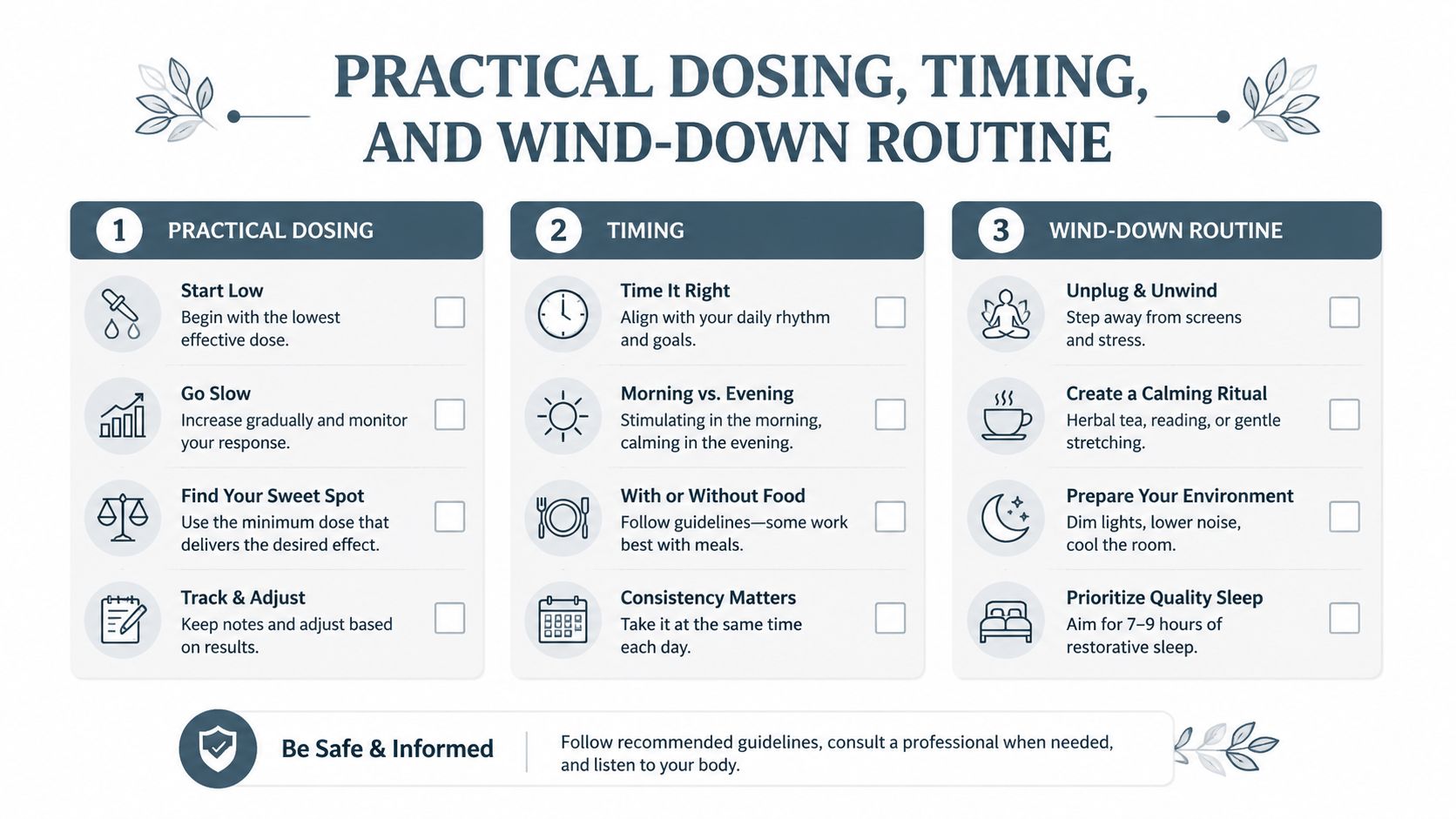
Clinical trials have used different products and doses, so a single universal schedule isn't established. A cautious approach focuses on the elemental magnesium amount, not the total weight of the compound listed on the front of the bottle.
Some practical supplement protocols use roughly 200 to 400 mg of elemental magnesium taken one to two hours before bed, but those ranges should be treated as a starting framework, not a personal prescription. The form changes how much compound supplies that elemental amount.
Build the evening around the routine
A simple evening experiment could look like this:
- Reduce stimulation. Dim the lights and put away stimulating screens during the final part of the evening.
- Take the supplement with food. A small snack may reduce stomach discomfort.
- Keep the timing consistent. Take the chosen product at roughly the same point in the evening rather than changing the time each night.
- Track the result. Record sleep-onset ease, nighttime waking, morning alertness, and bowel changes.
The wind-down matters because magnesium is unlikely to overcome a bright, stimulating, irregular bedtime environment. General psychiatrist-approved sleep tips can help you build the behavioral part of the routine instead of treating the supplement as the entire intervention.
Adjust for form and sensitivity
People often discuss 200 to 400 mg of glycinate or citrate, 200 to 350 mg of L-threonate, and 300 to 400 mg of malate, while keeping oxide lower when laxative effects are a concern. These are commonly discussed practical ranges, not dosing instructions supported equally by the sleep trials.
Some adults also pair magnesium with L-theanine or melatonin, but combining products makes it harder to identify what helped and may increase unwanted effects. Older adults, people taking blood-pressure or acid-reflux medication, and anyone with kidney impairment should start only after discussing the plan with a clinician. A lower starting amount, such as 100 mg, may be more appropriate for people who need extra caution. For broader dose context, see how much magnesium for sleep.
A realistic first week shouldn't require dramatic results. Look for a tolerable product, stable timing, no new diarrhea or cramping, and a clear record of whether falling asleep feels easier. If nothing changes, increasing the dose repeatedly is less useful than reassessing the cause of the insomnia.
Who Benefits Most and Who Probably Won't
Magnesium is most plausible as a targeted tool when a person's sleep problem has a connection to low intake, poor status, muscle discomfort, or nervous-system overactivation. It makes less sense as a universal enhancer for someone who already eats adequately, sleeps well, and hopes to gain an extra layer of optimization.
Older adults with insomnia have the clearest randomized-trial signal. The pooled evidence described earlier involved older participants, and the main improvement was faster sleep initiation. The elderly insomnia trial also reported better sleep efficiency and other sleep outcomes, which suggests that people with an existing sleep problem may have more room to notice a change than people without one.
People with low magnesium status are another logical subgroup. Repletion can correct a shortfall, but the available evidence doesn't establish a simple home rule for identifying deficiency or guarantee that every person with low intake will sleep better. A clinician may need to consider diet, medications, digestive conditions, and relevant laboratory testing.
Situations where the logic is plausible
- Older adults with insomnia: The available randomized evidence is concentrated here, although its quality remains limited.
- People with low magnesium intake or status: A deficiency correction is more plausible than enhancement beyond normal physiology.
- Athletes in demanding training periods: Muscle tension, recovery demands, and dietary gaps may contribute to restless nights, but magnesium shouldn't be assumed to solve training load or overreaching.
- Shift workers: Timing disruption may make a calming routine useful, although magnesium can't fully reset a misaligned circadian schedule.
- People with restless-leg symptoms: Magnesium may be considered in a broader assessment, but worsening or persistent symptoms deserve evaluation for other causes.
Sleep apnea requires particular caution. Magnesium depletion may occur alongside conditions involving breathing disruption and systemic stress, but supplementation doesn't reopen an obstructed airway. If you want a plain-language overview of why diagnosis matters, William M. Schneider, DDS on sleep apnea offers relevant background.
A healthy young adult with normal intake, no persistent insomnia, and consistent sleep habits may notice little or nothing. That isn't a failure. It may mean magnesium isn't correcting a limiting factor.
Safety, Interactions, and When to See a Clinician
“Natural” doesn't mean risk-free. Magnesium supplements can cause gastrointestinal effects, especially loose stools, cramping, or urgency, and the risk depends on the form, amount, and individual tolerance.
The Institute of Medicine's tolerable upper limit for supplemental magnesium is 350 mg per day, a figure that applies to supplements rather than magnesium naturally present in food. This limit doesn't mean a clinician can never recommend more, but it does mean higher supplemental intake deserves a clear reason and appropriate oversight.
People with chronic kidney disease need medical guidance because impaired kidney function can reduce magnesium clearance. Clearance and safety also matter for people with heart block or myasthenia gravis, and for anyone taking medicines whose absorption or effects may change when magnesium is added.
| Medication Class | Interaction Type | Recommended Spacing |
|---|---|---|
| Bisphosphonates | Binding in the digestive tract can reduce medicine absorption | Separate magnesium from the medication according to the prescriber or pharmacist's instructions |
| Tetracyclines | Binding can reduce antibiotic absorption | Use a pharmacist-confirmed separation window |
| Fluoroquinolones | Binding can reduce antibiotic absorption | Use a pharmacist-confirmed separation window |
| Proton-pump inhibitors | Long-term use may affect magnesium status, while magnesium can complicate an already changing mineral balance | Review the combination with a clinician rather than self-adjusting |
| Certain diuretics | May alter magnesium handling and electrolyte balance | Ask for medication-specific advice and monitoring |
| Blood-pressure medicines or other sedating products | Effects may add to dizziness or unwanted sedation in some combinations | Start cautiously and confirm compatibility |
Don't use a supplement trial to explain away red flags. Seek clinical assessment for witnessed apneas, daytime sleepiness despite adequate time in bed, restless-leg sensations that worsen at night, new anxiety with autonomic symptoms, or insomnia that persists beyond two to four weeks.
A sensible escalation pathway is straightforward:
- Self-monitor: Use a consistent routine and track sleep, digestion, and morning function when symptoms are mild and there are no interaction risks.
- Ask about testing: Discuss serum magnesium or RBC magnesium testing when deficiency is plausible, especially with relevant medication use, digestive problems, or kidney concerns.
- Book a sleep or primary-care visit: Persistent insomnia may require actigraphy, polysomnography, or referral for CBT-I rather than repeated supplement changes.
Magnesium can be part of a thoughtful sleep plan, but it shouldn't delay diagnosis when breathing, movement, medication, or mental-health symptoms point to another cause.
SleepHabits offers educational sleep resources and products such as a melatonin-free magnesium wind-down drink, mouth tape, and nasal strips designed to support evening routines and nasal breathing. If you want to explore those tools alongside a consistent, evidence-aware sleep plan, visit SleepHabits.