

People hear REM sleep and assume a supplement should only target that one stage. HealthyCell REM Sleep challenges that idea by claiming to support all four sleep stages, which is a much broader promise than the name suggests. That matters because sleep quality isn't just about drifting off, it's about whether your night stays intact long enough to cycle through the stages that do the restorative work.
The question isn't whether a gel can sound more advanced than a pill. It's whether the formula, delivery system, and evidence line up with how sleep architecture works. If a product is trying to improve sleep continuity, deep sleep, and REM at the same time, the burden of proof is higher, not lower.
Why HealthyCell REM Sleep Promises More Than Just REM
HealthyCell's positioning starts with a naming trick that's easy to miss. The product says REM Sleep, but the company's own summary frames it as support for all four sleep stages, not just REM. That broad claim fits the modern sleep market, where consumers are no longer buying a single-ingredient fix for falling asleep, they're looking for something that can help them stay asleep, sleep more soundly, and wake up clearer.
The promise is wider than the label
That distinction matters because REM is only one part of sleep architecture. Adult sleep typically includes repeated cycles through the night, and REM is just one stage inside that sequence. A supplement that claims to help across stages is really making a continuity claim, not only a dreaming claim.
HealthyCell's marketing also leans hard on its MicroGel delivery system. The logic is straightforward, if ingredients are absorbed efficiently and delivered in a format that feels easier to take, the product can be sold as more than a standard sleep aid. But delivery claims should always be judged separately from ingredient claims, because a better format does not automatically mean a better outcome.
Practical rule: evaluate the ingredient list, the delivery mechanism, and the evidence as three separate questions. If any one of them is weak, the whole promise gets less convincing.
The market context helps explain why products like this keep showing up. People are not shopping for “more REM” in isolation, they're shopping for fewer awakenings, better sleep quality, and a routine they can repeat nightly. That's why a supplement framed around sleep architecture can feel more relevant than a blunt sedative approach, even before you look at the data.
Inside the Formula and MicroGel Delivery System
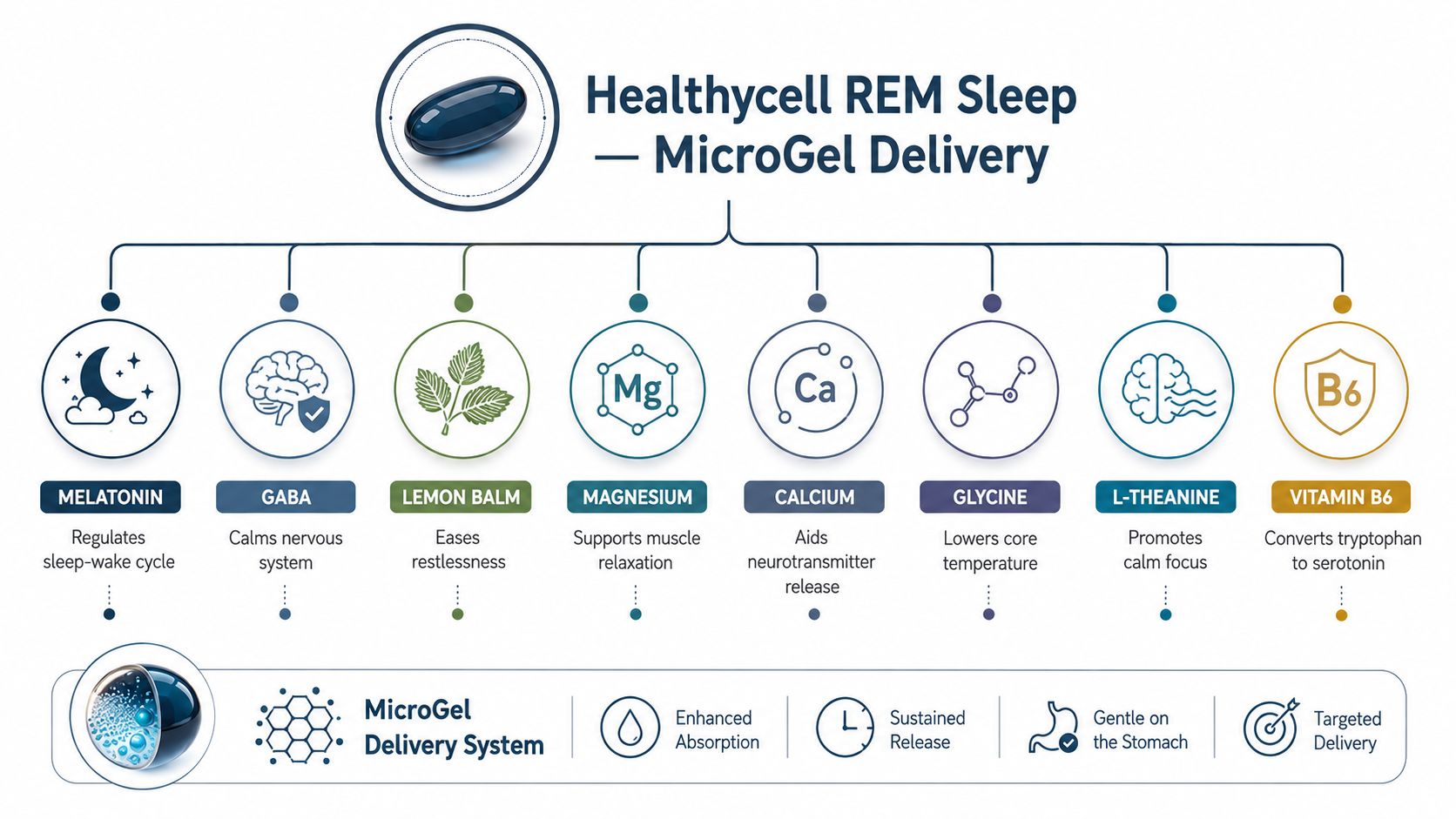
The formula combines melatonin, GABA, lemon balm, magnesium, calcium, glycine, L-theanine, vitamin B6, 5-HTP, and other ingredients intended to support sleep. On paper, that covers several different mechanisms at once, timing, relaxation, neurotransmitter support, and mineral support. In practice, a multi-ingredient sleep formula can make sense only if the ingredients are dosed and timed in a way that doesn't blur the effect.
What each ingredient is trying to do
Melatonin is the clearest timing signal in the mix. It's the ingredient most associated with helping the body recognize that bedtime is approaching, which is why melatonin-based products often feel more like sleep schedulers than sleep restorers.
GABA, L-theanine, glycine, lemon balm, magnesium, calcium, vitamin B6, and 5-HTP are all commonly grouped under relaxation or sleep-support categories. Some are meant to quiet mental chatter, some are meant to support calming neurotransmitter pathways, and some are meant to help the body settle physically. That broad design can be appealing, but it also makes the formula harder to interpret, because you can't tell which ingredient is doing the heavy lifting unless the evidence isolates them.
If you want a contrast, Restore+ Magnesium Sleep Aid takes a different route. It is a melatonin-free wind-down drink built around nitric oxide supporting ingredients, along with magnesium, L-theanine, tart cherry, lemon balm, and glycine. That makes it easier to compare philosophies, one formula tries to push timing with melatonin, the other tries to support relaxation and circulation without hormone intake.
What MicroGel can plausibly change
HealthyCell says its MicroGel format improves nutrient absorption versus traditional pills or gummies. That claim is plausible in a general sense because delivery form can affect how comfortable a supplement is to take and how quickly it disperses. But “better absorption” is not the same as “better sleep,” and without ingredient-specific comparisons, the delivery system remains a product feature, not proof.
The most defensible way to think about MicroGel is simple. It may improve convenience and possibly absorption, but it doesn't remove the need to prove that the formula works in real sleepers.
For readers comparing products, the question is not whether gels are interesting. It's whether the gel format solves a real problem that capsules, powders, or drinks don't already address.
What the SleepScore Labs Study Actually Shows
HealthyCell points to a SleepScore Labs analysis of 822 nights of sleep from 26 healthy research participants. That is a concrete dataset, and it's better than vague testimonial marketing because it gives you a count of nights, not just anecdotes. The reported results were statistically significant versus baseline for time to fall asleep, deep sleep, sleep efficiency, and total time asleep.
The reported changes are meaningful, but they are still product-linked
The consumer-facing outcomes were stronger in perception than in raw physiology. Participants said it was easier to fall asleep by 24%, they could sleep through the night without waking 43% more often, and their overall sleep quality improved by 33% in the company's summary of the analysis. The study also reported an objective increase in deep sleep of +3.2 hours per month if the effect is sustained over repeated nights, which can add up in a way that matters to people who sleep poorly often. The study summary is here: HealthyCell REM Sleep research summary.
The limitation is just as important as the result. This was a product-linked research summary, not an independent randomized clinical trial. That doesn't make the findings useless, but it does mean you should treat them as supportive evidence rather than final proof.
How to read the data like a skeptic
A short checklist helps separate signal from marketing:
- Look at the sample: 26 healthy participants is small, even when the number of nights tracked is larger.
- Look at the outcomes: falling asleep faster and waking less often are practical endpoints, not vanity metrics.
- Look at the source type: a company-linked summary can be informative, but it's not the same as independent replication.
- Look at the accumulated effect: +3.2 hours of deep sleep per month is more useful than a single-night claim because sleep benefits compound over time.
Bottom line: the data are encouraging, but they support a cautious conclusion, not a sweeping one. You can say the product showed measurable improvements. You can't say it solved insomnia for a broad population.
Safety Considerations and Who Should Avoid This Formula
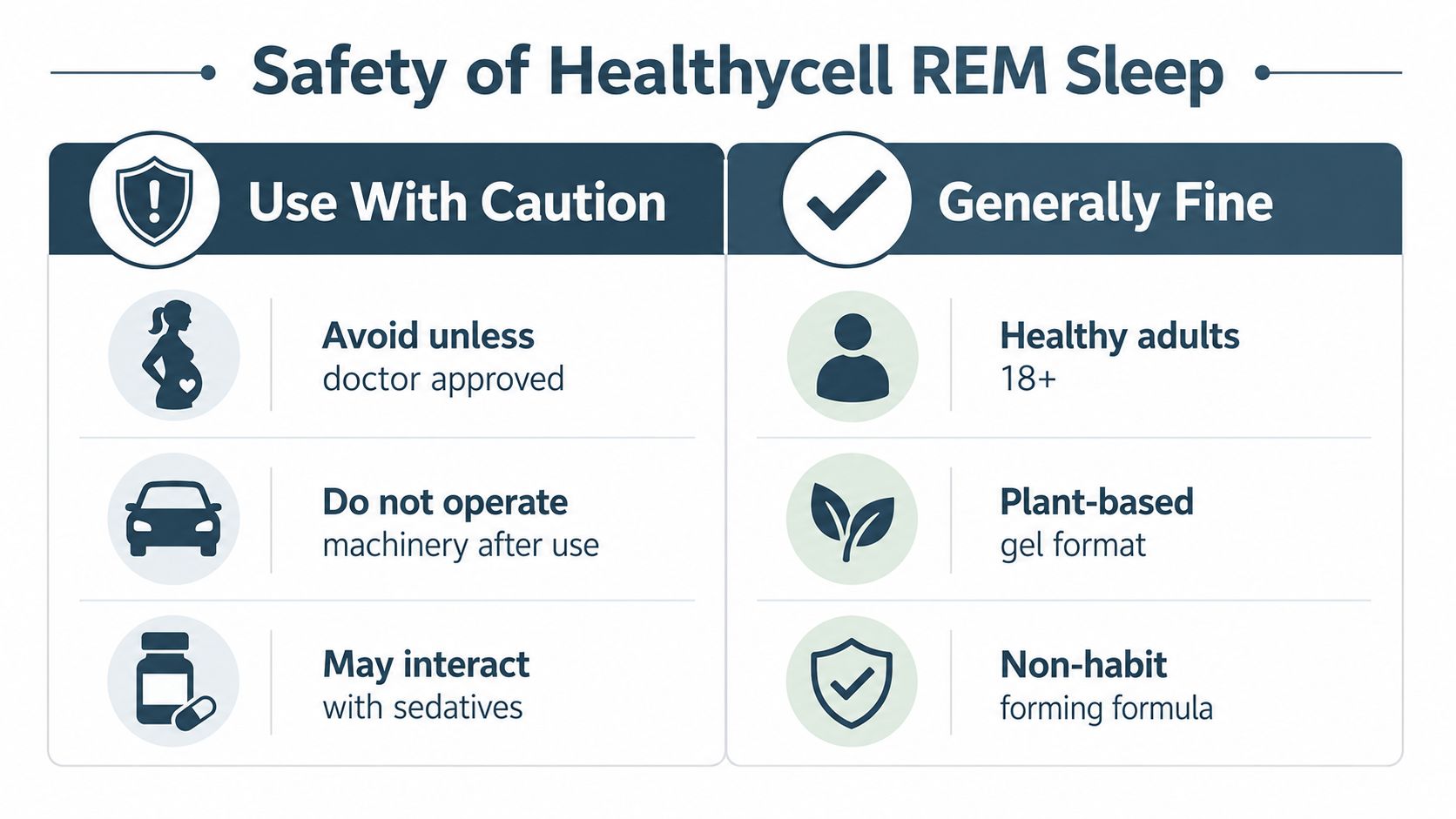
The product is marketed as non-habit-forming and drug-free, but that doesn't make it universally suitable. The ingredient profile includes sleep-active compounds such as melatonin, 5-HTP, GABA, L-theanine, and related botanicals, which means the safety conversation has to include timing, interactions, and morning carryover. HealthyCell's public material centers efficacy far more than it addresses who should stay cautious, and that's a gap buyers should notice.
Who should think twice first
People taking antidepressants should be careful with 5-HTP because it acts in the serotonin pathway. Pregnant individuals should be especially cautious with any multi-ingredient sleep supplement, because a broad formula creates more variables than a single-nutrient product. Shift workers should also think carefully before using a melatonin-containing formula, since timing signals that help one person fall asleep can confuse another person who needs to stay alert at odd hours.
A practical concern is next-day grogginess. Melatonin-containing products can leave some users feeling dulled the next morning, especially if timing is off or sleep duration is short. That trade-off matters more than brand language about being gentle or natural.
If you want a focused overview of that risk profile, this internal resource is useful: Side effects of melatonin supplements.
How to use it more safely if you still try it
- Start with timing discipline: take any sleep formula only when you're preparing for bed.
- Avoid stacking sedatives: don't combine it casually with alcohol or other sleep aids.
- Watch morning function: if you feel foggy after waking, the dose or ingredient mix may not fit your routine.
- Think about your sleep goal: if you need circadian shifting, melatonin may make more sense than if you need nightly recovery support.
The “fine for most adults” message is too blunt. A more accurate reading is that some healthy adults may tolerate it well, but anyone with medication use, pregnancy concerns, or schedule-sensitive sleep should treat it as a product that deserves review, not assumption.
Melatonin-Based Gels Versus Melatonin-Free Alternatives
HealthyCell REM Sleep sits in one camp. It uses a melatonin-based MicroGel and presents the product as a fast-dissolving bedtime support. The other camp is expanding around melatonin-free formulas that focus on relaxation, minerals, and circulation rather than hormone signaling. Those two approaches serve different purposes, even though both are marketed as sleep solutions.
Timing versus recovery support: the core difference
Melatonin works best as a sleep-wake timing signal. That makes it useful when the goal is to tell the body, “sleep now,” especially if the schedule is off. A melatonin-free formula, by contrast, usually tries to help the body settle without adding a hormone layer on top.
That distinction matters for people who want nightly use. The more a product depends on melatonin, the more you have to decide whether it is acting as a temporary cue or becoming part of a longer routine. Melatonin-free options often fit better into routines that already emphasize wind-down behavior, breathing, and sleep environment.
For a deeper look at ingredient strategy, this resource on whole food magnesium benefits Aspen Falls Wellness is a useful complement because it helps frame why magnesium-based approaches are often discussed separately from melatonin-driven ones.
A decision framework that actually helps
Use these criteria instead of asking which product is “stronger”:
| Criterion | Melatonin-Based Gel | Melatonin-Free Alternative |
|---|---|---|
| Primary role | Timing signal | Relaxation and recovery support |
| Best fit | Bedtime cueing | Habit-based wind-down routines |
| Morning feel | Can vary more with timing | Often preferred by people avoiding hormone intake |
| User preference | People okay with melatonin | People who want a non-hormonal approach |
HealthyCell's own positioning focuses on stage support and absorption, while melatonin-free products tend to emphasize consistency and compatibility with nightly routines. That is why the better choice depends less on marketing and more on the sleep problem you are trying to solve.
If you are comparing categories, this internal guide can help narrow the field: Alternatives to melatonin for sleep.
Building an Evidence-Based Wind-Down Routine
Supplements work better when the rest of the evening is doing part of the job. A supplement can't compensate for a bright room, erratic bedtime, or mouth-breathing that leaves you waking dry and unrested. The cleanest routine is the one that reduces stimulation before the supplement ever enters the picture.
A simple 60-minute sequence
Start by dimming lights and reducing screens about an hour before bed. That keeps the environment from fighting your sleep cue, whether you use HealthyCell REM Sleep or a melatonin-free drink. Then shift to low-effort activities, reading, stretching, journaling, or a quiet wash-up routine, so your brain gets the same message your body is getting.
Breathing matters more than most supplement ads admit. Consistent nasal breathing supports steadier airflow at night, and that's where tools like Transparent Nasal Strips can fit naturally, especially if congestion or dry air makes nasal breathing harder. Some people also pair that with mouth tape, not as a gimmick, but as a way to reduce the odds of waking with a dry mouth and fragmented sleep.
Practical rule: if your bedtime routine changes every night, your sleep cue stays weak. Keep the sequence boring on purpose, the body responds to repetition better than novelty.
Where supplements belong in the routine
Take the supplement only after you've already started winding down. That way, the product supports the routine instead of replacing it. The best-case scenario is a stack that feels almost unremarkable, lights lower, screens off, breathing easier, then the supplement, then bed.
The logic here is behavioral, not magical. Sleep improves when you remove friction from the transition into night. Supplements can help, but they work best as one part of a routine that also respects light, breathing, and consistency.
Understanding REM Sleep and Why It Matters for Recovery
REM sleep usually begins about 60 to 90 minutes after falling asleep, most adults spend about 25% of total sleep time in REM, and the first REM period is typically the shortest at about 10 minutes, with later cycles getting longer, according to the Sleep Foundation's REM sleep guide. That pattern is why sleep continuity matters so much. If you wake repeatedly, you interrupt the later cycles that tend to expand as the night goes on.
Why the stage matters more than the label
REM is tied to memory consolidation, mood regulation, and cognitive recovery. That's why people often feel mentally sharper after a night with fewer awakenings, even if they didn't consciously notice dreaming more. The stage isn't a luxury, it's part of how the brain organizes the night.
REM also changes across the lifespan. HealthyCell's framing reflects the broader point that adults typically spend about 25% of sleep in REM, while newborns can spend 50% or more and older adults may drop to about 17% to 20% later in life, as noted in the earlier section. That doesn't mean more REM is always better, it means the balance of stages shifts with age and sleep architecture.
For readers who want a broader primer, sleep restoration explained is a useful companion because it connects stage cycling to restorative sleep without turning it into supplement marketing.
The more useful question is not “How do I force more REM?” It's “How do I protect the sleep window so the body can naturally move through its cycles?” That's where supplements, breathing habits, and light control intersect.
For a practical next step, review how to increase REM sleep naturally, then compare that list against the actual features of any product you're considering. If you want a melatonin-free routine that puts breathing, minerals, and nighttime recovery first, visit SleepHabits and look at the tools and guides built around that approach.