

Most healthy adults need at least 7 hours of sleep per night, but individual needs vary based on age, activity level, breathing quality, and recovery demands. Some adults function best closer to 7–9 hours, while older adults are generally advised to aim for 7–8 hours.
But how much sleep do you need if you exercise hard, wake often, breathe through your mouth, work nights, or lie in bed for hours without feeling restored? Conventional age charts provide a useful starting point, yet they can't tell you whether your sleep is deep enough, whether your breathing is interrupting recovery, or whether your body is carrying a sleep debt.
The practical answer combines two questions: How long are you sleeping, and how well are you recovering while asleep? Use the official minimum as your baseline, then assess daytime alertness, sleep continuity, breathing patterns, circadian timing, and the demands placed on your body. That approach is more useful than chasing a universal number.
Why the Answer Depends on More Than Just Your Age
Age-based guidance matters because sleep need changes across the lifespan. For healthy adults, however, the most reliable starting point is simple: regularly getting fewer than 7 hours is generally too little for optimal health. Expert panels concluded that 6 hours or less is inappropriate for optimal adult health, while 7–9 hours is the range most consistently associated with better outcomes (dose-response evidence review).
That baseline doesn't mean every adult has the same ideal target. Two people of the same age may need different amounts because their bodies face different workloads. A person training intensely may need more recovery opportunity than someone with a sedentary routine. A shift worker may spend enough time in bed but sleep at a biologically inconvenient time. Someone who breathes poorly at night may need more time in bed because frequent arousals reduce restorative sleep.
Hours are only one part of the equation
Think of sleep as charging a phone. Time connected to the charger matters, but a damaged cable or unstable connection prevents a full charge. Time in bed is the connection time. Sleep continuity, breathing quality, nervous system balance, and circadian alignment determine how much charge you receive.
Nasal breathing, for example, supports a quieter and more stable overnight pattern for many people. Mouth breathing can accompany dryness, snoring, and repeated disturbances. Stress can keep the sympathetic nervous system alert when the body should be shifting toward calm. Circadian disruption can make a reasonable bedtime feel unnatural, especially when work schedules change.
Your first step is to establish a realistic baseline. If you're an adult, start by protecting at least 7 hours, then ask whether you wake refreshed and stay alert without depending heavily on stimulants or naps. For professionals managing demanding schedules, this guide to the recommended sleep duration for executives can add useful context around performance and recovery.
A personal target needs personal evidence
Don't adjust your sleep target after one restless night. Keep your wake time reasonably stable, observe your energy and mood, and account for unusually demanding days. If your schedule changes often, learning about circadian rhythm timing can help you distinguish a duration problem from a body-clock problem.
The goal isn't to sleep as long as possible. It's to find the amount that allows your body and brain to recover consistently.
Official Sleep Recommendations by Age Group
Public-health guidance has become more precise over time. Earlier messaging often used a broad 7–8 hour adult target, while later recommendations separated age groups and commonly placed young and middle-aged adults in a 7–9 hour range. The National Sleep Foundation's updated recommendations formalized these adult targets and helped standardize public guidance (PubMed-indexed recommendations).
For adults, the CDC states that people aged 18–60 should get 7 or more hours per night. Adults aged 61–64 are advised to sleep 7–9 hours, while adults aged 65 and older should generally target 7–8 hours (CDC adult sleep guidance).
| Age Group | Recommended Hours | Key Notes |
|---|---|---|
| Adults 18–60 | 7 or more hours | Fewer than 7 hours is classified as insufficient sleep in public-health surveillance. |
| Adults 61–64 | 7–9 hours | The broader adult range remains appropriate for many people in this group. |
| Adults 65 and older | 7–8 hours | Guidance becomes more specific rather than automatically increasing sleep duration. |
Why the 7-hour threshold matters
The 7-hour mark isn't merely a comfort recommendation. The CDC defines insufficient sleep as fewer than 7 hours in a 24-hour period and reported that 35% of U.S. adults had insufficient sleep in 2020 (CDC chronic disease indicator definition). That makes 7 hours a practical population-level benchmark as well as an individual starting point.
Regular short sleep has been associated with worse health outcomes, including obesity, diabetes, hypertension, heart disease, stroke, anxiety, and depression, as summarized in the CDC guidance above. The evidence review supporting adult recommendations also connects chronic short sleep with cardiometabolic and neurobehavioral harm (adult sleep duration review).
The NIH adds useful nuance. Healthy adults given unlimited opportunity to sleep average about 8 to 8.5 hours per night, while 7–8 hours is generally needed to perform adequately, avoid sleep debt, and prevent daytime sleepiness (NIH healthy sleep guide). These figures don't create a new rule for everyone. They show why your personal target may sit above the minimum.
Use the table as a starting range, not a verdict. Your next task is to see how lifestyle, breathing, and recovery demands alter the amount of sleep you can usefully obtain.
How Different Lifestyles Change Your Sleep Needs
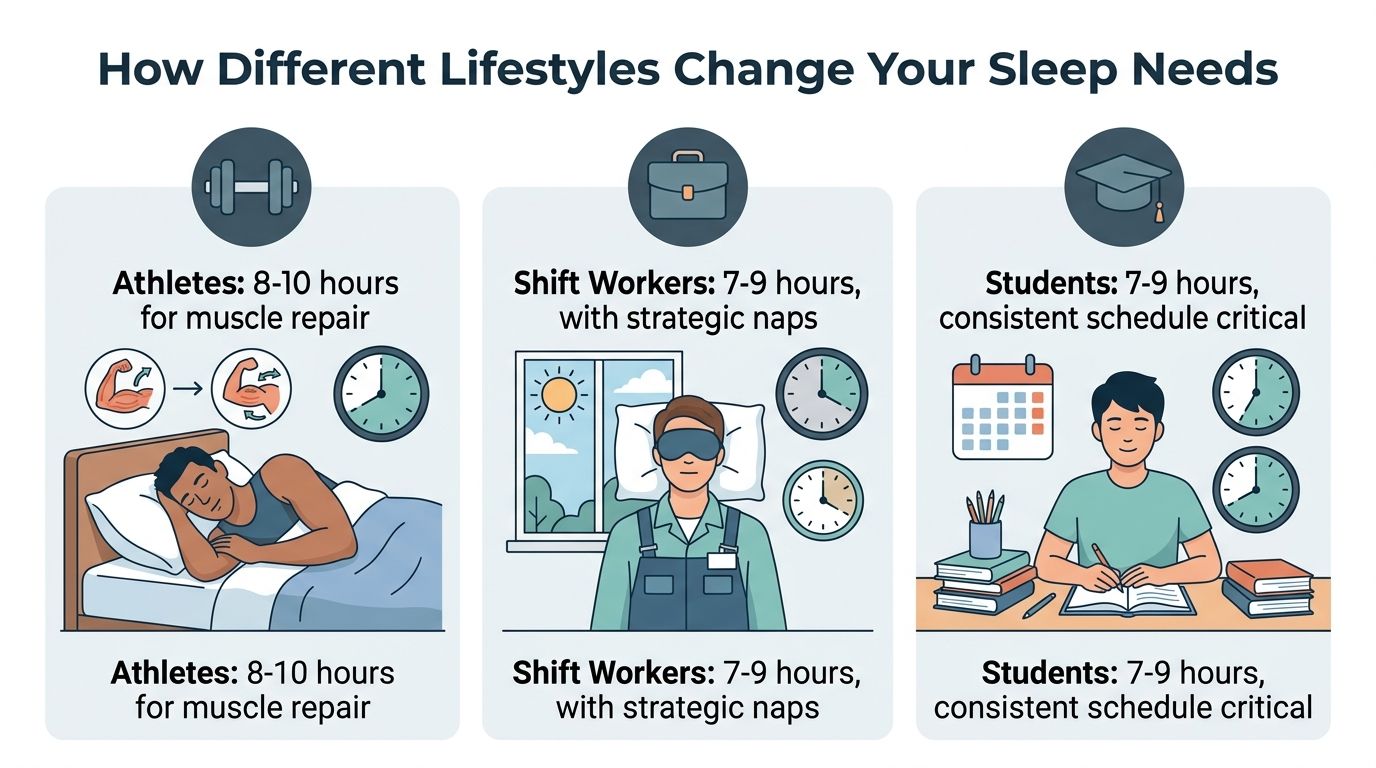
A generic recommendation can fail when the obstacle isn't motivation but physiology. An athlete may need greater recovery opportunity, a night worker may struggle with circadian timing, and a mouth breather may experience fragmented rest despite spending adequate hours in bed. Someone with insomnia may need to calm an overactive nervous system before adding more time under the covers.
Athletes and active adults
Training creates recovery demands that extend beyond muscle soreness. Sleep supports the processes involved in physical repair, learning movement patterns, and regulating energy. If you increase training volume, add intense evening sessions, or combine exercise with demanding work, your usual sleep duration may stop feeling sufficient.
Don't assume that one fixed target works through every training phase. Compare your sleep need during a lighter week with your need after strenuous sessions. If you wake unrefreshed, feel unusually irritable, or notice declining coordination, examine both duration and recovery quality rather than just pushing bedtime later.
Nutrition and hydration also shape how manageable recovery feels. A broader guide to hydration nutrition exercise sleep tips can help you coordinate those habits instead of treating sleep as an isolated behavior.
Shift workers
Shift work challenges the circadian system because your required sleep window may conflict with light exposure, meal timing, and social obligations. The solution isn't always to force one conventional bedtime. Protect a consistent sleep opportunity when possible, make the room dark and quiet, and treat the transition between shifts as a recovery period.
Strategic naps may help some workers manage alertness, but naps shouldn't hide persistent exhaustion or replace an adequate main sleep period. If your schedule rotates, track your wakefulness and sleep quality across shifts rather than judging yourself against someone with daytime hours.
Mouth breathers and people with insomnia
Mouth breathing can create a different problem from insufficient time. Dryness, snoring, and repeated awakenings may leave you tired even when the clock suggests you've slept enough. Address nasal congestion, discuss persistent snoring with a qualified clinician, and don't use mouth tape if you can't breathe comfortably through your nose or have an untreated breathing disorder. Hydrating Mouth Tape is described as supporting quieter nights, oral care, tongue posture, and nasal-breathing practices, but it isn't a substitute for medical evaluation.
Insomnia often involves difficulty settling, repeated awakenings, or worry about sleep itself. Adding more time in bed can increase frustration if the nervous system remains activated. A calm routine, consistent wake time, and professional support can matter more than extending the sleep window indefinitely.
Practical rule: Match your sleep strategy to the barrier. Recovery demand calls for protected sleep opportunity, circadian disruption calls for schedule management, and breathing or insomnia symptoms call for addressing sleep quality.
How to Assess Your Personal Sleep Needs
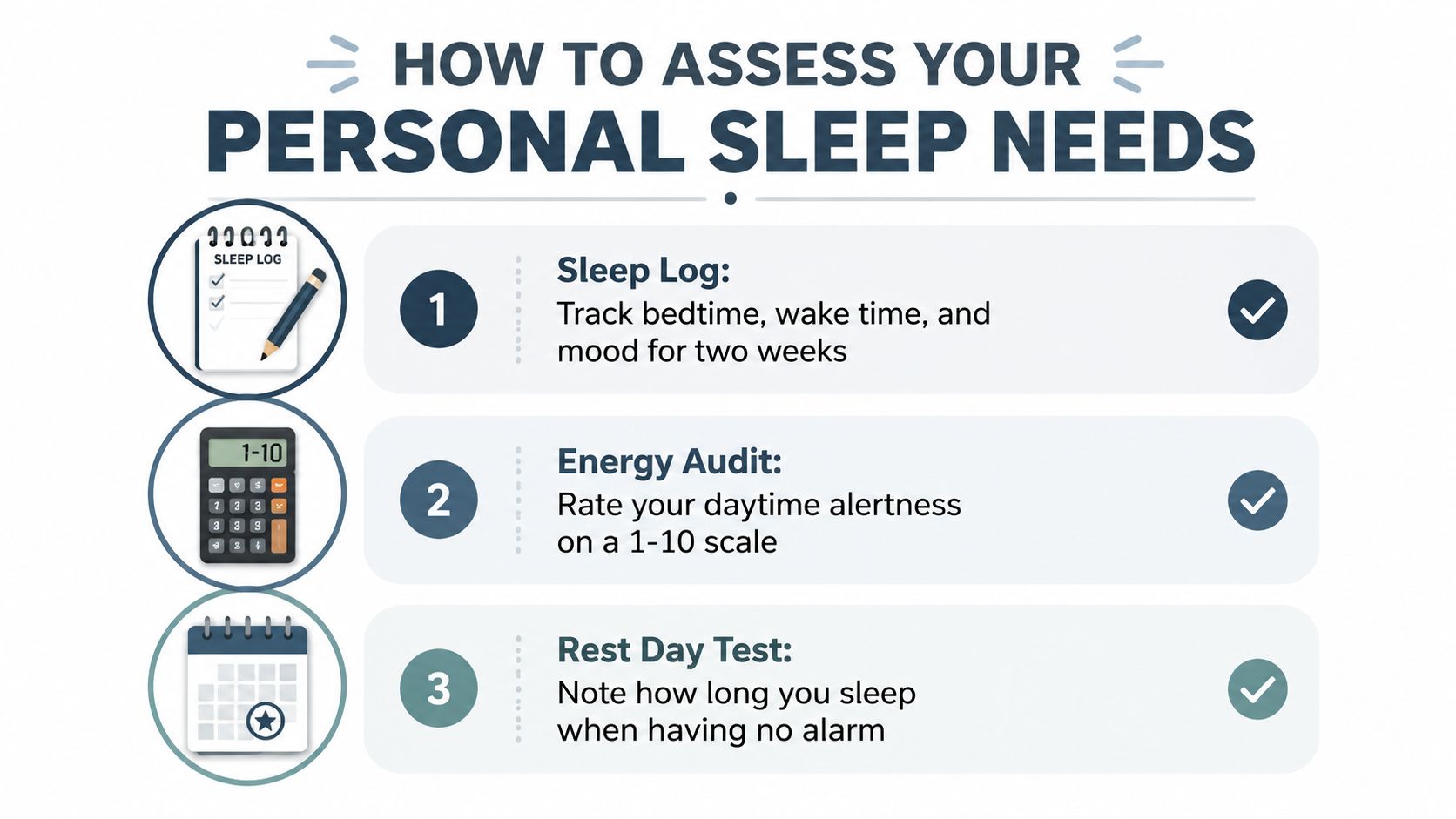
Your body can give you better information than a chart, but you need to collect it systematically. A few nights can be misleading because illness, travel, stress, alcohol, late exercise, or an unusual workload can distort the result.
Start with a sleep log
Keep a simple record for two weeks. Note when you tried to sleep, when you believe you fell asleep, awakenings you remember, final wake time, naps, and how rested you feel. You don't need laboratory precision. Consistent observations reveal whether your schedule is stable and whether your tiredness follows short nights, broken nights, or irregular timing.
Look for patterns rather than perfect averages. If you feel alert after a stable longer sleep opportunity but tired after a shorter one, duration may be the main issue. If both nights leave you tired, breathing, stress, pain, temperature, or another sleep disruptor may deserve attention.
Use wearable data carefully
Wearables can help identify trends in bedtime, wake time, movement, and estimated sleep stages. Treat stage labels as approximations, not medical diagnoses. The useful question is whether the device shows a repeatable pattern alongside your own experience, not whether one night contains a precise amount of deep or REM sleep.
Compare the data with your diary. If the device says you slept well but you remember frequent awakenings and feel impaired, investigate the mismatch instead of blindly trusting the score.
Run a daytime functioning audit
Your sleep target is probably too low if you regularly struggle to stay awake, need repeated caffeine to function, lose concentration, experience mood instability, or react more slowly than usual. Sleep debt often shows itself during quiet tasks, long drives, meetings, or afternoon work rather than during stimulating activities.
A useful personal experiment is to observe sleep when you don't have to set an alarm. A longer sleep period after demanding days may indicate accumulated sleep debt, while persistent long sleep with daytime exhaustion suggests that sleep quality or health concerns need evaluation.
If loud snoring, gasping, witnessed breathing pauses, persistent insomnia, or excessive daytime sleepiness continues, speak with a healthcare professional. Your log can make that conversation more concrete.
The Science of Sleep Quality and Recovery
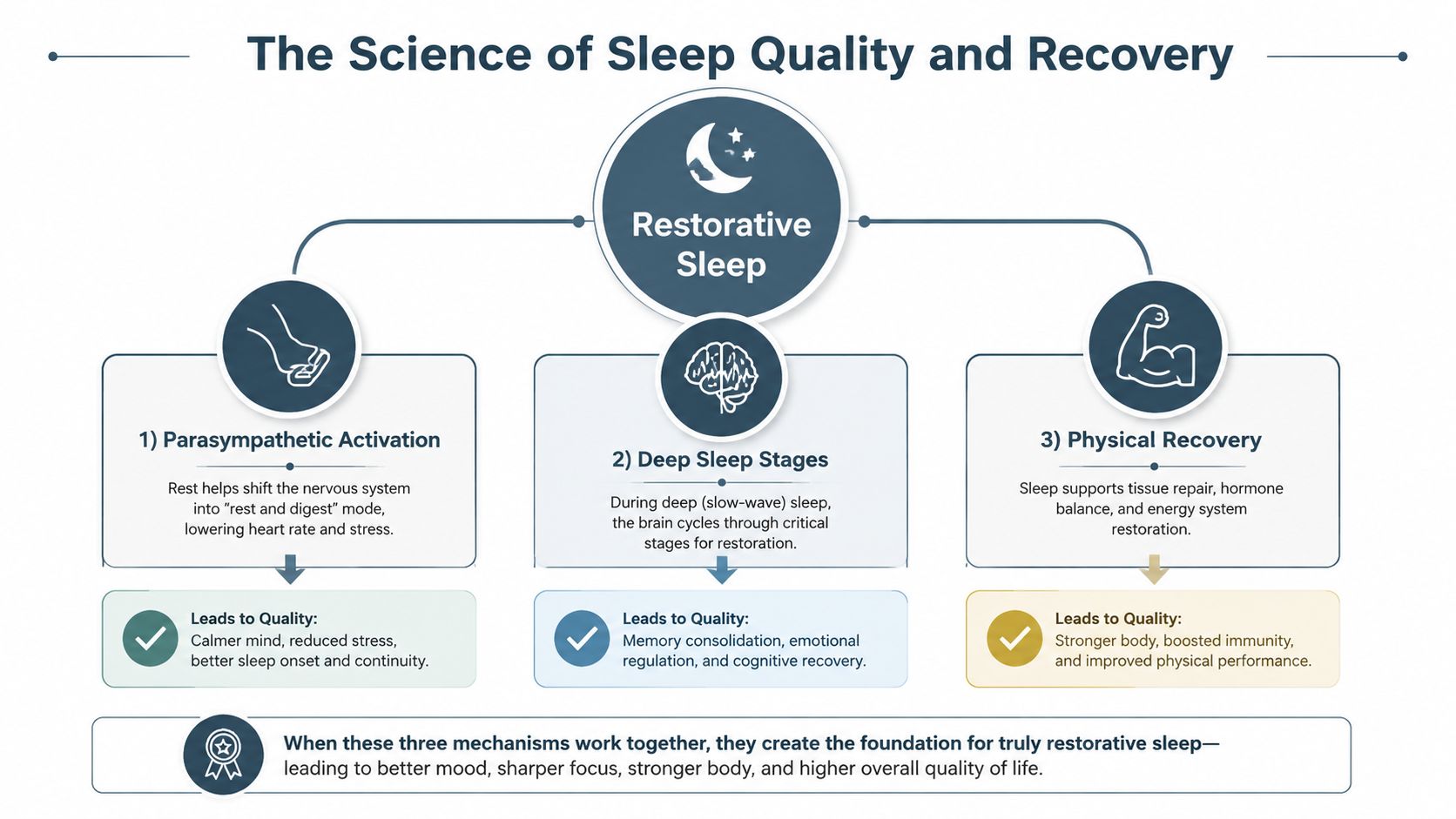
Restorative sleep requires more than unconsciousness. Your body must move through coordinated changes in nervous-system activity, breathing, circulation, temperature, and sleep architecture. If those systems keep receiving signals of threat or instability, time in bed may not translate into a full recovery.
Calm the nervous system
The parasympathetic nervous system helps the body shift toward rest. Slow breathing, reduced stimulation, and a predictable evening sequence can make that transition easier. Stress hormones, intense late-night work, and constant notifications can keep the body in a more vigilant state, even when you're physically tired.
Deep sleep and REM sleep also serve different recovery functions. Sleep architecture is the pattern of stages that unfolds across the night, and disruptions can reduce the restorative value of a seemingly adequate sleep period. A practical introduction to sleep architecture can help you understand why uninterrupted sleep matters.
Support comfortable breathing
Nasal breathing can support nitric oxide production in the nasal passages, which is relevant to airflow and circulation. Mouth breathing doesn't provide that same nasal contribution and may accompany snoring, dryness, or unstable breathing. This doesn't mean every mouth breather can safely use a product to close the lips. Persistent obstruction, loud snoring, or suspected sleep apnea needs clinical assessment first.
Circulation and oxygen delivery are also influenced by posture, airway comfort, congestion, and general health. Focus on removing obstacles, not forcing a breathing pattern that feels unsafe.
Recovery principle: If you wake repeatedly, solve the interruption before assuming you simply need more hours.
Expert panels found that 6 hours or less is inappropriate for optimal health, while 7–9 hours is the range most consistently associated with better adult health outcomes, based on dose-response reviews linking chronic short sleep to higher odds of cardiometabolic and neurobehavioral harm (supporting evidence). The number still matters, but quality determines how much of that time becomes useful recovery.
For people already dealing with accumulated fatigue, practical guidance on how to manage sleep deprivation can support safer short-term decisions while you correct the underlying pattern.
Building Your Melatonin-Free Evening Routine
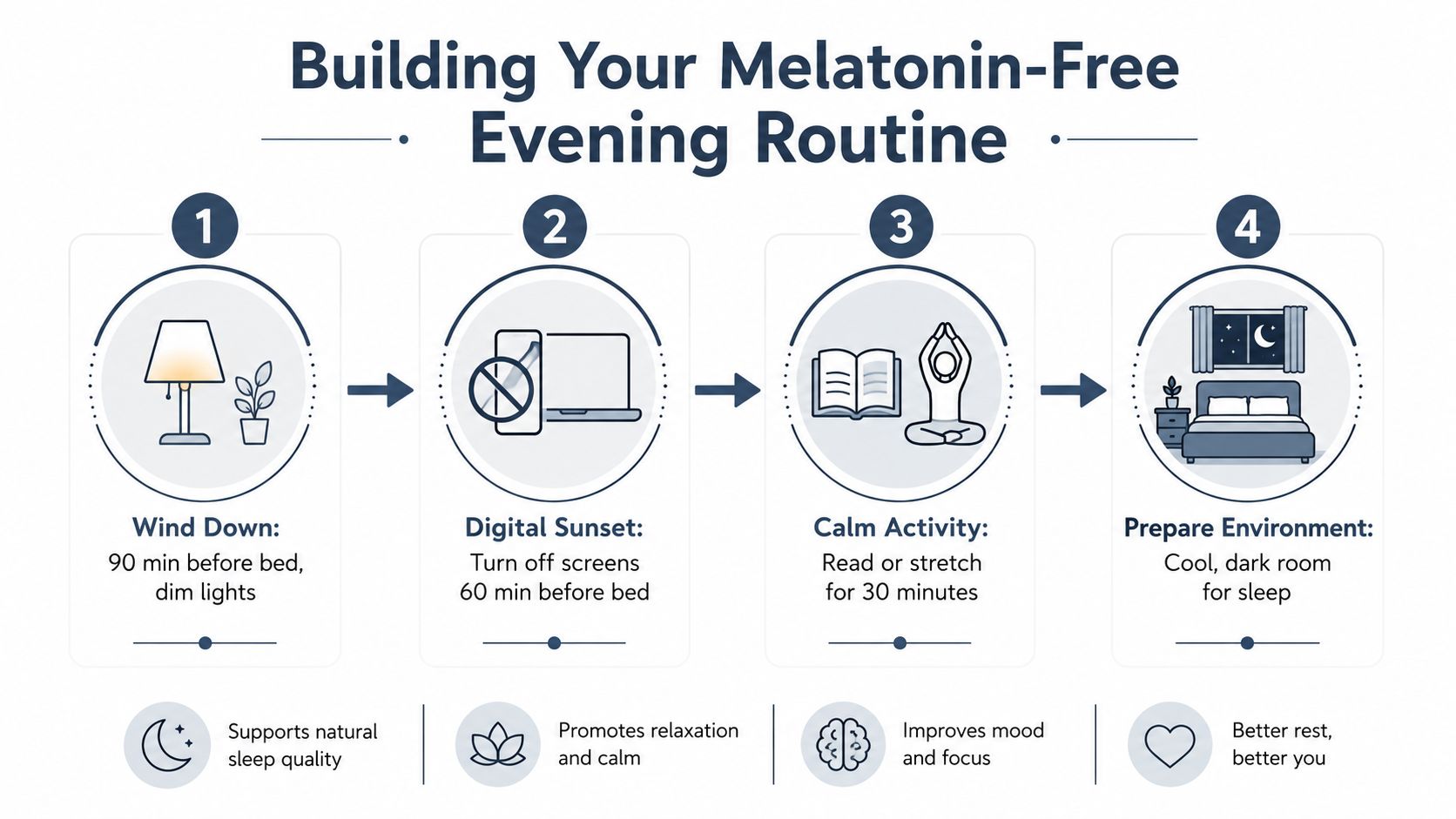
A melatonin-free evening routine builds sleep readiness through repeated signals, allowing the brain and body to shift from alertness toward rest. Use the sequence consistently, then adapt it to your bedtime, shift pattern, breathing comfort, and stress level.
Begin the transition before bed
Start dimming lights and reducing stimulating screen exposure about 90 minutes before bed. Lower light and fewer demanding tasks act like a runway for sleep, giving your brain time to reduce daytime alertness.
About 60 minutes before bed, create a digital sunset. Put the phone out of reach, silence nonessential alerts, and replace scrolling with a low-stimulation activity. If work keeps intruding, write down tomorrow's tasks. The written list gives your mind somewhere to store unfinished plans instead of rehearsing them in bed.
Use the final 30 minutes for reading, gentle stretching, journaling, or slow breathing. Inhale comfortably through the nose if possible, then let the exhale remain unhurried. Stop any technique that causes dizziness or discomfort.
Make the bedroom support the goal
Keep the room cool, dark, and quiet. Prepare clothing, water, and anything else you need before getting into bed, so small decisions do not restart mental activity. Nasal strips may help some people feel more open through the nose, but they cannot treat a blocked airway or sleep disorder.
For more ideas, see this melatonin-free sleep aid guide. Supplements can be part of a routine, but a stable schedule and enough time in bed remain the foundation. Persistent snoring, breathing interruptions, or severe insomnia call for professional evaluation.
Restore+ Magnesium Sleep Aid is described as a melatonin-free magnesium wind-down drink containing magnesium, L-theanine, tart cherry, lemon balm, glycine, and nitric oxide-supporting ingredients. Treat it as an optional addition to habit-based care. Check ingredient suitability with a healthcare professional if you have medical conditions, take medication, or are pregnant.
Repetition gives the routine its effect. Like dimming a room before turning off the lights, consistent cues help your body recognize that sleep is approaching.
Common Sleep Myths That Keep You Tired
Myth one, you can train yourself to need very little sleep. You may adapt to the feeling of tiredness, but adaptation isn't proof that your attention, reaction time, mood, or health are unaffected. The evidence-based adult threshold remains at least 7 hours, and 6 hours or less isn't considered appropriate for optimal health (expert panel review).
Myth two, more than 9 hours is always better. The adult evidence supports a 7–9 hour range, while the evidence is insufficient to judge 9 or more hours as clearly beneficial or harmful for every adult (American Academy of Sleep Medicine and Sleep Research Society review). Persistent long sleep with exhaustion deserves attention rather than automatic praise.
Myth three, tiredness always means you need more hours. Sometimes you do need more sleep. Sometimes breathing interruptions, circadian disruption, stress, pain, or insomnia are reducing sleep quality. Track the pattern before changing the target.
Myth four, a supplement fixes the root cause. A melatonin-free routine can remove stimulation and support relaxation, but no drink or technique can diagnose sleep apnea, resolve severe insomnia, or replace medical care.
Start tonight by choosing a protected sleep window of at least 7 hours, recording your bedtime and wake time, and noting how alert you feel the next day. Explore SleepHabits for educational sleep resources and melatonin-free tools focused on nighttime breathing, calmer wind-down routines, and restorative recovery.