

852,325,091 adults worldwide, about 16.2% of the adult population, had clinically relevant insomnia in a 2025 systematic review, and 414,967,941 people, or 7.9%, had severe insomnia. The practical answer to how to fix restless sleep is to identify whether your problem is broken-up sleep, breathing disruption, or conditioned wakefulness, then start with behavioral treatment before adding supplements.
The popular advice gets this backward. Restless sleep usually isn't a simple melatonin deficiency that a pill can solve. It's often a fragmentation problem: you wake repeatedly, shift into lighter sleep, breathe through your mouth, respond to stress, or lie awake long enough for your brain to associate the bed with frustration.
That distinction matters. Trouble falling asleep is a sleep-onset problem. Falling asleep easily but waking at 2 a.m. is a sleep-maintenance problem. Sleeping for what looks like a full night but waking exhausted points toward non-restorative or fragmented sleep, including possible breathing-related disruption.
The plan below is deliberately tiered. First, audit the pattern. Then reset the bed with CBT-I fundamentals, build a wind-down routine that supports quiet nasal breathing, consider melatonin-free support, and escalate to a clinician when the signs point beyond self-management.
Why Restless Sleep Is Not a Melatonin Problem
Melatonin is the default answer because it sounds simple. You are awake, so you must need more of the hormone that signals nighttime. That explanation fails when you fall asleep normally but wake repeatedly, or sleep for hours and still feel unrefreshed.
A 2025 systematic review estimated that 852,325,091 adults worldwide had clinically relevant insomnia, about 16.2% of adults, while 414,967,941 people, or 7.9%, had severe insomnia (systematic review data on insomnia prevalence). Historical reviews place insomnia disorder at roughly 10% of adults, with another 20% experiencing occasional symptoms. Broken sleep is common, not a personal failure.
CDC data from 2020 found that 14.5% of adults had trouble falling asleep most days or every day, while 17.8% had trouble staying asleep (CDC sleep duration and sleep health information). The second pattern deserves separate attention. Staying asleep requires a different strategy from falling asleep.
Identify your version of restless sleep
Use these distinctions:
- Sleep onset: You lie awake at bedtime with racing thoughts, tension, or clock-watching.
- Sleep maintenance: You fall asleep, then wake repeatedly or stay awake during the night.
- Non-restorative sleep: You spend enough time in bed but wake foggy, dry-mouthed, headachy, or aware of snoring and gasping.
- Movement-related restlessness: Your legs feel uncomfortable, or you kick and shift throughout the night.
Stress can keep the nervous system alert. Nasal congestion, mouth breathing, snoring, and airway resistance can trigger repeated arousals. You may not remember every interruption, yet fragmented sleep can still leave you depleted.
Practical rule: Treat maintenance or breathing problems as different from a bedtime problem.
Loading up on melatonin, buying another mattress, or chasing a trending sleep formula often wastes effort. If breathing repeatedly destabilizes the night, or your nervous system stays alert after each awakening, more melatonin does not address the mechanism. Review the side effects of melatonin supplements before making it your automatic first move.
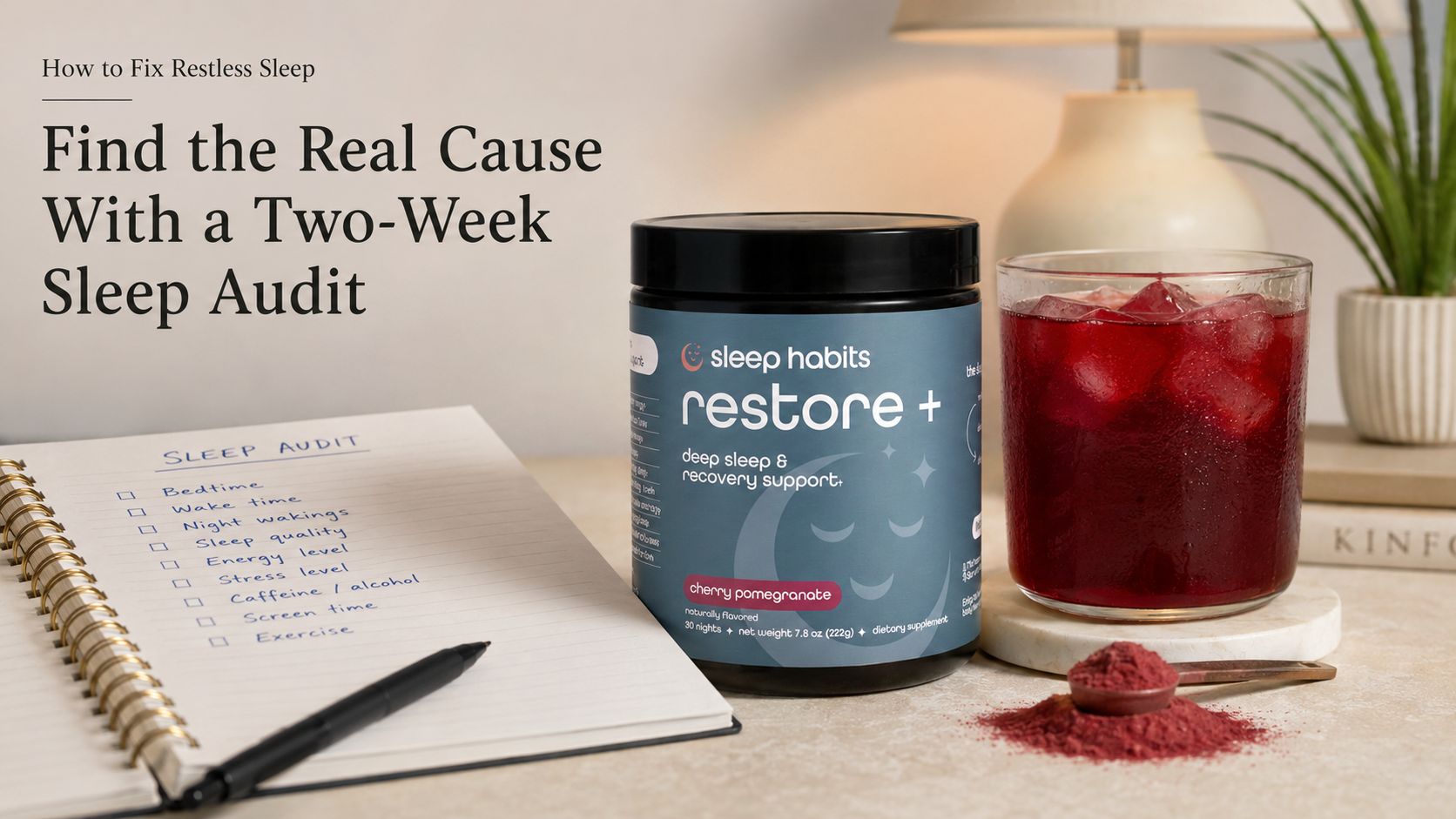
Find the Real Cause With a Two-Week Sleep Audit
Your tired brain is a poor historian at 3 a.m. It remembers the frustration, not the pattern. A two-week sleep diary gives you something more useful than a vague feeling that sleep was bad.
Record the basics each morning, using a notes app, paper, or a simple tracker:
- Bedtime and wake time: Include the time you got into bed and the time you got up.
- Sleep latency: Estimate how long it took to fall asleep.
- Awakenings: Note how many you remember and whether you woke around the same time.
- Total sleep: Estimate actual sleep rather than time spent in bed.
- Morning refresh: Give the morning a 1 to 5 refresh score.
- Inputs: Record caffeine cutoff, alcohol, late meals, screens, medication timing, and unusual stress spikes.
- Breathing clues: Note dry mouth, snoring reports, gasping, congestion, or a partner's disturbance.
A pattern of long sleep latency plus racing thoughts points toward an onset and hyperarousal problem. Repeated awakenings after an otherwise easy bedtime point toward maintenance insomnia, stress, reflux, pain, temperature, bathroom trips, or environmental disruption. A full-looking night followed by exhaustion, headache, dry mouth, or partner-reported snoring deserves a breathing and fragmentation check rather than another bedtime product.
You can also use the diary to separate a sleep concern from an unrelated nighttime routine issue. For example, people who are unsure how oral health, congestion, or mouth breathing may be affecting their nights can use find the right cleaning with Gregory DDS as a practical dental-care resource while they review their habits.
If you want a melatonin-free evening option during the audit, Restore+ Magnesium Sleep Aid is described as a magnesium wind-down drink with L-theanine, tart cherry, lemon balm, and glycine. Keep it separate from other changes so you can tell whether the routine, schedule, or supplement is doing anything.
At the end of two weeks, write one sentence: “My main issue is falling asleep, staying asleep, or waking unrefreshed.” That diagnosis is more valuable than a shelf full of sleep aids.
Reset the Bed With CBT-I Fundamentals
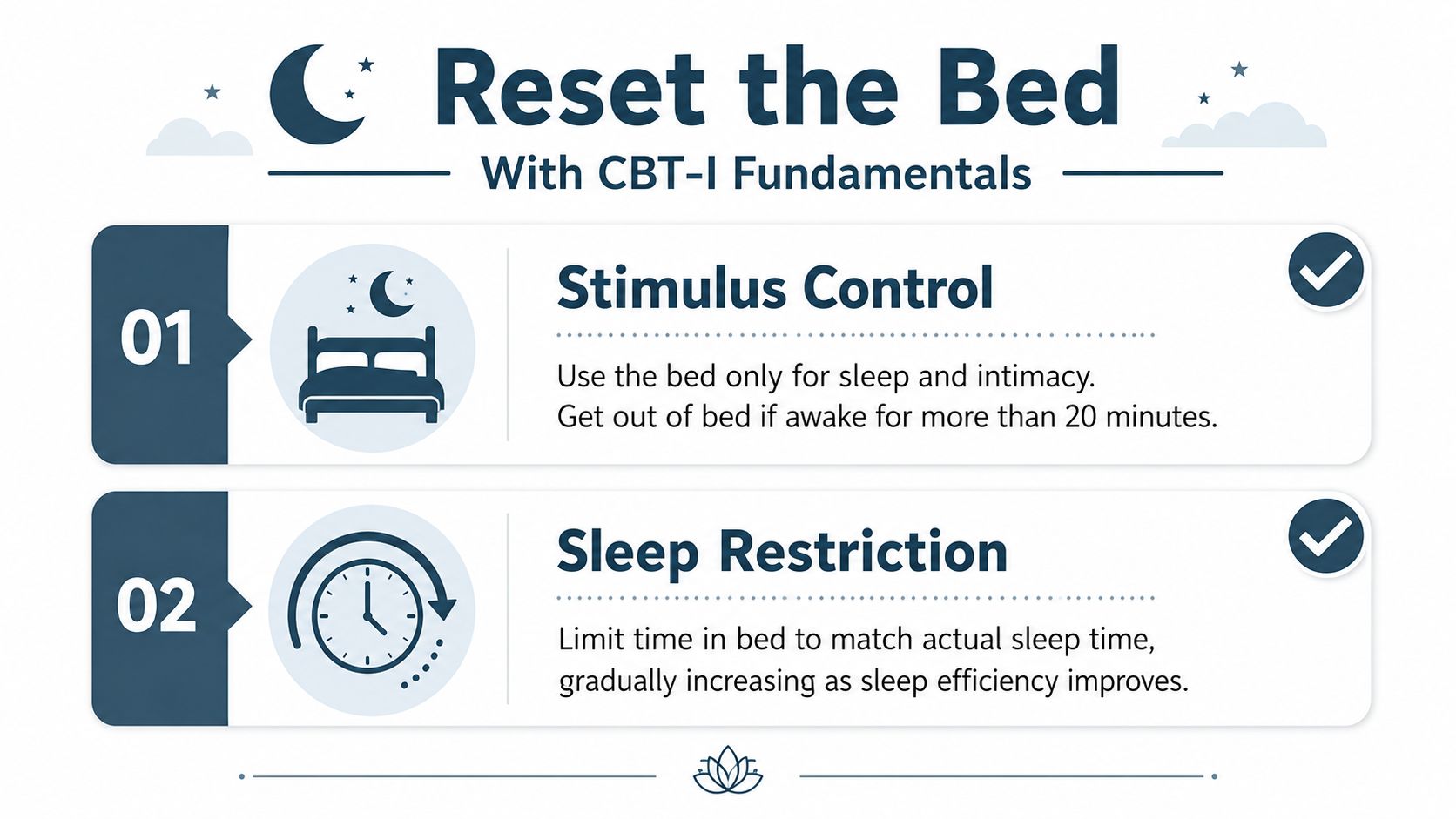
If chronic insomnia is driving the restlessness, CBT-I is the first treatment I'd prioritize. It typically runs across 6 to 8 weekly sessions and combines stimulus control, sleep restriction, and cognitive restructuring. Across studies, about 70% to 80% of completers show a therapeutic response, and roughly 40% reach clinical remission (CBT-I overview and outcomes).
You can start with the two parts that change the bed's role most directly.
Use stimulus control tonight
Go to bed only when you're sleepy, not merely because the clock says it's bedtime. Reserve the bed for sleep and sex. If you're awake for roughly 15 to 20 minutes, get up, keep the lights dim, and do something quiet and boring somewhere else.
Return only when sleepiness comes back. Repeat the process after nighttime awakenings, and keep your wake-up time fixed every day, including weekends. The point isn't to punish yourself. It's to stop reinforcing the link between bed, alertness, and worry.
Match time in bed to actual sleep
Use your diary to calculate average sleep time over about two weeks. A clinical guide recommends setting the initial sleep window at average sleep time plus 30 minutes, with a minimum of 5 to 6 hours, then adjusting in 30-minute steps according to the weekly response (clinical sleep restriction guide).
Sleep efficiency is the key calculation:
Sleep efficiency = total sleep time ÷ time in bed × 100
A review describes a target around 85%. Weekly efficiency above 90% can support adding 15 to 20 minutes to time in bed, while efficiency below 80% can support reducing the window by 15 to 20 minutes (sleep efficiency review).
| Weekly sleep efficiency | What it means | Adjustment to time in bed |
|---|---|---|
| Below 80% | Too much time is being spent awake in bed | Consider reducing the window by 15 to 20 minutes |
| Around 85% | The schedule is near the target range | Hold steady and watch the next week |
| Above 90% | Sleep is becoming more consolidated | Consider adding 15 to 20 minutes |
Early sleep restriction can feel worse before it feels better. One analysis found that only 45% had returned to at least baseline total sleep time by the end of acute treatment, and 17% had gained 30 minutes at that point. By 24 months, those figures rose to 86% and 58%, respectively (long-term CBT-I sleep-time analysis). Don't abandon the method because the first nights feel tight.
Keep the schedule safe. Don't drive when dangerously sleepy, and get professional guidance if you have conditions that make sleep restriction inappropriate. If bedding is part of your comfort experiment, you can compare bamboo sheets, but don't mistake softer fabric for treatment of insomnia.
Build a Wind-Down Hour That Actually Works
A wind-down routine fails when it's a list of ideals you'll never repeat. Make it a sequence that closes the day without demanding much thought.
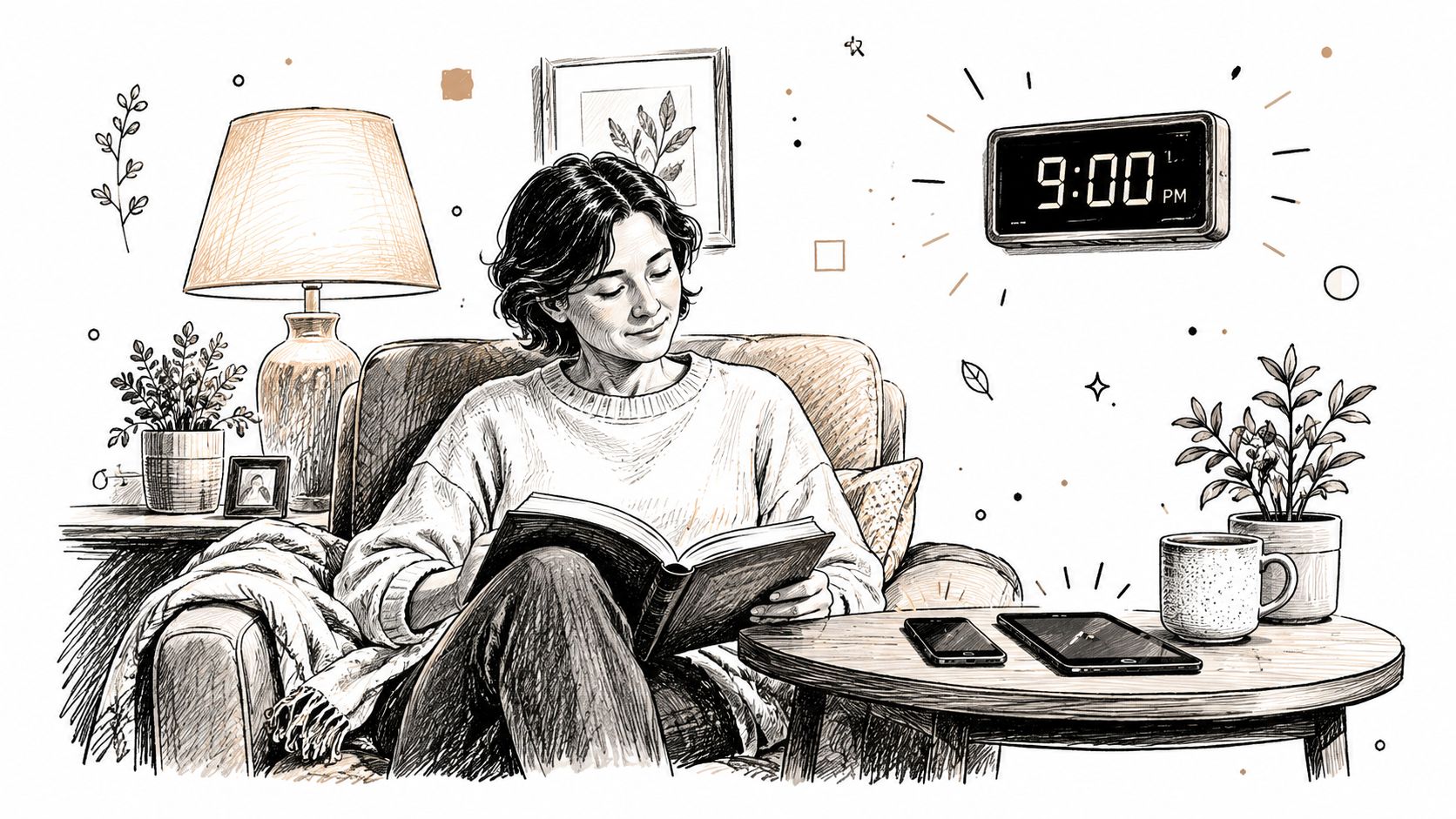
Take a typical adult evening. One hour before bed, dim the main lights and put the phone somewhere inconvenient. Spend the first part writing down unfinished tasks and tomorrow's first action. Then choose one quiet activity, such as reading a paperback, taking a warm shower, or doing gentle stretching.
The breathing piece deserves more attention than it gets. During sleep, upper-airway resistance is significantly lower with nasal breathing than oral breathing, and one PubMed study reported an 83.7% mean reduction in nasal flow signals when participants changed from nasal to oral breathing (nasal and oral breathing research). If congestion, dry air, or a habit of mouth breathing is part of your audit, preserving nasal breathing is a reasonable target.
A repeatable hour
- 60 minutes before bed: Dim lights, end work, and stop stimulating conversations.
- 45 minutes before bed: Shower, prepare clothing for morning, or tidy only what needs attention.
- 30 minutes before bed: Read, journal, or use slow, quiet breathing. Keep the phone out of reach.
- At bedtime: Go to bed only when sleepy, as stimulus control requires.
- If you wake: Don't start scrolling. Leave the bed if wakefulness persists, then return when sleepy.
Nasal strips can be useful when congestion or narrow nasal airflow is part of the pattern. Transparent Nasal Strips are described as supporting easier nighttime airflow, reduced congestion, nasal breathing habits, and nitric oxide production through consistent nose breathing. Mouth tape should never be used when nasal breathing is impaired or when a breathing disorder is suspected.
For racing thoughts, use a notebook rather than trying to solve tomorrow in the dark. The practical guidance in stop overthinking for better sleep can complement that mental offload, while this nighttime routine for better sleep gives you another routine framework to adapt.
Layer in Melatonin-Free Sleep Support
Supplements come after the schedule, not before it. If you're still spending long periods awake in bed, adding four ingredients at once makes the result impossible to interpret. If your routine is stable, a focused melatonin-free option can support the wind-down without pretending to repair sleep apnea, reflux, anxiety, or chronic insomnia.
Match the ingredient to the problem
Magnesium glycinate is the sensible choice when the goal is a gentle evening routine, muscle relaxation, and a calmer transition into rest. Check the label for the amount of elemental magnesium, not just the total weight of the compound, and follow the product directions. People with kidney disease or medication concerns should ask a clinician or pharmacist first.
L-theanine fits a “tired but wired” pattern. It's commonly used to take the edge off mental activation rather than act as a sedative. Avoid stacking multiple calming products without checking for overlapping ingredients or unwanted next-day effects.
Glycine is often included in sleep formulas aimed at relaxation and overnight recovery. It pairs naturally with a consistent wind-down because it gives the routine a repeatable endpoint, but it won't compensate for an irregular wake time.
Tart cherry provides a food-based polyphenol component in some nighttime formulas. Treat it as supportive, not curative, and remember that a branded blend can contain several ingredients that are redundant with products already in your cabinet.
Read the label before you build a stack. One coherent formula is easier to evaluate than several overlapping powders, capsules, and gummies.
A combined drink such as SleepHabits Restore+ can be convenient because its snapshot describes magnesium, L-theanine, tart cherry, lemon balm, and glycine in a melatonin-free evening formula. It's designed to support a wind-down routine, healthy circulation, and oxygen delivery, but those product descriptions aren't a substitute for diagnosing fragmented breathing.
For a broader look at non-melatonin approaches, use these alternatives to melatonin for sleep. Keep the experiment simple: introduce one product, use it consistently according to its label, and track latency, awakenings, refreshment, and any next-day effects.
Track, Tweak, and Stop Guessing
Sleep improvement gets messy when you change the bedtime, caffeine, supplements, room temperature, bedding, and breathing tools all at once. You won't know what helped, and one bad night can convince you that the entire plan failed.
Score your morning refresh from 1 to 5, record awakenings and estimated sleep time, then review the week on Friday. Look for direction rather than perfection:
- Latency improves: Your onset routine and stimulus control may be working.
- Awakenings fall: The schedule, stress routine, environment, or breathing intervention may be reducing fragmentation.
- Refreshment stays low: Investigate breathing, movement, pain, reflux, medication effects, or another medical cause.
- Sleep time falls while efficiency rises: Don't panic immediately. Consolidation can improve before total sleep time catches up.
If you own a wearable, use it as a trend tool, not a diagnosis. Compare its patterns with your diary and how you function during the day. A device can't reliably explain every brief arousal, and a sleep score shouldn't overrule loud snoring, gasping, or severe daytime sleepiness.
Make only one adjustment after each two-week review. For example, hold the wake time and wind-down steady while changing the sleep window, or hold the schedule steady while adding a nasal breathing aid. That approach protects the experiment from becoming another source of bedtime anxiety.
The target isn't a perfect graph. It's a night that feels less interrupted and a morning that feels more usable.
When to Stop Tweaking and See a Clinician
Self-management has a boundary. If your sleep stays restless despite consistent effort, stop adding products and look for a clinical explanation.
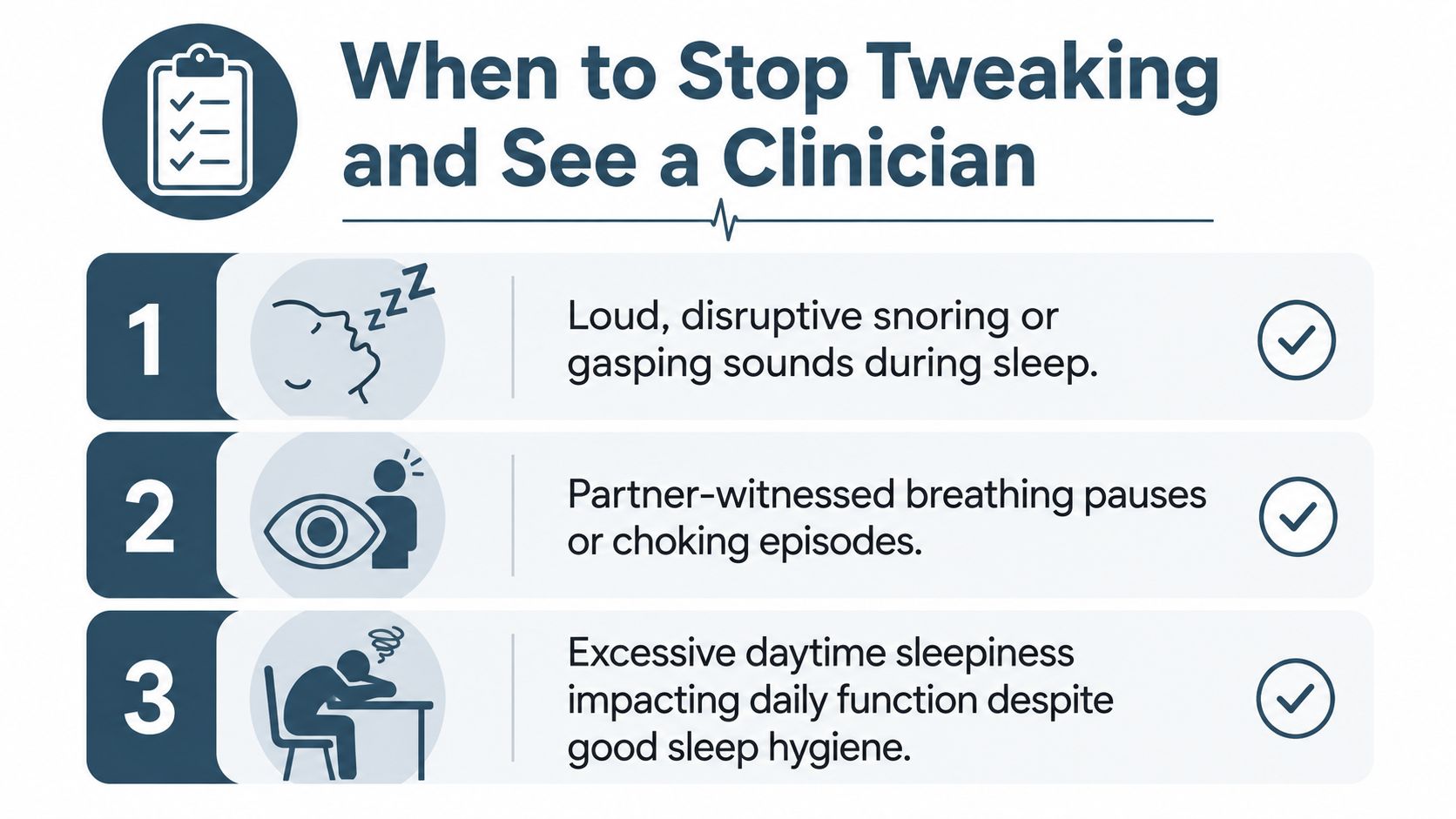
Book an appointment with primary care or a sleep specialist if you have loud snoring, gasping, choking, or partner-witnessed breathing pauses. A home sleep study may be appropriate, depending on your history. Waking with headaches, dry mouth, or an unrefreshed feeling despite enough time in bed also points toward a breathing and fragmentation evaluation.
Restless legs deserve their own hand-off. An urge to move, crawling or buzzing sensations, or leg movements that repeatedly drive you out of sleep should prompt a clinician discussion. Ask whether ferritin and TSH testing makes sense, and bring a complete list of medications and supplements.
Match the symptom to the appointment
- Breathing symptoms: Start with primary care or a sleep specialist. Ask whether a sleep study is appropriate.
- Nasal obstruction or persistent congestion: Ask primary care about an ENT referral. Don't seal the mouth if you can't breathe comfortably through the nose.
- Leg discomfort or kicking: Ask primary care about restless legs evaluation and relevant laboratory testing.
- Perimenopause or menopause disruption: Consider a women's health clinician who can address night sweats, hormonal changes, and sleep together.
- Shift work or medication timing: Bring your work schedule and medication list. Don't stop prescriptions abruptly. Ask whether timing or alternatives should be reviewed.
- Persistent insomnia: Ask for a CBT-I referral or a structured digital or clinical CBT-I program.
Insomnia that has continued for longer than three months despite consistent effort is no longer a small routine problem. Take your two-week diary, symptom timeline, snoring observations, medication list, caffeine and alcohol timing, and questions about home sleep testing or CBT-I.
Escalating isn't failure. It's the correct response when fragmented breathing, restless legs, hormonal changes, medication effects, or persistent insomnia needs treatment beyond habit changes.
SleepHabits offers melatonin-free sleep support built around evening wind-down, magnesium, and nasal breathing tools, including Restore+ and nasal strips, alongside practical sleep education. Visit SleepHabits to choose one focused routine, track your nights, and build from evidence instead of adding another random supplement.