

Mouth taping is a newer practice with a small evidence base, and the clearest trial found a 47% reduction in apnea-hypopnea index, from 8.3 to 4.7 events per hour, in just 20 adults with mild obstructive sleep apnea. It may be a cautious adjunct for selected mild snoring or habitual mouth-breathing cases, but it isn't a proven cure for poor sleep and isn't safe for everyone.
You may be considering it after waking with a dry mouth, irritated throat, noisy breathing, or the heavy fatigue that follows a restless night. Social media often presents a small strip of tape as an effortless sleep upgrade. The practical reality is narrower: the method encourages nasal breathing, and the main question isn't whether tape sticks well. It's whether your nose can carry your breathing comfortably all night.
What Mouth Taping Actually Does for Sleep
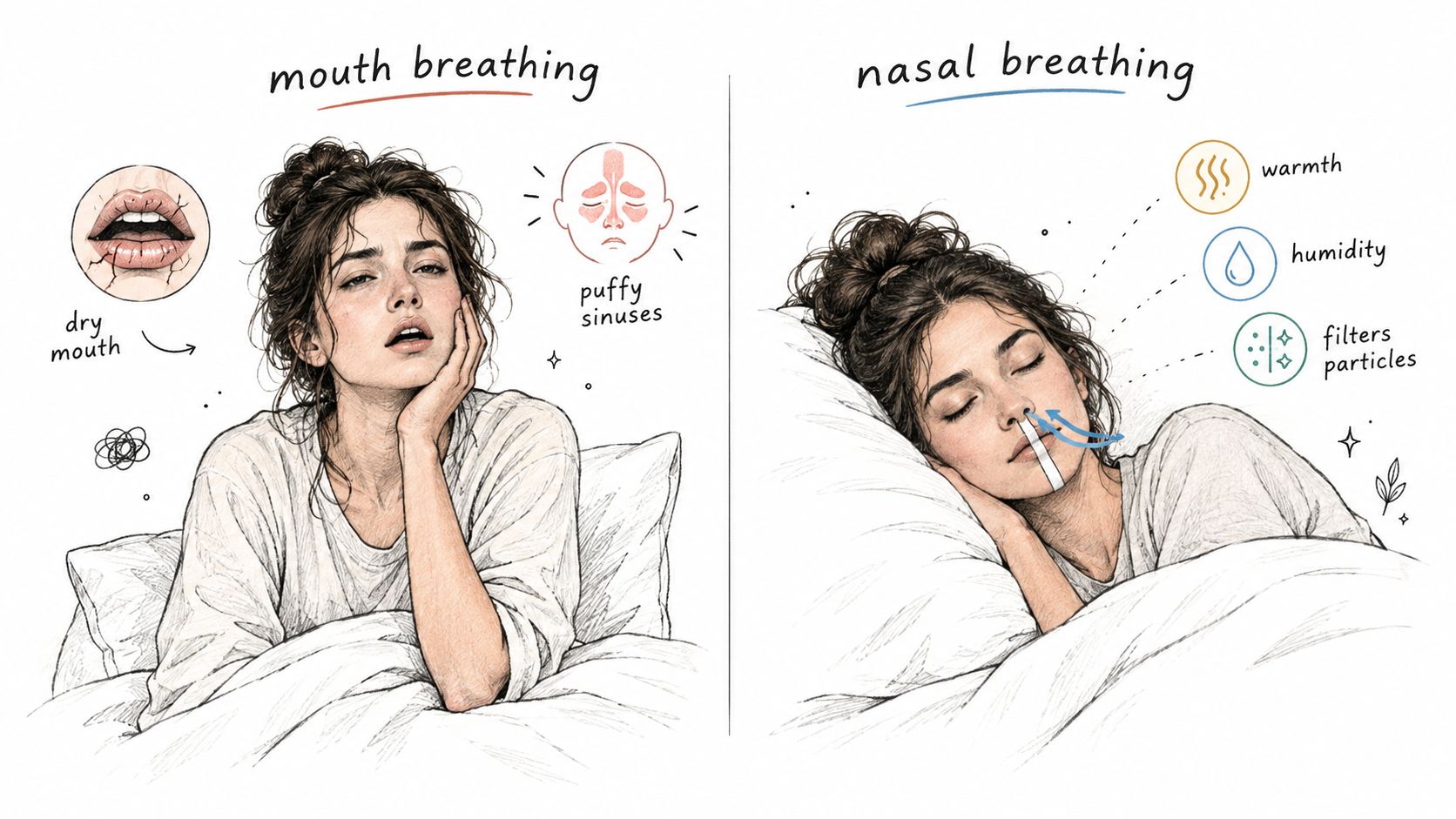
A person who sleeps with an open mouth may wake with dry lips, a parched tongue, swollen-feeling nasal passages, and the sense that sleep never became restorative. Mouth breathing can let air bypass the nose, which normally warms, humidifies, and filters incoming air. Nasal breathing may also support nitric-oxide-related airway function, but those physiological advantages don't turn mouth tape into a universal treatment.
Mouth tape acts mainly as a behavioral cue. A small strip over the lips can discourage automatic mouth opening and make nasal breathing more likely when the nasal airway is already clear. That distinction matters. Tape doesn't remove swollen tissue, correct a deviated septum, treat allergies, or resolve airway collapse.
What the small trial found
The most frequently cited clinical evidence comes from a 2022 study of 20 adults with mild obstructive sleep apnea and habitual mouth breathing. After one night of mouth taping, median AHI fell from 8.3 to 4.7 events per hour, a 47% decrease, and 65% of participants were classified as responders. The median snoring index also fell by 47%, from 303.8 to 121.1 events per hour. These figures come from the PubMed clinical study.
That result is interesting, but it isn't broad proof. The sample was very small, the intervention lasted one night, and mean oxygen saturation didn't significantly change in the clinical dataset detailed by the full study report. A later review also noted that the effect was concentrated in mild OSA, which supports treating mouth taping as a niche adjunct, not a general sleep fix.
If snoring is your main concern, consider the wider sleep environment too. Mattress support and sleeping position can affect comfort, so these snoring solutions from Suburban Furniture may be useful alongside medical evaluation. You can also review the practical case for nasal breathing, especially if you regularly wake with oral dryness.
Choosing the Right Tape and Preparing Your Skin
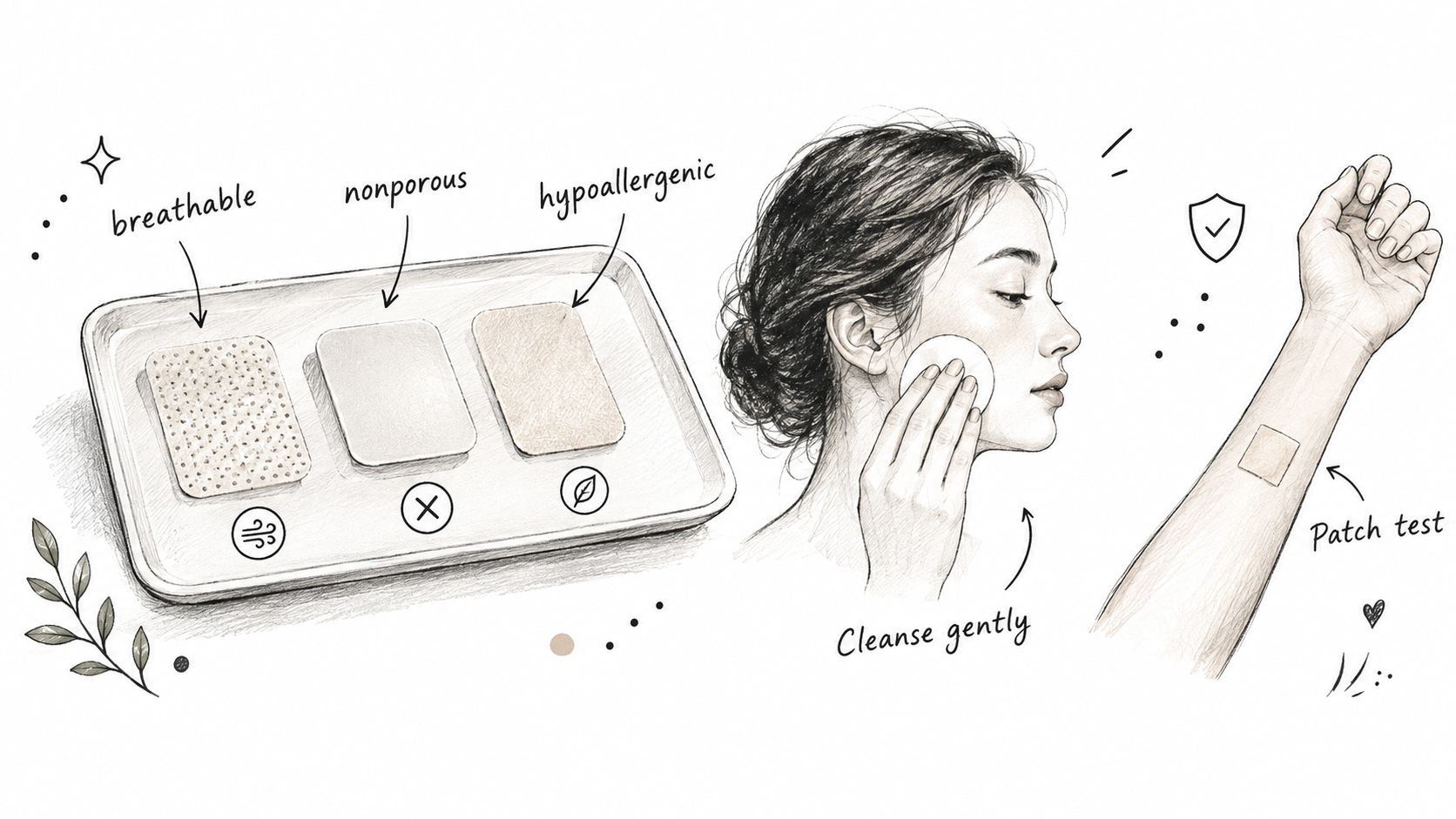
The tape should encourage closure, not create a sealed barrier that makes you feel trapped. Choose a product designed for skin and overnight use, with a porous or breathable construction and a gentle, hypoallergenic adhesive. Avoid household, packaging, or highly aggressive tapes. A low price doesn't compensate for redness, itching, residue, or sleep disruption.
Read the label for skin compatibility and intended use. Tape designed for the body is more appropriate than a general-purpose adhesive because the manufacturer has considered contact with skin, movement, and removal. If you have facial hair, chapped lips, eczema, or a history of adhesive reactions, your tolerance may be lower.
Prepare before bedtime
Clean and dry the skin around your lips. Heavy creams and oily night products can weaken adhesion, while applying tape over damp skin can make it shift. Don't put tape over broken, inflamed, or severely chapped skin.
A daytime test is essential. Apply a small piece to the surrounding skin while you're awake, then remove it slowly. This checks both adhesive sensitivity and your emotional response to having the lips lightly covered. If you feel panicked, short of breath, or preoccupied with removal, that discomfort is useful information. Don't force an overnight trial.
Skin rule: Mild inconvenience is a reason to adjust the product. Burning, swelling, blistering, or persistent redness is a reason to stop.
For readers comparing product formats, Hydrating Mouth Tape is listed with one variant and availability data in the supplied catalog. Its catalog description references reduced snoring, oral care, tongue posture, and nasal-breathing support, but those product descriptions shouldn't be treated as clinical proof. The same safety screening still applies, regardless of the label.
Applying Mouth Tape Correctly for Overnight Use
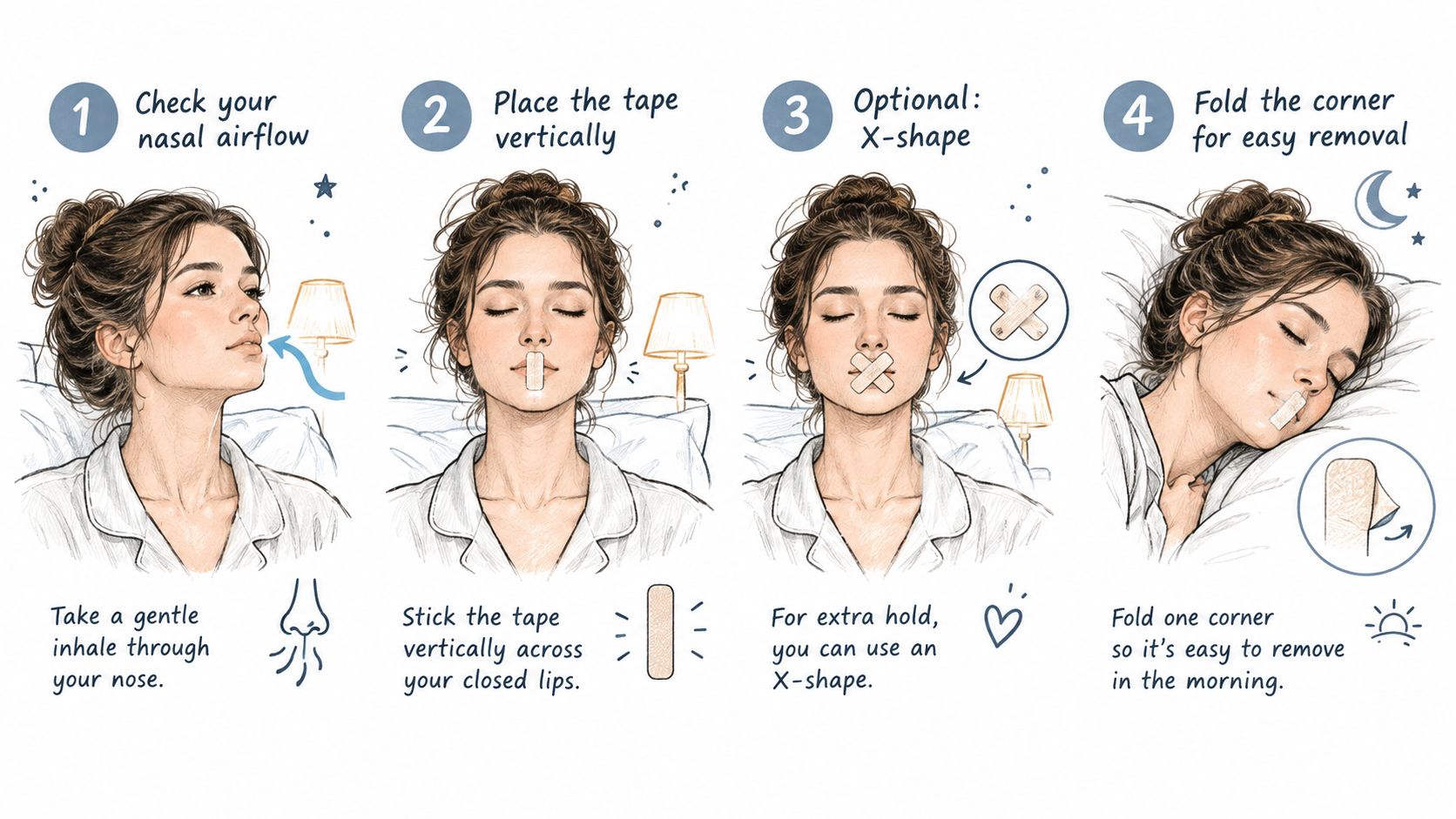
Begin only when nasal breathing feels clear and the room is calm. The tape should provide a light reminder to keep the lips together, not force them shut or make you monitor each breath. Sit or lie down briefly and confirm that breathing through your nose remains comfortable before applying it.
Choose a small strip instead of covering the entire mouth. A vertical strip across the center of the lips leaves the corners available and often feels less restrictive. An X-shaped application gives a wider cue for some users, but more tape does not make the method safer or more effective.
A simple bedtime routine
- Check your nose. Skip the tape if allergies, a cold, dry air, or structural blockage makes nasal breathing difficult.
- Clean the area. Keep the lips and nearby skin dry, with heavy creams away from the adhesive zone.
- Relax the jaw. Let the lips meet gently. Do not clench them or pull the skin tight.
- Apply lightly. Set the strip over the lips without pressing it firmly into the surrounding skin.
- Make removal easy. Fold one corner outward so you can locate and lift it in the morning, a practical step included in the Sleep Foundation's mouth-taping guidance.
- Reassess immediately. Remove the strip if breathing feels restricted or anxiety increases.
After lying down, check that your nose still feels open. Keep the room quiet enough to notice discomfort. Nasal strips are a separate aid, and using one does not make mouth taping suitable for everyone. They may support airflow for some users, but they cannot correct every cause of nasal obstruction.
If the tape loosens overnight, do not reapply it while half-awake. Remove the loose piece and consider whether congestion developed after you went to sleep. Leave it off if nasal breathing was not effortless. A disrupted trial is safer than trying to keep tape in place against a restricted airway.
Safety Guidance and Who Should Avoid Mouth Taping
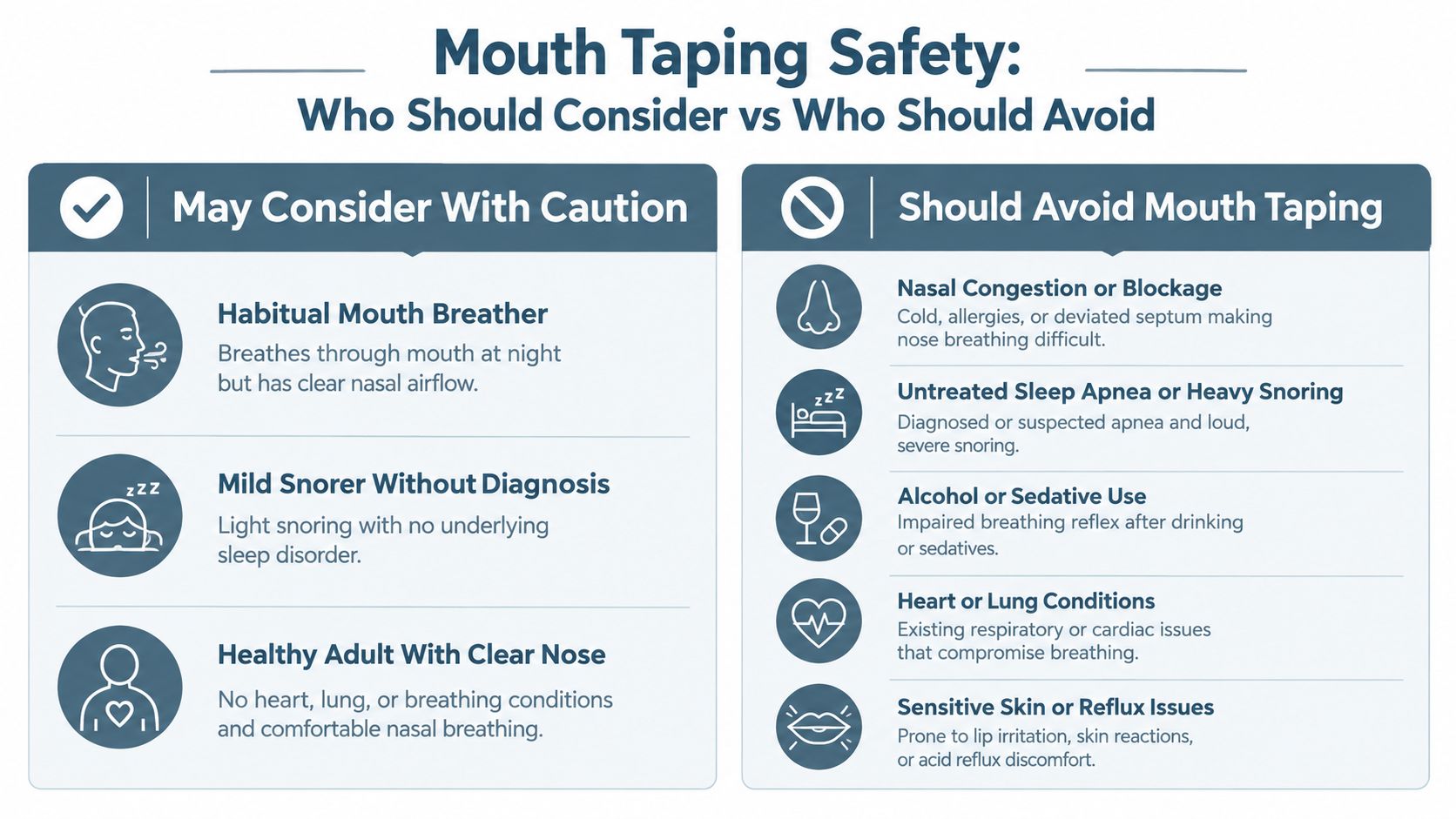
Mouth taping becomes risky when it removes the backup route for breathing while the nose is compromised. Congestion from a cold or allergies, nasal polyps, a deviated septum, or another obstruction can make forced nasal breathing uncomfortable or inadequate. The main failure mode isn't weak adhesive. It's blocked nasal airflow.
A 2025 systematic review covering 10 studies and 213 patients found that only two studies showed significant improvement in sleep-apnea metrics, while four explicitly warned about potential asphyxiation risk when nasal airflow is obstructed. The review judged the evidence insufficient for routine general-population use, as reported in PLOS One.
Skip the experiment if any of these apply
- Nasal blockage: Don't tape during a cold, ear or sinus infection, allergy flare, or any period when nose breathing is difficult.
- Snoring or suspected apnea: Cleveland Clinic advises against mouth taping for people who snore or have sleep apnea because it can do more harm than good. Review tape and sleep apnea only as an educational starting point, not as a substitute for assessment.
- Alcohol or sedatives: WebMD lists alcohol and sedative use among situations in which mouth taping should be avoided. The same guidance also lists obesity defined as BMI over 35, severe heart or lung problems, nasal breathing problems, and severely irritated lips as exclusions. See the WebMD mouth-taping guidance.
- Reflux or vomiting risk: Cleveland Clinic warns that taping can create aspiration concerns if reflux or vomiting occurs while the mouth is covered. It also identifies trouble breathing and skin irritation as risks. Read its medical safety warning before considering the practice.
- Panic or severe discomfort: A technique that triggers claustrophobia or anxious awakenings isn't improving sleep, even if the tape stays in place.
A 2026 review concluded that indiscriminate, social-media-style mouth taping may pose a potentially serious risk of harm and that more research is needed. If you have a diagnosed or suspected breathing disorder, speak with a clinician before experimenting.
Comparing Mouth Tape Options and Formats
Tape shape changes comfort and removal, not the basic safety requirement. Nasal breathing must remain easy. Use the smallest application that provides a reminder while allowing quick removal.
A vertical strip crosses the middle of the lips and leaves the corners accessible. It can suit someone whose mouth opens slightly during sleep. A horizontal strip gives a stronger closure cue, but may feel more restrictive and take more care to remove. An X-shaped design spreads adhesive across the lips, which can feel secure while increasing skin contact.
| Format | Practical advantage | Main trade-off | Removal |
|---|---|---|---|
| Vertical strip | Small contact area and accessible corners | May lift if the lips move | Usually straightforward |
| Horizontal strip | Stronger sense of closure | Can feel restrictive across the mouth | May require more care |
| X-shaped design | Broad cue across the lips | More adhesive and skin contact | Depends on adhesive and skin tolerance |
These formats differ mechanically, not by evidence that one shape improves sleep more than another. Small clinical trials do not justify choosing the most dramatic design. Begin with comfort, control, and skin tolerance. If a small vertical strip causes anxiety, changing the shape is unlikely to address the underlying problem.
Choose based on why the mouth opens. A person with a clear nose and only slight mouth opening may tolerate a small cue. Deep or noisy breathing, waking gasping, or persistent congestion calls for assessment rather than a stronger strip. Use this guide to finding the best mouth tape for sleeping to compare designs and removal features. Nasal strips are a separate airflow-support option, not a reason to force mouth taping. Do not combine products to compensate for difficult breathing.
Troubleshooting Common Problems and Removal Tips
The first failed attempt usually gives you useful information. If you wake with the tape partly detached, your mouth may have opened because nasal airflow changed, saliva loosened the adhesive, or the format didn't suit your movement. Remove the remaining piece, inspect your nose and skin, and don't just apply a larger strip the next night.
Aggressive adhesion creates a different problem. Pulling tape quickly can irritate the lip border, especially when the skin is dry or facial hair is involved. Loosen an edge with warm water and peel slowly. A dermatologist-approved oil may help with residue, but keep oils away from the airway and don't use a product that has previously irritated your skin.
Match the response to the problem
- Dry lips: Stop until the skin recovers, then reassess whether the adhesive or placement contributed. Don't tape over cracks.
- Redness or itching: Remove the tape and discontinue that product. Persistent irritation deserves medical advice.
- Nighttime congestion: Leave the tape off. Treating or evaluating the congestion is more sensible than forcing nasal breathing.
- Panic on waking: Remove the tape immediately and don't repeat the trial without discussing the reaction with a clinician.
- Tape residue: Use gentle cleansing rather than scrubbing, which can prolong irritation.
Never tape through a feeling of restricted breathing. If you wake choking, gasping, or unable to breathe comfortably, remove the tape and seek appropriate medical evaluation, particularly if the pattern repeats.
For a visual demonstration of application and removal, this embedded video may help, but watching a technique doesn't replace the screening above.
When Mouth Taping Makes Sense and When to Stop
Mouth taping makes the most sense when the problem is habitual, mild mouth opening and your nasal breathing is consistently clear. It may be worth a cautious trial for a healthy adult who doesn't have diagnosed or suspected sleep apnea, significant snoring, respiratory disease, nasal obstruction, reflux-related concerns, or adhesive sensitivity. Even then, treat it as an experiment in comfort, not a promise of deeper sleep.
Track simple observations rather than chasing a dramatic overnight result. Note whether you wake with less dry mouth, whether breathing sounds quieter to a partner, whether you wake less often, and whether you feel rested. Also record negative signals, including anxiety, headache, skin irritation, nasal blockage, choking, or repeated removal. A product that stays on but disrupts sleep isn't working well.
Stop signs deserve priority
Stop immediately if you feel short of breath, panicked, nauseated, or unable to remove the tape easily. Stop if congestion develops during the night, if your lips become inflamed, or if your sleep becomes more fragmented. Don't interpret worsening symptoms as a need for a tighter design.
The evidence remains narrow. Independent reviews published in 2025 found only nine studies specifically evaluating mouth taping after screening 177 unique studies, and concluded that evidence was minimal in most groups outside mild OSA and not clinically significant overall, according to the PubMed review record. A separate 2026 review of 10 studies described indiscriminate social-media use as potentially harmful and framed mouth taping as a trend rather than established therapy, as detailed in this PubMed-indexed review.
If loud snoring, gasping, witnessed breathing pauses, persistent fatigue, or morning headaches continue, stop self-managing and arrange a sleep assessment. Mouth tape can't diagnose or treat the condition causing those symptoms.
SleepHabits offers educational guidance alongside tools such as hydrating mouth tape and nasal strips for adults exploring nasal-breathing habits. Visit SleepHabits to compare those options and build a safer bedtime routine based on clear nasal airflow, gradual testing, and realistic expectations.