

To get yourself to stop mouth breathing, the real key is retraining your body to breathe through your nose, especially at night. This means tackling the root causes, like congestion, and building new habits from the ground up. It’s a combination of conscious daytime practice, using the right tools to help you along, and setting up your bedroom to encourage nasal breathing while you sleep.
Why You Mouth Breathe and What It's Costing You

Waking up with a sandpaper-dry mouth, a sore throat, and a feeling of being completely drained isn’t just a sign of a rough night. It's your body sending a clear signal: you're breathing through your mouth. This isn't just a minor quirk; it’s the backup system your body resorts to when its primary breathing pathway—the nose—is out of service.
Mouth breathing is almost never a conscious choice. It's a reaction. For most people, it starts with some kind of physical obstruction. Think of it like a roadblock on a highway, forcing all the traffic onto slow, inefficient side streets. That roadblock could be:
- Nasal Congestion: Persistent allergies, a cold that won’t quit, or chronic sinus issues can swell your nasal passages, making it tough to get enough air through your nose. For example, if seasonal pollen makes your nose stuffy, your body will automatically switch to mouth breathing to get the oxygen it needs.
- Structural Issues: A deviated septum—where the wall between your nostrils is off-center—can physically block airflow on one or both sides. Enlarged tonsils or adenoids are also common culprits, especially in kids.
- Just Plain Habit: Sometimes, mouth breathing is a pattern that started during a childhood illness and simply never went away, even after the original problem cleared up. You had a bad cold for a week, breathed through your mouth, and your body just never got the memo to switch back.
The Hidden Toll on Your Health and Energy
The consequences of this seemingly harmless habit are surprisingly far-reaching. Think of a dedicated athlete who feels constantly out of breath despite being in peak condition. Or a driven professional who hits a wall of fatigue every afternoon, struggling to focus in meetings. These aren't just personality traits; they're often the direct result of a dysfunctional breathing pattern.
Your nose is an incredible piece of biological engineering. It's a built-in air filter and humidifier, warming and cleaning every breath you take before it reaches your lungs. Your mouth, on the other hand, was designed for eating and talking, not breathing. When you bypass the nose, you open the door to a whole host of problems. You can learn more about the critical differences in our detailed guide on nasal breathing vs mouth breathing.
Shifting to mouth breathing isn't just a change in airflow; it’s a significant downgrade to your body's operating system. It wrecks your sleep, damages your oral health, and can even alter your physical development over time.
Nasal Breathing vs Mouth Breathing at a Glance
To really understand why making the switch is so important, it helps to see the differences side-by-side. This isn't just about comfort; it's about fundamental biological functions.
| Feature | Nasal Breathing (The Optimal Way) | Mouth Breathing (The Problem) |
|---|---|---|
| Air Filtration | Air is filtered, warmed, and humidified by nasal passages. | Unfiltered, dry, and cold air enters the lungs directly. |
| Nitric Oxide | Produces nitric oxide, which improves oxygen absorption and circulation. | Bypasses nitric oxide production, leading to less efficient oxygen uptake. |
| Oral Health | Helps maintain a healthy oral microbiome with balanced saliva. | Causes dry mouth, increasing risk for cavities, gum disease, and bad breath. |
| Sleep Quality | Promotes deeper, more restorative sleep and activates the "rest and digest" nervous system. | Leads to snoring, sleep apnea, and fragmented sleep, keeping you in a "fight or flight" state. |
| Facial Development | Supports proper development of the jaw, teeth alignment, and facial structure. | Can lead to changes in facial structure, crooked teeth, and a recessed chin, especially in children. |
| Immune Defense | The nose's mucus and cilia trap pathogens and allergens before they reach the lungs. | Allows allergens, bacteria, and viruses to enter the lungs without any filtration. |
This table makes it clear: nasal breathing is how our bodies are meant to function for optimal health and recovery. Mouth breathing is a costly compromise.
More Than Just a Bad Habit
The impact on children is especially serious. Chronic mouth breathing during their formative years can have a lasting impact on facial development. It's not a rare issue; research shows mouth breathing affects a staggering number of children, with prevalence rates ranging from 11% to 56%.
The consequences are visible and measurable. In one study, incomplete lip closure was found in 58.8% of mouth-breathing children compared to just 5.7% of nasal breathers. A shocking 60% of the mouth breathers developed an anterior open bite. These aren't just cosmetic issues; they reflect deep functional changes that can follow a person into adulthood.
For adults, the costs add up in different ways. The constant dry mouth neutralizes saliva's protective qualities, making you far more vulnerable to cavities, bad breath, and gum disease. Chronic fatigue from poor sleep tanks your focus and kills productivity.
Understanding these costs is the first step. Nasal breathing isn't just another option; it is the body's intended, superior method for breathing, recovery, and overall well-being. The rest of this guide is designed to give you the practical tools you need to reclaim it.
Build Your Daytime Nasal Breathing Habit
Switching from mouth breathing to nasal breathing isn’t something that happens overnight. It’s about methodically rebuilding a habit that’s gone off the rails. And that journey doesn’t start when you get into bed—it begins the moment you wake up.
By consciously training yourself to breathe through your nose during the day, you’re laying the foundation for quieter, more restorative sleep. Think of it like learning to type without looking at the keys. It feels slow and awkward at first, but with practice, it becomes your body's new default.
Start with Simple Awareness
The most powerful tool you have is simple awareness. Most people have no idea they’re mouth breathing. It happens unconsciously while they're buried in a spreadsheet, driving, or zoned out in front of the TV. The trick is to interrupt that autopilot pattern.
A simple way to do this is with subtle reminders. Set a silent, recurring alarm or notification on your phone or watch to go off every hour. All it needs to say is "Breathe" or "Check-in." When you see it, do a quick three-point check:
- Lips Together: Are your lips sealed? They should be resting together gently, not clenched.
- Teeth Apart: Your top and bottom teeth shouldn’t be touching or grinding.
- Tongue Up: Where’s your tongue? Ideally, the tip and front part should be resting lightly against the roof of your mouth, right behind your front teeth.
This simple check-in, repeated all day long, starts rewiring your brain and muscles. You're dragging an unconscious habit into the light, which is always the first step to changing it.
Integrate Simple Breathing Exercises
Once you start noticing your breathing patterns, you can layer in short, targeted exercises. These aren't intense workouts. They’re two-minute resets you can slide into even the busiest of days. One of the best and easiest is Box Breathing.
It’s a straightforward, four-part cycle that helps calm your nervous system and reinforces controlled nasal breathing.
- Inhale through your nose for a slow count of four.
- Hold your breath gently for another count of four.
- Exhale slowly through your nose for a count of four.
- Hold at the bottom of the exhale for a final count of four.
Actionable Tip: You're a busy professional about to jump on a stressful video call. Instead of reaching for more coffee, take two minutes at your desk to do a few rounds of Box Breathing. Not only are you reinforcing your nasal breathing habit, but you're also calming your stress response, so you can go into that meeting feeling more centered.
This exercise does more than just train your nose. It actually improves your body’s tolerance to carbon dioxide, which can reduce that feeling of "air hunger" that makes you want to gulp air through your mouth. The more comfortable your body gets with a calm breathing rhythm, the less it will resort to inefficient mouth breathing. You can learn more about the power of nasal breathing and how it optimizes oxygen uptake.
Use Humming to Your Advantage
Another surprisingly effective trick is humming. It's almost impossible to hum without exhaling through your nose. This simple action creates a gentle vibration that can help open up your nasal passages.
Even better, humming has been shown to increase your body's production of nitric oxide, a molecule that improves circulation and helps your body absorb oxygen more efficiently.
You don’t have to hum a whole tune. Just try this for a minute or two:
- Take a normal breath in through your nose.
- As you exhale, make a steady, low "hmmmm" sound.
- Feel the vibration in your nose, cheeks, and forehead.
- Repeat for 5-10 breaths.
This is a fantastic technique to use when you feel a little stuffy. A marketing manager I know practices this during her short walk from the parking garage to the office each morning. It's discreet, easy, and actively reinforces the exact pattern you want—nasal exhalation.
By combining these three strategies—awareness check-ins, Box Breathing, and humming—you create a practical daytime routine. You're not just stopping a bad habit; you're actively building a new, healthier one, one conscious breath at a time.
Optimize Your Nighttime Routine for Better Breathing
Winning the battle against mouth breathing often happens while you're asleep. Daytime practice is absolutely essential for building the conscious habit, but the night is when your unconscious patterns really take over. This is where a little preparation can make all the difference.
Think of it like setting the stage for success. Creating a sleep sanctuary that naturally encourages nasal breathing is your secret weapon for making this change stick. It all starts with a deliberate wind-down routine designed to prepare your airways for a night of optimal function.
Create a Nasal-First Wind-Down Routine
Just as you dim the lights to signal "sleep" to your brain, you can take simple steps to prepare your nasal passages. Dry, cool air is a common culprit; it can irritate sinuses and lead to congestion, forcing you back to mouth breathing.
A simple humidifier can be a game-changer here. Keeping your bedroom's moisture level between 30% and 50% helps keep your nasal passages from drying out, making it far easier to breathe comfortably through your nose all night long.
Here’s a practical wind-down checklist you can use tonight:
- An Hour Before Bed: Turn on your humidifier and start dimming the lights.
- 30 Minutes Before Bed: Use a gentle saline nasal spray or rinse to clear out any dust or allergens from the day. This gives your airways a clean slate.
- 10 Minutes Before Bed: Practice a few rounds of slow, deliberate nasal breathing—like Box Breathing—to calm your nervous system and prime the pump.
Safely Introducing Mouth Tape for Sleep
For a lot of people, the idea of taping their mouth shut sounds intense. I get it. But when done correctly, it’s one of the most direct ways to ensure you maintain nasal breathing through the night. The key is to start slow and use the right materials.
First things first: never use household tapes like duct tape or scotch tape. These will irritate your skin and aren't breathable. You want to use either a porous, skin-safe surgical tape or strips designed specifically for this purpose. They’re gentle and allow a tiny bit of air to pass through if needed.
The goal of mouth tape isn't to force your mouth shut against your will. It's to serve as a gentle, physical reminder for your jaw to stay relaxed and your lips to remain closed, encouraging your body to use the nasal pathways it prefers.
The transition from mouth breathing to nasal breathing at night is a critical step. The habits you build during the day directly set you up for success at night.
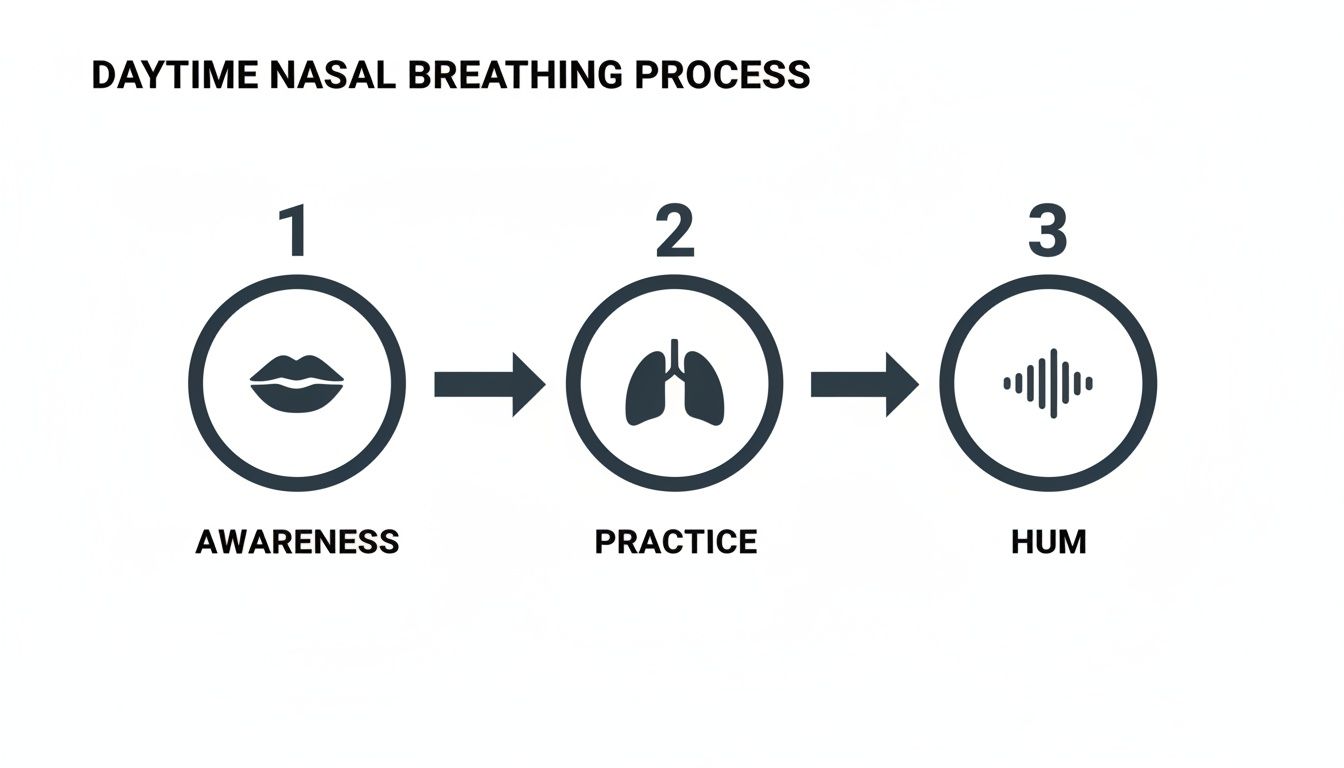
As this shows, consistent daytime awareness, practice, and humming are what make unconscious nasal breathing during sleep possible.
Your First Night with Mouth Tape: A Step-by-Step Guide
To get over any initial anxiety, don't go for a full seal on your first try. The goal is to ease into it. A small vertical strip is the perfect starting point.
- Prep Your Skin: Wash and dry the area around your lips so the tape adheres properly. If you use moisturizer, let it fully absorb first.
- Cut a Small Strip: Take a piece of porous tape about one inch long and half an inch wide.
- Apply Vertically: Place the tape right over the center of your lips. This gentle prompt is often enough to keep your mouth closed without feeling restrictive. You can still easily cough or speak if you need to.
- Practice First: Wear the tape for 15-20 minutes while you're reading or relaxing before you turn out the lights. This helps you get used to the sensation and build confidence.
As you get more comfortable, you can switch to a single horizontal strip if you feel like you need a bit more support. If you want a more detailed walkthrough, check out our complete beginner's guide to mouth tape for sleeping.
Pairing Aids for Maximum Airflow
What if your nose feels a little stuffy? This is where pairing your tools becomes incredibly effective. You don’t have to choose between mouth tape and other aids; they often work best as a team.
External nasal strips are a perfect partner for mouth tape. These adhesive strips gently lift the sides of your nostrils, physically opening your nasal passages to increase airflow. If you feel even a hint of congestion, applying a nasal strip before your mouth tape can make all the difference, ensuring your nose is ready to handle the full workload.
The impact of this switch is huge. Chronic mouth breathing is closely tied to sleep-disordered breathing (SDB), with prevalences as high as 75% in some groups. Switching to nasal breathing boosts your body’s nitric oxide production, which can enhance oxygen uptake by up to 10-20%—a massive advantage for improving sleep quality and recovery.
By fine-tuning your nighttime environment and thoughtfully using these tools, you give your body everything it needs for a night of deep, restorative, nose-first sleep.
Hitting a Wall? How to Troubleshoot Common Roadblocks
Let's be honest: retraining a lifelong breathing habit isn't always a straight line. You're going to have nights where it feels easy and nights where it feels like a struggle. That’s completely normal. Think of this section as your field guide for navigating those inevitable bumps in the road.
The journey to consistent nasal breathing is a process of adjustment. Patience and a few practical tricks are your best allies. Let's dig into the most common frustrations people run into.
"My Nose Feels Too Stuffy to Breathe Through!"
This is, without a doubt, the number one complaint. You’re committed to the idea, but your nose just won't play along. The feeling of not getting enough air can be really unsettling and make you want to rip the tape right off.
Don't give up. One of the simplest and most effective things you can do is use a gentle saline nasal spray about 30 minutes before bed.
A quick spritz in each nostril helps to:
- Moisten Everything Up: Dry air, especially in winter or arid climates, can irritate your sinuses. Saline brings that moisture back.
- Flush Out Irritants: Think of it as a rinse cycle for your nose. It clears out the dust, pollen, and other gunk that's accumulated all day and can cause inflammation.
- Thin Out Mucus: If you're a little congested, saline helps thin things out, making it much easier to clear your airways before you lie down.
This tiny step can make a massive difference in how comfortable you feel breathing through your nose, setting the stage for a much more successful night.
"I Feel Anxious or Claustrophobic with Mouth Tape."
The idea of taping your mouth shut can feel... weird. It’s a totally normal reaction to feel a bit of anxiety or even claustrophobia at first. The trick is to ease into it gradually, showing your brain that everything is okay before you try to sleep a full night with it.
Don't just slap on a piece of tape and hope for the best. Instead, introduce it during a calm, low-stakes moment.
Try This: About 30 minutes before bed, grab a book or put on a podcast. Apply a single, small vertical strip of mouth tape and just go about your relaxing activity. The goal is to wear it for just 15-20 minutes while you're awake and your mind is elsewhere. This simple act teaches your nervous system that you're safe, you're in control, and you can breathe just fine.
After a few evenings of this little "practice run," the sensation will become familiar and far less intimidating when it's actually time for sleep.
"Why Does My Mouth Tape Keep Falling Off?"
Waking up with your mouth tape stuck to your pillow instead of your face is incredibly frustrating. Most of the time, the culprit isn't the tape—it's your skin prep. Facial oils, lotions, chapstick, and even a little bit of moisture can completely ruin the adhesive's grip.
For a secure hold that lasts all night, you need a clean canvas.
- Wash Up: Gently wash the skin around your lips with a mild soap and water.
- Dry Completely: Pat the area totally dry with a towel. Any lingering dampness is the enemy.
- Time Your Moisturizer: If you use a facial oil or heavy moisturizer at night, apply it at least an hour before you plan to put on the tape. This gives it plenty of time to fully absorb into your skin.
A clean, dry surface is the key. It allows the tape to get a proper hold and do its job of gently reminding your lips to stay together.
Taking It to the Next Level with Breathing Exercises
Once you're comfortable with the basics, you might be ready to make nasal breathing feel even more natural. A great way to do that is by improving your body's tolerance to carbon dioxide (CO2). When your body gets more efficient with CO2, you feel less of that "air hunger" that can make you gasp for air through your mouth.
A simple exercise from the Buteyko Method, called the Control Pause (CP), is perfect for this. It's a quick measurement of your breath-hold time that helps reset your breathing reflexes over time.
- Sit up straight and just breathe normally through your nose for about a minute.
- After a normal, quiet exhale (don't force all the air out), gently pinch your nose closed and start a timer.
- Hold your breath only until you feel the very first definite urge to breathe in. This is not a contest.
- Let go of your nose and breathe normally and calmly again.
The number of seconds you held is your CP score. The goal isn't to get a huge number by forcing it; it's to get an honest measurement of your body's response. Practicing this regularly can help your body adapt to a new normal, making nasal breathing feel effortless.
Protecting Your Smile From Mouth Breathing

While you’re working on retraining your breathing patterns, it's easy to focus on the big picture and forget about one of the most immediate casualties of mouth breathing: your oral health. The constant, unfiltered airflow creates a perfect storm inside your mouth, turning it into a dry environment where harmful bacteria can absolutely thrive.
Think of saliva as your mouth's built-in security detail. It’s always working, neutralizing acids from food, washing away debris, and fighting off the microbes that cause cavities. Mouth breathing essentially shuts this system down by drying everything out, leaving your teeth and gums defenseless.
This dry environment is exactly what cavity-causing bacteria love. Without saliva to keep them in check, they multiply like crazy. This dramatically increases your risk for tooth decay, gum inflammation (gingivitis), and persistent bad breath.
Proactive Steps to Protect Your Teeth
The link between mouth breathing and dental issues isn’t just theoretical; it’s well-documented. For instance, pilot data from one study found that children who breathe through their mouths faced a staggering 42% caries rate, compared to just 25% for their nasal-breathing peers. That same research highlighted higher rates of gum dehydration and gingivitis, making it crystal clear that protecting your smile is non-negotiable. You can read more about the dental health risks of mouth breathing to get the full picture.
The good news is you can take simple, practical steps to mitigate the damage right now.
- Stay Rigorously Hydrated: This is your first line of defense. Sipping water consistently throughout the day helps compensate for the lack of saliva, keeping your mouth moist and rinsing away food particles. Try keeping a water bottle on your desk as a constant visual reminder.
- Stimulate Saliva Production: Chewing sugar-free gum, especially brands with xylitol, is a great way to kick your salivary glands into gear. Xylitol has the added benefit of actually inhibiting the growth of the bacteria that cause tooth decay. Pop a piece in after lunch to help clean your teeth and promote a healthier oral environment.
- Maintain Impeccable Oral Hygiene: This becomes more critical than ever. You’ll need to be diligent about brushing thoroughly twice a day with fluoride toothpaste and make flossing a non-negotiable daily habit. An alcohol-free mouthwash can also help restore moisture and fight bacteria without causing even more dryness.
By taking these protective measures, you're not just passively waiting for your nasal breathing habits to improve. You're actively creating a healthier oral environment right now, which reinforces why making the switch is so important for fewer cavities and healthier gums in the long run.
When It's Time to Call in a Professional
While most people can make huge strides with habit changes and simple aids, your body sometimes uses mouth breathing to signal a deeper issue. If you've put in the effort but aren't seeing results, or if certain symptoms just won't quit, it's a clear sign you need to bring in an expert.
Ignoring these red flags isn't just about slow progress; it's about potentially missing an underlying condition that needs real medical attention. It's crucial to know when self-help has reached its limit.
There are a few hard stops where professional guidance becomes your next best step. If you experience any of these, it's time to book an appointment:
- You physically cannot breathe through your nose, even when you're perfectly healthy. This points to a significant physical obstruction that no amount of habit change can fix.
- You have chronic, loud snoring that's disrupting your sleep or your partner's.
- You wake up gasping for air or someone has told you that you stop breathing during the night. This is a classic, non-negotiable sign of potential sleep apnea.
Navigating the Specialists Who Can Help
Once you decide to seek professional help, it’s useful to know who does what. Different specialists play unique roles in diagnosing and treating the root causes of mouth breathing, and seeing the right one first can save you a lot of time and frustration.
Ear, Nose, and Throat (ENT) Doctor
If you suspect a structural issue is the culprit, an ENT is your first stop. They are the detectives for the physical architecture of your airway.
An ENT can perform a thorough examination to check for common blockers like a deviated septum, chronically enlarged tonsils, or nasal polyps. These are issues that physically block the path of air, forcing your mouth to take over.
What to Expect: An ENT can pinpoint the exact why behind your mouth breathing. They often use tools like a nasal endoscopy—a tiny camera—to see exactly what’s happening inside your nasal passages and determine if a medical or surgical solution is the best path forward.
Myofunctional Therapist
Think of a myofunctional therapist as a physical therapist for your mouth, tongue, and facial muscles. They are the experts in retraining the deep-seated neuromuscular habits that cause mouth breathing.
Even after an ENT clears a physical obstruction, your brain and muscles might still be stuck in old patterns. A myofunctional therapist provides targeted exercises to correct your tongue posture, strengthen your lip seal, and make nasal breathing your body's natural default again. For example, they might give you exercises where you practice holding water in your mouth with a perfect lip seal to strengthen the muscles involved.
Ultimately, seeing a professional isn't a sign of failure. It’s an empowered, informed step toward finding a real, lasting solution by getting to the true root of the problem.
Your Questions, Answered
When you're first learning how to stop mouth breathing, a lot of questions come up. Let's get right into the most common ones I hear from clients.
How Long Does This Actually Take?
This is a retraining process, not an overnight switch. You're building a new neurological habit, and that takes time.
Most people feel noticeable improvements—like better sleep quality or less morning dryness—within a few weeks of consistent daily practice. But turning nasal breathing into a completely unconscious, automatic habit? That can take several months.
The key is to focus on daily progress, not perfection. Celebrate the small wins. Waking up with your mouth tape still on is a huge victory.
Is Mouth Taping Really Safe?
Yes, but only when you do it correctly. Safety comes down to following a smart, gradual protocol.
Always start with a porous, skin-safe tape. And you don't need to seal your lips shut—just use a small vertical strip to gently encourage them to stay closed. Your body can easily push past it if needed.
Never, ever use mouth tape if you're congested, have had alcohol, or feel nauseous. This isn't about forcing an outcome; it's about gently guiding your body toward a better habit. A safe, cautious approach builds confidence and gets results without risk.
What If I Have Chronic Allergies? Can I Still Do This?
Absolutely. The strategy here is to manage the root cause while you train the new habit. You can’t just ignore the allergies and hope for the best.
This is where you pair allergy management tactics—like using a high-quality air purifier in your bedroom or working with an allergist—with supportive tools that make nasal breathing easier.
For instance, an external nasal strip can provide just enough extra airflow to make nasal breathing comfortable, even during a mild allergy flare-up. This lets you keep practicing the habit without feeling like you're starving for air.
At SleepHabits, we believe better nights lead to better days. Our science-backed solutions, from hydrating mouth tape to our Restore+ sleep aid, are designed to support your journey to optimal nasal breathing and restorative rest. Discover how our tools can help you at https://sleephabits.com.