

You wake with a sticky mouth, a scratchy throat, and breath that feels stale before your feet touch the floor. You may have spent enough time in bed, yet still feel foggy, restless, or unrefreshed. If that pattern repeats, the answer usually isn't to cover your mouth immediately. The reliable sequence is clear the nose first, retrain the breathing habit second, and consider mouth tape last.
That order matters because nighttime mouth breathing can reflect nasal resistance, an open-mouth habit, or sleep-disordered breathing. A tape strip may remind the lips to stay together, but it can't repair a blocked nasal passage or diagnose an airway problem. The practical question isn't only how to stop mouth breathing in adults. It's why your mouth is opening in the first place.
Why Adults Breathe Through the Mouth at Night
Mouth breathing usually begins with one of two problems. The first is a nose that can't move air comfortably because of congestion, allergies, inflammation, or structural narrowing. The second is an ingrained open-mouth posture, where the tongue rests low, the lips separate, and the body continues using the mouth even after nasal airflow improves.
Most adults have some combination of both. A blocked nose can force mouth breathing during sleep, and repeated open-mouth breathing can then become the body's default pattern. That explains why a person may breathe through the nose during a calm daytime moment but wake with a dry mouth after lying down for hours.
Nasal breathing also changes the mechanics of airflow. The nose filters, warms, and humidifies incoming air, while nasal breathing supports a pathway associated with nitric oxide production. For sleep, a peer-reviewed study of sleep breathing routes found that upper-airway resistance was significantly lower during nasal breathing than during oral breathing, providing a mechanical reason to keep the mouth closed while keeping the nose unobstructed (sleep breathing route findings).
A quick self-assessment
Look for clues rather than guessing. If one nostril is almost always blocked, congestion worsens when you lie down, or you wake unable to breathe comfortably through your nose, airway resistance probably leads the problem. If your nose feels clear while awake, but your lips part during concentration, exercise, or sleep, habit and oral posture may contribute more.
Dryness alone doesn't prove mouth breathing. Medication effects, dehydration, and other factors can also contribute, so a resource on what causes dry mouth can help you consider the wider picture. Snoring, repeated awakenings, gasping, or morning headaches make the situation more important to assess rather than treating it as a cosmetic nuisance.
A useful overview of the distinction between habit and obstruction is available in this guide to why adults breathe through their mouths. Your answer determines the next step. A clear nose calls for retraining. A blocked nose calls for treatment before any attempt to restrict mouth airflow.
Clearing Your Nasal Airway Before Anything Else
Nasal breathing only works when the nose can carry the airflow. That makes nasal clearance the first intervention, not an optional add-on after mouth tape fails.
Start with a saline rinse or saline spray when mucus, pollen, or dry irritation is contributing to blockage. Use clean equipment and follow the product directions. In an allergy-heavy bedroom, reduce the trigger load by washing bedding regularly, limiting dust accumulation, and keeping the room comfortably humid rather than excessively dry. During pollen exposure, showering before bed and changing clothes can reduce what you carry into the bedroom.
Short-term decongestant use may help during an acute congested night, but it isn't a long-term answer without medical guidance. If you need a spray repeatedly, or one side remains blocked even when allergies settle, arrange an evaluation instead of escalating self-treatment. Structural narrowing, persistent inflammation, and nasal valve problems need a different plan.
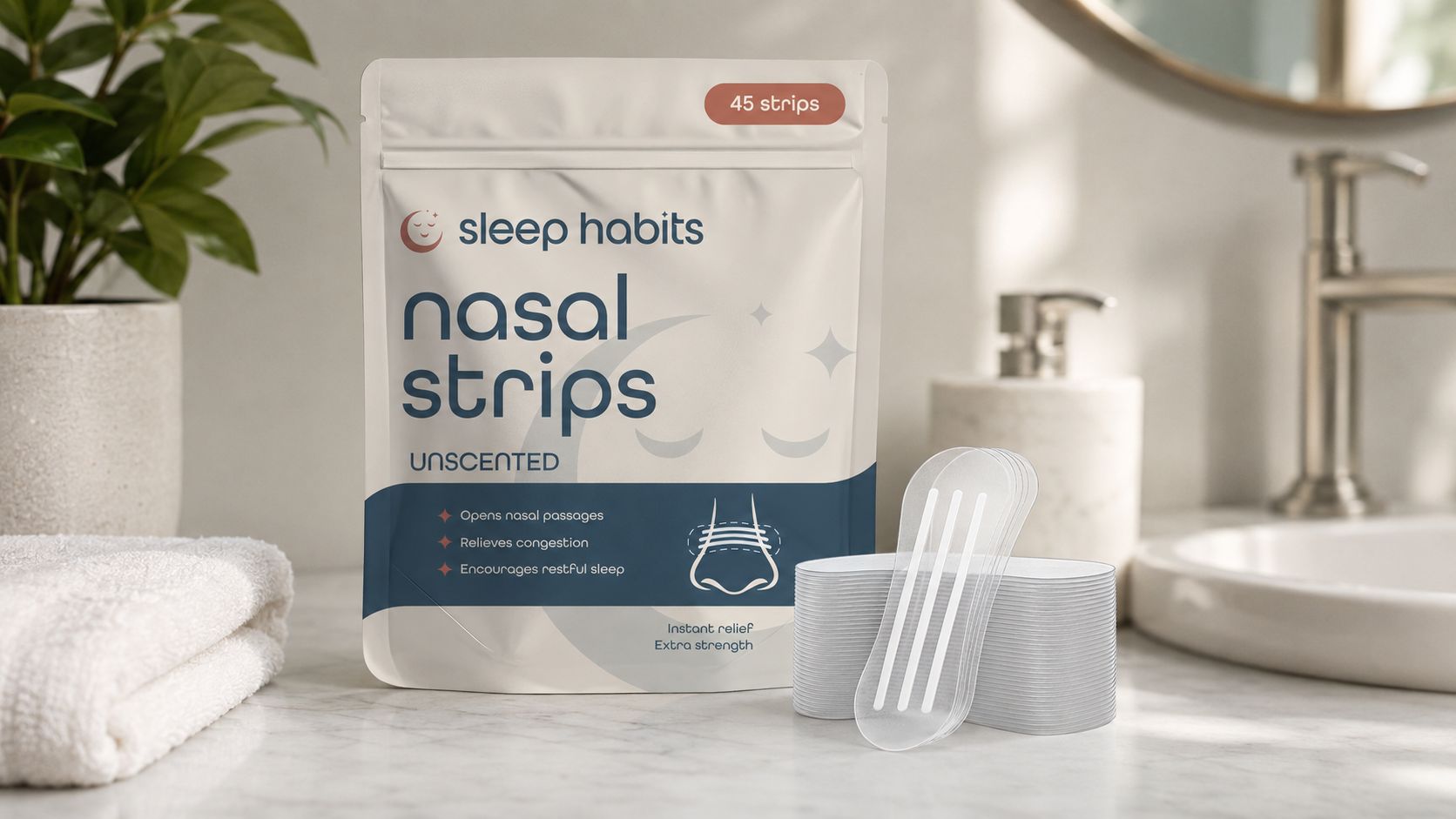
External nasal dilator strips can widen the nasal valve area without forcing the mouth closed. For example, a strip may be useful after yard work, during allergy season, or on a night when dry indoor air makes the nose feel narrow. Transparent Nasal Strips are one example of a strip designed to improve airflow and support consistent nasal breathing. They can be paired with retraining, but they don't correct every underlying obstruction.
Match the symptom to the first remedy
| Symptom | First-Line Remedy | Escalate When |
|---|---|---|
| Seasonal allergies or nighttime stuffiness | Bedroom allergen control, saline care, and appropriate allergy treatment | Congestion persists outside the trigger period or disrupts sleep regularly |
| Dry, irritated nasal passages | Saline moisture and bedroom humidification | Dryness remains painful, bleeding develops, or airflow stays restricted |
| One-sided or constant blockage | Nasal examination rather than repeated home remedies | A deviated septum, polyps, or another structural issue seems possible |
| Sudden congestion from a cold | Saline care and short-term symptom management | Breathing difficulty continues after the illness improves |
A randomized crossover study in adults with severe nasal obstruction showed why this sequence works. Treating obstruction with a topical decongestant plus an external nasal dilator strip produced a mean absolute 30% reduction in the oral fraction of ventilation during sleep, improved sleep architecture, and reduced the apnea-hypopnea index by about 12 events per hour (randomized nasal obstruction study). The lesson isn't that every adult needs a decongestant. It's that reducing nasal resistance comes before asking the lips to stay closed.
If you still can't breathe through your nose comfortably, don't add tape. Use this nasal breathing troubleshooting guide to identify the point where home care should give way to clinical assessment.
Retraining the Habit With Breathing Exercises
Some adults can breathe through the nose comfortably during the day but still default to an open mouth. In that situation, the work is less about clearing a passage and more about teaching the tongue, lips, and breathing muscles a different resting pattern.
Begin with tongue posture. Let the tongue rest gently against the palate, with the tip behind the upper front teeth rather than pressing into them. Keep the lips together without clenching the jaw, allow the teeth to remain relaxed, and breathe through the nose. The position should feel calm, not forced.
Practice for several minutes after brushing your teeth, during your morning commute when you're not driving actively, or while sitting at a red light. Another useful drill is a nasal walk. Walk at an easy pace while breathing only through the nose. If you feel air hunger, slow down rather than straining to maintain the pace.
A simple daily drill
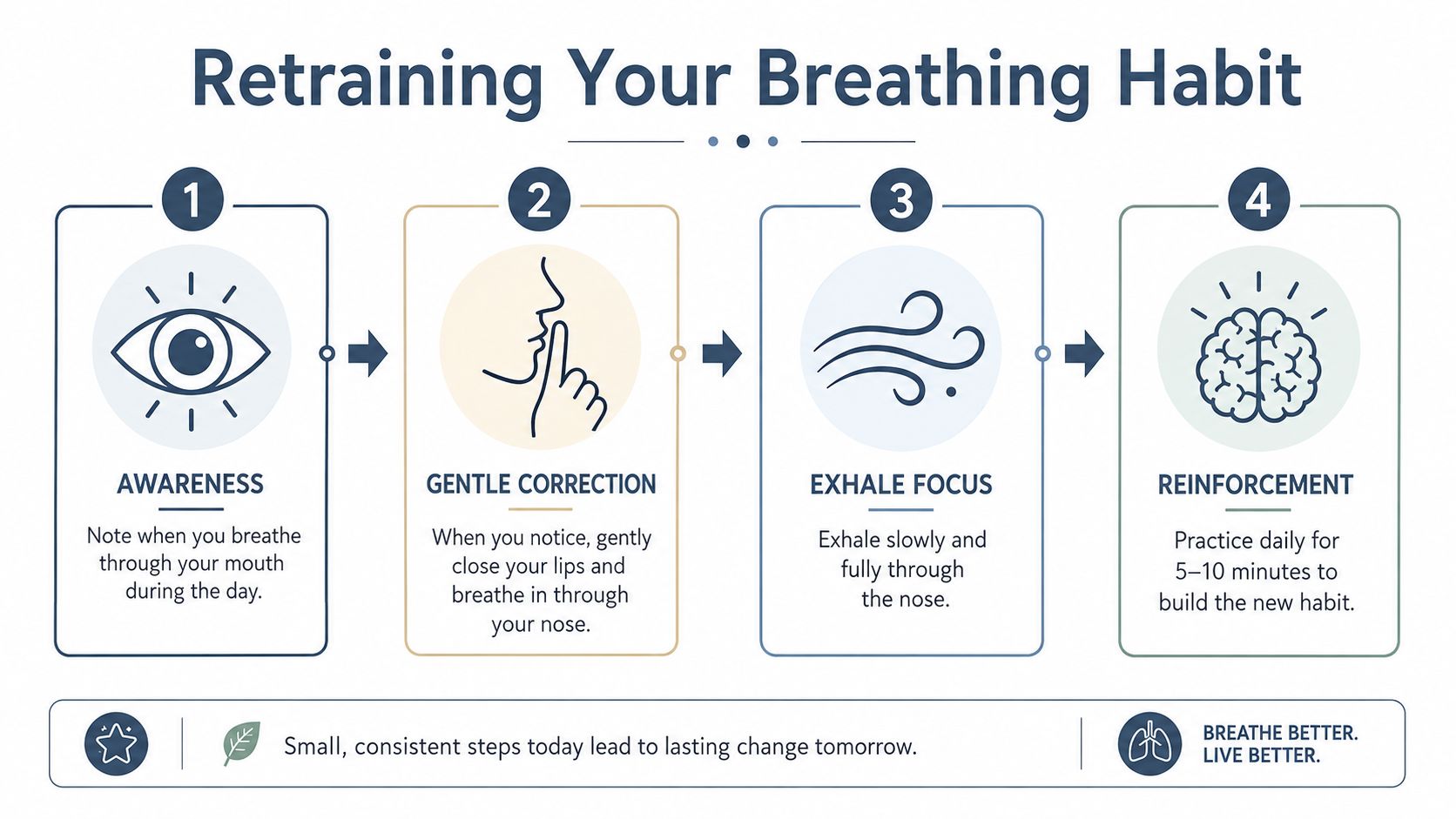
- Notice when your lips part or your breathing becomes noisy.
- Close the lips gently and place the tongue on the palate.
- Inhale through the nose without taking a large corrective breath.
- Exhale slowly through the nose, keeping the shoulders relaxed.
- Repeat for a short, comfortable practice period.
The point is repetition, not intensity. A five-minute practice attached to an existing routine is more useful than an occasional exhausting session. During the day, use reminders such as a phone notification, a note near your workspace, or the moment you sit down for a meal.
A pilot clinical trial in adults with mouth breathing found that a structured orofacial myofunctional therapy program produced significant improvements in respiratory symptoms, with p<0.001, respiratory mode, with p=0.029, and nasal peak inspiratory flow, with p=0.002. The gains remained three months later, while the control group worsened, suggesting that tongue and posture retraining can create durable functional change rather than a temporary effect (pilot orofacial therapy trial).
That result shouldn't be interpreted as permission to force nasal breathing through a blocked nose. Clear the airway first, then practice consistently. A comfortable daily habit gives the nervous system a chance to replace the old open-mouth pattern.
Using Nasal Strips and Mouth Tape Safely
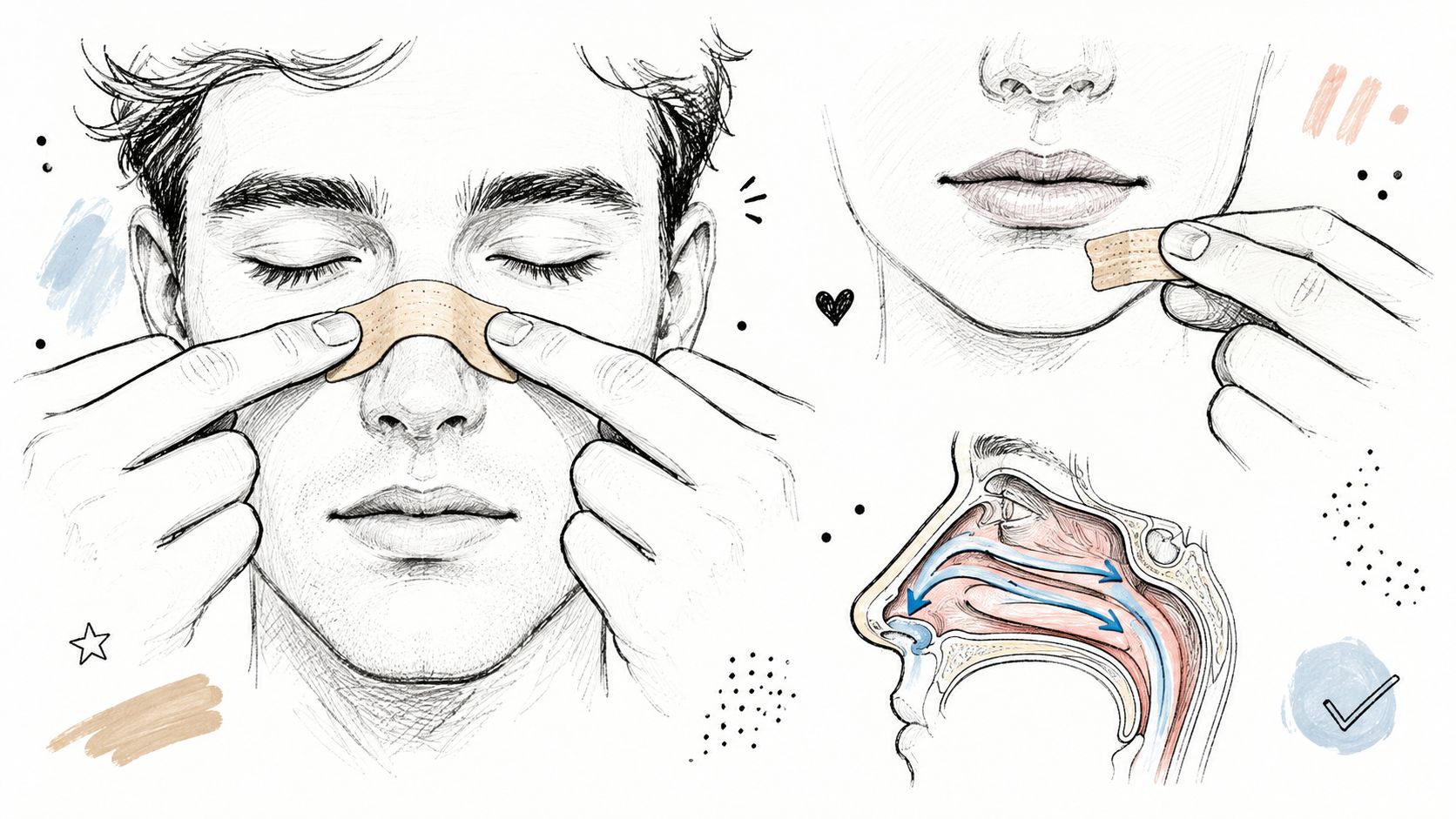
Nasal strips and mouth tape do different jobs. A nasal strip mechanically lifts or widens part of the external nasal passage. Mouth tape attempts to keep the lips together, usually as a behavioral reminder. The strip addresses airflow at the nose, while tape addresses the final position of the mouth.
That distinction makes nasal strips the less aggressive tool to test first, provided you don't have a condition requiring medical care. Tape should never be used to compensate for nasal obstruction. If the nose can't carry airflow while you're awake, restricting the mouth removes a backup route without solving the cause.
Test the nose before testing tape
While awake, sit upright and breathe through your nose with your mouth closed for several comfortable minutes. You shouldn't feel panic, significant air hunger, or the need to open your mouth to recover. Try this only when you're well and not congested. If it feels difficult, stop and address the nasal problem.
A clinical review summarized a pilot study involving 20 patients with mild obstructive sleep apnea. Their median apnea-hypopnea index fell from 8.3 to 4.7 events per hour after one week of mouth taping, but no validated study supports mouth taping as primary therapy for AHI 15 or higher (clinical review of mouth tape and sleep apnea). That is limited evidence, not a general treatment recommendation.
Do not tape if you have nasal congestion or blockage, a deviated septum, enlarged tonsils, obesity with breathing issues, reflux risk, sedation, or heavy snoring. Suspected sleep apnea also belongs in the evaluation pathway, not in a self-experiment with occlusion.
A guide to nasal breathing during sleep can help you understand the role of nasal airflow before choosing a product. If a clinician has cleared you and the nose passes the awake test, a product such as Hydrating Mouth Tape may fit a wind-down routine as a gentle lip-closure reminder. Don't treat it as airway therapy, and don't combine it with alcohol, sedatives, or a night of severe congestion.
When Mouth Breathing Is a Symptom Not a Habit
Chronic mouth breathing often signals an underlying problem worth investigating, especially when snoring, breathing pauses, or repeated awakenings occur. A blocked nose, structural narrowing, or sleep-disordered breathing can keep the mouth open even after you have tried to build better daytime habits.
Arrange clinical advice when congestion never fully clears, one side remains blocked, or you regularly wake with a dry mouth despite improving hydration and bedroom conditions. Heavy snoring with witnessed pauses, waking while gasping, unrefreshing sleep despite enough time in bed, and morning headaches deserve particular attention. These signs do not prove a diagnosis, but they make a simple habit explanation incomplete.
The people who should not tape
A 2025 systematic review found minimal evidence for mouth taping in most populations and no clinically significant benefit outside selected mild obstructive sleep apnea cases. It also warned of asphyxiation risk when nasal obstruction is present. A university summary of the same research reported that 4 of 10 included studies warned about serious asphyxiation risk during sleep if the nose is blocked (systematic review summary and safety concerns).
That risk is why screening comes before tape. Anyone whose nose blocks at night should not tape. The same applies to people with heavy snoring, witnessed pauses, or gasping. If you use sedating medication or have reflux concerns, discuss the plan with a clinician before trying lip closure.
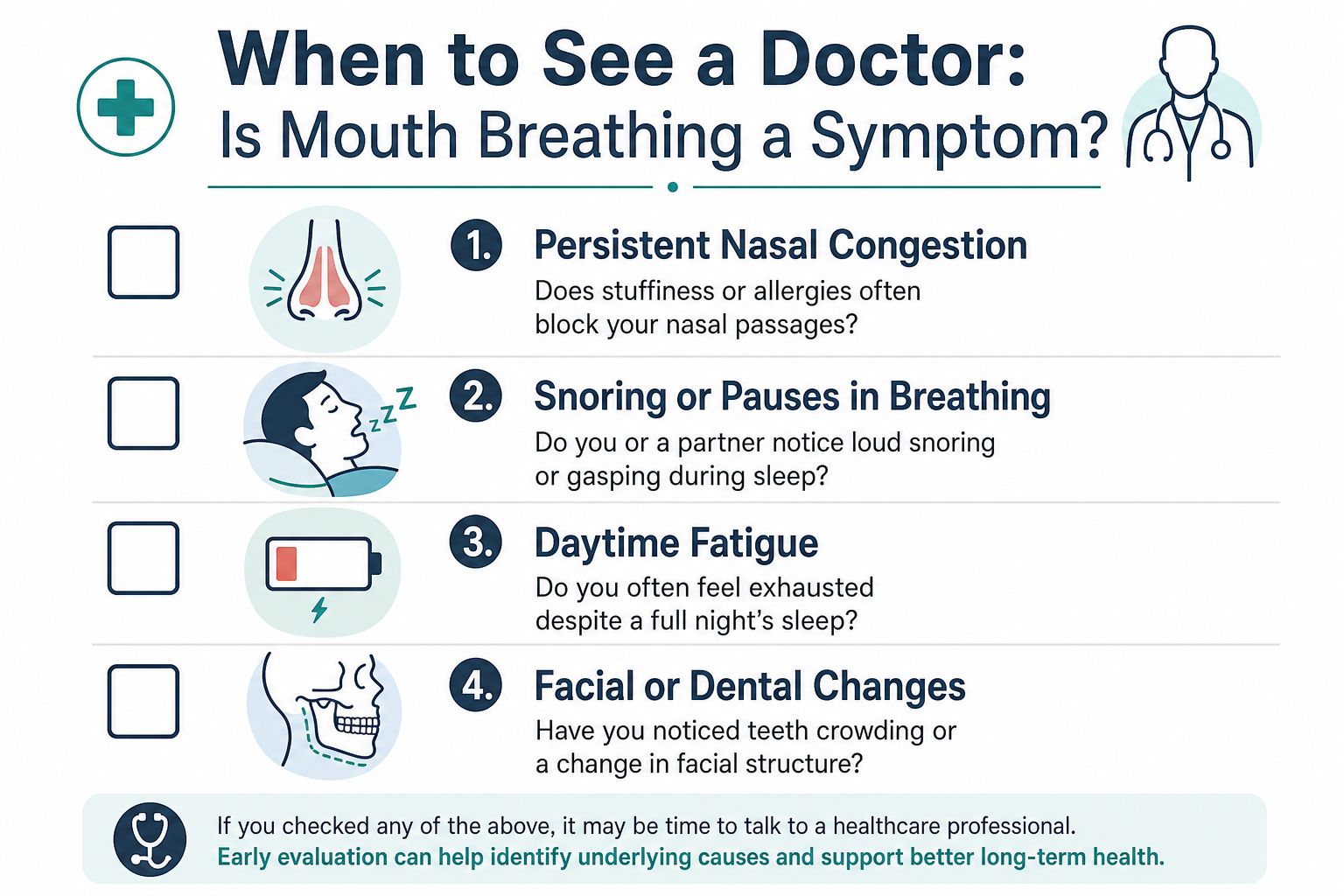
Start with primary care for an overall review or referral. An ENT can examine the nasal passage for structural or inflammatory causes. A sleep clinician can assess whether snoring, pauses, gasping, or severe daytime fatigue warrant sleep testing. Bring a short record of congestion, snoring, awakenings, morning dryness, and daytime energy.
While the cause is being assessed, protect your mouth with water, gentle oral hygiene, and practical oral care tips for dry mouth. Relief from dryness helps, but it does not treat the breathing problem.
A Realistic 30-Day Plan for Switching to Nasal Breathing
Use the first week to make nasal airflow easier. Try saline care when needed, control bedroom dust and allergens, and note whether congestion changes with the season, the room, or your sleeping position. Don't tape during this stage.
In the second week, add daily tongue-posture practice and slow nasal breathing. Use a short session after brushing your teeth, then repeat nasal-only breathing during an easy walk or another predictable part of the day. Track whether your lips stay closed more often while awake.
During the third week, introduce an external nasal strip on suitable nights and begin the awake nose test before considering tape. A cold, allergy flare, or sudden blockage resets the process. Remove the strip if it irritates your skin, and seek help if airflow remains poor.
In the fourth week, use mouth tape only if your nose passes the comfortable awake test, you have no listed contraindications, and a clinician has addressed any concerning snoring or breathing symptoms. Your wind-down routine might be: hydrate, dim the lights, journal, apply the nasal strip, practice slow nasal breathing, and use tape only when cleared.
Track less morning dry mouth, fewer awakenings, and easier nose-only breathing during walks. Expect plateaus and occasional relapses during colds or allergy season. The trial evidence points toward durable improvement from structured retraining, so steady practice beats forcing a dramatic overnight change.
SleepHabits offers educational sleep resources plus breathing-focused tools such as nasal strips and hydrating mouth tape for adults building a careful nighttime routine. Visit SleepHabits to explore those options and pair them with the safer sequence of nasal clearance, breathing retraining, and clinical evaluation when needed.