

You're in bed with a blocked nose, your partner is nudging you awake, and every breath feels narrower than it should. A nasal strip can help, but only when it's placed where its spring-like bands can support the sides of the nose. Learning how to wear nasal strips is less about sticking a strip anywhere across the bridge and more about matching its position to the anatomy it's designed to lift.
Why a Simple Strip Can Transform Your Nightly Breathing
A nasal strip doesn't dissolve congestion or force air through the entire upper airway. It works mechanically. Flexible bands in the adhesive strip pull the lateral nasal walls outward, helping widen the nasal valve area where airflow can feel restricted.
That distinction matters when you're deciding whether a strip is worth trying. If your snoring becomes worse during a cold, allergy flare, or period of nasal stuffiness, opening the front of the nose may make breathing feel smoother. If the main problem comes from collapse farther back in the throat, a strip may do little.
A physiological study of 15 healthy adults during cycle exercise found that external nasal dilators reduced nasal resistance and the flow-resistive work of breathing. During ordinary tidal breathing, 9 subjects had a statistically significant decrease in inspiratory and/or expiratory resistance, showing that response varies rather than occurring uniformly in every user. The study's findings on nasal resistance and individual response help explain why correct placement and realistic expectations matter.
Practical rule: A nasal strip can support nasal breathing, but it isn't a cure for every form of snoring.
The sleep experience can still improve for some habitual snorers. One study reported statistically significant reductions in snoring intensity and duration with external nasal strips. Partners reported less snoring, while users noted less mouth dryness and daytime sleepiness. You can also compare practical guidance on whether nasal strips work before choosing one.
Persistent loud snoring, witnessed breathing pauses, or repeated gasping deserves clinical attention rather than repeated experimentation with adhesive strips. For people considering professional evaluation, Bristol Dental sleep apnea care is a useful resource on sleep-related breathing concerns.
Finding Your Fit Not All Nasal Strips Are Created Equal
The right strip depends on what's limiting your comfort, not just on which package looks most appealing. Width, flexibility, adhesive feel, and scent can all change how practical the product is for your nightly routine.
Match the strip to the problem
A wider or stronger strip may feel more supportive when the nasal sidewalls need firmer outward tension, such as during exercise or when the nostrils tend to narrow with inhalation. A lighter design may suit someone who wants gentle support or who's testing whether mechanical opening changes their breathing.
Skin sensitivity changes the decision. If adhesive products often leave redness, prioritize a sensitive-skin formulation, use a smaller trial area first, and remove the strip slowly. Stronger adhesion isn't automatically better if it makes removal uncomfortable or discourages consistent use.
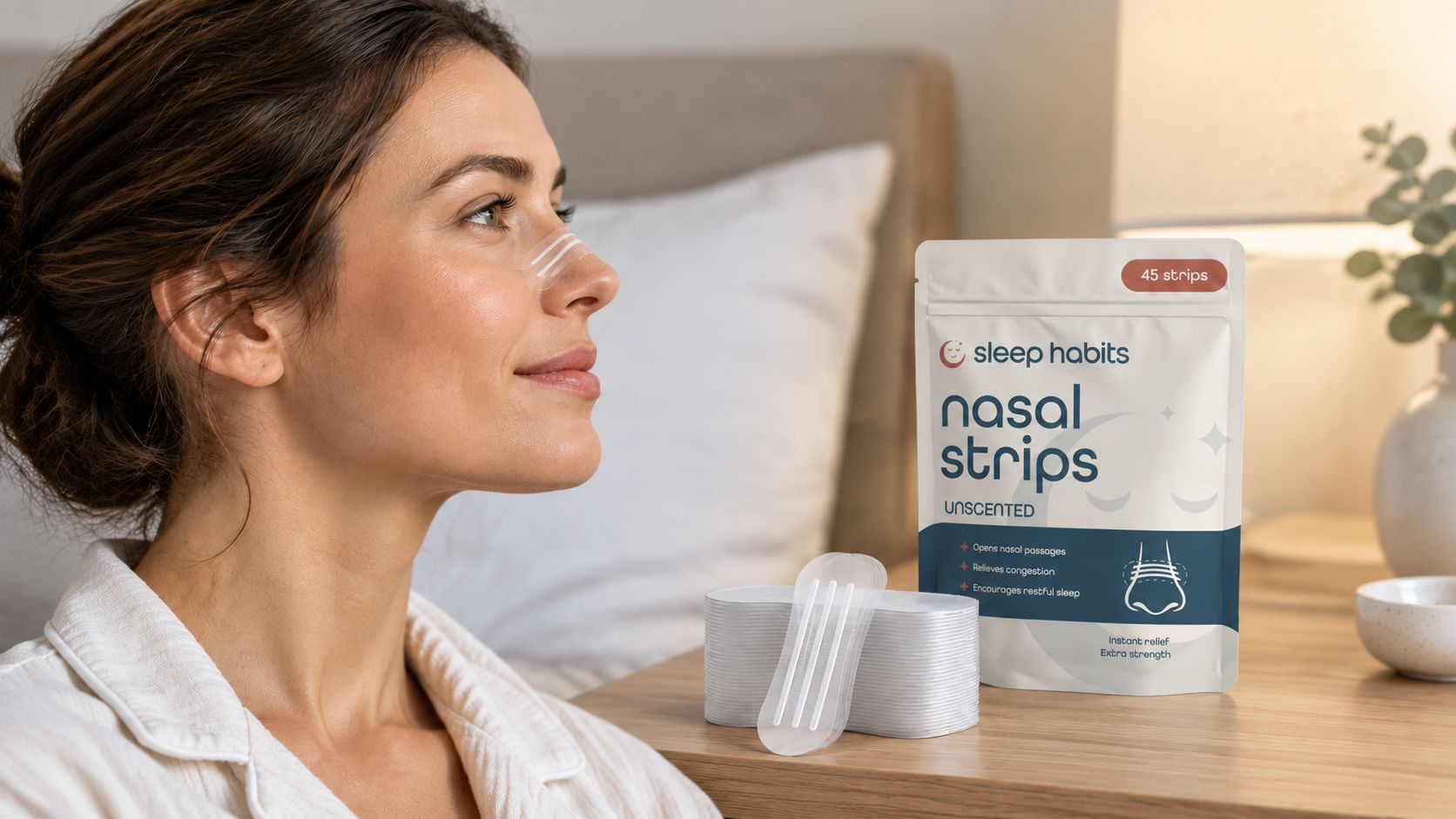
Size matters too. The ends should rest on the soft side cartilage near the nostril flare, not on the bony bridge and not so low that they cover the nostrils. If the strip extends too far beyond the useful cartilage, it may wrinkle, lose contact, or create tension in the wrong place.
Compare features by your routine
| Your priority | Look for | Why it helps |
|---|---|---|
| Temporary congestion | Reliable adhesion and comfortable support | The strip can stay in place while nasal breathing feels restricted |
| Sensitive skin | A gentler or hypoallergenic adhesive | Removal may be easier on reactive skin |
| Nightly simplicity | A design that sits flat and doesn't wrinkle | Fewer loose edges mean fewer overnight distractions |
| Calming bedtime ritual | An aromatic option such as eucalyptus or lavender | Scent can add a sensory element to the wind-down routine |
Transparent Nasal Strips are cataloged for easier nighttime breathing, support during congestion from colds, allergies, or dry air, and nasal breathing habits. The listed product information also describes pairing them with mouth tape for broader upper-airway support. That pairing should never be used to mask unresolved breathing problems or suspected sleep apnea.
For a closer comparison of designs and selection criteria, use this guide to the best nasal strips. Choose the option you can apply correctly, tolerate comfortably, and remove without rushing.
Mastering the Application for Maximum Airflow
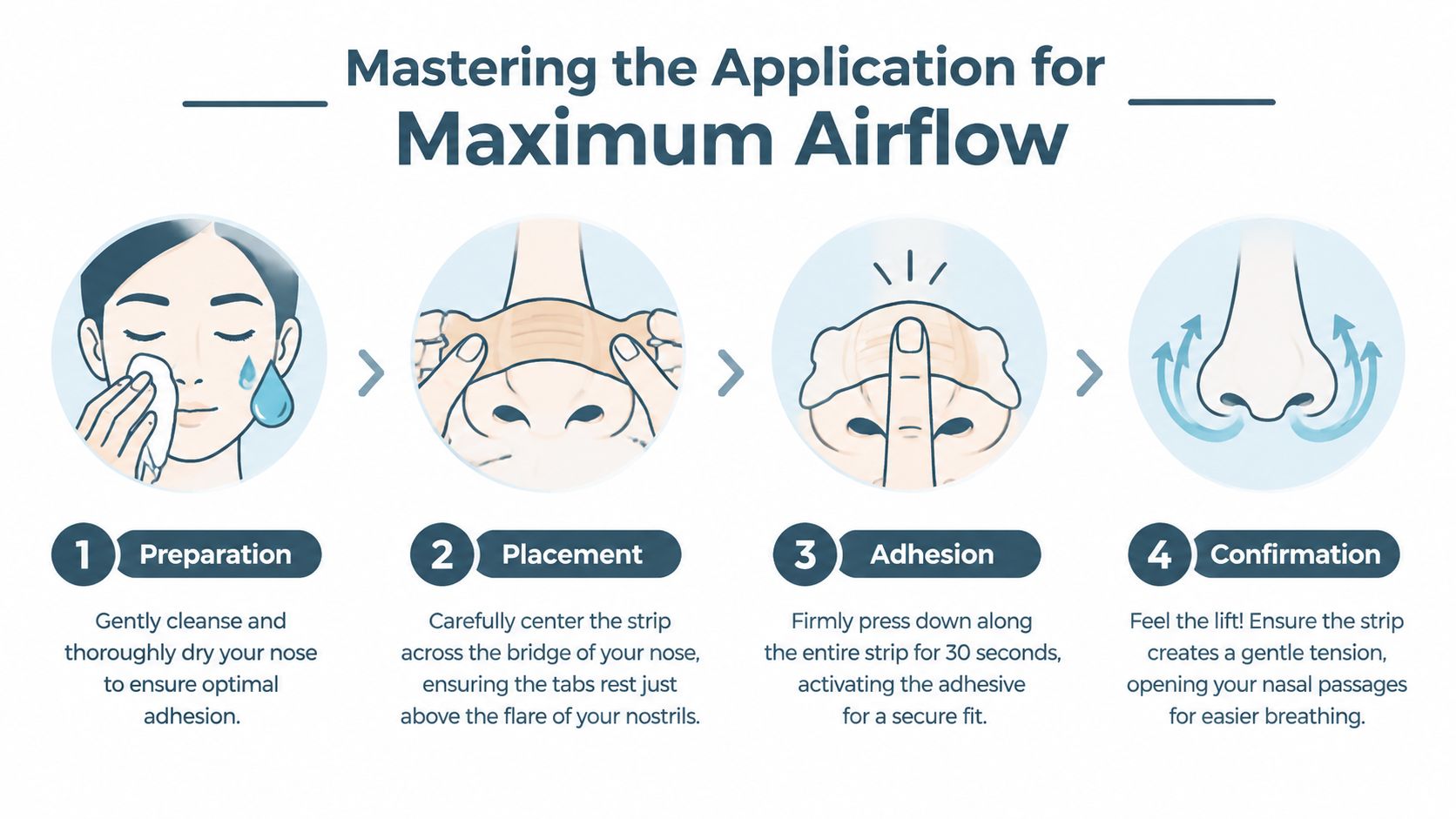
Placement determines whether the strip lifts the nasal sidewalls or sits across the nose. Treat application as a four-part process: prepare the skin, locate the correct line, secure the adhesive, and confirm the lift.
Prepare the surface
- Clean the nose gently. Use a gentle cleanser or water to remove skin oils, sweat, and residue from moisturizers. Oil on the surface can weaken the adhesive before you get into bed.
- Dry thoroughly. Pat the area dry, then wait until the skin feels completely dry. Damp skin makes it harder for the adhesive to form an even bond.
- Skip oily products on the application area. Night creams, balms, and facial oils can interfere with adhesion. Apply them elsewhere or after removing the strip in the morning.
Find the placement line
Stand in front of a mirror and identify where the nostrils begin to flare outward. Center the strip horizontally across the nose, just above that flare point. The ends should rest on the soft lateral cartilage, while the strip should avoid the hard bony bridge and shouldn't sit so low that it covers the nostril openings.
This position lets the spring-like bands lift the nasal sidewalls outward and mechanically widen the nasal valve area. Guidance from Sleep and Sinus Centers on nasal strip placement describes the same landmark, using the flare of the nostrils rather than the bridge alone as the positioning reference.
Secure the adhesive
Start at the center and smooth outward toward each end. Press along the full strip so it lies flat against the skin, paying particular attention to the edges. Wrinkles and air gaps can reduce contact and create loose corners that peel back during sleep.
A firm, even press helps the adhesive settle. Don't stretch the strip downward or place it diagonally. Its job is to create outward tension across the sidewalls, not to pull the nose upward.
Confirm the result
Take a calm breath through your nose. You should feel a gentle outward lift or a sense that the nasal entrance is less restricted. You shouldn't feel sharp pressure, pinching, burning, or an urge to remove it immediately.
If there's no noticeable change, don't assume the product has failed. Check whether the strip is too high on the bone, too low near the nostrils, off-center, or applied over oily skin. Correct the position before changing products.
Use this visual demonstration as a reference for the hand placement and smoothing motion:
Controlled studies have used strips overnight for about 8 hours, with protocols allowing no more than 12 hours per night and repeating use across 2 weeks or 28 nights, depending on the study design. The clinical protocol details provide a useful framework for normal overnight wear, but your skin's tolerance still determines whether continued use is sensible.
Troubleshooting Common Nasal Strip Issues
Most failures come from a mismatch between the strip and the way it's applied. A strip that falls off, feels ineffective, or irritates the skin isn't necessarily evidence that nasal dilators don't work for you.
When the strip won't stick
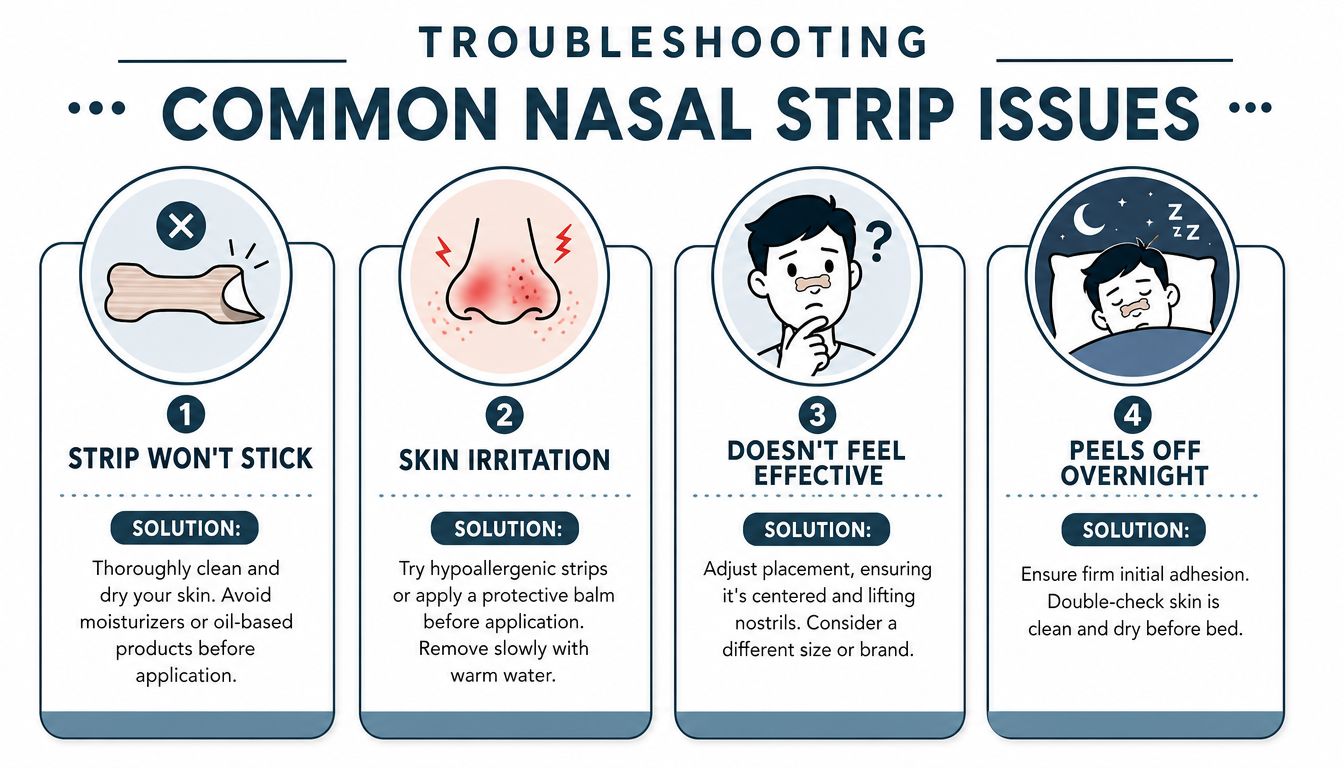
The usual culprits are oil, moisture, and skincare residue. Clean the application area, dry it completely, and avoid moisturizer directly beneath the strip. Press from the center toward the ends rather than tapping only the middle.
If it still peels, check the environment and timing. Applying it immediately after washing while the skin is still damp, or after using an oil-based product, can undermine the bond before you fall asleep.
When removal irritates the skin
Pulling the strip rapidly upward can tug at the skin and leave redness. Soften the adhesive with warm water, then peel slowly from one end while supporting the nearby skin with your other hand.
Clinical studies generally report good tolerability over consecutive nights, but minor events, including a mild nasal scab from removal, can occur. The evidence on tolerability and application training reinforces the value of washing and drying the nose, centering the strip, rubbing it down gently, and removing it carefully.
Removal matters as much as application. A strip that works well but is ripped off can turn a useful routine into a reason to stop using it.
When you feel no benefit
First, reassess the anatomy. The strip should sit just above the nostril flare and across the soft side cartilage. A position over the nasal bone may feel secure but won't provide the intended outward lift.
Next, consider the source of the problem. If your nose feels open but snoring continues, the sound may not be driven primarily by nasal resistance. In that case, changing strip strength won't address the underlying cause.
When it peels off overnight
Reapply only to clean, dry skin and smooth every edge firmly. If you move around heavily in sleep or perspire at night, a flatter application and a less oily bedtime routine may improve retention.
For more detail on redness, adhesive sensitivity, and other nasal strip side effects, monitor your skin rather than pushing through discomfort. Stop if irritation persists, worsens, or becomes painful.
What to Expect and Important Safety Considerations
A nasal strip can make nasal breathing feel easier and may reduce snoring linked to nasal blockage. It can't guarantee a quiet night, eliminate congestion at its source, or correct collapse in the deeper throat.
The safety boundary is especially important with suspected obstructive sleep apnea. A medical review found no significant change in apnea-hypopnea index, lowest oxygen saturation, or snoring index in people with OSA using nasal dilators. The review of nasal dilators and OSA supports a clear conclusion: nasal strips aren't a treatment for sleep apnea and shouldn't replace assessment or prescribed therapy.
Use a measured routine
Wear the strip overnight within the product's stated limits, using no more than 12 hours per night as a practical upper boundary. Remove it gently in the morning and inspect the skin before applying another one.
Stop using the product if you develop persistent redness, blistering, significant soreness, or repeated scabbing. Seek medical advice if nasal obstruction remains difficult, if you regularly wake gasping, or if someone observes breathing pauses while you sleep. People who need convenient support for evaluating sleep-related concerns can also explore telehealth options for sleep disorders in Pennsylvania.
Nasal strips are best treated as a targeted breathing aid. They may improve comfort at the nasal entrance, but ongoing sleep disruption requires attention to the cause, not solely the addition of more adhesive.
SleepHabits offers transparent, aromatic, and hydrating tools designed to support nasal breathing and a melatonin-free nighttime routine. Visit SleepHabits to explore nasal strips and complementary sleep products, then apply your chosen strip to clean, dry skin tonight and assess both airflow and skin comfort in the morning.