

You're lying awake, checking the clock while a magnesium bottle sits on the nightstand. You took the serving, followed the label, and still feel restless. That experience doesn't automatically mean magnesium is useless. It may mean less magnesium reached circulation than you expected.
Magnesium supplement absorption depends on more than the number printed on the front of a bottle. The chemical form, the size of each serving, the food and minerals present in your gut, and the timing of the dose all influence what your body can use. A large elemental magnesium number can look impressive while delivering a smaller absorbed amount than a modest serving of a more soluble form.
The central question is simple: How can you make each serving count before bed? The answer starts with three variables, the magnesium form, the environment in your digestive tract, and the way you divide and time your intake. Once those pieces fit together, your evening routine becomes less about taking more and more about taking magnesium in a way your body can handle.
Why Your Magnesium Might Not Be Working
At midnight, it's easy to treat the supplement bottle as a light switch. You take magnesium, expect your body to shift into relaxation, and feel disappointed when sleep doesn't arrive. But swallowing a supplement is only the first step. Your digestive system still has to release the mineral, move it through the small intestine, and transfer enough of it into circulation.
That gap between the labeled elemental amount and the amount your body absorbs is the silent variable many people miss. A poorly absorbed form can leave more magnesium in the gut, where it may contribute to loose stools instead of supporting your intended wind-down routine. A form that dissolves more readily may provide a more dependable amount without requiring a large serving.
Late-night reality: More magnesium in the capsule doesn't necessarily mean more magnesium available to your cells.
The form matters because magnesium is paired with another compound. Magnesium oxide, citrate, chloride, glycinate, and other forms don't behave identically in the digestive tract. A human comparison found magnesium oxide had only about 4% fractional absorption, while magnesium chloride, lactate, and aspartate showed significantly higher and roughly equivalent bioavailability, as summarized in research on magnesium preparation bioavailability.
The gut environment matters, too. Dose size changes absorption efficiency, while meals and other minerals can alter how quickly magnesium moves through your digestive tract or how it competes for transport. Timing then determines whether your supplement arrives during dinner, close to bedtime, or alongside another product that may interfere with uptake.
This isn't a reason to abandon magnesium. It's a reason to stop treating every form and every dose as interchangeable. The next sections will show how the gut handles magnesium, why form comparisons matter, and how to build an evening schedule that helps every serving do useful work.
How Magnesium Gets Absorbed in the Gut
Your small intestine absorbs magnesium through two distinct pathways: passive and active. Passive paracellular absorption moves magnesium between intestinal cells, influenced largely by its concentration in the gut. Active transcellular absorption carries magnesium through the cells with regulated channels and transport proteins. The small intestine, particularly its distal portion, handles most of this work.
Absorption begins about 1 hour after oral intake, reaches a plateau around 2 to 2.5 hours, and then declines, according to a review of intestinal magnesium handling in the National Library of Medicine. Across a typical daily intake of 370 mg, overall intestinal absorption is about 30% to 50%, with reported variation from roughly 20% to 80% depending on magnesium status and other factors. These figures describe a changing biological process, not a guaranteed result from one bedtime serving.

Why dose size changes the result
Transport systems have limits, much like a doorway that cannot move an unlimited number of people efficiently at once. In a landmark human study, researchers measured magnesium absorption across doses of 0, 10, 20, 40, and 80 mEq of magnesium acetate. Fractional absorption fell from 65% at the lowest intake to 11% at the highest intake, showing a strong dose-response tradeoff, as reported in this human magnesium absorption study.
That pattern matters for a sleep-focused routine. A very large serving taken before bed may place more magnesium in the intestine while reducing the fraction absorbed. Stomach acidity helps release magnesium from its bound form, but the small intestine performs most absorption. Any magnesium that reaches the colon unabsorbed can draw water into the bowel and contribute to loose stools.
The practical goal is a serving your digestive system handles comfortably, timed so absorption can begin before your wind-down routine. For a separate discussion of topical products and sleep routines, see magnesium spray for sleep. Topical use follows a different route, while oral absorption still depends on the form and serving size.
Comparing the Most Common Magnesium Forms
A label comparison can feel confusing because elemental magnesium and bioavailability answer different questions. Elemental magnesium tells you how much magnesium the compound contains. Bioavailability describes how much your body absorbs and can use. A form with more elemental magnesium per pill may still deliver less absorbed magnesium if it dissolves or transports poorly.
The strongest comparison data in the verified evidence favor organic salts over oxide. Magnesium citrate has been summarized at about 25% to 30% absorption, compared with about 4% for magnesium oxide, a difference of roughly 6 to 7 times, as described in the commercial preparation review linked above. Organic forms such as citrate, glycinate, malate, and lactate also tend to be more soluble and generally better absorbed than inorganic forms such as oxide, sulfate, and chloride, according to Mayo Clinic's overview of magnesium forms.
| Form | Elemental Mg % | Bioavailability | Best For | Notes |
|---|---|---|---|---|
| Glycinate | Varies by product | Generally favorable | Evening routines and people seeking gentler digestion | Bound to glycine, but product labels differ |
| Citrate | Varies by product | About 25% to 30% in the cited review | General supplementation and occasional constipation support | May loosen stools |
| Oxide | Relatively high per pill | About 4% | Low-cost elemental magnesium delivery | Often less suitable when reliable absorption is the priority |
| Chloride | Varies by product | Higher than oxide in the cited comparison | People seeking a well-absorbed salt | Tolerability still varies |
| Chelates | Varies by product | Often favorable | People prioritizing solubility and comfort | “Chelated” can cover different compounds |
Choosing for a sleep-focused routine
Magnesium glycinate pairs magnesium with glycine and is commonly selected for a gentler evening experience. The absorption evidence is stronger for organic forms generally than for every individual glycinate product, so check the label's elemental magnesium amount rather than assuming the compound weight equals usable magnesium.
Magnesium citrate is a reasonable secondary choice when bowel regularity matters. Its absorption profile is favorable compared with oxide, but its bowel activity can make it less comfortable immediately before sleep for people who are sensitive to digestive changes.
Magnesium chloride performed better than oxide in the cited commercial preparation comparison. Chelated forms can also be useful when a person wants a soluble product that fits comfortably into a consistent routine.
For a more sleep-specific comparison, read magnesium glycinate versus citrate for sleep. The practical choice is the form you tolerate, absorb reasonably well, and can take consistently without turning bedtime into a digestive gamble.
Factors That Help or Hurt Absorption
Dose size creates the clearest absorption tradeoff. As the amount in one serving rises, the fraction absorbed tends to fall. The human dose-response study described earlier found fractional absorption dropping from 65% to 11% across its tested magnesium acetate doses, so dividing intake is more rational than treating a large single serving as automatically superior.
Food and competing nutrients add another layer. Taking magnesium with a meal can be gentler than taking it on an empty stomach, while high-dose calcium, phytates in grains and legumes, oxalates in foods such as spinach and rhubarb, and excess fiber that speeds intestinal transit can reduce absorption, according to this practical magnesium timing and food guide.
| Factor | Effect on Absorption | Practical Threshold |
|---|---|---|
| Single serving size | Larger loads produce a lower absorbed fraction | Split higher daily intake into smaller servings |
| Meal timing | Food may improve tolerance and slow transit | Take with a meal or light snack |
| High-dose calcium | Can compete with magnesium uptake | Avoid taking large supplemental doses together |
| Phytates and oxalates | May bind minerals in the gut | Consider the overall meal context |
| Excess fiber or rapid transit | Leaves less contact time for absorption | Avoid pairing with a meal that predictably speeds digestion |
| Diarrhea or intestinal disease | Can reduce net uptake | Discuss evaluation with a clinician if persistent |
A simple evening example is a serving with dinner and another smaller serving later, rather than one concentrated dose at bedtime. The exact amount should reflect your diet, product label, tolerance, and clinician guidance. The evidence supports smaller per-dose loads, but it doesn't justify inventing a universal serving for every adult.
Stomach conditions matter as well. Acidity helps release magnesium from its bound form before intestinal uptake. People using acid-reducing medicines or dealing with chronic digestive symptoms should avoid assuming that a standard label serving will behave predictably.
Practical rule: If a supplement causes loose stools, reducing the single serving or changing the form is usually more sensible than pushing through the discomfort.
Persistent diarrhea, celiac disease, or other intestinal problems can change the amount your body retains. In those situations, symptoms alone can't tell you whether magnesium status is low or whether the supplement is irritating your gut. A clinician may consider serum magnesium, and sometimes RBC magnesium, alongside the broader health picture.
A Sleep-Focused Protocol to Maximize Uptake
A useful evening routine should be easy enough to repeat. Start by choosing a form with a generally favorable absorption profile and a digestive experience you can tolerate. Glycinate is a common sleep-oriented option, while citrate may fit better when bowel support is also relevant. Magnesium threonate is marketed for evening use, but the verified evidence provided here doesn't establish a specific bioavailability advantage or a universal sleep dose for it.
Build the routine around smaller servings
- Read the elemental magnesium line. Don't compare products by the total weight of the magnesium compound. Compare the elemental amount and the form listed on the label.
- Use dinner as the first opportunity. If your daily plan includes more than one serving, taking part with dinner can reduce the size of the later bedtime serving and may improve tolerance.
- Keep the pre-bed serving modest. A smaller serving around 30 to 60 minutes before bed can fit a wind-down routine without placing the entire daily amount into one dose. The timing is a practical routine choice, not a guarantee of an immediate sedative effect.
- Pair it with simple food if your stomach is sensitive. A light snack can be easier to tolerate than an empty stomach. Avoid assuming that every high-fiber or mineral-heavy snack is ideal, because phytates, oxalates, calcium, and excess fiber can complicate uptake.
- Separate competing supplements and medicines. High-dose calcium, zinc, and iron supplements deserve separate timing. Magnesium can also interact with certain antibiotics, bisphosphonates, and levothyroxine, so ask a pharmacist or clinician for a medication-specific schedule.

Hydration, consistent meal timing, and avoiding late alcohol can support a more predictable routine. Alcohol can increase urinary magnesium loss, so it works against the goal of maintaining magnesium status even if the supplement itself is well chosen.
If restless legs remain part of the problem, a non-supplement approach such as BionicGym wearable therapy may be worth discussing with a healthcare professional. It addresses a different part of the evening experience, so it shouldn't be treated as a substitute for investigating nutrition, medication effects, or underlying causes.
Track bedtime, approximate sleep onset, night wakings, stool changes, and the form and serving schedule you used. A journal won't prove cause and effect, but it can show whether the routine is comfortable enough to continue. For additional guidance on serving size decisions, see how much magnesium to take for sleep.
Pairing Absorption With Your Evening Routine
Absorption works best as part of a repeatable wind-down rather than as an isolated event. A split schedule, such as part of the intake with dinner and a smaller portion later, avoids concentrating the full amount at the exact moment you want to become comfortable and still. It also gives your digestive system more manageable loads to process.
The rest of the routine should lower stimulation. Dim screens before bed, keep the bedroom comfortably cool, and use gentle stretching if physical tension keeps you alert. These habits don't increase magnesium absorption directly, but they can remove competing sources of arousal, making it easier to judge whether your supplement routine is helping your evening.
Make the drink or capsule part of a cue
A consistent cue might be brushing your teeth, preparing a caffeine-free drink, writing a short journal entry, and then taking the later magnesium serving. The sequence matters because it reduces decision-making. You're not asking yourself each night whether magnesium belongs in the routine. You're following a familiar pattern and observing how your body responds.

Restore+ Magnesium Sleep Aid is described by SleepHabits as a melatonin-free magnesium wind-down drink containing magnesium, L-theanine, tart cherry, lemon balm, and glycine. Its product snapshot positions it as a drink for easing into rest and supporting an evening routine, with ingredients selected around relaxation, circulation, and the body's natural nighttime rhythm.
The formula doesn't remove the need to check the elemental magnesium amount, account for other supplements, or consider medical conditions. It can, however, serve as a practical ritual anchor for someone who prefers a prepared evening drink over a tablet. The larger principle remains the same: choose a tolerable form, use a sensible serving pattern, and let the routine stay consistent long enough to evaluate.
Safety, Side Effects, and Common Myths
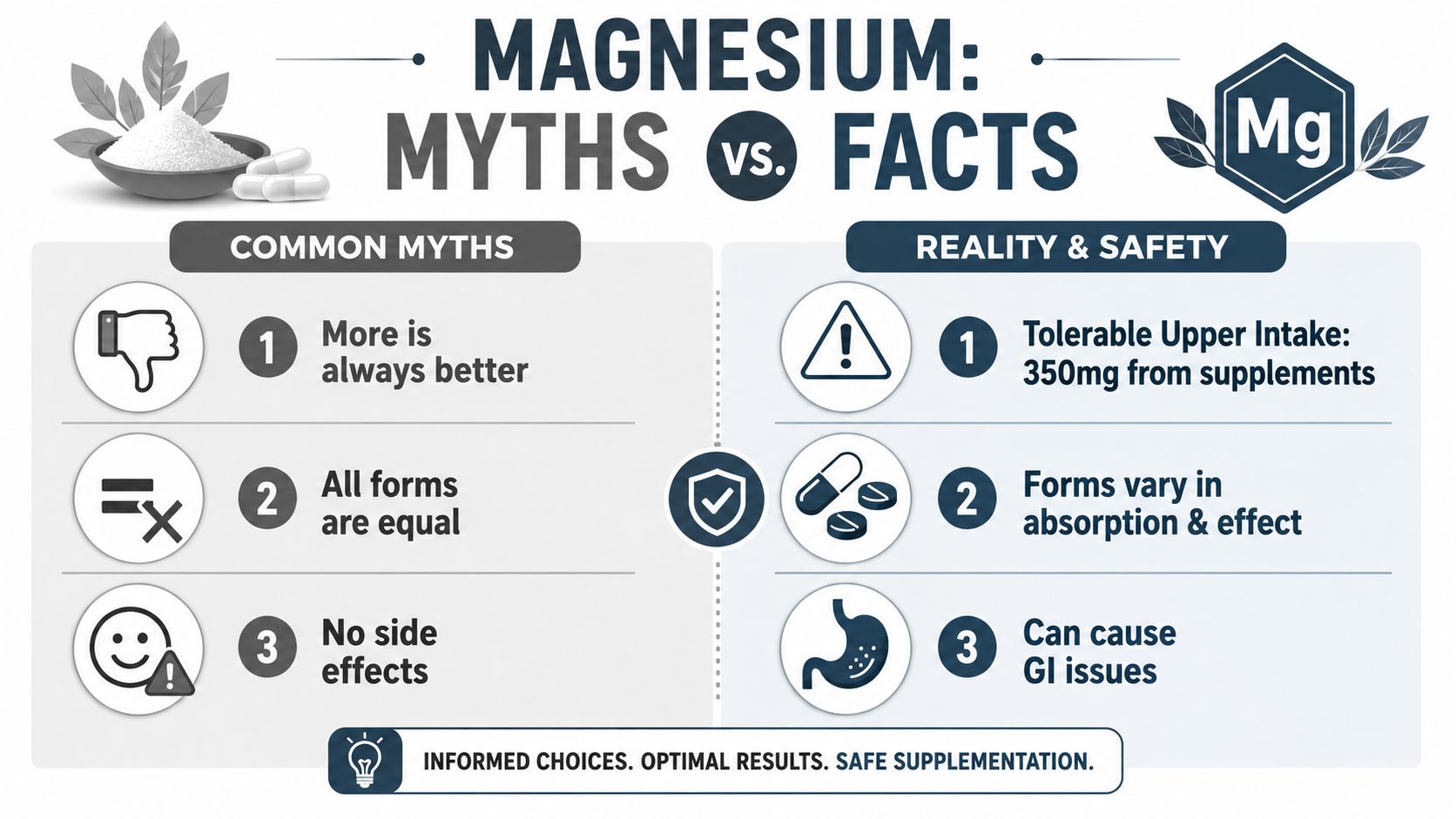
The first myth to retire is more magnesium always means better sleep. The dose-response evidence points in the opposite direction for absorption efficiency. As a single dose increases, the absorbed fraction can fall, while the unabsorbed remainder may draw water into the bowel and cause loose stools.
The second myth is that all forms work identically. Magnesium oxide showed about 4% fractional absorption in the cited comparison, while citrate was summarized at about 25% to 30%, demonstrating why a label's elemental amount doesn't tell the whole story. The third myth is that supplements are automatically risk-free. Magnesium can cause gastrointestinal side effects and can alter the absorption or handling of medicines.
Medication and health-condition checks
Ask a clinician or pharmacist before changing magnesium if you take antibiotics, especially tetracyclines or fluoroquinolones, bisphosphonates, levothyroxine, diuretics, or acid-reducing medicines. Magnesium can bind some medicines in the digestive tract, while other medicines can affect mineral balance or the conditions that influence absorption.
People with chronic kidney disease should not self-supplement casually because the kidneys help regulate magnesium levels. Extra caution is also appropriate for people with severe heart block or myasthenia gravis. Pregnancy adds another reason to use individualized guidance, and this resource on pregnancy-safe magnesium supplement tips can help frame the questions to bring to a healthcare professional.
Stop and seek medical guidance: Severe weakness, confusion, marked drowsiness, breathing difficulty, or a significant change in heart rhythm should not be treated as an ordinary supplement side effect.
Loose stools are usually a practical signal that the serving is too large for your gut or that the form doesn't suit you. Stop or reduce the supplement and seek advice if symptoms are persistent, severe, or accompanied by warning signs.
Testing can help when symptoms persist, intake is uncertain, kidney function is reduced, or a clinician suspects an imbalance. Serum magnesium is commonly considered, while RBC magnesium may provide additional context in some evaluations. Results should be interpreted alongside symptoms, diet, medicines, and health history, not in isolation. A clinician can decide whether repeat testing after a period of consistent use is appropriate.
Your Nightly Magnesium Checklist
Use this as a simple starting framework, then adjust with professional guidance if you have a medical condition or take medication.
- Choose the form: Glycinate is a reasonable sleep-focused default for people who want a gentler routine. Citrate may suit occasional constipation, while oxide is less appealing when dependable absorption is the priority. Chelated forms can be considered with food, but check the actual elemental magnesium amount.
- Keep the serving manageable: A daily starting window of 200 to 400 mg of elemental magnesium is often discussed in evening routines, but the verified evidence here does not establish that range as appropriate for every person. The supplemental tolerable upper intake level shown in the supplied safety material is 350 mg per day, so review the label and your total intake with a healthcare professional before exceeding it.
- Time it deliberately: Take magnesium with dinner, or use a later serving 30 to 60 minutes before bed if that fits your digestion and medication schedule. Splitting a higher daily amount is preferable to taking one concentrated bedtime dose.
- Pair it thoughtfully: A light snack containing some protein or fat may improve comfort, but avoid automatically combining magnesium with high-dose calcium, zinc, or iron. Keep those supplements separated according to pharmacist or clinician advice.
- Protect the wind-down: Dim screens, avoid late alcohol, and keep your sleep and wake times consistent. Gentle stretching can help distinguish muscular tension from the general restlessness that brought you to magnesium in the first place.
- Track instead of guessing: Record the form, serving time, approximate dose, sleep onset, night wakings, and bowel changes. If nothing improves or side effects continue, reassess the form and serving rather than escalating automatically.
Quick questions readers ask
How long should I wait for an effect? Don't expect an instant knockout effect. Give the routine enough consistent time to judge comfort, sleep patterns, and digestive response, while seeking clinical advice if insomnia or other symptoms persist.
Do I need to cycle magnesium? The supplied evidence doesn't establish a need to cycle it. Consistency, tolerability, total intake, and medical context matter more than an arbitrary on-and-off pattern.
What if my stools loosen? Reduce the single serving, split the intake, take it with food, or discuss a different form with a clinician. Persistent or severe symptoms require medical advice.
When should I re-evaluate? Reassess when your sleep journal shows no meaningful change, your gut doesn't tolerate the product, or your medicines or health status change. A thoughtful nightly ritual outperforms sporadic megadosing every time.
SleepHabits offers a melatonin-free magnesium wind-down option alongside educational resources and nighttime breathing tools designed to support consistent restorative sleep habits. Visit SleepHabits to explore a calmer, repeatable evening routine built around better absorption and more restful nights.