

The real magic of mouth taping comes down to one simple thing: it encourages you to breathe through your nose while you sleep. That simple switch is what can lead to less snoring, deeper sleep, and even better oral health. By gently keeping your lips closed, the tape helps your body default to its built-in, highly efficient air filtration system—your nose.
Why Is Everyone Talking About Mouth Taping?

If it feels like mouth taping is suddenly everywhere online, you're right. It's a low-cost, surprisingly simple tool that has people talking, and for good reason. The idea is almost too straightforward: place a small piece of skin-safe tape over your lips at night, and you nudge your body back to breathing the way it was designed to.
But why is that such a big deal? Think of your nose as a sophisticated HVAC system. It’s built to warm, humidify, and filter every breath you take. When you breathe through your mouth, you bypass that entire process. Cold, dry, unfiltered air goes straight into your lungs, which can contribute to everything from a scratchy throat and snoring to restless nights and that dreaded morning breath. A practical example of this is waking up with a sore throat and needing a glass of water immediately—that's a classic sign of overnight mouth breathing.
Nasal vs. Mouth Breathing: A Quick Comparison
The difference between these two ways of breathing isn't subtle—it's night and day. Mouth tape just acts as a gentle reminder, guiding your body back to the far more beneficial option while you're asleep.
To really get a feel for the impact, it helps to see the physiological differences laid out side-by-side. If you want to dive deeper, you can explore the crucial distinctions between nasal breathing vs. mouth breathing in our detailed guide.
For a quick snapshot, this table sums up why getting back to nasal breathing is a cornerstone of better sleep and health.
Nasal Breathing vs Mouth Breathing at a Glance
| Feature | Nasal Breathing (Promoted by Mouth Tape) | Mouth Breathing (Discouraged by Mouth Tape) |
|---|---|---|
| Air Filtration | Naturally filters dust, allergens, and airborne particles. | No filtration, allowing direct entry of irritants into your airway. |
| Air Humidification | Warms and moistens inhaled air, protecting the throat and lungs. | Delivers cold, dry air that can lead to throat irritation and dry mouth. |
| Nitric Oxide | Produces nitric oxide, a gas that improves oxygen circulation and delivery. | Does not produce nitric oxide, reducing the efficiency of oxygen uptake. |
| Oral Health | Helps maintain a healthy oral microbiome and prevents dry mouth. | Contributes to dry mouth, bad breath, and an increased risk of cavities. |
Looking at this, it becomes pretty clear. Mouth breathing isn't just a bad habit; it actively works against your body's efforts to rest and recover overnight. Nasal breathing, on the other hand, supports those processes from the very first breath.
The Science of Better Breathing While You Sleep
To really get why mouth taping can be a game-changer, we have to look at how your body is designed to breathe. Your nose isn't just a facial feature; it's a highly sophisticated, purpose-built air purification system.
Your mouth, on the other hand, is built for eating and talking. Breathing is a backup plan, at best.
When you breathe through your mouth, you're pulling raw, unfiltered air straight into your lungs. This completely bypasses the multi-stage filtration process that happens in your nasal passages, which can lead to irritation, inflammation, and fragmented sleep.
Your Nose Is Your Bodyguard
Think of your nasal passages as a vigilant gatekeeper. They do three crucial jobs before air ever gets near your lungs, creating a protective barrier that your mouth simply can't match.
- It Filters: Tiny hairs called cilia line your nasal passages, acting like a net to trap dust, pollen, and other airborne junk before it can irritate your lungs. For example, if you live in an area with high seasonal pollen, nasal breathing can be your first line of defense against nighttime allergy symptoms.
- It Warms: Your nose is packed with a rich network of blood vessels that warm cold air to body temperature, which protects the sensitive tissues in your airway. This is especially important in winter when cold, dry air can be particularly harsh.
- It Humidifies: The mucous membranes in your nose add moisture to the air you inhale. This simple step prevents that dry, scratchy throat and lung irritation that so often comes with mouth breathing. This natural humidifier means you're less likely to wake up feeling parched.
This whole process ensures the air reaching your lungs is clean, warm, and moist—the perfect conditions for efficient oxygen exchange. Mouth taping simply encourages your body to use this superior, built-in system all night long.
The Secret Ingredient: Nitric Oxide
Beyond just filtering, your nose produces a remarkable molecule called nitric oxide. This gas is a potent vasodilator, meaning it helps relax and widen your blood vessels. When you breathe nasally, you carry this nitric oxide down into your lungs and bloodstream.
Think of nitric oxide as a key that unlocks better oxygen delivery throughout your body. By widening the pathways, it allows your red blood cells to absorb and transport oxygen much more efficiently.
This boost in oxygenation has far-reaching effects. It can help support healthy blood pressure, bolster immune function, and enhance overall cellular health. By promoting nasal breathing, mouth tape helps you harness this natural advantage all night. A practical benefit of this improved oxygenation is waking up feeling more mentally clear and less groggy.
You can learn more about how to boost nitric oxide for sleep in our detailed guide.
Ultimately, the benefits of mouth taping aren't really about the tape itself. It's about restoring your body's most effective and natural way of breathing while you rest.
Quieting Snoring and Supporting Better Sleep
For a lot of people, the first and most obvious win from mouth taping is simple: a quieter bedroom. Snoring, that all-too-familiar rumble, is often a direct consequence of breathing through your mouth at night. When air moves through the mouth, it can cause the soft tissues at the back of your throat—the soft palate and uvula—to vibrate. That vibration is the sound of snoring.
But this isn't just about noise pollution in the bedroom. Chronic snoring chops up sleep for both you and your partner, robbing you of the deep, restorative stages your body desperately needs to repair itself. For example, your partner might nudge you multiple times a night, or you might wake yourself up with a loud snort—both are examples of sleep fragmentation.
By gently keeping the lips sealed, mouth tape encourages a shift back to nasal breathing. This creates a much more stable and less turbulent airway, which can dramatically reduce or even completely stop the tissue vibrations that cause snoring.
The infographic below really drives home just how much your body gains when you make that simple switch.
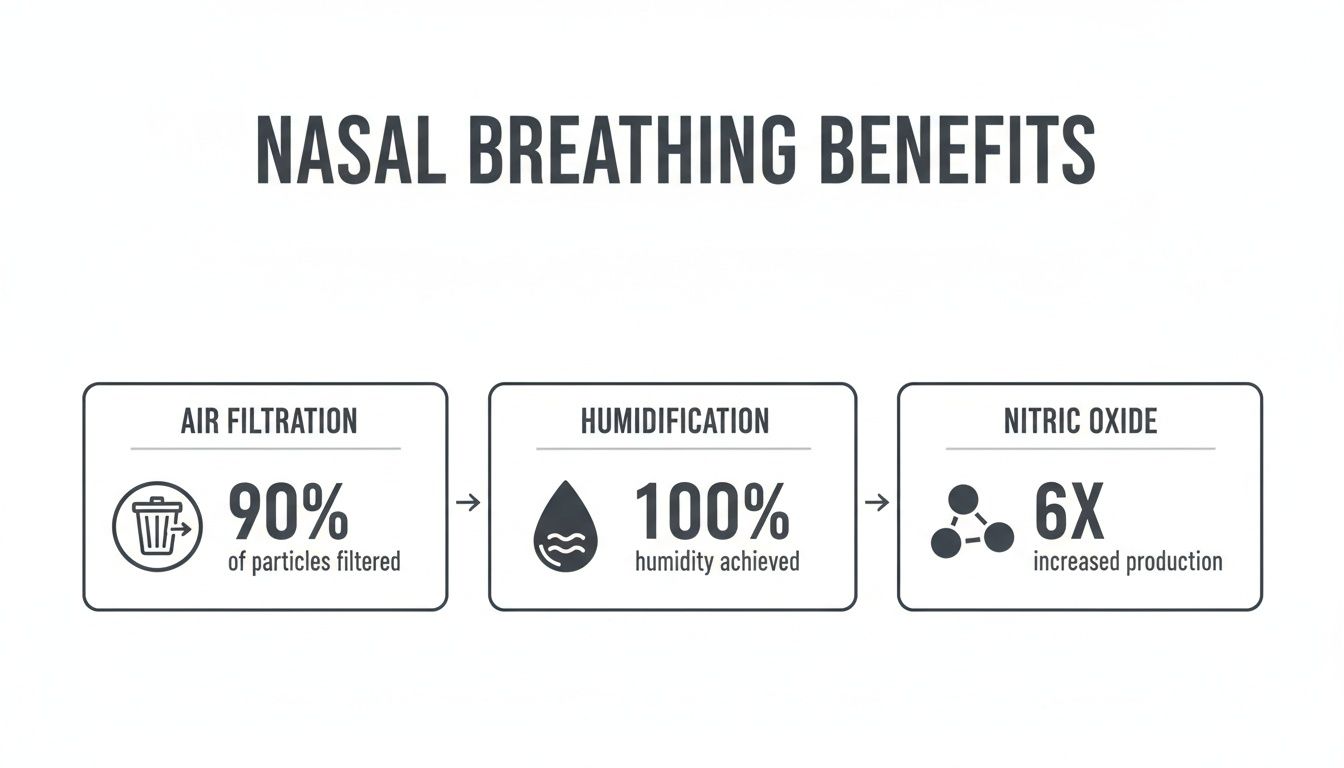
It’s a powerful visual reminder that your nose is a built-in air filter, humidifier, and nitric oxide factory—all essential components for a healthier, quieter night of sleep.
Evidence From Clinical Research
This link between mouth taping and less snoring isn't just something people talk about online; there's solid clinical evidence to back it up. Researchers have been looking into how this simple habit can affect not just snoring but also mild forms of sleep-disordered breathing, like obstructive sleep apnea (OSA).
One particularly eye-opening study from 2022 looked at 20 people with mild OSA who were also habitual mouth breathers. The results were pretty staggering. After they started using a porous mouth tape, their apnea-hypopnea index (AHI)—a key metric for breathing disruptions—dropped by nearly 50%. Their snoring index (SI), which tracks how much of the night is spent snoring, also fell by about 50%. You can discover more about these powerful findings from the 2022 study and see the data for yourself.
These findings suggest that for individuals with mild OSA and habitual mouth breathing, mouth taping can be a powerful tool to reduce breathing disruptions and significantly quiet snoring, leading to more restorative sleep.
This kind of data is huge. For anyone looking for a non-invasive way to get a better night's rest, the evidence clearly shows a major benefit of mouth tape: a quieter, more peaceful, and healthier sleep environment for everyone involved. It reinforces the idea that taping isn't just a band-aid for a symptom; it’s about guiding your body back to its most efficient and natural way of breathing.
Improving Deep Sleep and CPAP Effectiveness
Beyond just quieting a noisy bedroom, one of the most significant benefits of mouth tape is its impact on the quality of your sleep. Consistent nasal breathing helps stabilize your entire respiratory system. That stability, in turn, nurtures a healthier sleep architecture—the natural cycle of different sleep stages your brain moves through each night.
This is the key. When you breathe through your nose, you create a smoother, more consistent flow of oxygen. This helps your body spend more time in the most restorative phases of sleep: deep slow-wave sleep and REM sleep. These are the critical periods for physical recovery, memory consolidation, and overall brain function. A practical outcome of this is feeling less "brain fog" in the morning and having more stable energy levels throughout the day.
A Game-Changer for CPAP Users
For the millions who rely on Continuous Positive Airway Pressure (CPAP) therapy, mouth breathing can be a major roadblock to success. When you sleep with your mouth open, the pressurized air from the machine escapes instead of keeping your airway open. This is known as a “mouth leak,” and it seriously undermines the effectiveness of the therapy. Many users notice this as a dry mouth or a hissing sound from their mask.
Mouth tape acts as a simple yet powerful accessory to CPAP treatment. By gently keeping the lips closed, it prevents these leaks and ensures the air pressure gets delivered where it’s supposed to go. This simple act can lead to:
- Improved Compliance: A more comfortable and effective therapy experience makes it much easier to stick with it long-term.
- Fewer Arousals: Consistent pressure means fewer breathing disruptions, leading to less fragmented and more continuous sleep.
- Reduced Daytime Fatigue: When your CPAP works as intended, you finally get the restorative sleep needed to feel energized and alert the next day.
Recent research highlights just how impactful this can be. A 2023 study found that for patients using CPAP or similar devices, adding mouth tape significantly improved their sleep architecture. This included a 15-20% increase in slow-wave sleep and a 25% reduction in sleep arousals. These improvements are a direct result of stabilized breathing patterns and are a clear win for better sleep quality. Explore the full research findings on sleep architecture improvements.
By sealing mouth leaks, mouth tape ensures the CPAP machine can do its job effectively. This simple addition helps users maintain consistent pressure, leading to fewer awakenings and a noticeable boost in daytime energy.
Ultimately, whether you use a CPAP machine or not, the goal is the same: to achieve deep, uninterrupted rest. Mouth taping supports this by guiding your body back to the breathing method that promotes a calm, stable, and truly restorative night’s sleep.
How to Start Mouth Taping Safely

Ready to see how encouraging nasal breathing—one of the simplest benefits of mouth tape—can improve your sleep? Getting started is pretty straightforward, but it's crucial to approach it with a safety-first mindset.
The goal here is to gently guide your body back to its natural breathing pattern, not force it into an uncomfortable or unsafe situation. Before you even think about applying tape, you have to make sure you're a good candidate. This isn't a one-size-fits-all solution.
Who Should Avoid Mouth Taping
Safety always comes first. If you have any of the following conditions, mouth taping is not recommended until you’ve spoken with a healthcare professional.
- Significant Nasal Congestion: This one is just common sense. If you have a cold, bad allergies, or anything else blocking your nose, your body needs to breathe through your mouth. Don't fight it. A practical test: can you breathe comfortably through your nose for a full minute right now? If not, skip the tape.
- Deviated Septum or Nasal Polyps: Any structural issue that obstructs your nasal airflow can make mouth taping dangerous. You need a clear airway to breathe properly.
- Respiratory or Lung Conditions: Anyone with asthma, COPD, or other lung-related health concerns should avoid this practice entirely.
- Gastroesophageal Reflux Disease (GERD): The risk of regurgitation makes mouth taping a potential hazard for anyone with severe reflux.
When in doubt, talk to your doctor. This is especially true if you suspect you might have an undiagnosed issue like sleep apnea. Their guidance is key to making sure you're approaching this new habit safely and effectively.
Choosing the Right Kind of Tape
The type of tape you use matters—a lot. Please, never reach for household items like duct tape, packing tape, or electrical tape. Their adhesives can seriously damage the sensitive skin on and around your lips and may contain chemicals you don't want anywhere near your mouth.
Instead, your focus should be on products specifically designed for this purpose.
The ideal tape acts as a gentle reminder, not a seal. It should be strong enough to keep your lips together but gentle enough that a cough or an intentional mouth opening can easily break the seal.
Look for a tape that is:
- Medical-Grade and Hypoallergenic: This is non-negotiable for preventing skin irritation or allergic reactions.
- Porous and Breathable: A good tape allows for some minimal airflow and moisture release.
- Designed for Skin: You need a gentle adhesive that won’t cause damage when you peel it off in the morning.
Many people find that a dedicated, hypoallergenic mouth tape works best. You can explore options like SleepHabits' Hydrating Mouth Tape, which is specifically designed for comfort and safety.
Your First Night: A Simple Routine
Ready to give it a try tonight? Follow these simple steps to get started on the right foot.
- Test It During the Day: Before committing to a full night, wear a small piece of tape for about 10-15 minutes while you're awake and relaxed, maybe while reading. This helps you get used to the sensation and ensures it doesn't make you feel anxious. This daytime trial is a crucial step to build comfort and confidence.
- Clean and Dry Your Lips: Right before bed, as part of your wind-down, wash and thoroughly dry the area around your mouth. Any oils from your skin, lotions, or lip balms will keep the tape from sticking properly.
- Apply a Single Vertical Strip: You don't need to seal your entire mouth shut. A small, single strip placed vertically over the center of your lips is usually enough to gently encourage them to stay closed, unlocking the benefits you’re after. This method allows the sides of your mouth to open if needed, adding a layer of safety.
Common Questions About Mouth Taping
Anytime you try a new wellness practice, questions are going to come up. It’s completely normal. Getting clear, straightforward answers is part of feeling confident enough to give it a real try. Let's tackle the most common ones.
Is Mouth Taping Safe for Everyone?
While a lot of people can benefit from mouth taping, it's definitely not for everyone.
You should skip it if you're dealing with serious nasal congestion from a cold or allergies, have a severely deviated septum, or anything else that physically blocks your nasal passages. Trying to force nasal breathing when you can't breathe through your nose is not the goal.
It's also not a good idea if you have a respiratory condition, feel nauseous, or if the idea of covering your mouth triggers anxiety. And if you have a known health issue like sleep apnea, it's critical to talk to your doctor before you even think about trying it.
What Kind of Tape Should I Use?
First, let's cover what not to use: never, ever use household tapes like duct tape, packing tape, or electrical tape. Their adhesives are harsh, can irritate your skin, and they aren't breathable.
The right tape is a gentle guide, not a seal. It should be porous, breathable, and easy to remove. The goal is to encourage your lips to stay closed, not to force them shut.
Always go for a purpose-made, hypoallergenic mouth tape or a gentle medical-grade tape designed for sensitive skin. A light, breathable adhesive is what makes it both safe and comfortable enough for nightly use.
What if I Need to Cough?
This is a totally valid concern and probably the most common question people ask. Proper mouth tape is designed with a gentle adhesive that will release with the force of a cough, a sneeze, or even just intentionally opening your mouth.
Think of it as a gentle reminder, not a restraint. If you're feeling sick or nauseous, it's best to just skip the tape until you're feeling better. You want to be sure your airway is completely available if you need it. A practical tip: before you fall asleep, try a practice cough to see how easily the tape comes loose. This can provide peace of mind.
How Long Until I See Benefits?
This really varies from person to person. Some people notice a difference on the very first night—they snore less or wake up without that sandpaper-dry mouth feeling. That's a great sign.
For others, it might take a week or so just to get used to the sensation of wearing the tape. The bigger, longer-term benefits, like feeling more energized during the day and getting consistently deeper sleep, often become more obvious after a few weeks of consistent use. A practical way to track progress is to keep a simple sleep journal: note how you feel upon waking (1-10 scale), your energy levels in the afternoon, and any comments from a partner about snoring. This can help you see the gradual improvements.
Ready to experience a quieter, more restorative night's sleep? SleepHabits offers hydrating, hypoallergenic mouth tape designed for comfort and effectiveness. Start your journey to better breathing and deeper sleep tonight at https://sleehabits.com.