

Melatonin is the advice almost every shift worker hears first. Take it before daytime sleep, block out the light, and hope your body cooperates. That approach can help some people, but it fails when it treats rotating shifts, fixed night work, and short stretches of nights as if they create the same biological problem.
A reliable sleep aid for shift workers is usually a protocol, not a pill. Light exposure, a dark bedroom, breathing support, carefully timed naps, caffeine control, and a suitable supplement all have to work together. The right test isn't only whether you fall asleep faster. It's whether you wake clear enough to drive safely, make decisions, and stay alert through the next shift.
Why Most Sleep Aid Advice Fails Shift Workers
Melatonin has a legitimate place, but it isn't a universal reset button. In a double-blind, randomized, placebo-controlled crossover study of 86 shift-work nurses, 5 mg taken about 30 minutes before daytime sleep reduced sleep-onset latency and improved subjective sleep quality compared with placebo, while total sleep time didn't measurably increase and no adverse effects were reported during treatment (clinical study of melatonin in shift-work nurses). A later review found that melatonin after a night shift increased daytime sleep length by about 24 minutes on average across 7 trials involving 263 participants, but the evidence was low quality and sleep latency didn't improve versus placebo (systematic review of melatonin after night shift).
That distinction matters in practice. Someone who falls asleep quickly but wakes after a short, broken daytime sleep needs a different plan from someone who lies awake for hours after clocking out. A supplement may influence one part of the problem while leaving the circadian mismatch, morning light, household noise, and next-shift alertness untouched.
Shift pattern changes the prescription
Fixed night workers can often build a stable daytime sleep window and repeat the same light routine. Rotating workers face repeated transitions, so aggressive attempts to force one permanent sleep schedule may create more disruption. Short-stretch workers, who work only a brief run of nights before returning to days, usually need protection during the night block and a deliberate transition afterward.
Recent evidence supports that personalization. Rotating shifts were associated with higher odds of sleep disturbances, with an odds ratio of 1.48, while night shifts of 8 hours or less had an odds ratio of 1.77 and healthcare workers had an odds ratio of 1.56 (2026 meta-analysis of shift-work sleep patterns). Those figures don't tell you which product to buy. They do show why one-size-fits-all advice is inadequate.
Practical rule: Choose the intervention based on the failure point, falling asleep, staying asleep, or waking alert, then adjust it to the shift pattern.
The useful stack is straightforward: control light before sleep, make the bedroom dark, support nasal breathing when appropriate, use non-melatonin relaxation support if desired, and protect alertness during work. No single product repairs a clock that has been pushed in the wrong direction.
The Real Scale of Shift Work Sleep Disorder
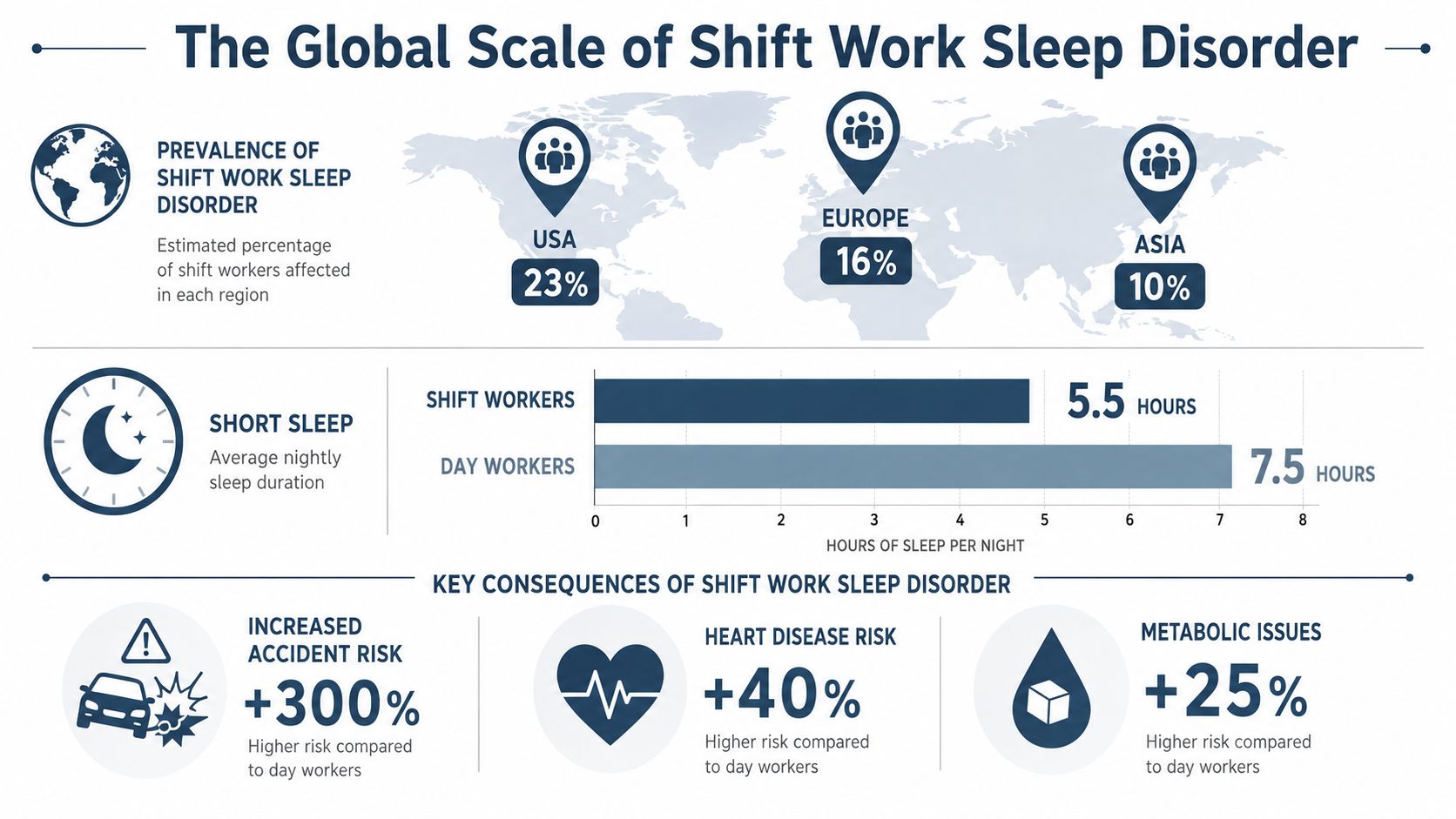
Shift-related sleep problems aren't a sign that a worker lacks discipline. A CDC and NIOSH analysis found short sleep duration in 37.6% of U.S. workers overall, rising to 61.8% among night-shift workers. Among night-shift workers, 30.7% reported poor sleep quality and 18.5% reported insomnia, compared with 8.4% of daytime workers (CDC and NIOSH analysis in NIH's PMC).
The scale is larger than the United States. An NIH review notes that nearly 20% of employed U.S. adults work schedules including at least part of the period between 7:00 pm and 6:00 am, and more than one in five shift workers may experience shift work disorder (NIH review of shift work and sleep). A systematic review and meta-analysis covering 29 studies from 16 countries reported an overall shift work sleep disorder prevalence of 26.5%, with a 95% confidence interval of 21.0% to 32.8% (systematic review and meta-analysis of shift work sleep disorder).
Why the numbers feel personal
A worker can have a measurable sleep deficit without meeting the criteria for a formal disorder. That difference matters, but both situations can feel similar at the bedside, in an ambulance, or on a production floor. You may notice heavy eyelids during the commute, a mood crash after several nights, slower judgment, or a sudden need for stimulants just to reach the end of the shift.
The meta-analysis pooled evidence from both high-income and low- and middle-income settings, showing that the burden isn't confined to one country or one occupation (international shift work sleep disorder review). Healthcare, emergency response, transport, manufacturing, and other round-the-clock services place people in schedules that repeatedly oppose ordinary light and sleep cues.
For a practical overview of clinical approaches, see this guide to shift work sleep disorder treatment. A melatonin-free option such as Restore+ Magnesium Sleep Aid can fit an evening wind-down routine, with magnesium, L-theanine, tart cherry, lemon balm, glycine, and nitric oxide supporting ingredients, but it shouldn't be mistaken for treatment of a diagnosed disorder.
Comparing Sleep Aid Options for Irregular Schedules
No single pill repairs circadian disruption. The right option depends on the shift pattern, the problem you are trying to solve, and how alert you must be after waking. Melatonin may suit sleep initiation when its timing matches the intended sleep window. Prescription sedative-hypnotics can promote sleep under clinical supervision, yet they do not restore a misaligned body clock and may leave residual effects when the next shift starts.
Rotating workers face a different problem from people on fixed nights. A rotating schedule may require repeated timing changes, while a fixed-night worker may benefit more from consistent light and sleep cues. Workers on short stretches of nights often need a recovery plan that protects daytime sleep without making the return to daytime hours harder.
Non-melatonin supplements occupy a narrower role. Magnesium, L-theanine, glycine, tart cherry, lemon balm, and nitric oxide support may help create a calmer transition into sleep, but they are not guaranteed to deepen sleep or improve performance. A 2022 meta-analysis found that dietary supplements improved sleep quality and daytime function in shift workers, but not psychomotor vigilance or mood (review of sleep interventions for shift workers). Better sleep ratings do not automatically mean safer work performance.
| Aid Type | Sleep Onset | Total Sleep Time | Next-Shift Alertness | Grogginess Risk |
|---|---|---|---|---|
| Melatonin | May reduce sleep-onset latency in some shift workers when timed before sleep | May not increase total sleep time | Assess personally, because faster onset does not prove better alertness | Variable |
| Prescription sedative-hypnotics | Can promote sleep under clinical supervision | Does not reliably correct circadian disruption | Requires medical review because residual effects can matter | Potentially significant |
| Non-melatonin supplements | May support relaxation and wind-down | Evidence varies by formulation and individual | Improved sleep quality does not guarantee better vigilance | Often considered lower, but individual responses differ |
| Light, darkness, naps, and schedule design | Works indirectly by shaping alertness and sleep cues | Protects the sleep opportunity rather than forcing sleep | Central to maintaining performance across the shift | Low when timed appropriately |
Judge the aid by the next shift
Run any trial against two measures: sleep outcome and functional outcome. Record estimated time to fall asleep, awakenings, perceived rest, fogginess, concentration, and heavy fatigue at work. Do not keep increasing a supplement because sleep onset remains imperfect.
Workers comparing melatonin with other consumer options may also find HempWell USA's take on CBD for sleep useful when reviewing category differences. CBD, melatonin, and sedating medications are not interchangeable, and a calming reputation does not show that a product improves alertness after a night shift.
Judge success by next-shift alertness, not sleep onset alone. Light control, nasal breathing, naps, caffeine timing, and schedule design still carry much of the recovery plan, whether or not a supplement is included.
Building a Pre-Sleep and Wake-Up Protocol
A post-shift routine should begin at clock-out, not when you finally reach the bedroom. The first objective is to stop sending your brain bright-morning signals while you're trying to create a sleep opportunity.
Start at clock-out
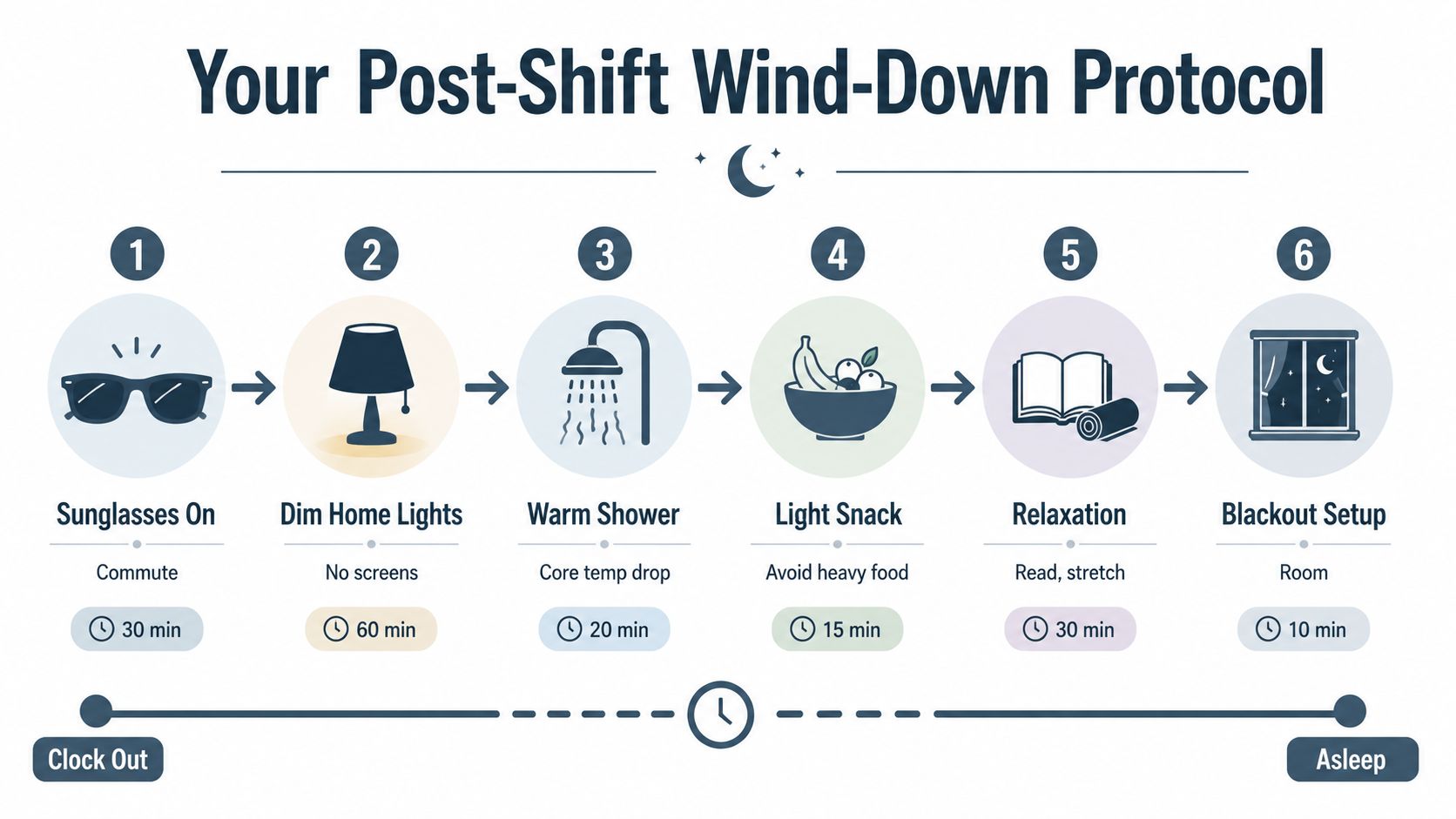
Use this sequence after a night shift, adapting the timing to your commute and home responsibilities:
- Block bright light on the way home. Sunglasses can reduce morning light exposure during the commute. If you must use a phone, activate a blue-light filter and keep the interaction brief.
- Dim the home environment immediately. Use warm, low lighting and avoid turning on bright overhead fixtures. The purpose is to reduce stimulation before your intended sleep window.
- Take a warm shower. The relaxing routine and subsequent cooling sensation can help you shift from work activation toward rest.
- Choose a light snack if hunger will keep you awake. Avoid making a heavy meal part of the final stretch before bed.
- Spend the final 30 minutes with low-arousal activity. Read, stretch, journal, or practice slow breathing rather than reviewing work messages.
- Make the bedroom dark, cool, and quiet. Blackout curtains, an eye mask, earplugs, and phone do-not-disturb settings address the daytime environment directly.
This routine aligns with the consensus guidance to aim for 7 to 9 hours of sleep per 24 hours and to treat light, caffeine, food, fluids, exercise, alcohol, nicotine, and sleep problems as separate targets (2023 consensus guidance for shift workers).
Add breathing support carefully
Nasal strips or nostril dilators may help people whose nasal airflow contributes to snoring. One clinical study found that a nostril dilator significantly reduced snoring at both 1- and 6-month follow-ups, while another study found that changing between nasal and oral breathing altered snoring in the examined subjects (clinical evidence on nasal airflow and snoring). These tools aren't a treatment for every form of sleep-disordered breathing.
Mouth tape requires more caution. Don't cover your mouth if you have significant nasal obstruction, breathing concerns, or suspected sleep apnea without discussing it with a clinician. A product such as Hydrating Mouth Tape is designed around quieter nights, oral care, tongue posture, and nasal-breathing support, but those product claims don't replace an assessment of your airway.
Use slow breathing for several minutes, with a comfortable exhale that's slightly longer than the inhale. On waking, expose yourself to bright light, drink water, and move gently before preparing for the next shift. For more practical daytime-sleep guidance, follow this night-shift sleep routine.
Strategic Napping and Caffeine Timing on Shift
Naps and caffeine are performance tools, not substitutes for a protected main sleep period. Used late or without a plan, they can keep you alert at work and wide awake after clocking out.
A short operational nap should stay under 30 minutes, according to the practical protocol described in the evidence brief. In real settings, a 20 to 30 minute nap is usually easier to end cleanly than a longer nap, especially when you need to return to patient care, driving, or safety-sensitive work. Set an alarm that vibrates if sound could disturb others, and allow a brief transition before taking on a demanding task.
Match the tool to the shift
Use caffeine early enough that it supports the first or middle part of the shift rather than the final stretch. Specialty guidance emphasizes caffeine early in the shift, followed by light control after work and avoidance of stimulants before daytime sleep (shift-worker sleep and alertness guidance).
The common mistake is using coffee to push through the final hours, then expecting the body to sleep immediately in daylight. Energy drinks can make that pattern worse by encouraging repeated stimulant use when hydration, movement, food, or a brief nap would be more appropriate. If you need a lower-stimulation alternative during a later break, these smarter afternoon coffee swaps offer ideas for changing the ritual without automatically adding more caffeine.
A practical “nappuccino” sequence is simple: drink a small amount of coffee immediately before a short nap, then wake as the caffeine begins to take effect. Because individual caffeine sensitivity varies, test this on a lower-risk shift first, never before driving home or performing a critical task.
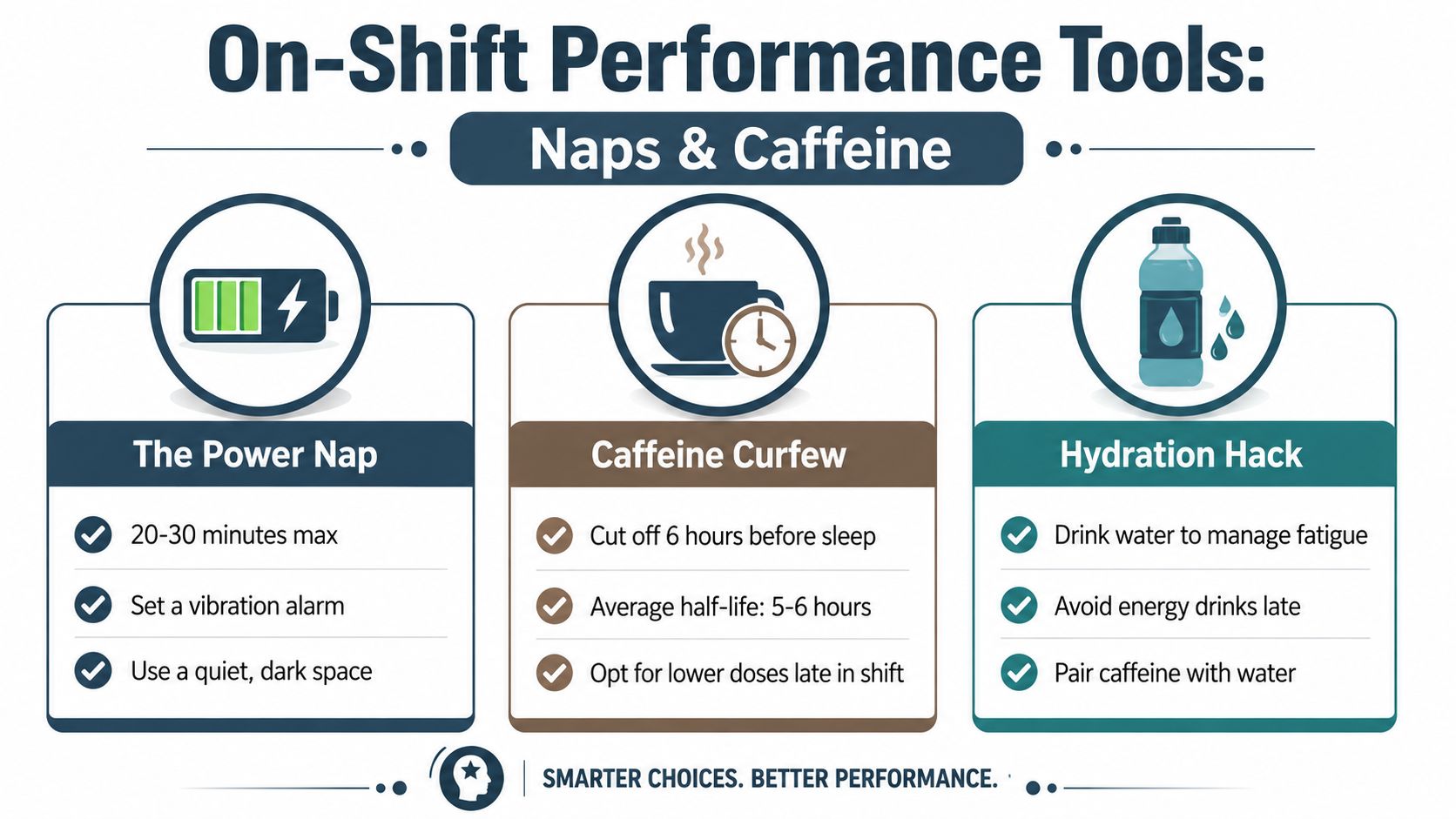
Hydration supports basic comfort and can help you distinguish fatigue from thirst, but it won't cancel sleep deprivation. Drink regularly during the shift, pair caffeine with water, and reduce large fluid loads near bedtime if bathroom trips interrupt your daytime sleep. For more guidance on choosing a nap duration, use this nap-length guide for energy.
Performance check: If a strategy helps you stay awake at work but leaves you unable to sleep after clock-out, it isn't working as a complete shift-work protocol.
Personalizing Your Weekly Sleep Recovery Plan
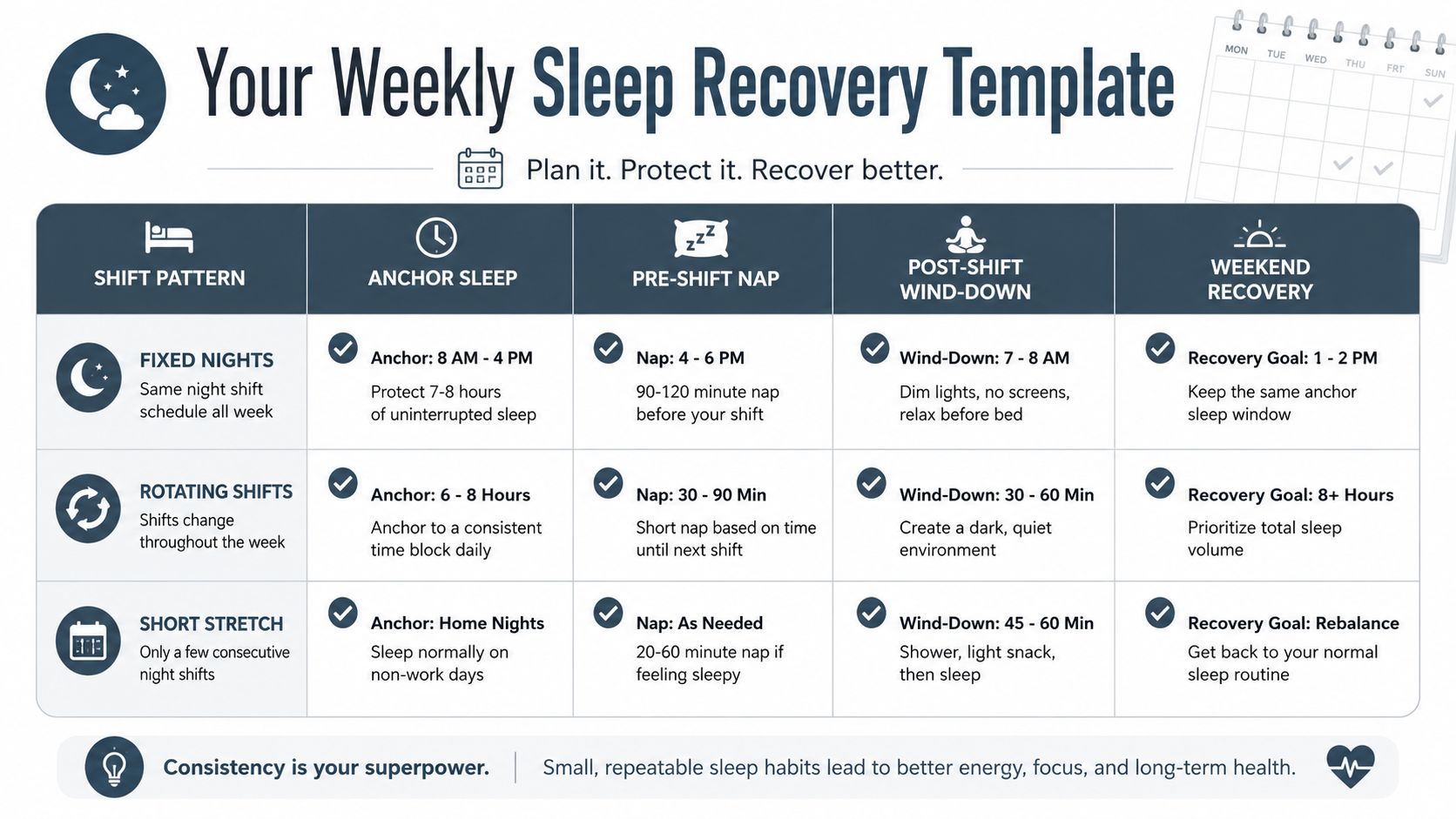
A weekly plan needs stable anchors, not perfect consistency. Consensus guidance supports regularity within the demands of irregular schedules, so set a repeatable sleep window for each shift pattern instead of forcing every day onto one clock (consensus sleep guidance for shift workers). Judge the plan by next-shift alertness and safe functioning, not sleep onset alone.
Fixed nights
Keep your main sleep window stable on workdays and days off as far as home demands allow. Wear sunglasses or limit bright light on the commute home, follow the same wind-down sequence, and seek stronger light after waking rather than immediately after the shift. If you nap before work, finish early enough to avoid grogginess at clock-in.
Rotating shifts
Use separate anchors for day shifts, night shifts, and days off. During a night block, repeat the post-shift routine. When returning to days, shorten the morning sleep opportunity if necessary, then get light after waking to guide the transition instead of alternating unpredictably between sleep and wakefulness.
Rotating workers often need better scheduling before adding supplements. Keep nasal strips available when congestion or snoring limits airflow. Use mouth tape only when nasal breathing is comfortable and a clinician has ruled out relevant breathing problems. The target is a repeatable sleep environment and breathing pattern, not a growing pile of products.
Short-stretch schedules
For a brief run of nights, protect recovery immediately. Take a pre-shift nap when possible, use caffeine early rather than late, wear sunglasses on the commute, and keep the bedroom dark after work. When the run ends, shift deliberately instead of alternating long daytime sleep with an early bedtime.
Know when self-management isn't enough
Discuss supplements with a clinician if you are pregnant, managing a chronic condition, taking medication, or considering regular use of a sedating product. Persistent insomnia, excessive daytime sleepiness, near-misses while driving, loud snoring, witnessed breathing pauses, or difficulty functioning at work warrant clinical evaluation.
The American Academy of Sleep Medicine guideline identifies melatonin before daytime sleep as a timing-based option for night-shift workers. That does not make it suitable for every schedule or person (AASM circadian rhythm practice guideline). If symptoms continue despite a structured plan, ask a sleep specialist about shift work sleep disorder rather than continuing to experiment.
SleepHabits offers a melatonin-free Restore+ wind-down drink and breathing-focused tools for a consistent post-shift routine, alongside light control, naps, and schedule planning. Visit SleepHabits to review the products and sleep education resources, then build the protocol around your shift pattern and next-shift alertness.