

You wake up with a dry mouth, your partner rolls over and complains about the noise, and you're left wondering why snoring mouth breathing keeps happening even after a full night in bed. That pattern is frustrating because it feels simple, yet it usually isn't. The sound may start at the mouth, but the underlying problem often begins higher up, where air is being forced through a narrowed airway.
Why Mouth Breathing and Snoring Happen Together
A person can breathe through the mouth for a night or two without much consequence. The trouble starts when the mouth becomes the default airway during sleep, because open-mouth breathing sends air across the soft palate, uvula, and throat tissues with more turbulence, which increases vibration and makes snoring louder Mayo Clinic and Yale Medicine's snoring overview. A closed mouth and a relaxed nose-based breath create a smoother airflow path, so there's less tissue buzzing.
A simple bedroom example
Think of two fans pointed at a curtain. One fan blows straight and steady, the other blows at an angle and makes the fabric flap. Mouth breathing is closer to that angled fan, especially when sleep relaxes the tongue and throat muscles and narrows the space behind the mouth.
Practical rule: if the snoring is much worse when the mouth falls open, the mouth is probably acting like a loudspeaker for a narrower airway, not causing the whole problem by itself.
That's why people often wake up with both dry mouth and poor sleep. The mouth is open because the nose isn't giving enough easy airflow, or because the upper airway is less stable during sleep. A helpful starting point is a simple internal check, not a quick fix. If you're looking for a broad primer on common triggers, what causes snoring at night offers a useful overview.
The key idea is this. Closing the mouth can reduce noise, but it doesn't solve the airflow problem that made mouth breathing necessary in the first place. That's why the better question isn't “How do I stop the mouth from opening?” It's “What's making nasal breathing hard right now?”
The Hidden Causes Behind Mouth Breathing at Night
Mouth breathing is usually a workaround, not a bad habit in isolation. The nose may be blocked, inflamed, or structurally narrow, so the body switches to the mouth to keep air moving. Cleveland Clinic's overview lists common drivers such as deviated septum, turbinate hypertrophy, nasal congestion from allergies or infection, nasal polyps, enlarged adenoids or tonsils, and sleep apnea as reasons people mouth-breathe instead of breathing through the nose Cleveland Clinic.
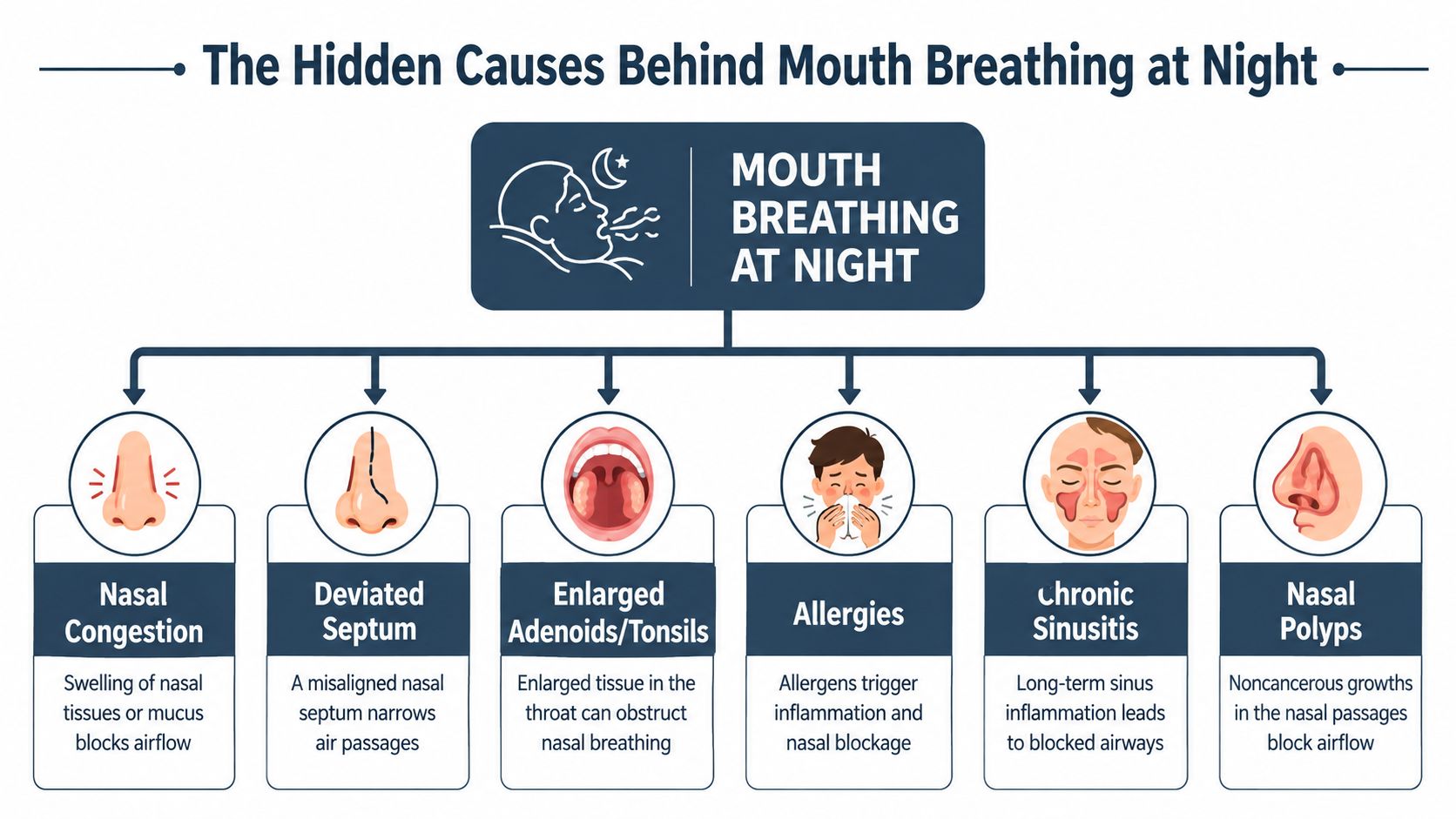
What to ask yourself before you chase a fix
If your mouth breathing happens mostly at night, ask a few plain questions. Do you wake congested most mornings? Do allergies flare at certain times of year? Have you noticed one side of the nose feels more blocked than the other? Does your child sleep with an open mouth and snore, but seem better during the day? Those clues matter because they point toward upstream obstruction, not just a sleep posture problem.
A child mouth-breathing sample found that the main underlying causes were allergic rhinitis (81.4%) and enlarged adenoids (79.2%), with snoring (79%), sleeping with mouth open (86%), and nasal obstruction (49%) appearing often as well PubMed pediatric mouth-breathing study. In other words, when mouth breathing shows up alongside snoring, the body is often signaling a real airway issue.
That's why symptom-level fixes alone can disappoint. Covering the mouth without checking for blocked nasal airflow can feel like taping over a warning light. If you're trying to sort out whether pain or pressure in the face and jaw needs urgent attention, the article on signs your tooth pain needs urgent care is a useful example of how to think about red flags instead of guessing.
A practical product example can help here. Eucalyptus Nasal Strips are positioned for easier nighttime breathing, reducing congestion from colds, allergies, or dry air, and supporting nasal breathing habits when the nose is the main bottleneck. That kind of tool makes sense when the issue is airflow resistance, not when a deeper sleep-breathing disorder is driving the pattern.
If the nose feels blocked most nights, treat the blockage first. Mouth breathing is often the consequence, not the cause.
Health Consequences of Chronic Mouth Breathing and Snoring
The first consequence people notice is usually annoyance. The second is often sleep that never feels fully restorative. In a longitudinal childhood study published in Sleep, “always” snoring ranged from 3.6% to 7.7%, “habitual” snoring ranged from 9.6% to 21.2%, and “always” mouth breathing ranged from 2.1% at 0.5 years to 7.6% at 4.75 years, with mouth breathing roughly doubling between ages 3.5 and 4.75 years Sleep journal cohort. The same study found “always” apnea at 1% to 2%, which matters because snoring and mouth breathing showed up much more often than obvious apnea in early childhood.
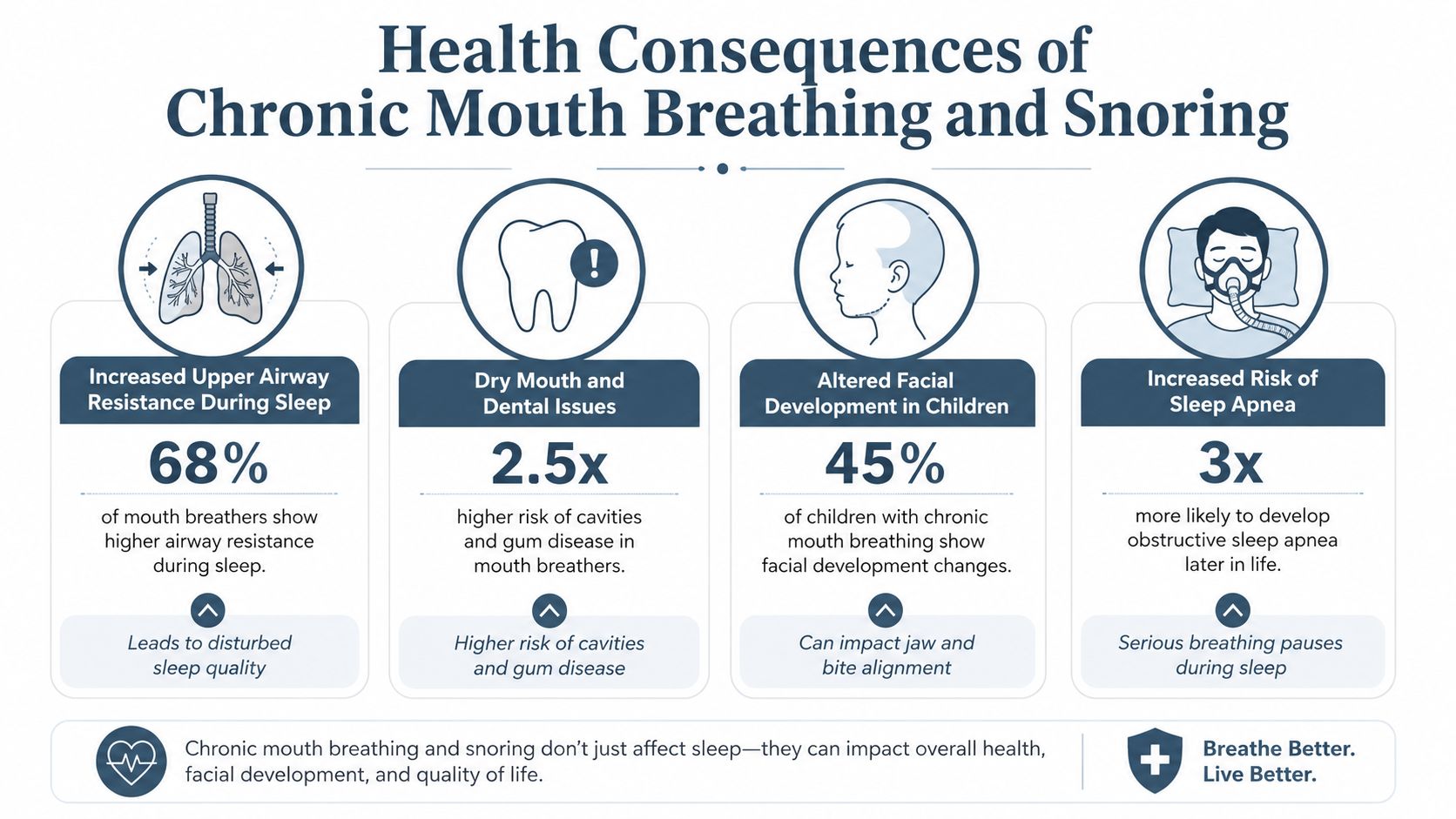
Why the mechanics matter
Mouth breathing can measurably worsen sleep-breathing mechanics. One review reports about a 2.5-fold increase in upper airway resistance during sleep when people breathe through the mouth rather than the nose, and it also cites an Apnea-Hypopnea Index of 43 for oral breathing compared with 1.5 for nasal breathing in the same context PMC review. That doesn't mean every mouth breather has apnea, but it does show the airway can become less stable when the mouth stays open.
The same pattern can affect daily life in different ways. Adults often report waking tired, while children may show agitated sleep, drooling on the pillow, daytime irritability, or recurrent airway irritation. In a cohort of 4,866 children, habitual mouth breathing during sleep was 18.7% and habitual snoring was 6.0%, and both were strongly associated with more frequent rhinosinusitis, ear infections, and antibiotic use with p < 0.0001 for each outcome PubMed cohort study.
Practical rule: when mouth breathing and snoring happen together often, think beyond noise. The pattern can point to recurrent upper-airway inflammation, nasal blockage, or sleep-disordered breathing.
A consumer sleep-support example fits here, too. Restore+ Magnesium Sleep Aid is a melatonin-free magnesium wind-down drink built around a habit-based evening routine, but it's best viewed as a sleep routine support, not a treatment for blocked nasal airflow or apnea.
The main takeaway is simple. Chronic mouth breathing isn't just about comfort. It can be a sign that the airway is working harder than it should, especially when snoring shows up at the same time.
Evidence-Based Interventions for Snoring and Mouth Breathing
Instead of seeking one fast answer, the better approach is to match the tool to the cause. If the nose is the bottleneck, nasal support makes sense. If the airway is collapsing during sleep or apnea is part of the picture, the plan has to go beyond a strip or a sticker.
| Intervention | Best For | Evidence Strength | When to Avoid |
|---|---|---|---|
| Nasal strips or dilators | Mild nasal blockage, stuffy nights, positional congestion | Moderate for airflow support, limited for major obstruction | Severe structural blockage, suspected apnea without evaluation |
| Mouth tape | People who can already breathe through the nose comfortably | Limited, especially outside mild cases | Nasal congestion, vomiting risk, suspected apnea, panic with occlusion |
| Side sleeping | Back-sleepers whose snoring worsens supine | Practical and low risk | When pain, reflux, or another condition makes side sleeping unrealistic |
| Weight loss, avoiding alcohol or sedatives | Snoring made worse by airway collapse, throat relaxation, or body-weight factors | Strong lifestyle logic, often part of medical advice | When nasal obstruction is the main driver and these steps are used alone |
| Medical evaluation and treatment of obstruction | Allergies, septal deviation, enlarged adenoids or tonsils, polyps, apnea | Strong when a root cause is present | Never as a last resort if symptoms are persistent |
Mouth tape deserves caution, not hype
A 2024 systematic review found the evidence for mouth taping and similar occlusive devices is minimal for most groups and not clinically significant outside mild OSA PLOS One review. That does not make it useless, it makes it conditional. If the nose is open and the mouth is only drifting open out of habit, tape may help reinforce closed-mouth sleep. If the nose is blocked, tape can turn a fix into frustration.
That is the right lens for Hydrating Mouth Tape, which is positioned to support quieter nights, oral care, and proper tongue posture. It belongs in a routine only when the person can already breathe through the nose comfortably enough for sleep.
Start with the lowest-risk tool that matches the cause. If a tool cannot address the blockage, it will not solve the symptom for long.
For broader snoring support, the nasal strips for snoring guide can help you think about airflow first instead of chasing every trend. One practical example is positional therapy. If snoring clearly worsens on the back, side sleeping can be a low-effort change worth testing before more aggressive options.
The rule of thumb is plain. Use nasal support for nasal resistance, use mouth-closure tools only when nasal breathing is already possible, and escalate when symptoms do not fit a simple habit problem.
Building Your Nightly Breathing Routine
A nightly routine works best when it follows the body's sequence, not a random checklist. Start by making nasal breathing easier, then decide whether any mouth support is appropriate. That order matters because putting a mouth tape over a blocked nose is like closing one door while the hallway stays jammed.
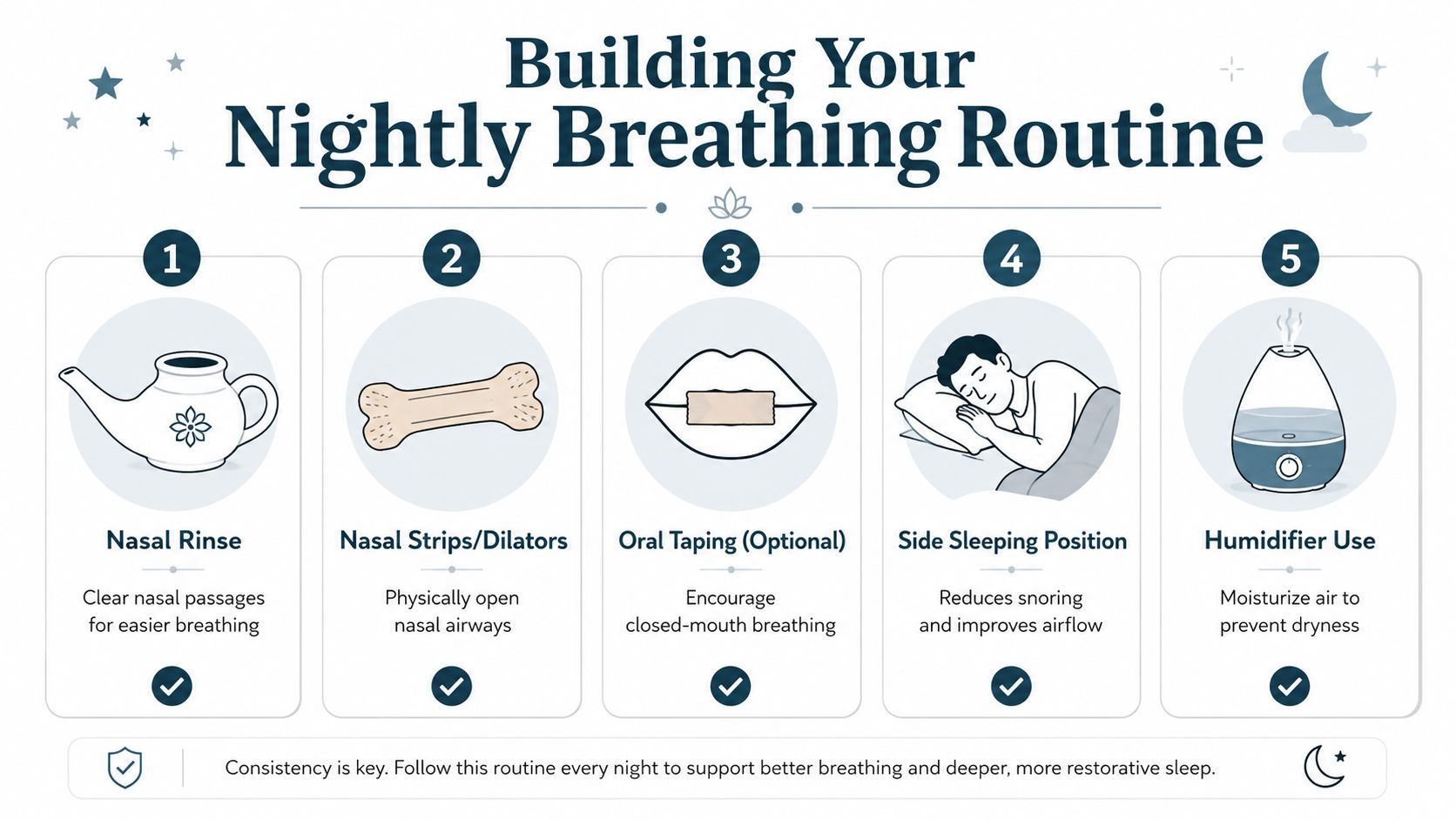
A practical nightly stack
Start with the airway itself.
- Nasal rinse. Use this when mucus, dust, or allergy residue makes the nose feel heavy.
- Nasal strips or dilators. Add them if airflow still feels restricted after the rinse.
- Optional mouth tape. Use it only when nasal breathing already feels comfortable enough for sleep.
- Side sleeping. This can reduce the body positions that make snoring louder.
- Humidifier use. Helpful in dry rooms where the nose and mouth feel parched by morning.
That order helps you separate a habit problem from a breathing problem. If the nose clears and mouth breathing still shows up, the issue may be less about bedtime habits and more about an airway that needs a different kind of support.
A useful resource on support tools is ArtNaturals' magnesium oil guide, which fits the broader idea of building a calm, repeatable wind-down rather than relying on one dramatic fix.
How to make the routine stick
The simplest way to test the routine is to check the morning after. Notice dry mouth, throat soreness, congestion, and whether a partner says the snoring changed. Keep the setup steady for several nights so you can tell which part made the difference.
If you like supplements as part of sleep hygiene, SleepHabits also offers a melatonin-free magnesium wind-down drink alongside nasal strips and mouth tape, which can fit into a routine built around breathing support and calm bedtime habits. That only helps if you still treat the airway issue as the main focus, not the product list.
The routine does not need to be complicated. Clear the nose first, give the airway the easiest path you can, and let the mouth stay closed only when that follows naturally.
When Self-Care Isn't Enough and You Need Professional Help
Some snoring mouth breathing patterns are simple and temporary. Others are loud enough, persistent enough, or tied to fatigue enough that they deserve a clinician's eye. The decision point is not whether you've tried hard enough, it's whether the pattern keeps coming back despite basic, consistent self-care.
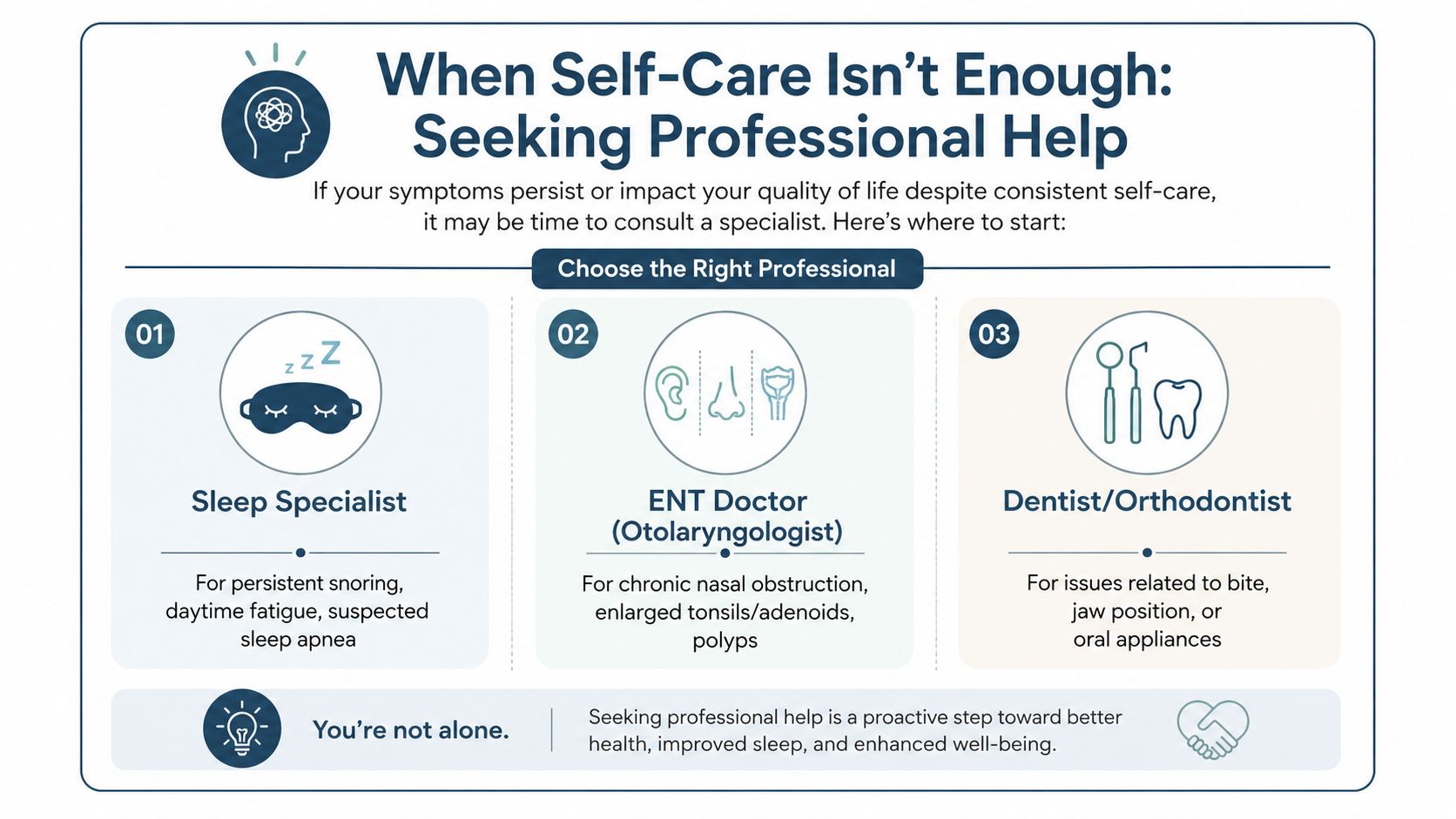
Who to see and why
- Sleep specialist. Best when snoring comes with daytime fatigue, witnessed pauses, or persistent unrefreshing sleep.
- ENT doctor. Best for chronic nasal obstruction, suspected polyps, enlarged adenoids or tonsils, or a deviated septum.
- Dentist or orthodontist. Best when jaw position, bite, or oral appliance options need evaluation, including the possibility of sleep-focused dental care.
- For readers who want to find sleep-oriented dental support, find sleep dentistry near Ultimo is a relevant local search path.
Questions that help you advocate for yourself
Ask whether your symptoms fit simple snoring or sleep-disordered breathing. Ask whether your nose is obstructed enough that mouth breathing is just a workaround. Ask whether a sleep study makes sense if you've already tried conservative changes and the problem still shows up most nights.
A helpful background reference is what is sleep disordered breathing, because not every noisy night is the same thing. The distinction matters. Snoring can be benign, but it can also be the visible edge of a deeper airway problem.
If your child snores regularly, breathes through the mouth most nights, or wakes unrefreshed, don't wait for the problem to grow into a habit. A clinician can help separate inflammation, anatomy, and sleep-breathing disorders in a way self-care can't.
Your Path to Quieter Nights and Better Sleep
Start with the most likely cause. If the nose feels blocked, work on airflow first. If the mouth opens because the airway is unstable, don't assume a mouth-only fix will hold. A simple checklist helps, look for congestion, snoring, dry mouth, fatigue, and whether symptoms improve on side sleeping or after nasal support.
The practical goal is modest and realistic. Try one or two changes, give them a fair run, and escalate if the pattern stays the same. Better breathing at night is usually built, not forced.
If you want straightforward sleep guidance that connects breathing habits, night routines, and practical product choices, visit SleepHabits and explore tools designed to support calmer, quieter nights. Start with the simplest change that matches your symptoms, then build from there with a routine you can keep.