

Going to bed earlier is one of the most common answers to nighttime waking. It also fails surprisingly often. More time in bed can mean more time awake, lighter sleep, and a stronger habit of worrying about the clock. Staying asleep longer isn't primarily a time-in-bed problem. It's a sleep-continuity problem.
Sleep maintenance deserves serious attention. An epidemiology review found that about 10% of adults have an insomnia disorder, while another 20% experience occasional insomnia symptoms. U.S. CDC data reported that 17.8% of adults had trouble staying asleep most days or every day in the previous 30 days in 2020. These figures come from the epidemiology review of insomnia and sleep-maintenance symptoms, and they make one point clear: fragmented sleep isn't a minor wellness complaint.
The practical approach is to identify what keeps your brain and body alert after sleep begins. That includes excessive time awake in bed, disrupted nasal breathing, heat, light, noise, late stimulation, and conditions that need clinical treatment. The habits below focus on the mechanics that determine whether sleep remains consolidated.
Why Spending More Time in Bed Backfires
Going to bed earlier can backfire when you aren't biologically ready for sleep. You may fall asleep from exhaustion, then spend the latter part of the night drifting between light sleep and wakefulness. The mattress becomes a place for waiting, checking the time, and trying harder, rather than a cue for reliable sleep.
Sleep efficiency describes the proportion of time in bed spent asleep. Someone who stays in bed for nine hours but sleeps intermittently may get less restorative sleep than someone who spends less time in bed and sleeps with fewer interruptions. The exact schedule varies by person, but the principle is consistent: more opportunity for sleep isn't the same as more sleep.
Practical rule: Measure your actual sleep, not the number of hours you wish you were sleeping.
Sleep drive matters
Your body builds homeostatic sleep pressure while you're awake. That pressure helps you fall asleep and supports continuity through the night. Spending excessive time in bed can dilute it. If you go to bed before enough sleep pressure has accumulated, normal brief awakenings may become full awakenings because returning to sleep is harder.
This is why sleep restriction therapy, a core component of CBT-I, deliberately narrows time in bed rather than extending it. The aim isn't to deprive you indefinitely. It temporarily aligns your time in bed with your actual sleep, then expands the window as sleep becomes more efficient. A review of CBT-I trials found meaningful improvements in sleep maintenance, including wake after sleep onset improving by about 26 minutes, sleep efficiency improving by about 10%, and total sleep time increasing by about 30 minutes. The review also found benefits persisting at 3, 6, and 12 months, although effects taper over time. See the CBT-I evidence review for the clinical context.
The overlooked behavior is staying in bed while awake. A clinical study found that people with insomnia spent substantially more time awake in bed during the night and after their final awakening than good sleepers. The authors concluded that this may reflect insomnia itself, rather than proof that extending time in bed improves sleep. Read the clinical analysis of awake time in bed before assuming an earlier bedtime is the answer.
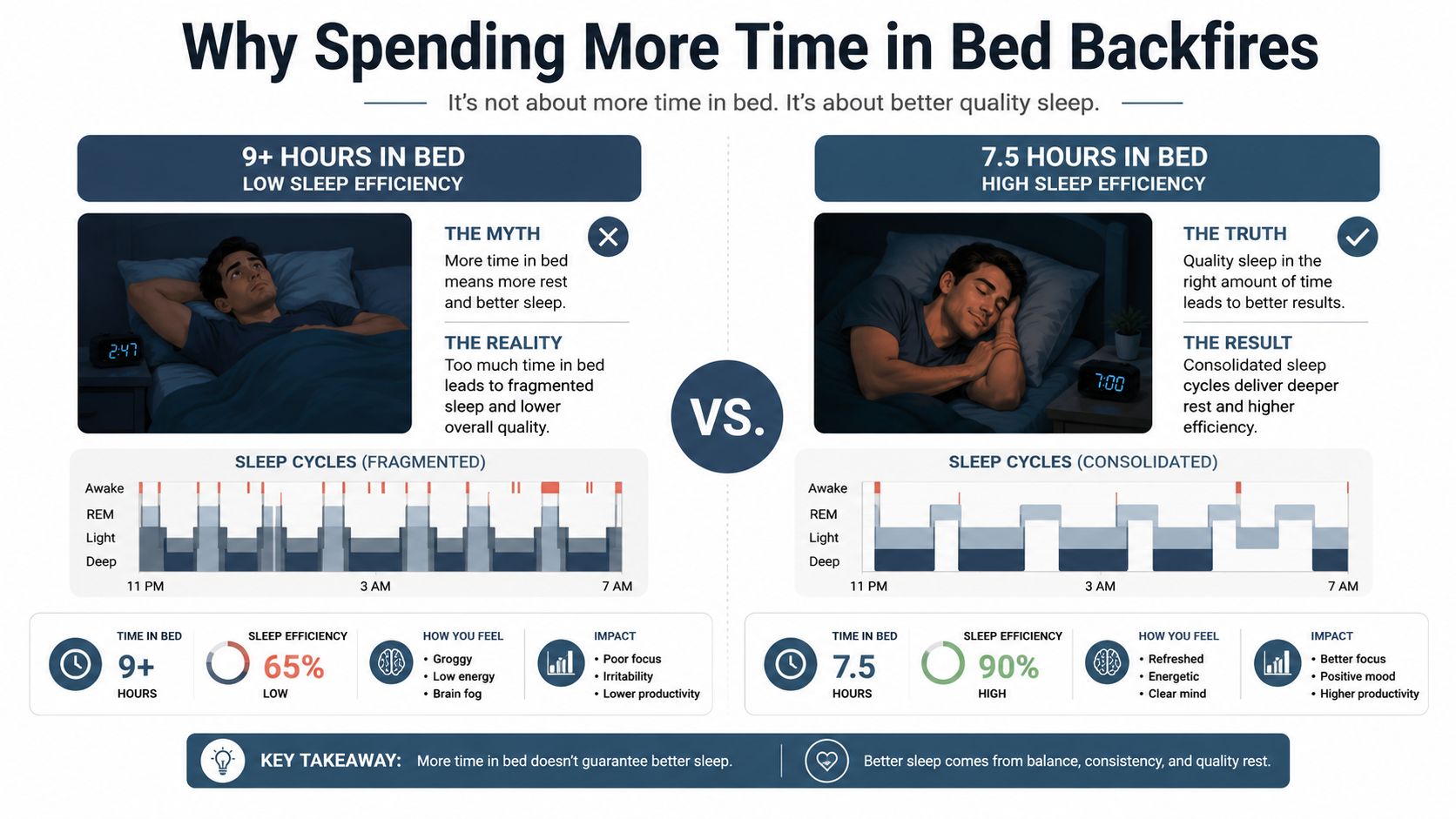
A better target is higher sleep continuity. Keep a consistent wake time, record sleep and awakenings in a diary, and avoid adding time in bed unless your sleep is already reasonably consolidated. A calming pre-bed routine can still help, and this guide to an effective sleep routine with shower steamers offers one practical way to make the wind-down period more predictable.
The Hidden Mechanics Behind Nighttime Awakenings
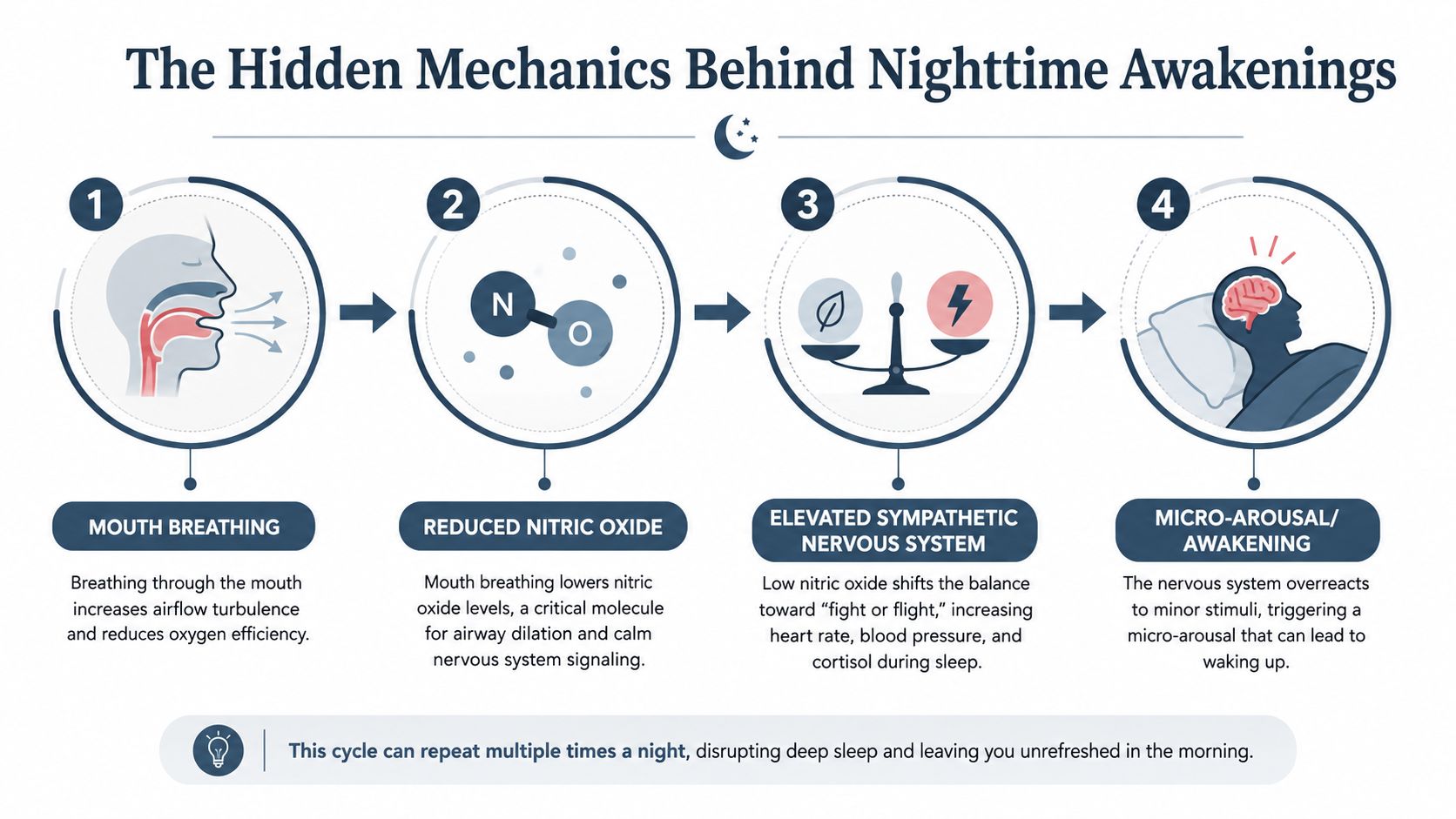
Nighttime waking often reflects a small physiological disturbance that becomes large enough to reach consciousness. Breathing is one overlooked trigger. When the nose is congested or the jaw falls open, oral breathing can dry the mouth, alter airflow, and increase mechanical strain in the upper airway.
Nasal breathing supports nitric oxide production in the nasal passages. Nitric oxide helps regulate blood-vessel function and airway dynamics, so reduced nasal airflow can remove one useful support for efficient breathing. A sleep-disordered breathing study found that upper-airway resistance was significantly lower during nasal breathing than oral breathing, while oral breathing was associated with markedly greater obstructive sleep apnea severity. The study on oral and nasal breathing during sleep provides the relevant physiological comparison.
Arousal can follow the breath
A person doesn't need to wake fully to lose sleep continuity. A dry mouth, increased airway resistance, snoring vibration, or a brief breathing disturbance can produce a micro-arousal. The sympathetic nervous system then raises alertness, and the sleeper may move into lighter sleep or wake long enough to notice the room.
A prototype nasal dilator strip offers a useful, limited example. During its active phase, participants reported better sleep-related symptoms, including staying asleep and feeling refreshed. Objectively, median wake after sleep onset decreased by about 11 minutes, and spontaneous arousal rate fell by about 37%. Those findings come from the exploratory nasal dilator study. It was a prototype study, so it shouldn't be treated as proof that every strip will solve insomnia, but it supports testing airflow when congestion or nasal restriction is part of the pattern.
The sleep architecture guide can help you understand why brief arousals may feel different depending on the sleep stage. In practice, don't assume every awakening is caused by stress. Consider nasal blockage, snoring, reflux, temperature, alcohol, medication timing, and a bedroom disturbance.
If you experiment with a Hydrating Mouth Tape, treat it as a breathing-habit aid, not a treatment for suspected sleep apnea. The catalog describes support for quieter nights, reduced snoring, oral care, tongue posture, and nitric oxide-supportive breathing. Don't use mouth tape if you can't breathe comfortably through your nose, and discuss persistent gasping, choking, or loud snoring with a clinician.
Optimizing Your Sleep Environment for Continuity
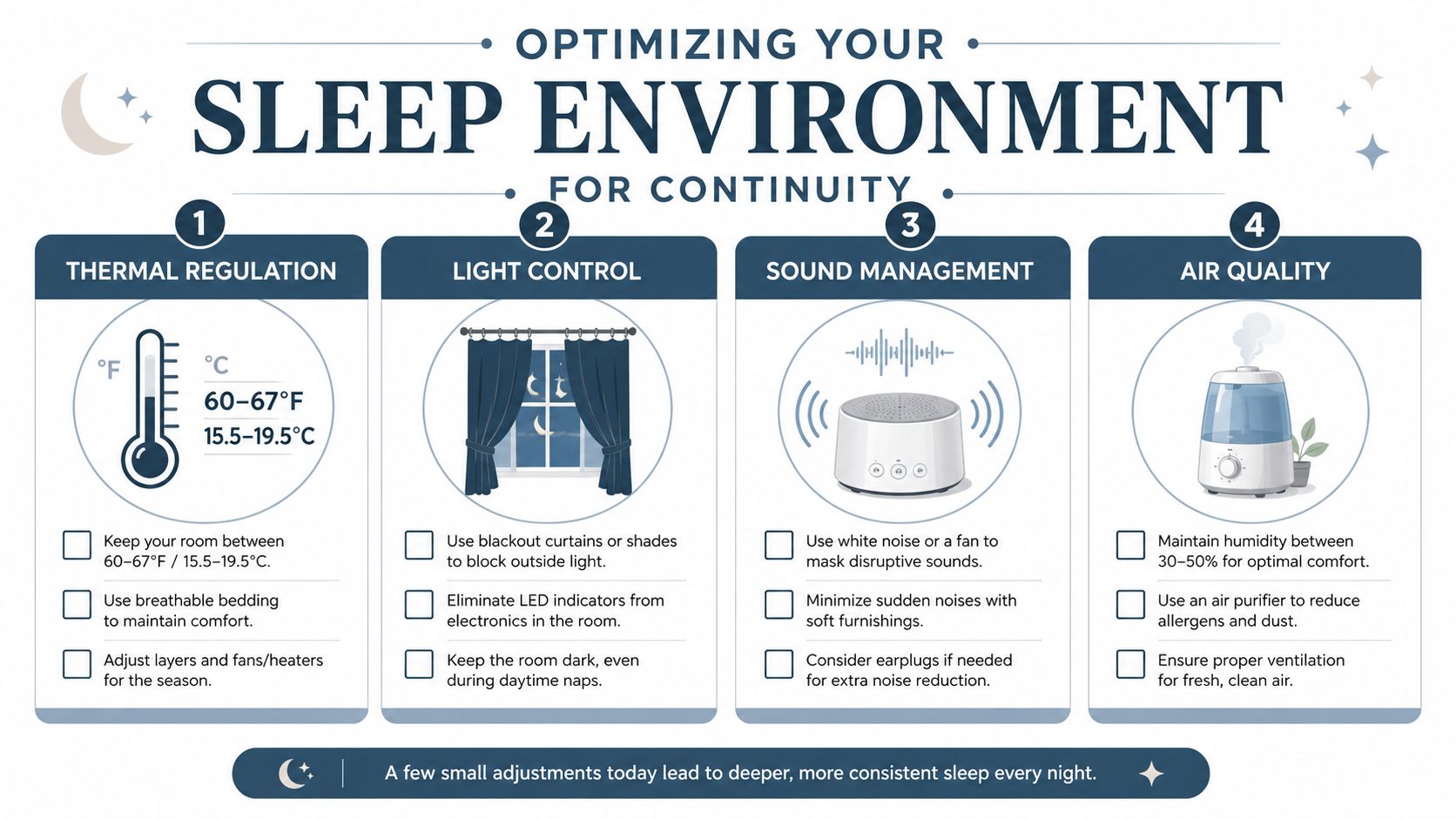
A bedroom can support sleep maintenance or repeatedly interrupt it. Audit the environment by category instead of changing everything at once. One adjustment per category makes it easier to identify what helps.
Thermal regulation
Your core body temperature normally falls as sleep begins and remains important for maintaining sleep. A bedroom that's too warm can interfere with that process, especially under heavy bedding. A practical target is 60 to 67°F, or 15.5 to 19.5°C.
Use breathable sheets, lighter layers, or a cooling mattress pad if heat wakes you. If your feet feel cold while your torso overheats, change the bedding system rather than lowering the whole room temperature. A warm shower earlier in the wind-down period may also help some people feel sleepy afterward, but avoid turning the bedroom into a hot, humid space.
Light control
Install blackout curtains if outdoor light reaches the bed. Cover bright standby LEDs, turn the phone face down outside arm's reach, and avoid checking the clock after an awakening. Even a short pulse of light can increase alerting signals, particularly when you're already close to waking.
Sound management
Use steady white noise when unpredictable sounds interrupt you. Brown noise may feel less sharp to some listeners, while rugs, curtains, and door seals can soften household noise. Keep the volume comfortable and stable. A changing playlist is more likely to become a new source of attention than a continuous neutral sound.
Physical setup
Your pillow should keep the neck neutral without pushing the head sharply forward. Side sleepers may need more height than back sleepers, but the right choice depends on shoulder width, mattress compression, and airway comfort. A mattress that's too soft can make repositioning difficult, while one that's too firm can create pressure that prompts movement.
Remove psychological stimuli as aggressively as physical ones. Put work materials out of sight, use a clock without an illuminated display, and leave the phone outside the bed area. For broader guidance on sleep quality support, choose resources that address both the bedroom and the behaviors you bring into it.
Breathing Techniques and Tools That Reduce Disruptions
Nasal breathing is worth testing when you wake with a dry mouth, notice snoring, or feel congested at night. It won't correct every cause of fragmented sleep, and it shouldn't replace evaluation for breathing pauses. The goal is to make nasal airflow easier so the body doesn't need to work as hard to maintain ventilation.
Start before bedtime. Sit upright and practice slow nasal breathing, with a comfortable exhale that lasts longer than the inhale. The 4-7-8 method can be used as a relaxation exercise, but don't force breath-holding or continue if you feel air hunger. A gentler version is often more sustainable: inhale softly through the nose, exhale slowly, and keep the shoulders relaxed.
Train the resting position
Place the tongue lightly against the roof of the mouth, with the lips together and the jaw relaxed. This posture can encourage nasal breathing while you're awake, but it won't overcome severe congestion or structural obstruction. Practice during calm daytime periods first, then notice whether nasal breathing remains comfortable as you recline.
A nasal strip can mechanically widen the external nasal valve. The product snapshot for Transparent Nasal Strips describes support for easier nighttime airflow, congestion related to colds, allergies, or dry air, consistent nose breathing, and pairing with mouth tape. Use strips only on clean, dry skin and stop if irritation develops.
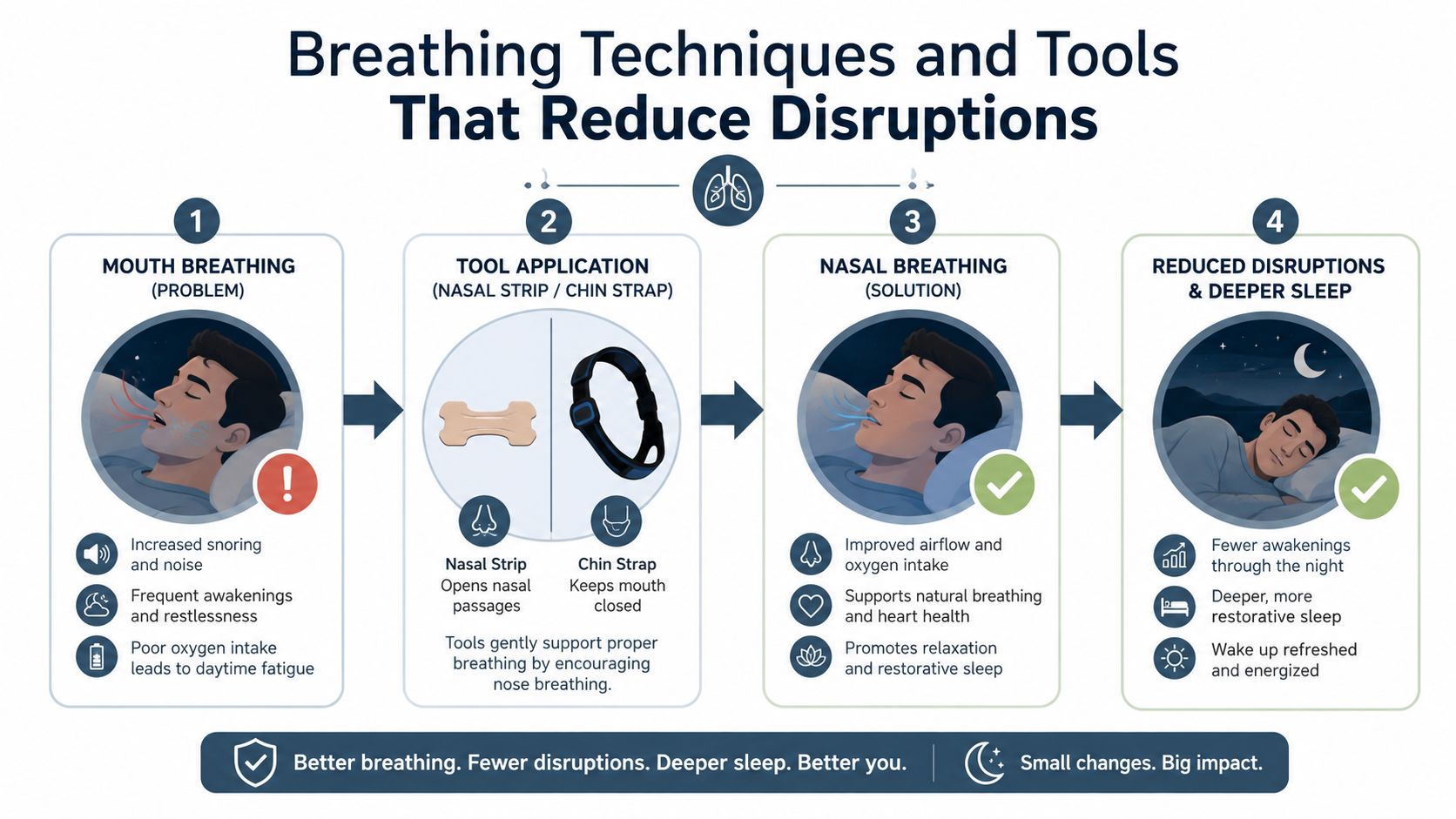
Internal dilators may suit people whose obstruction is deeper inside the nose, although chronic blockage warrants medical assessment. Mouth tape requires more caution. Test nasal breathing while awake, use a porous product designed for sleep, apply it so removal is easy, and never use it to force the mouth closed when you have nasal obstruction, respiratory illness, vomiting risk, or suspected untreated sleep apnea.
A BOLT score is sometimes used as a personal breath-comfort test, but it isn't a diagnostic test for sleep-disordered breathing. Treat it as a subjective indicator of how comfortable you are with a gentle breath pause, not as permission to ignore symptoms. The nasal breathing techniques guide offers additional practice ideas.
The evidence is more modest than many product claims suggest. In severe nasal obstruction, treatment reduced the oral fraction of ventilation during sleep by a mean absolute 30%, improved sleep architecture, and reduced the apnea-hypopnea index by 12 points, but the authors concluded that treating nasal blockage doesn't fully resolve obstructive sleep apnea. See the clinical study of severe nasal obstruction.
Building a Melatonin-Free Pre-Sleep Nutrition Protocol
Nutrition can support sleep maintenance, but supplements aren't automatically harmless or universally useful. A melatonin-free routine starts with identifying what destabilizes your second half of the night, then removing one variable at a time.
Alcohol deserves particular suspicion. It may make you drowsy initially, but its sedative effect can fade into increased alertness later, especially as sleep becomes lighter. Caffeine can also remain relevant well beyond the afternoon for sensitive people. Track your own response rather than assuming a morning coffee is always irrelevant.
Time the final meal
Finish a substantial meal well before lying down so digestion, reflux, or discomfort doesn't disturb sleep. At the same time, going to bed hungry can make some people more alert. If hunger appears regularly, a small snack containing slow-digesting carbohydrate, such as oats or sweet potato, may be more practical than a large late meal.
Magnesium glycinate and L-theanine are often discussed for relaxation, but dosage and suitability depend on your health, medications, and clinician's advice. Don't treat a supplement as a substitute for CBT-I, airway assessment, or correction of a disruptive schedule. Tart cherry juice and kiwi are food-based options people commonly test, though individual tolerance matters, particularly if fluids or digestive symptoms already wake you.
Avoid the hydration trap
Drink enough earlier in the day, then moderate fluids close to bed if bathroom trips interrupt sleep. Don't deliberately dehydrate yourself. Instead, separate ordinary thirst from habitual sipping, and review alcohol, caffeine, and medication timing when nocturia appears.
A simple food-and-sleep diary can reveal patterns that memory misses. Record the final meal, alcohol, caffeine, supplements, fluids, bedtime, awakenings, and morning alertness. The sleep-promoting foods guide can provide ideas, but your response should determine what stays in the routine.
What to Do When You Wake Up at 3 AM
The first mistake is treating the awakening as an emergency. A brief waking can become prolonged when you turn on bright lights, check the time, calculate tomorrow's consequences, and demand immediate sleep. The brain learns from that sequence.
If you can't return to sleep after roughly 20 minutes, leave the bed. Keep the room dim, avoid stimulating screens, and choose a quiet activity such as reading a familiar paper book, slow stretching, or calm breathing. Return only when sleepiness returns. The purpose isn't to punish yourself. It rebuilds the association between bed and sleep rather than bed and frustration.
Use the bed for sleep and sex, not for negotiating with wakefulness.
Break the rumination loop
Cognitive shuffling can interrupt repetitive planning. Pick a neutral letter, then name unrelated, ordinary objects beginning with it. The task should be mildly absorbing but emotionally flat. If you start evaluating whether it's working, switch to a simple body scan or return to reading.
Hide the clock. Time checking activates problem-solving, and the resulting arithmetic often increases arousal. If you need an alarm, place it where you can hear it without seeing the display.
Rebuild consolidation over time
For a persistent pattern, sleep restriction therapy may temporarily reduce time in bed to match actual sleep, then expand the schedule as efficiency improves. One dose-response trial found that a 4-session CBT protocol produced clinically significant improvement for 58.3% of participants, compared with 43.8% after one session, 22.2% after two sessions, 35.3% after eight sessions, and 9.1% in controls. At 6 months, only the 4-session group retained significant objective gains in wake time and sleep efficiency. The dose-response trial of CBT for sleep-maintenance insomnia supports a structured, measured approach.
Don't apply aggressive sleep restriction if you have bipolar disorder, seizure risk, untreated sleep apnea, or another condition for which sleep loss could be unsafe without professional guidance. Occasional waking calls for troubleshooting. A recurring pattern that affects daytime function calls for assessment.
When to Seek Professional Help for Sleep Maintenance
Seek clinical help when awakenings persist and affect concentration, mood, safety, or daily functioning, especially when consistent habits haven't changed the pattern. Gasping, choking, loud snoring, witnessed breathing pauses, persistent leg discomfort, pain, reflux, or pronounced early-morning waking with low mood can point beyond behavioral insomnia.
A sleep diary records timing, habits, awakenings, and daytime effects. A clinical sleep study measures breathing, movement, oxygen-related signals, and sleep physiology when a clinician believes testing is appropriate. Ask a primary-care clinician or sleep specialist which route fits your symptoms.
CBT-I remains the strongest non-drug treatment for chronic insomnia and includes stimulus control, sleep scheduling, cognitive work, and follow-up. A 2025 primary-care trial found that low-dose amitriptyline and mirtazapine didn't produce the expected improvements in wake after sleep onset or sleep efficiency, while a digital CBT-I study reported fewer minutes awake after sleep onset without consistent improvement in other diary outcomes. The 2025 randomized primary-care evidence is a reminder that no single remedy fits every awakening pattern.
Mood deserves attention too. If fatigue comes with hopelessness, loss of interest, or other emotional changes, review the distinction between signs of depression vs fatigue and speak with a qualified professional. Don't start or stop medication or supplements without medical advice, and bring a complete list of everything you're taking to the consultation.
SleepHabits offers education on nighttime breathing, sleep architecture, wind-down routines, and melatonin-free options such as magnesium-based support, along with tools including mouth tape and nasal strips. Visit SleepHabits to build a practical plan for staying asleep longer and make your next sleep experiment more structured, measurable, and safer.