

Most advice about nitric oxide supplements is lazy. It treats the category like there's one magic tub that fixes blood pressure, pumps, endurance, recovery, and sleep all at once. That's not how this works, and the market itself shows how messy the category has become, with estimates ranging from US$914.5 million in 2024 to US$1.15 billion in 2026, depending on the model, because buyers are chasing different outcomes, not one universal product (market estimate, independent market estimate).
The better question is not what's the best nitric oxide supplement, it's which ingredient fits your goal, your timing, and your current health. If you want a clean answer, start there. If you want a brand ranking, you're already asking the wrong question.
| Supplement Type | Mechanism | Typical Trial Dose | Time to Effect | Best For |
|---|---|---|---|---|
| L-citrulline | Raises arginine availability and supports nitric oxide production | 6 to 12 g in trials, with a 12 g pre-exercise dose studied in young men (PubMed) | About 45 to 60 minutes pre-training | Pumps, blood-flow support, pre-workout use |
| L-arginine | Direct precursor, but oral absorption is less reliable | 6 to 13 g in research and practical use (Men's Health) | Roughly 30 to 60 minutes | Budget option, but rarely the first pick |
| Beetroot or nitrate concentrates | Dietary nitrate converts through the nitrate to nitrite to nitric oxide pathway | 300 to 600 mg nitrate, or 6.4 to 12.8 mmol NO3− in performance work (Frontiers) | About 2 to 3 hours | Endurance, blood pressure, steadier vascular support |
| Combination formulas | Blend precursors and pump-support compounds | Usually underdosed blends unless the label is transparent | Varies by formula | People who want a broader pre-workout feel |
Practical rule: if the label hides the dose in a proprietary blend, assume the marketer is doing the heavy lifting, not the ingredient.
If you want a relaxing nighttime routine that supports breathing and recovery, Aroma Warehouse relaxation blends can sit in the same conversation as breathwork and light management, but they're not a substitute for a real nitric oxide strategy.
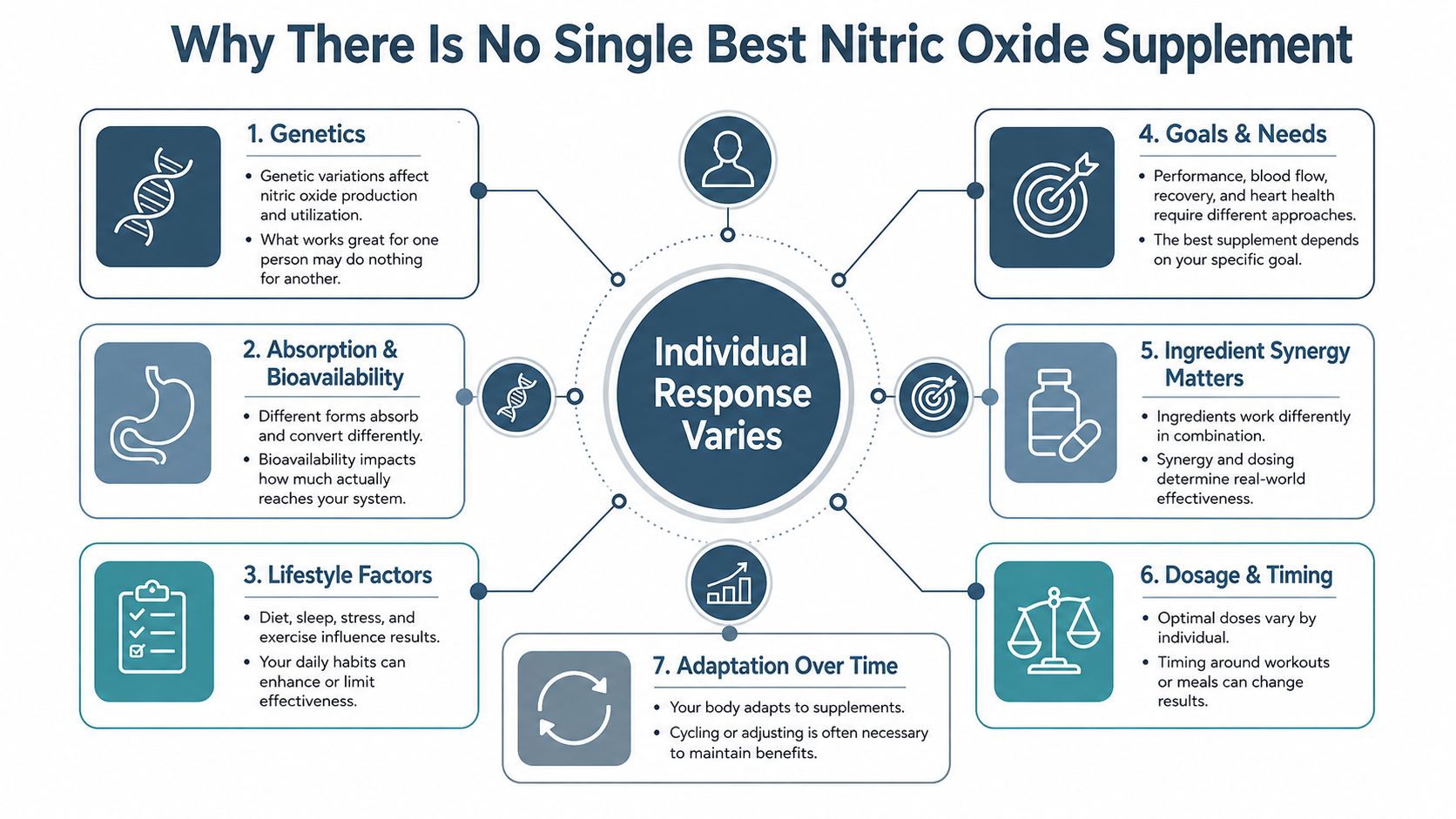
Why There Is No Single Best Nitric Oxide Supplement
The phrase best nitric oxide supplement sounds useful, but it falls apart the second you separate the jobs people want these products to do. Blood pressure support, gym pumps, endurance, and sleep recovery are not the same outcome, so one ingredient won't win every category. The scientific literature is broad enough to show that nitric-oxide-related supplementation has been studied for decades, yet broad enough to show that the benefit depends heavily on the ingredient and the person using it (review of the literature).
The real decision is ingredient, goal, and context
Beetroot nitrate is the cleanest answer if your main goal is vascular support or endurance. L-citrulline makes more sense if you want a workout pump or more noticeable pre-training blood-flow support. L-arginine still sells because it's familiar and cheap, not because it's the most convincing option on the shelf.
The context matters too. A trained athlete chasing another marginal edge is a different buyer from a desk worker trying to support nighttime breathing and next-day recovery. That's why comparison articles that rank bottles instead of ingredients miss the point.
The category has also matured beyond gimmick language. Market growth shows mainstream demand, but it also explains why formulas keep getting noisier, with magnesium, amino acids, and sleep ingredients bolted onto nitric oxide positioning. That doesn't make them better. It just means brands know consumers want more than a pump.
Who this guide is for
This is for readers who want a blunt answer, not a supplement aisle tour. If you want endurance, blood pressure support, pre-workout blood flow, or a sleep and recovery angle, you can make a smarter choice than grabbing the first tub with “NO” on the front.
If you take blood-pressure medication, use nitrates, use PDE5 inhibitors, have kidney disease, or you're pregnant or breastfeeding, don't shop like this is a casual wellness product. Talk to a clinician first.
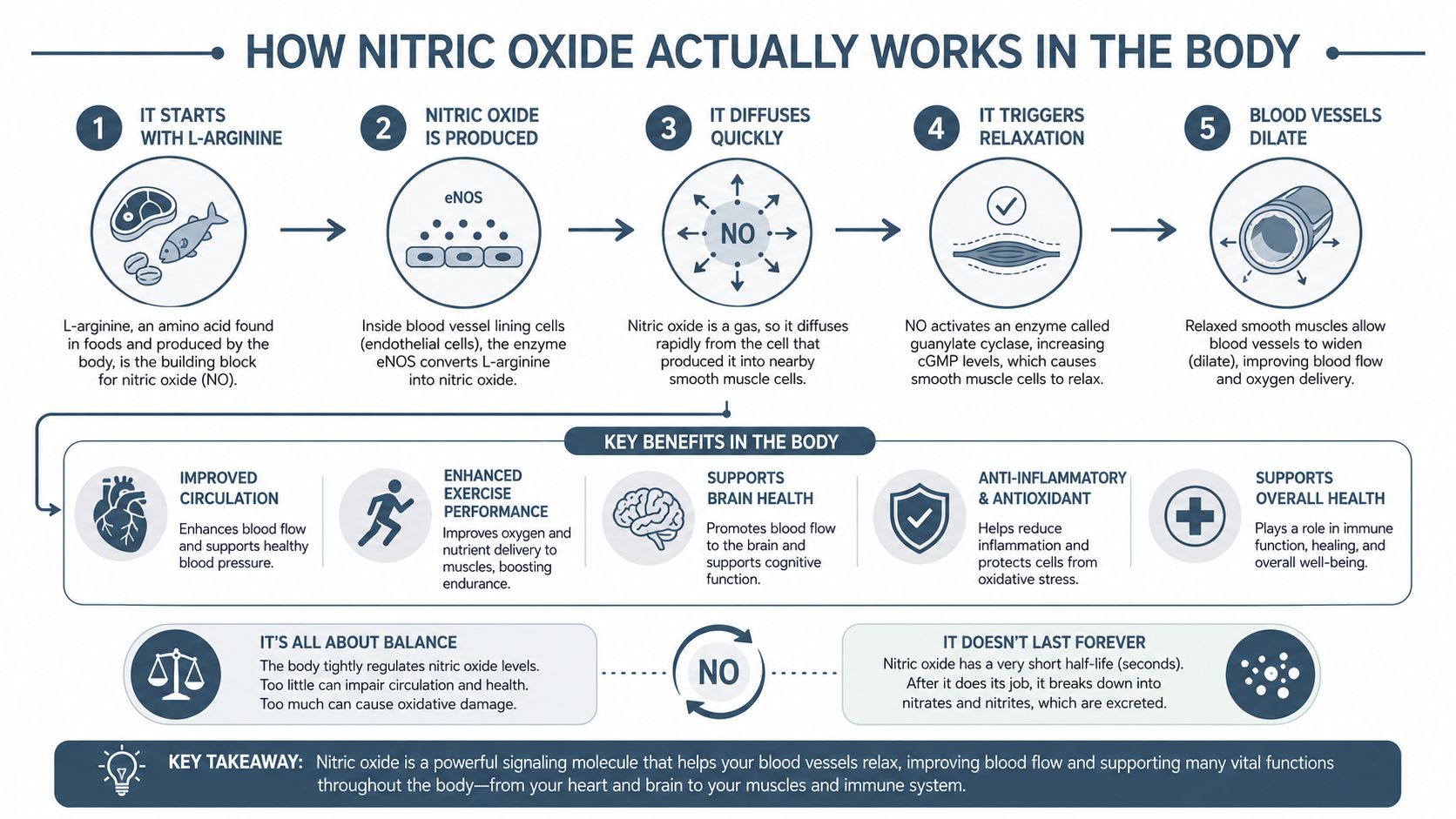
How Nitric Oxide Actually Works in the Body
Nitric oxide is a signaling molecule. Your body makes it to help blood vessels relax, which changes blood flow, pressure, and oxygen delivery. The point of a supplement isn't to swallow nitric oxide itself, it's to feed the pathways your body uses to make more of it (PubMed).
Two pathways matter most
The first is the L-arginine to nitric oxide pathway. This is the classic amino-acid route, which is why arginine keeps showing up on labels. The catch is that oral arginine gets handled aggressively by the body, so the pathway looks better on paper than it often performs in real life.
The second is the nitrate to nitrite to nitric oxide pathway. Beetroot earns its reputation here. Dietary nitrate can raise nitric oxide availability through a route that's especially relevant for endurance and blood pressure, and the clearest clinical signal in the evidence sits with nitrate-rich foods and supplements rather than vague blends (PubMed blood-pressure meta-analysis).
Practical rule: if a product claims to “boost NO” but doesn't tell you whether it uses nitrate, citrulline, or arginine, you're buying marketing, not mechanism.
Why oral bacteria and timing matter
Beet-based formulas don't work in a vacuum. The nitrate pathway depends on saliva and oral bacteria, which means heavy mouthwash use can blunt the conversion. That's one reason beetroot is a better meal-planned tool than a random anytime pill. If your mouth and gut routines are working against the pathway, the label can't save you.
If you want a simple breathing-focused primer that connects lifestyle habits with nitric oxide support, the most useful practical resource is this guide on boosting nitric oxide naturally.
A product like Transparent Nasal Strips fits the same nighttime breathing conversation because it's meant to improve airflow, reduce congestion from colds, allergies, or dry air, and support nasal breathing habits. That matters because consistent nose breathing is part of the bigger nitric-oxide-supportive routine.
The Four Main Nitric Oxide Supplement Types Compared
The category gets clearer once you compare the ingredients head to head instead of arguing about brand names. Some products chase pumps, some chase blood pressure, and some just throw together enough buzzwords to sound technical. The label tells you a lot, but only if you know what to look for.
L-citrulline is the cleanest all-around pick for pre-workout use
Citrulline is the one I'd choose first for most healthy adults who want a noticeable workout effect. It's a precursor that helps raise nitric oxide-related markers without the same bioavailability headaches you run into with arginine. A controlled trial in young men used a single 12 g dose one hour before high-intensity interval exercise, and it increased NOx concentrations and improved antioxidant markers after the workout (PubMed).
That makes citrulline the most technically credible “pump” ingredient in the category. It's also the one most likely to be underdosed in cheap blends, which is why the label matters more than the branding.
Arginine is familiar, but the ceiling shows up fast
Arginine is popular because it sounds like the original nitric oxide ingredient. Research and consumer guidance commonly put usable oral doses in the 6 to 13 g range, and it's usually tolerated by most, but the GI ceiling arrives fast and oral absorption isn't great (Men's Health).
Bottom line: if a product leans hard on arginine and hides behind hype, it's usually a second-choice formula.
Beetroot nitrate is the performance-and-pressure specialist
Beetroot shines when the goal is endurance or vascular support. The most consistent exercise-performance effects show up at 6.4 to 12.8 mmol NO3−, with common protocols using about 6.4 to 8.4 mmol 2 to 3 hours before exercise, and multi-day use doing better than one-off guessing (Frontiers). For hypertensive adults, beetroot-juice nitrate at 200 to 800 mg daily was associated with a 5.31 mmHg mean reduction in clinical systolic blood pressure versus placebo in one meta-analysis, though certainty was low (PubMed).
Combination formulas are only good when the active doses are honest
Blends can work if the company discloses meaningful amounts. If the formula is built around too little citrulline, a splash of beet extract, and a handful of helper ingredients, you're paying for label design. The best blends are transparent, not crowded.
Matching the Evidence to Real Use Cases
The cleanest way to sort nitric oxide supplements is by outcome, not by label aesthetics. That's how the evidence reads, and it's how people buy these products in the world. The same ingredient can be smart in one setting and pointless in another.
Blood pressure support belongs to nitrate-rich foods first
If blood pressure is the main issue, beetroot and dietary nitrate are the strongest fit. In hypertensive adults, beetroot-juice nitrate lowered clinical systolic blood pressure by 5.31 mmHg on average versus placebo, with no significant diastolic or 24-hour ambulatory change in that analysis (PubMed). I'd rather see someone use a consistent nitrate-rich food strategy than chase a flashy pill.
That doesn't mean every bottle is worth it. It means the ingredient class makes more sense than the generic “NO booster” label.
Endurance gets the clearest benefit from citrulline or nitrate timing
For repeated high-intensity work, the most useful ingredients are citrulline and beetroot nitrate. Citrulline is the better pre-workout choice when you want a tighter workout feel, while nitrate works better when you can plan ahead. A recent meta-analysis found the most consistent exercise-performance effects from standard nitrate doses in the 6.4 to 12.8 mmol range (Frontiers).
The literature on arginine is much weaker in trained athletes, and that matters. If you're already fit and already adapted, weak ingredients get exposed fast.
Strength, pumps, and recovery are mostly about perception and training quality
People overspend. Nitric oxide can make a session feel better and fuller, but that doesn't automatically translate into bigger force output. If the pump helps you train harder and recover better between sets, fine. If you expect a miracle, you'll be disappointed.
Sleep and recovery are even murkier. A reasonable evening strategy is to keep expectations modest and use nitrate-rich food or a low-dose citrulline approach only if it supports the rest of your routine. One practical example is a product like Restore+ Magnesium Sleep Aid, which combines magnesium, L-theanine, tart cherry, lemon balm, and glycine with nitric-oxide-supporting ingredients in a melatonin-free drink designed around wind-down and recovery.
If the room air is part of the problem, find an asthma air purifier before you chase another capsule. Breathing quality at night can matter more than a marginal supplement tweak.
Honest read: sleep-focused nitric oxide use is still a soft-evidence play, not a hard recommendation.
Practical Dosing and Timing for Each Ingredient
The right dose matters more than the brand slogan. Too many products are built to sound impressive while delivering half-doses that never had a chance. If you want a bottle you can use, start with the ingredient and then check the timing.
The simple protocols that make sense
- L-citrulline malate: 6 to 8 g 45 to 60 minutes before training works as a practical pre-workout range. On non-training days, 3 to 5 g with the evening meal is a reasonable recovery-style approach. Plain L-citrulline usually needs more, roughly 1.4 times the malate dose to land in the same neighborhood.
- L-arginine: 3 to 6 g on an empty stomach is the practical starting point, but oral absorption is unreliable, so I'd only use it if you already know you tolerate it well.
- Beetroot juice or concentrated shot: 300 to 600 mg of dietary nitrate 2 to 3 hours before exercise is the clean endurance protocol. A 70 mL shot works for most adults if the label discloses nitrate content.
- Combination formulas: a fair pre-workout blend usually lands around 2 to 3 g citrulline, plus 300 to 500 mg betaine and 100 to 200 mg grape seed extract, taken 30 to 45 minutes before activity.
- Sleep-focused use: split a 3 g citrulline dose between dinner and bedtime instead of front-loading it.
What to skip
Don't pay for a “nitric oxide matrix” that doesn't tell you the active ingredient in grams. Don't assume a bigger scoop is better. And don't expect a beet shot taken at the wrong time to rescue a badly built training day.
For people comparing sleep and recovery tools, the most useful paired reading is muscle recovery supplements, because nitric oxide belongs in a recovery stack only when the rest of the routine is already handled.
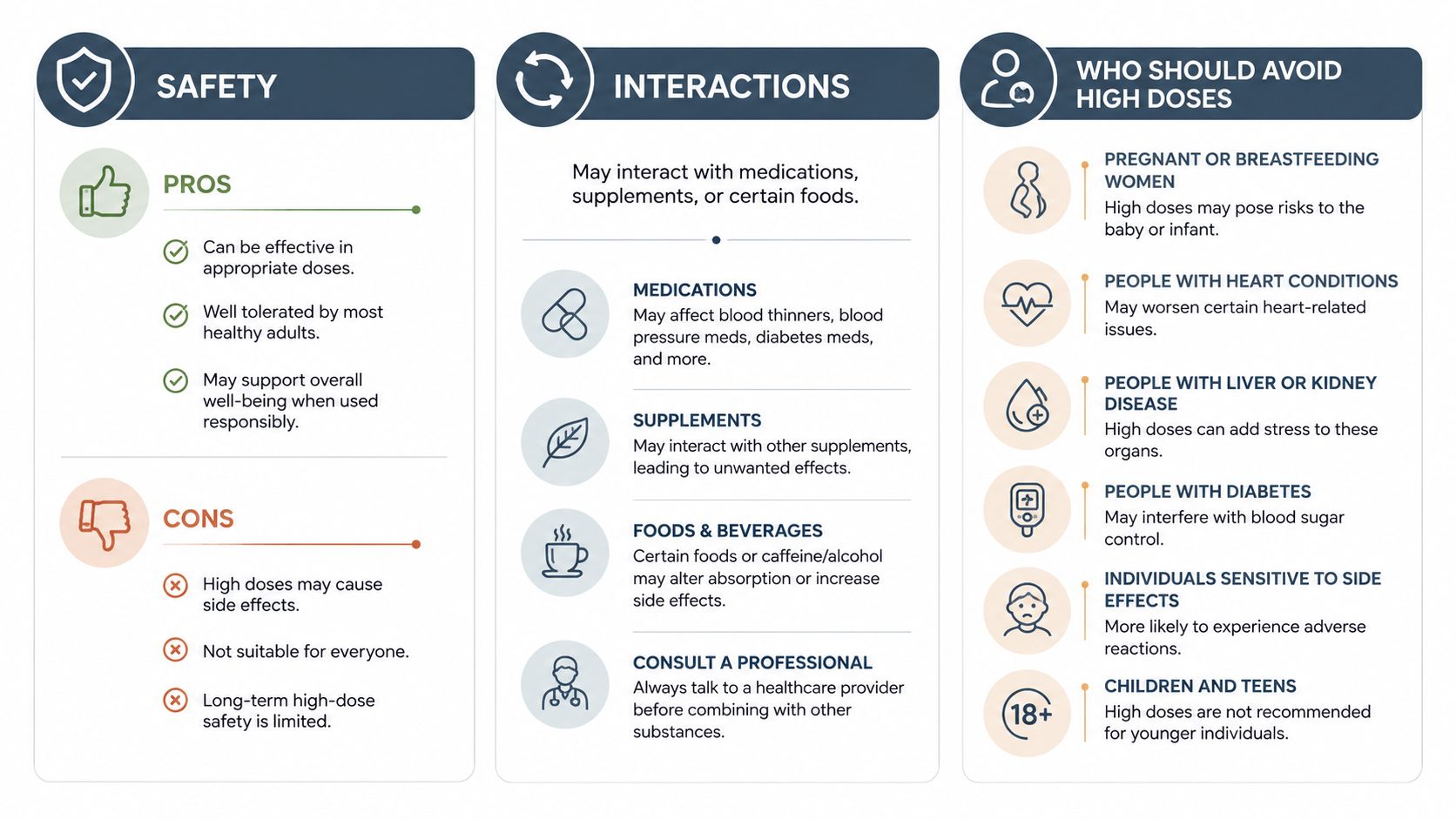
Safety, Interactions, and Who Should Avoid High Doses
More nitric oxide isn't automatically better. In fact, the most dangerous mistakes happen when people stack multiple vasodilators and forget that blood pressure is a real variable, not a vibe. The evidence base for high-dose use is limited in chronic settings, even when acute nitrate doses have looked safe in expert consensus reviews (expert consensus).
The groups that should slow down
- Anyone on PDE5 inhibitors or prescription nitrates: don't combine them with high-dose nitric oxide stacks. The blood-pressure drop can get too aggressive.
- People on antihypertensives, especially ACE inhibitors or alpha-blockers: get clinician sign-off first because additive vasodilation is the whole mechanism here.
- People with kidney disease: skip casual arginine experimentation.
- Anyone with recent herpes outbreaks or active cold sores: arginine can be a bad idea if it seems to flare symptoms.
- Pregnant or breastfeeding people: chronic high-dose use doesn't have enough safety data.
Even healthy users can overshoot
The most common problem is GI upset. Once doses get too high, bloating and loose stools show up fast, especially with arginine. That's why practical dosing matters more than whatever a supplement ad wants you to believe. If you've already got low blood pressure, or you're the kind of person who gets dizzy standing up quickly, a high-dose NO stack is not the first move.
Practical rule: if you need three products to “feel” the supplement, you're probably already past the useful dose.
Real World Scenarios for Sleep Recovery and Training
A 42-year-old desk worker with a blood pressure reading of 128/82 wants better sleep quality, not a pre-workout buzz. He takes 6 g of L-citrulline malate about 60 minutes before bed, cuts caffeine after 1 pm, and notices modest HRV improvement over three weeks. That kind of result is believable. It's not dramatic, but it fits the goal.
A marathoner preparing for a Saturday 20-mile long run does something different. He front-loads 8 g of citrulline plus a 70 mL beetroot shot about 90 minutes before the run, then skips the same stack on easy days so he doesn't turn every session into a supplementation experiment. For endurance, the timing matters as much as the ingredient.
A 55-year-old on lisinopril chooses food-first nitrate-rich beetroot at lunch instead of high-dose arginine because she doesn't want to push her blood pressure lower than necessary. That's the smarter call. The goal here isn't a bigger pump, it's avoiding a preventable problem.
For nights when breathing quality is the bottleneck, Hydrating Mouth Tape is a factual, low-friction option because it supports quieter nights, reduced snoring, better oral comfort, and more consistent nasal breathing habits. If you want the broader sleep-and-breathing angle, the companion read on nitric oxide for sleep fits this topic well.
The pattern is simple. Ingredient choice shifts with goal, time of day, and baseline health, not with brand loyalty.
Choosing the Right Option for Your Goal
| Goal | Best Ingredient | Starting Dose | Time to Notice Effect | Stack or Food Pairing |
|---|---|---|---|---|
| Endurance and pump | L-citrulline malate | 6 to 8 g | Same day, usually within 45 to 60 minutes | Pair with carbs and hydration |
| Blood pressure and vascular health | Beetroot nitrate | 300 to 600 mg nitrate | Usually with consistent use, not one dose | Pair with nitrate-rich meals |
| Sleep and recovery | Low-dose citrulline or nitrate-rich food | 3 g citrulline split between dinner and bedtime | Subtle, over days to weeks | Pair with magnesium and a wind-down routine |
| General daily support | Food-first nitrates | Food-based | Gradual | Leafy greens and beetroot |
| Weak use case, don't overspend | Generic arginine-only blends | Any label that hides the dose | Unreliable | None, skip it |
For a quick buyer checklist, keep it tight:
- Third-party testing: look for independent testing, not just a glossy label.
- Transparent dosing: buy grams on the label, not proprietary fog.
- Right form: citrulline malate for pre-workout, nitrate content listed for beetroot.
- Fair price per effective dose: cheap bottles are often underdosed bottles.
- No unnecessary stimulants: don't buy caffeine if you only want nitric oxide support.
- Storage instructions: follow the label, especially for liquid shots and powders.
If you want the blunt answer, it's this, match the ingredient to the outcome, not the influencer.
If you want a calmer, more useful sleep routine built around breathing, recovery, and melatonin-free support, start with SleepHabits' nitric-oxide-friendly tools and education, then build around the goal that matters to you. Visit SleepHabits and choose the routine that fits your nights, your training, and your breathing instead of buying another overhyped bottle.