

Does coffee keep you awake even when you fall asleep at your usual time? That question exposes the gap in most coffee advice. The problem isn't only whether you lie awake in bed. Caffeine can also make sleep lighter and less restorative, so you may spend a full night in bed and still wake up feeling unrefreshed.
The useful answer depends on dose, timing, and individual sensitivity. A small morning coffee may have little noticeable effect for one person, while a large afternoon drink can delay sleep or fragment it for another. Understanding what caffeine does after the alert feeling fades gives you a practical way to choose your last cup.
Why That Evening Cup Still Steals Your Sleep
Yes, coffee can keep you awake. But the more accurate answer is that caffeine keeps many people alert to some degree, while the size of the effect depends on how much they drink, when they drink it, and how quickly their body processes it.
Coffee doesn't flip an on-and-off switch in your brain. Caffeine blocks some of the signals that build sleep pressure during the day, which can make tiredness feel farther away than it really is. Later, that same caffeine may still be active when you're trying to settle down, even if the obvious energy boost has disappeared.
The timing surprise matters most. Caffeine is absorbed relatively quickly, begins taking effect in about 30 minutes, and can remain active for five hours or longer. Its half-life varies widely, from roughly 2 to 12 hours, depending on the person, according to the Sleep Foundation's explanation of caffeine and sleep. Half-life means the time it takes for your body to clear about half of the caffeine, not the time it takes for every effect to vanish.
The chain reaction after your last cup
An afternoon coffee can create a sequence that extends into the night:
- Alertness rises, so you may feel less sleepy than your schedule suggests.
- Sleep onset can shift, particularly after a larger dose or late serving.
- Sleep can become more fragmented, even if you eventually fall asleep.
- Deep, restorative sleep may suffer, leaving you tired the next morning.
A controlled review found that caffeine consumption reduced total sleep time by 45 minutes, lowered sleep efficiency by 7%, increased the time needed to fall asleep by 9 minutes, and increased wakefulness after sleep onset by 12 minutes. Those findings are summarized in the Sleep Foundation source above.
Practical rule: Judge coffee by how you feel the next morning, not only by whether you fell asleep quickly.
Your evening routine also includes factors beyond caffeine. If coffee stains are part of your nightly concerns, you can explore this guide to brighten coffee-stained teeth naturally while you adjust your drink timing.
The key question, then, isn't just “does coffee keep you awake?” It's how much caffeine is still active when your body needs to sleep, and what kind of sleep does it produce?
The Biology of Caffeine and the Adenosine Trick
Your brain builds sleep pressure while you're awake. One part of that process involves adenosine, a natural chemical that gradually encourages drowsiness. Think of adenosine as a message saying, “You've been active long enough. It's time to slow down.”
Caffeine resembles adenosine closely enough to occupy some of the same receptor sites. It doesn't remove the underlying need for sleep. Instead, it makes the sleepiness message harder to receive. You may feel sharper because the signal is being muffled, not because your body has stopped needing recovery.
That distinction explains why coffee can feel helpful in the moment and disruptive later. When caffeine's alerting effect becomes less noticeable, the sleep pressure that was already building hasn't necessarily disappeared. You may also feel tired but unable to transition smoothly into sleep.
From coffee cup to bloodstream
Caffeine reaches the bloodstream quickly and moves into the brain, where it can interact with those receptors. The liver then breaks it down, with the enzyme CYP1A2 playing a major role in clearance. People vary in how quickly this process happens, which is one reason the same drink can produce very different nights.
The important point is that subjective energy and caffeine concentration aren't identical. You might no longer feel jittery while caffeine remains present in your system. That remaining caffeine can still influence sleep timing and sleep architecture.
Why “I don't feel wired” isn't proof
Many people use the feeling of stimulation as their test. If they don't feel anxious or restless, they assume caffeine has no effect. Sleep research suggests that's too narrow a test because caffeine can affect the depth and continuity of sleep without producing an obvious bedtime struggle.
The practical response is to treat coffee as a timing decision. If you want to protect sleep, don't wait until you feel overstimulated before stopping. You'll get a clearer sense of your personal response by changing one variable, such as moving your last caffeinated drink earlier, and observing your sleep and morning energy.
If you prefer coffee later in the day, learning how to choose quality decaf beans can help preserve the ritual while reducing your caffeine exposure. Decaf isn't automatically caffeine-free, so sensitive drinkers should still pay attention to how they respond.
How Long Caffeine Actually Stays in Your System
Caffeine's effect follows an internal clock, not your perception of the drink wearing off. You may finish a coffee in the afternoon, feel normal by evening, and still have enough caffeine circulating to influence sleep.
The clearest rule is to count backward from bedtime. A major sleep review estimated that coffee containing 107 mg of caffeine should be consumed at least 8.8 hours before sleep to avoid reducing total sleep time. The same review reported reductions in sleep duration and efficiency, as described in this systematic review of caffeine and sleep.
A separate randomized study found that 400 mg of caffeine disrupted sleep even when taken 6 hours before bedtime, reducing total sleep time by 41 minutes at that interval. The study is available in this controlled trial on caffeine timing and sleep.
Map the dose to your evening
A drink's label, serving size, and preparation method matter. A large coffeehouse drink may contain far more caffeine than a small home-brewed serving, and a refill adds to the total amount your body must clear.
Use this table as a decision aid rather than a promise of exact clearance:
| Drink | Typical caffeine | Amount remaining 7 hours later | Amount remaining 10 hours later |
|---|---|---|---|
| Small coffee serving | Varies by preparation and serving size | Depends on the original dose and personal clearance | Depends on the original dose and personal clearance |
| Large coffee serving | Often more than a small serving | A late drink may still affect sleep | Residual caffeine may remain for sensitive people |
| Cold brew or concentrated drink | Varies widely by recipe | Check the label or café information | Treat an unknown dose cautiously |
A 4 p.m. refill isn't automatically harmless just because bedtime is several hours away. Larger doses have a wider window of possible disruption, and some people remain affected longer than others. If you're comparing coffee with other alertness products, this guide to energy drinks that keep you awake can help you look at the broader caffeine pattern rather than one cup in isolation.
Don't confuse other sleep issues with caffeine
Caffeine may not be the only reason sleep feels poor. Breathing problems, irregular schedules, stress, and evening habits can also contribute. Products such as Mouth Tape are marketed to gently encourage nasal breathing during sleep, but they aren't a substitute for evaluating persistent insomnia or breathing concerns with a qualified healthcare professional.
For tonight, count backward from your planned bedtime and move the last substantial caffeinated drink earlier. If you're still tired after making that change, track the time you drink caffeine, your estimated dose, how quickly you fall asleep, and how refreshed you feel the next day.
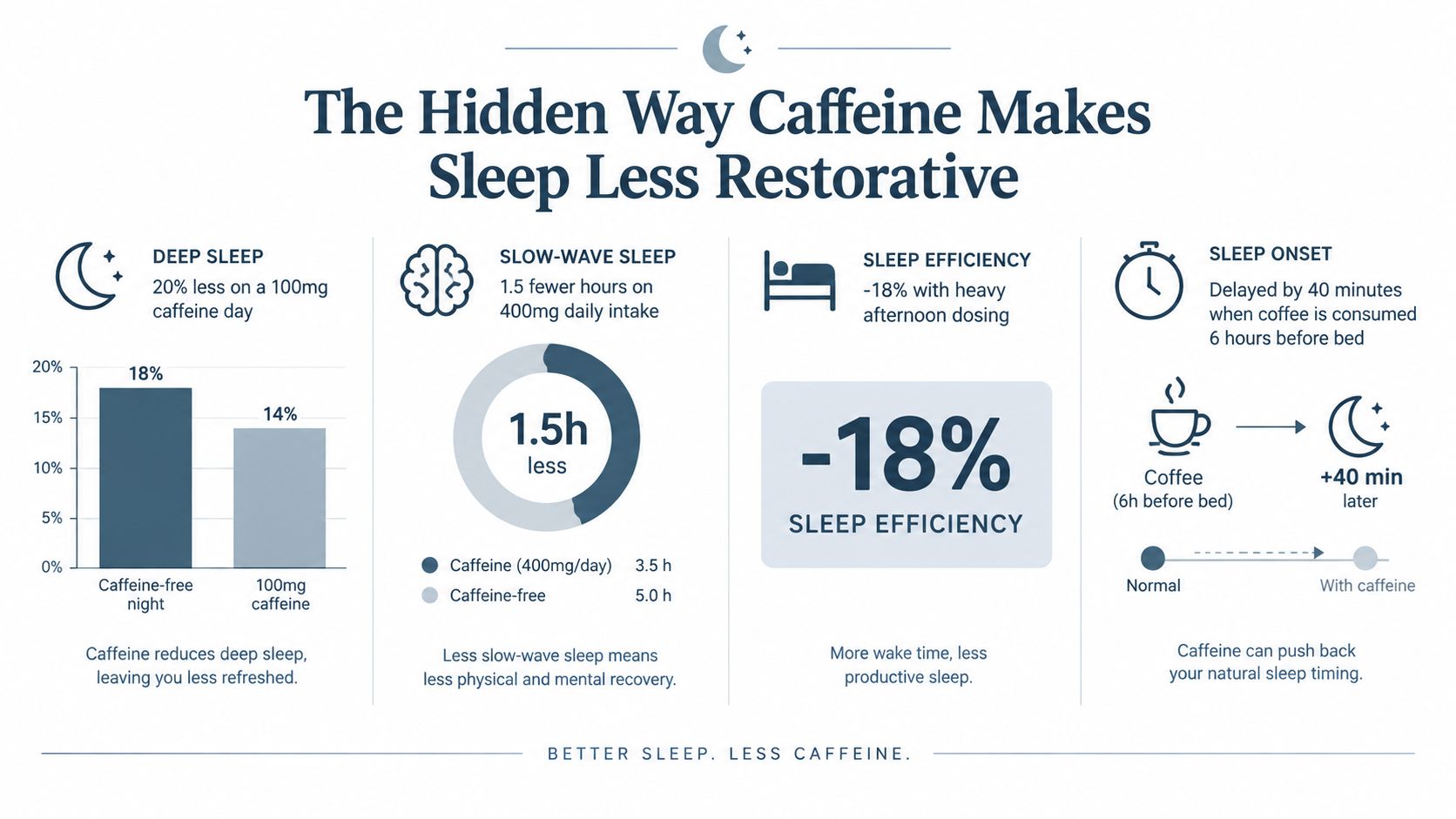
The Hidden Way Caffeine Makes Sleep Less Restorative
Falling asleep is only one part of sleep. Caffeine can also change what happens after you become unconscious, which explains why someone can sleep for what feels like a normal duration and still wake up foggy.
A recent systematic review linked caffeine with fewer slow brain waves, more wake-like electrical patterns, and weaker deep-sleep physiology. That finding helps explain the familiar complaint, “I slept fine, but I still feel off.” The issue may not be obvious time awake. It may be a reduction in the restorative quality of the sleep you did get, as discussed in this review of caffeine and deep sleep.
Sleep duration doesn't tell the whole story
Your night has an internal structure. Periods of lighter sleep, deeper slow-wave sleep, and brief awakenings work together rather than producing one uniform state. Caffeine can make that structure less stable, especially when the dose is high or the drink is close enough to bedtime for the stimulant to remain active.
This creates two common patterns:
- The obvious pattern: You feel alert at bedtime and struggle to fall asleep.
- The hidden pattern: You fall asleep on schedule but wake less restored, with mental fog or a stronger need for caffeine the next day.
That second pattern can reinforce the habit. You sleep poorly, drink more coffee to compensate, and then carry more caffeine into the following night. Breaking the loop often starts with reducing late-day exposure rather than demanding perfect sleep immediately.
Why athletes and shift workers notice this
People who prioritize recovery may notice the difference between being unconscious and being well-rested. Shift workers face an even harder problem because their sleep window may already conflict with their body clock. Caffeine can help them stay alert during work, but late use may reduce the restorative value of the sleep opportunity that follows.
That doesn't mean every coffee drinker needs to quit. It means your personal test should include morning recovery, not only bedtime. Ask whether you wake refreshed, whether you need caffeine immediately to feel functional, and whether your sleep feels shallow or interrupted.
If you're exploring a broader nighttime routine, Restore+ Sleep Aid is described as a melatonin-free product designed to support nitric oxide production, nervous system regulation, and overnight oxygen delivery. It shouldn't be used to cancel out late caffeine, and persistent sleep problems deserve professional evaluation.
Why Your Friend Can Drink Espresso at 8 p.m. and You Cannot
Your friend's evening espresso doesn't prove that caffeine is harmless. It proves that people clear and experience caffeine differently.
One person may drink coffee late and fall asleep without noticing a problem. Another may feel calm, fall asleep at the usual time, and still have lighter, less restorative sleep. A third may lie awake with a racing mind. The drink can be similar while the response is not.
Genetic differences in caffeine clearance help explain this variation. Lifestyle and health factors can also change the result. Regular coffee drinkers may develop some tolerance to the noticeable alerting feeling, but tolerance doesn't guarantee that sleep architecture remains unaffected. A large Swedish cohort found little overall association between habitual coffee intake and sleep quality or daytime sleepiness, which is consistent with the idea that regular drinkers can respond differently from sensitive people. The dose-and-timing evidence is summarized in this Sleep Advances research article.
Three familiar coffee drinkers
The 3 p.m. latte person falls asleep normally but wakes unrefreshed. The problem may be subtle sleep fragmentation rather than obvious insomnia.
The shift worker uses caffeine to stay alert during a late shift. If that drink lands near the beginning of the worker's daytime sleep period, it may remain relevant even when the person feels ready to rest.
The sensitive morning drinker notices poor sleep after caffeine that other people would consider early. For this person, “no coffee after lunch” may already be too permissive.
| Group | Approximate half-life | Sleep implication |
|---|---|---|
| Faster caffeine clearance | Shorter, within the broad individual range | A late drink may feel less disruptive, but dose still matters |
| Slower caffeine clearance | Longer, within the broad individual range | Earlier caffeine may remain relevant at bedtime |
| Regular drinker with tolerance | Individual response varies | Feeling less stimulated doesn't prove sleep is unaffected |
| Sensitive drinker | Individual response may be pronounced | Smaller doses or earlier cutoffs may be necessary |
The documented half-life range is roughly 2 to 12 hours, so there isn't one biologically correct cutoff for everyone. That range comes from the Sleep Foundation reference cited earlier.
Listen to the next morning: If you need more caffeine to overcome the previous night, your evening cutoff may be too late, even if you fell asleep without difficulty.
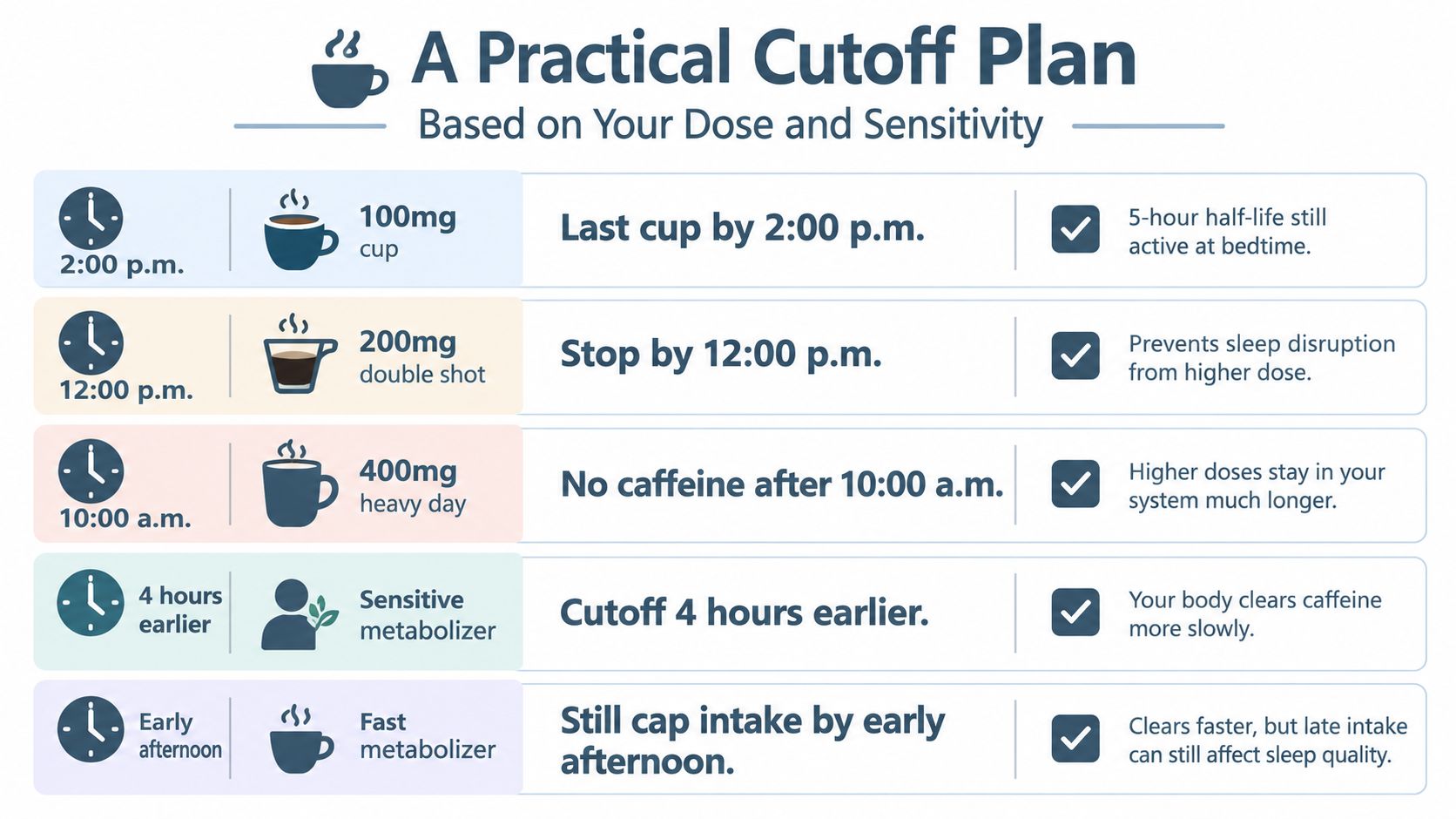
A Practical Cutoff Plan Based on Your Dose and Sensitivity
A useful cutoff plan starts with bedtime, not a universal clock time. The later your intended sleep period and the larger your dose, the earlier you should stop. The evidence supports a cautious approach because 400 mg can disrupt sleep within 12 hours of bedtime, while 100 mg did not significantly alter sleep in one recent trial when consumed up to 4 hours before bed. Those findings come from this randomized dose-and-timing study.
Use these rules of thumb:
- Small dose: Keep a smaller serving to the morning or early afternoon, especially if you already sleep lightly.
- Moderate dose: Move the last caffeinated drink earlier than your usual afternoon break and observe whether morning recovery improves.
- Large dose: Treat it as an earlier-day drink. Don't assume that feeling calm at bedtime means the dose has cleared.
- High sensitivity: Start with a morning-only experiment. If sleep improves, you've found a meaningful personal signal.
- Unknown serving: Assume the dose may be substantial until you can check the label or preparation details.
Replace the ritual, not just the caffeine
The afternoon cup often provides a pause, warmth, flavor, and a signal that work is ending. Replace those functions deliberately:
- Keep the same mug and break, but switch to water or a caffeine-free drink.
- Eat a snack if hunger is driving the desire for stimulation.
- Take a short walk or use brighter daytime light earlier rather than adding caffeine late.
- Write down the time of your last caffeinated drink for a week.
Don't compensate by adding another stimulant. Tea, chocolate, energy drinks, and some medicines can also contribute caffeine, so include them in your personal log.
For more ideas about making the switch without abandoning the coffee habit, see this guide to drinking decaf coffee before bed. Keep expectations realistic. A cutoff can reveal caffeine's role, but it won't solve every cause of restless sleep.
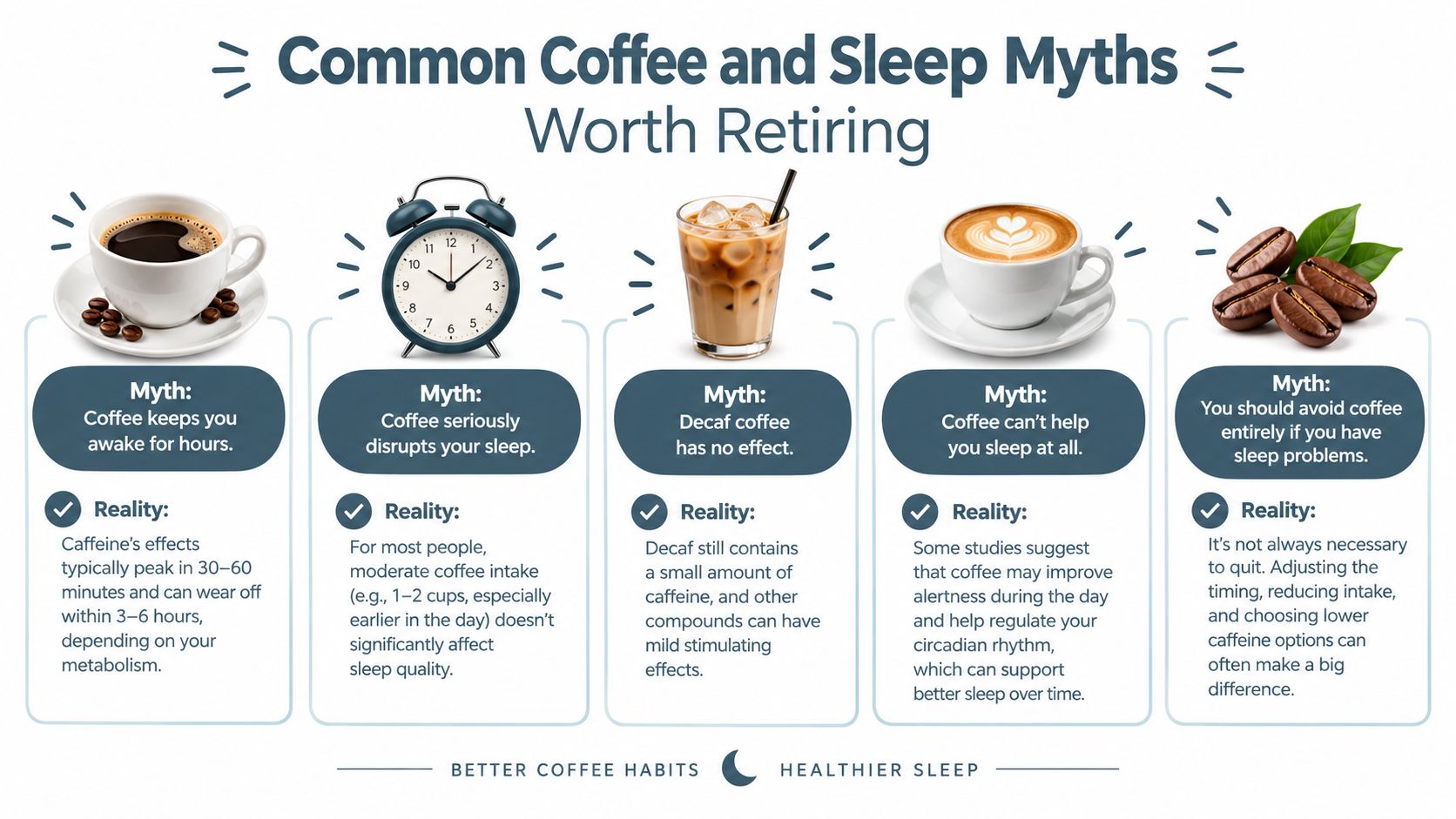
Common Coffee and Sleep Myths Worth Retiring
These myths persist because caffeine feels temporary. The alertness fades, so people assume the substance has disappeared. Sleep doesn't always provide such an obvious signal, especially when the main effect is lighter or more fragmented rest.
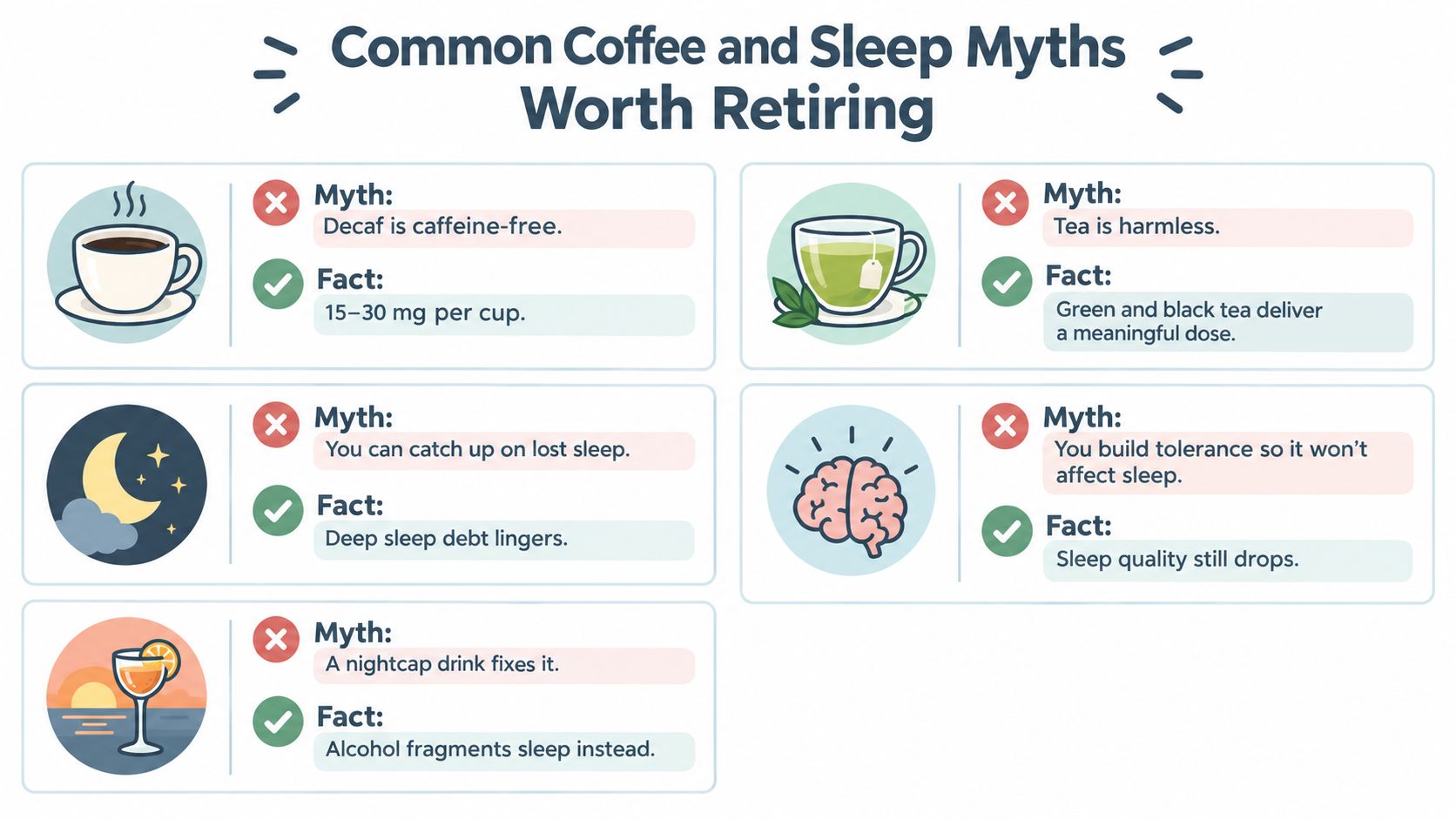
Myth: Decaf contains no caffeine. Decaf usually contains less caffeine than regular coffee, but it isn't automatically caffeine-free. Sensitive people should treat decaf as a lower-caffeine option, not a guaranteed sleep-neutral drink.
Myth: Tea is harmless. Green and black tea can contain caffeine. If you're tracking your exposure, include tea rather than assuming that replacing coffee removes the stimulant.
Myth: A morning cup can never affect bedtime. For many people, morning coffee is less likely to cause a noticeable problem. But caffeine clearance varies widely, and a slow-clearing person may still respond to an earlier drink.
Myth: Espresso is always stronger than drip coffee. Strength depends on serving size and total caffeine, not just the word espresso. A small concentrated serving may contain less caffeine overall than a larger brewed drink.
Myth: Half-caff or cold brew neutralizes caffeine. These options may change the dose, but they don't remove caffeine's adenosine-blocking action. The relevant questions remain how much you drank and how close it was to sleep.
Choose one change tonight
You don't need to redesign your entire routine at once. Pick one experiment:
- Move your last regular coffee earlier.
- Switch to decaf after your chosen cutoff.
- Record caffeine timing and morning energy for a week.
- Reduce the size of the final serving.
- Check whether tea, chocolate, or another product is adding caffeine later in the day.
The goal isn't perfect restriction. It's finding the smallest change that gives your sleep more room to recover.
Chocolate can also complicate an evening routine, so this guide on whether chocolate helps you sleep is useful if sweets are part of your wind-down.
Coffee doesn't affect everyone in the same way, but you can make the answer personal. Shift your last cup earlier, swap to decaf after your cutoff, or track your response for a week. That one small experiment can show whether caffeine is delaying sleep, reducing its restorative quality, or doing both.
SleepHabits offers melatonin-free sleep support, mouth tape, and nasal strips designed around nighttime breathing and restorative sleep routines. If late coffee leaves you sleeping but not recovering, visit SleepHabits to explore tools that can complement an earlier caffeine cutoff and a calmer wind-down.