

At 3 a.m., you nudge your partner, they roll onto their side, and the room goes quiet for a few breaths. Then the snoring starts again. You're exhausted, they may not even know what happened, and both of you are tempted to treat the problem as a nuisance that needs a quick fix.
Learning how to stop a partner from snoring works better when you treat it as a shared sleep problem. Start with simple bedside experiments, match tools to the pattern you observe, and know which sounds or breathing changes require medical evaluation.
Why Your Partner's Snoring Feels Impossible to Fix
Snoring happens when air moves through a narrowed or unstable upper airway during sleep. As the throat muscles relax, tissues can vibrate. The tongue may shift backward, nasal resistance may force more mouth breathing, and sleeping on the back can allow gravity to narrow the airway further. A forward-flexed neck or congestion can add another obstruction.
That's why one intervention may quiet the sound without solving the cause. A nasal strip can help when the nose is the bottleneck, but it won't correct snoring driven mainly by tongue position. Turning onto the side can help a back sleeper, but the benefit may fade if shoulder pain sends them back to the supine position. A partner who snores through every position may need a different assessment altogether.
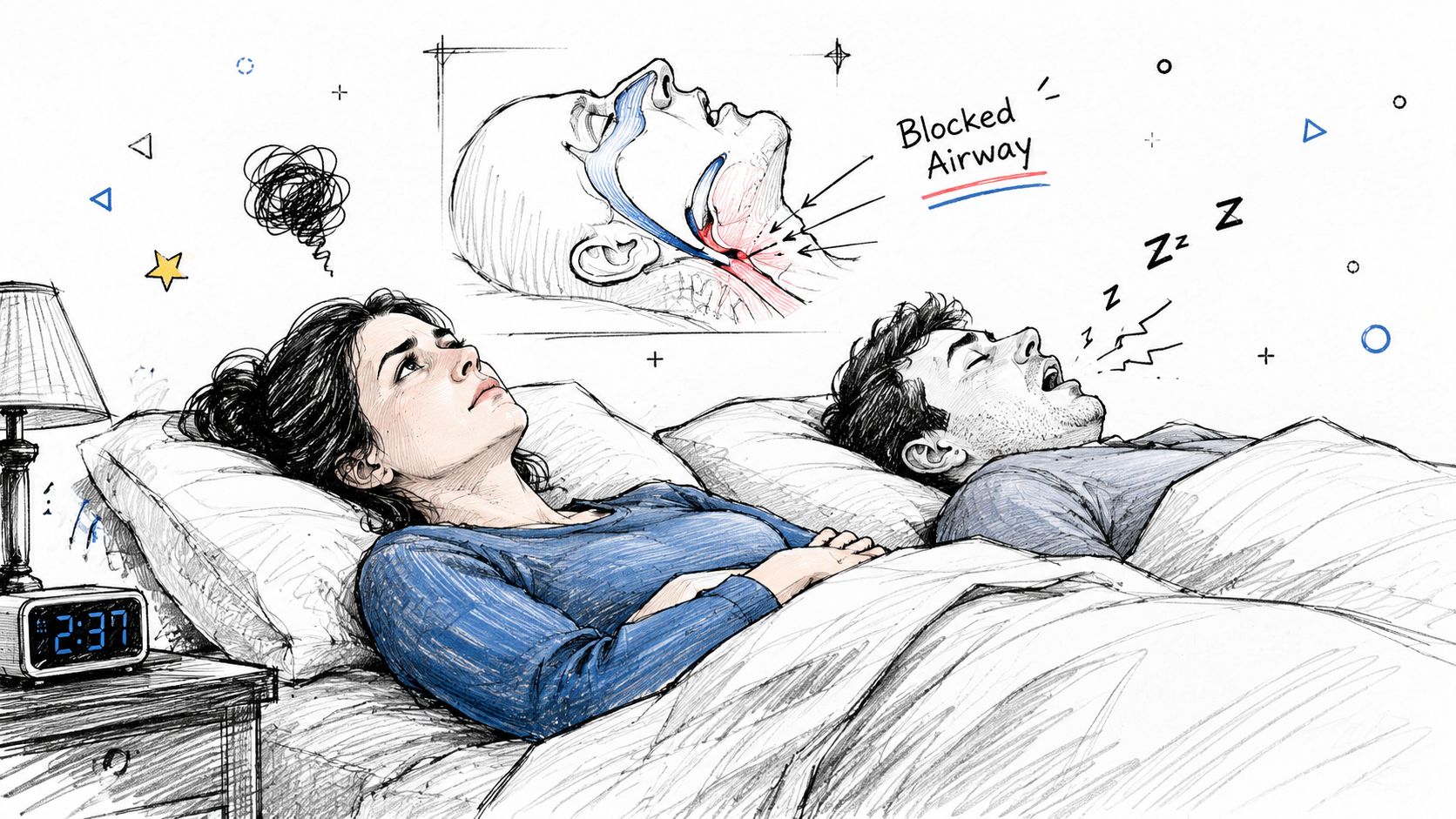
The problem belongs to both people
The snorer controls the airway, but the bed partner sees the pattern. You hear whether the sound follows a pause, notice whether breathing becomes strained, and experience the accumulated disruption firsthand. That makes the conversation less about blame and more about gathering useful information.
Snoring is common. The American Medical Association reports that it affects about 25% to 50% of adults regularly, and describes roughly 90 million Americans as snoring at least sometimes, with about 37 million snoring regularly (American Medical Association guidance on snoring). Those figures explain why the first step usually focuses on modifiable factors such as position, nasal obstruction, evening alcohol, and airway narrowing related to body weight.
Practical rule: Don't judge a remedy by whether it masks the noise for one minute. Judge it by whether your partner breathes comfortably and you both sleep more consistently.
A useful starting point is to observe the sound before changing everything at once. Is it loudest on the back? Does it improve when the nose is clear? Does it come with gasping or a noticeable pause? The plain-language overview of what causes snoring at night can help you connect those observations to possible airway patterns.
Immediate Bedside Fixes You Can Try Tonight
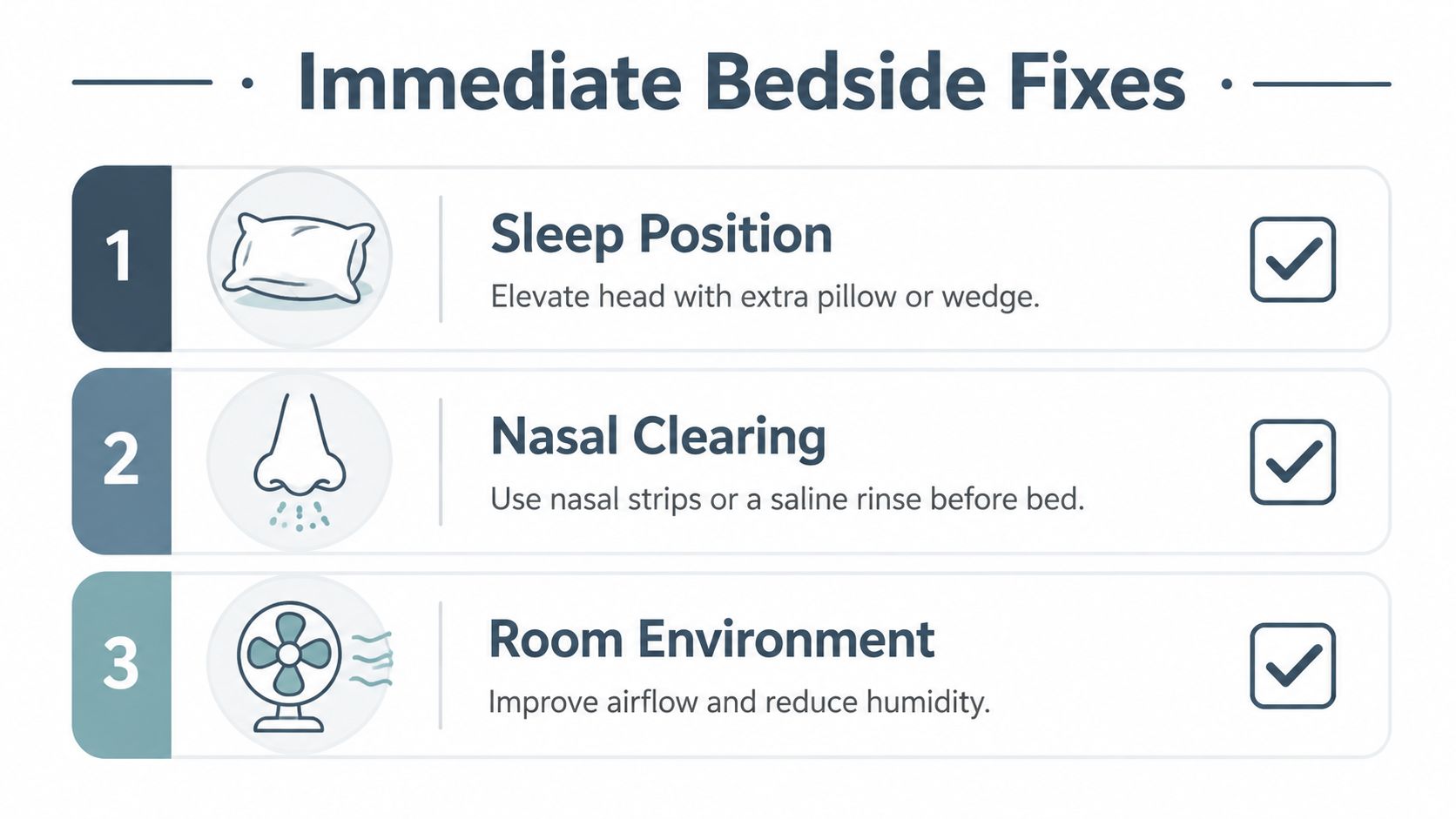
Start with the least complicated change, then listen for a response. If you alter position, nasal airflow, room conditions, and several products at once, you won't know what helped.
Begin with position and alignment
If your partner is on their back, gently ask them to turn onto their side. Snoring is typically more frequent and louder in the supine position because gravity can narrow the airway, and both the Mayo Clinic's snoring guidance and clinical advice recommend side sleeping as part of treatment.
Try a pillow arrangement that keeps the neck neutral rather than sharply bent forward. A wedge or modest head elevation may feel better than stacking soft pillows, which can push the chin toward the chest. If your partner returns to their back repeatedly, consider a structured positional aid instead of repeatedly waking them.
Check the nose before taping the mouth
Congestion changes the entire breathing route. A saline rinse, used appropriately, can clear mucus before bed. Nasal strips may gently widen the external nasal passage, so place one across the bridge of the nose according to its instructions and compare the sound with and without it.
Humidity is more individual than many people realize. A dry room can irritate the nose and throat, while excess humidity may feel stuffy. Improve airflow, keep bedding clean, and avoid assuming that a humidifier will help every snorer.
Introduce mouth support cautiously
Mouth tape is only a reasonable experiment when your partner can breathe comfortably through the nose and has no reason to suspect an untreated breathing disorder. Never use it to force nasal breathing through a blocked nose, and stop if it causes panic, air hunger, skin irritation, or worse sleep.
If you're evaluating Hydrating Mouth Tape, the available product information describes goals including supporting quieter nights, encouraging restorative rest, promoting oral care, reducing bad breath, practicing tongue posture, and supporting nasal breathing. Treat those as intended uses, not proof that tape will resolve every cause of snoring.
For a more clinical overview of oral approaches, snoring solutions from a dentist can help you understand where dental assessment fits.
Try one change for a few minutes while your partner is relaxed, not after an irritated midnight confrontation. The immediate goal is a calmer experiment, not a guaranteed cure.
Nasal Strips, Mouth Tape, and Oral Devices Compared
The right tool depends on where the airway narrows. Nasal aids address airflow through the nose. Mouth tape encourages the lips to stay together, but it can't compensate for nasal blockage. Positional devices reduce back sleeping. A mandibular advancement device changes the position of the lower jaw and tongue, making it a more targeted option for persistent snoring.
| Tool Type | How It Works | Best For | Key Cautions |
|---|---|---|---|
| Nasal strips | Gently supports the external nasal passage | Snoring that changes when nasal airflow improves | Won't treat throat-based narrowing or sleep apnea |
| Mouth tape | Encourages closed-mouth, nasal breathing | Selected mouth breathers with a clear nose | Avoid with nasal obstruction, anxiety about airflow, or suspected untreated apnea |
| Mandibular advancement device | Holds the lower jaw forward to support the airway | Persistent primary snoring after simpler measures | Fit and titration matter, and sleep apnea should be assessed |
| Positional aid | Discourages back sleeping | Position-dependent snoring | Can be ineffective for non-positional snorers and uncomfortable for some sleepers |
Nasal strips are easy to test, inexpensive compared with clinical devices, and low commitment. Their limitation is equally clear: they can improve the nasal entrance while leaving relaxed throat tissues or backward tongue movement unchanged. You can learn more about choosing among nasal breathing aids, especially when congestion and mouth breathing seem connected.
Oral devices need a better fit than a generic mouthpiece
Mandibular advancement devices have stronger evidence than many over-the-counter snoring gadgets. In a randomized trial involving primary snoring, sleeping partners rated 21 of 23 people, or 91%, using a mandibular advancement device as much or very much improved, compared with 11 of 19, or 58%, using a combined airway-and-positional device. The difference was 33 percentage points, with a number needed to treat of 3 (randomized trial indexed by PubMed).
Those results don't mean every person should buy a mouthpiece. Poor fit, insufficient advancement, jaw discomfort, dental changes, and inconsistent use can undermine the outcome. Clinical fitting and titration are more sensible when snoring is persistent, especially if the partner reports gasping, pauses, or choking.
A pooled review cited in the same evidence summary reported an overall snoring reduction of about 45%, while also emphasizing that oral appliances aren't a universal cure. The useful question is not “Which product stops snoring?” It's “Does this person have a nasal, positional, oral, or medical pattern, and can they use the tool consistently?”
Building a Nightly Routine That Reduces Snoring Over Time
A quiet night often begins before bedtime. Evening alcohol can relax airway muscles, and heavy late eating may make lying down uncomfortable. Rather than turning the routine into a strict performance, build a repeatable sequence that reduces predictable triggers and gives both partners a shared signal to slow down.
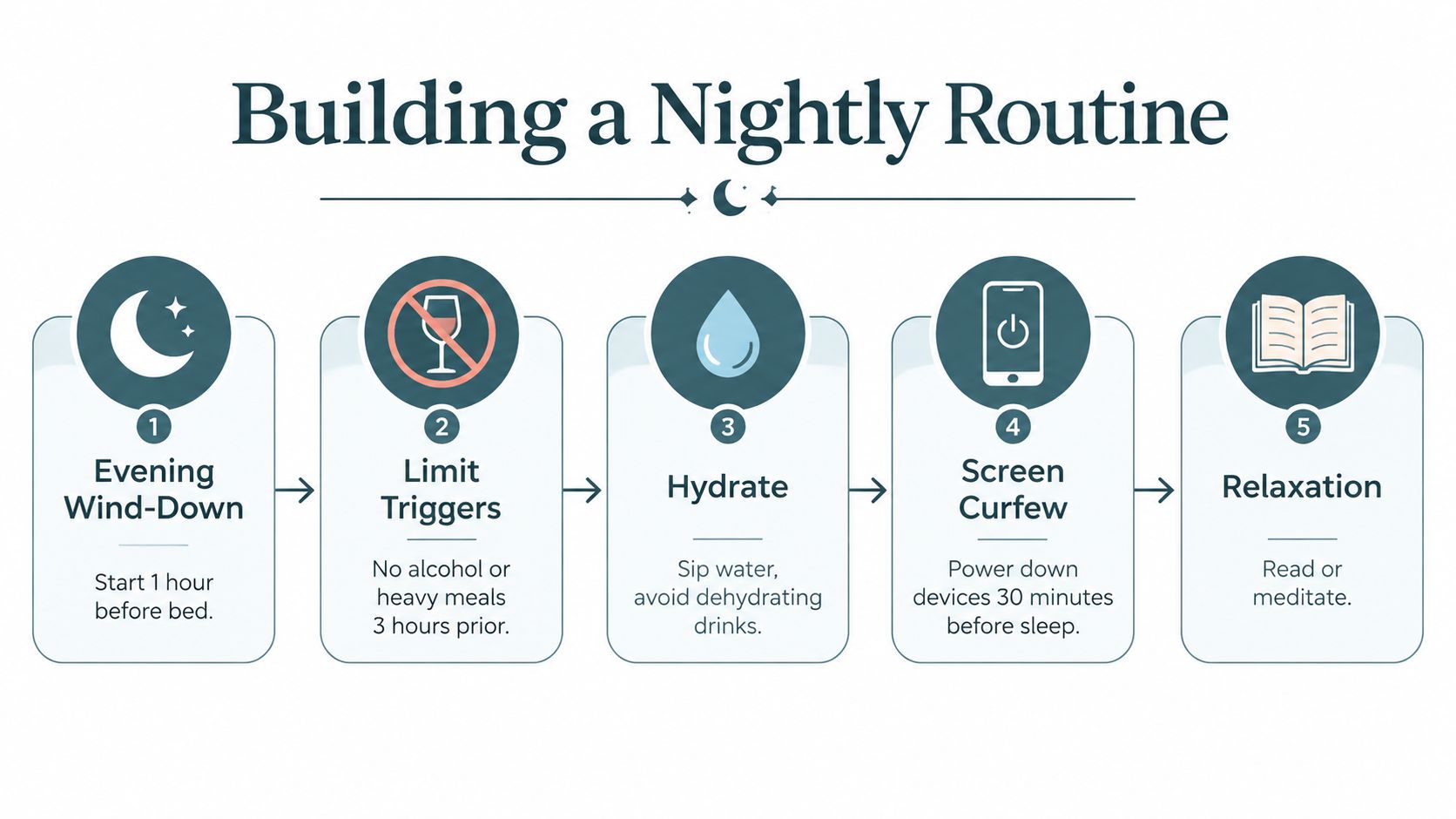
Use a simple sequence
Begin by dimming lights and reducing stimulation. If your schedules differ, the earlier sleeper can start the routine alone while the later sleeper joins for the final steps.
- Limit obvious triggers: Avoid alcohol close to bed and keep heavy meals earlier when possible. The point is consistency, not perfection.
- Support comfortable hydration: Sip water during the evening and notice whether dehydrating drinks leave the mouth or throat dry. Don't force large amounts immediately before sleep.
- Create a screen boundary: Power down phones and bright screens before getting into bed. Use that transition for journaling, reading, or a quiet conversation instead.
- Settle the nervous system: Slow breathing, gentle stretching, or meditation can replace the rushed feeling that often carries into sleep.
- Apply only the tools that fit: If nasal strips help, use them after clearing the nose. If mouth support is appropriate, introduce it only when nasal breathing feels easy.
Couples often do better when they agree on one shared cue, such as “quiet routine begins now,” rather than one person policing the other's habits. The snorer can prepare the room and tools, while the bed partner records whether the sound changed. That division reduces blame and creates useful feedback.
Keep the routine adaptable
A shift worker may not have a conventional evening. The core remains the same: reduce known triggers before sleep, allow a wind-down period, clear the nose, and choose a comfortable position. A calming drink or supplement may fit some people, but it shouldn't replace evaluation when breathing pauses or choking occur.
The routine should also protect the non-snoring partner. Agree on a gentle wake-up signal, a backup sleep arrangement when necessary, and a morning check-in that lasts less than a minute. Better habits can support quieter breathing, but they shouldn't become an excuse to ignore red flags.
When Snoring Is More Than Just a Noise Problem
Not every snore signals disease. Occasional or position-dependent snoring can result from temporary congestion, relaxed tissues, or sleeping on the back. But persistent loud snoring with breathing pauses, gasping, or choking deserves medical attention, even if a nasal strip or position change makes the room quieter.
Obstructive sleep apnea has long been linked with snoring. A major epidemiology review reported habitual snoring as the most common sleep-apnea symptom in 70% to 95% of cases, while more recent estimates place obstructive sleep apnea at 936 million adults ages 30 to 69 worldwide, including 425 million with moderate-to-severe disease (epidemiology review in Sleep). Another estimate identifies 83.7 million U.S. adults age 20 and older with the condition, so persistent snoring shouldn't be dismissed as merely irritating.
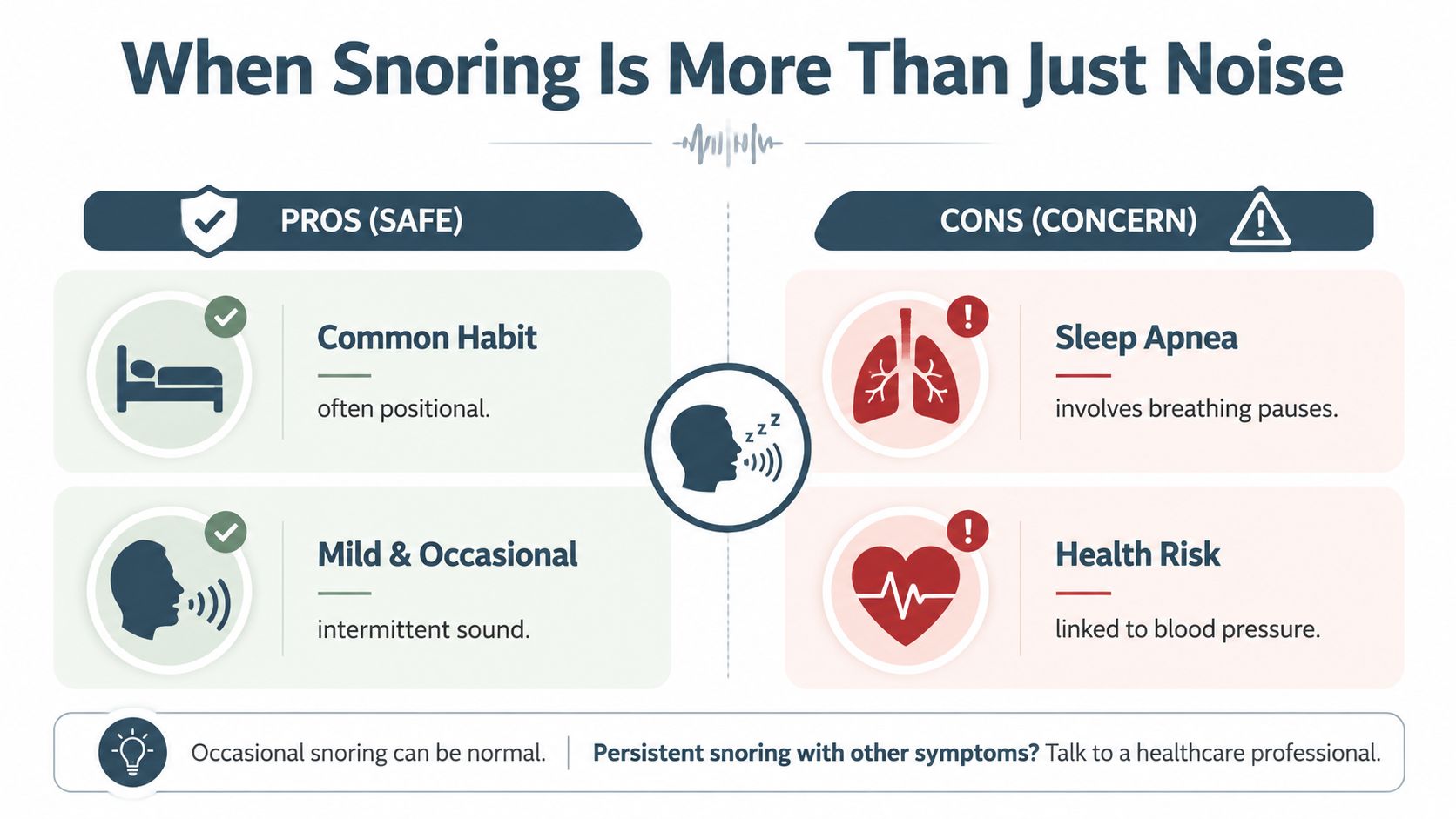
Watch for breathing changes
Keep a calm record of what you observe:
- Breathing pauses: The snoring stops and breathing appears absent before restarting.
- Gasping or choking: Your partner seems to fight for air during sleep.
- Persistent disruption: The snoring is loud and habitual rather than occasional.
- Daytime consequences: Your partner wakes unrefreshed, feels unusually sleepy, or struggles to stay alert.
The NHS classifies sleep apnea severity by apnea-hypopnea index, with 5 to 14 considered mild, 15 to 30 moderate, and over 30 severe (NHS information on sleep apnoea). Only a qualified clinician can determine whether those criteria apply.
Bed-partner observations matter, but annoyance alone can't measure severity. Research also indicates that bed partners' subjective reports don't reliably correspond to objective snoring measures (research on bed-partner reports and snoring). If a wedge feels comfortable, it may still be useful for position support, and resources on how wedge pillows help sleep apnea can explain the practical considerations. Comfort, however, is not a diagnosis.
A Two-Week Plan to Track and Troubleshoot Snoring Together
Random midnight adjustments create frustration. A short tracking period gives you a clearer pattern without turning the bedroom into a laboratory.
Each morning, record four observations:
- Sound: Rate the night's snoring qualitatively, such as mild, disruptive, or severe.
- Position: Note whether it appeared mainly on the back, on either side, or in every position.
- Nasal status: Record congestion, dryness, or easy nasal breathing before bed.
- Recovery: Note whether the snorer and bed partner woke rested, tired, or repeatedly disturbed.
Change one variable at a time. Start with side sleeping, then test nasal support, then consider a positional aid or clinical discussion if the pattern persists. If you're using an app, the SouthShore Fine Linens app picks may help you compare available tracking approaches, but recordings and scores are observation tools, not diagnostic tests.
At the end of the period, ask three questions: Did the sound improve consistently? Did your partner breathe comfortably? Did any warning signs appear? If snoring remains loud in every position, or if pauses, choking, or gasping continue, stop cycling through gadgets and arrange a medical evaluation. For additional ideas, review these snoring remedies that work and take the most relevant observations to a clinician.
SleepHabits offers melatonin-free sleep support, nasal strips, and mouth-breathing tools that can fit into a structured wind-down routine. Visit SleepHabits to explore options for clearer nighttime breathing, then pair any home experiment with the two-week tracking plan and medical follow-up when red flags appear.