

That groggy, exhausted feeling when your alarm screams is all too common, but it absolutely doesn't have to be your default setting. The secret to how to wake up feeling refreshed usually boils down to one thing: closing your personal "sleep gap."
This is the difference between the sleep your body is crying out for and what it actually gets. With a few smart, science-backed habits, you can make energized mornings your new normal.
Why You Wake Up Tired and How to Fix It
Waking up feeling drained isn't just a minor annoyance. It's a flashing red light from your body telling you that your sleep quality is falling short. Too many of us just accept daily fatigue as a part of modern life, but that grogginess is often a symptom of a deeper problem that sabotages everything you do.
Think about the executive who mainlines coffee to get through meetings, only to slam into a brutal 3 PM wall. Or the athlete whose performance tanks because their muscles just aren't recovering overnight. For example, a runner who only gets five hours of choppy sleep will have slower reaction times and a higher perceived effort during their morning workout. In both cases, poor sleep quality is the culprit, stealing their energy, focus, and physical edge.
The first step is to stop accepting fatigue as normal and start seeing it for what it is: a problem you can solve.
Understanding the Global Sleep Gap
This isn't just a personal battle; it's a massive, worldwide issue. The latest IKEA Sleep Report 2025 paints a pretty bleak picture, revealing a global average Sleep Score of just 63 out of 100.
That number shows just how much room for improvement there is. The report found huge 'sleep gaps' everywhere. In Turkey, for example, people want nearly nine hours of sleep but are only getting about 6 hours and 42 minutes. That deficit doesn't just make people tired; it fuels a public health crisis and tanks productivity on a global scale. You can dig into all the details in the IKEA Sleep Report 2025.
The real problem lies in that gap between the sleep we need and the sleep we get. But here's the key: it's not always about logging more hours in bed. It's about making the hours you do get count.
The goal is to make your sleep more efficient. By addressing the root causes of restlessness and poor sleep cycles, you can get more restorative value out of the time you have, even if you can't add more hours to your night.
This guide is designed to give you practical, evidence-informed strategies to close that gap for good. We'll walk through actionable steps that tackle the most common sleep disruptors and help you build a routine that actually promotes deep, uninterrupted rest. For a deeper dive into common pitfalls, check out these 6 mistakes that may be sabotaging your sleep.
Moving from Fatigued to Energized
The solutions we're about to cover aren't quick fixes or magic pills. They're sustainable habits that build on each other, night after night. By focusing on natural methods, you can support your body's own sleep processes instead of fighting against them.
We're going to zero in on the areas that make the biggest difference:
- Your Evening Routine: How to create a wind-down ritual that actually signals to your body that it's time to rest.
- Breathing Quality: Why breathing through your nose is a non-negotiable for deep sleep and how to make it happen.
- Smart Nutrition: Using the right foods and supplements to support relaxation and turbocharge overnight recovery.
- Personalized Strategies: How to adapt these habits to your life, whether you're a high-performing athlete or a tired shift worker.
By focusing on these foundational pillars, you can start the journey from waking up groggy to starting your day with genuine energy and clarity.
Crafting Your Ideal Evening Wind-Down Routine
How you spend the last hour of your day matters more than you might think. A good morning starts the night before, and waking up refreshed isn't about luck—it's about deliberately signaling to your body and mind that it’s time to rest. This isn’t a rigid, complicated checklist. It’s a simple, calming sequence that prepares you for deep, restorative sleep.
Let’s move past the generic advice and build a realistic timeline you can start using tonight. I'll break down the "why" behind each action so the habits actually stick.
Your Evening Wind-Down Checklist
Here’s a simple timeline to structure the last hour of your day. Think of it less as a strict schedule and more as a flexible guide to help you build a powerful pre-sleep ritual.
| Time Before Bed | Action | Why It Works |
|---|---|---|
| 60 Minutes | Digital Sunset: Power down all screens (phone, TV, laptop). | Blue light from screens suppresses melatonin, the hormone that signals sleep time. Shutting them down is the clearest way to tell your brain the day is over. |
| 60 Minutes | Dim the Lights & Cool the Room: Lower ambient lighting and adjust the thermostat. | Soft, warm light encourages melatonin release. A cool room supports the natural drop in body temperature needed to initiate sleep. |
| 45 Minutes | Brain Dump: Journal for 5-10 minutes. | Getting worries and to-do lists on paper moves them out of your head, quieting the mental chatter that keeps you awake. |
| 30 Minutes | Sip a Calming Drink: Prepare a warm, non-caffeinated beverage. | A warm drink like Restore+ (with magnesium) helps relax muscles and calm the nervous system, creating a comforting sensory cue for sleep. |
This sequence isn't just about going through the motions. Over time, it creates a powerful set of cues that your brain associates with winding down, making it easier and more natural to fall asleep each night.
The Digital Sunset: One Hour Before Bed
The bright blue light blasting from your phone, tablet, and TV is a powerful signal to your brain to stay awake. It actively slams the brakes on melatonin, the hormone that governs your sleep-wake cycle. To fight back, create a "digital sunset." Set an alarm on your phone for one hour before you want to be asleep.
When that alarm goes off, it's your non-negotiable cue: all screens go dark. A practical tip: Instead of leaving your phone on the nightstand, plug it in to charge across the room. This makes it impossible to mindlessly scroll in bed and removes the temptation entirely. This single habit is one of the most effective things you can do to tell your body the day is officially over.
This visual shows just how big the gap is between the sleep our bodies need and what we're actually getting—a gap that a solid wind-down routine helps close.
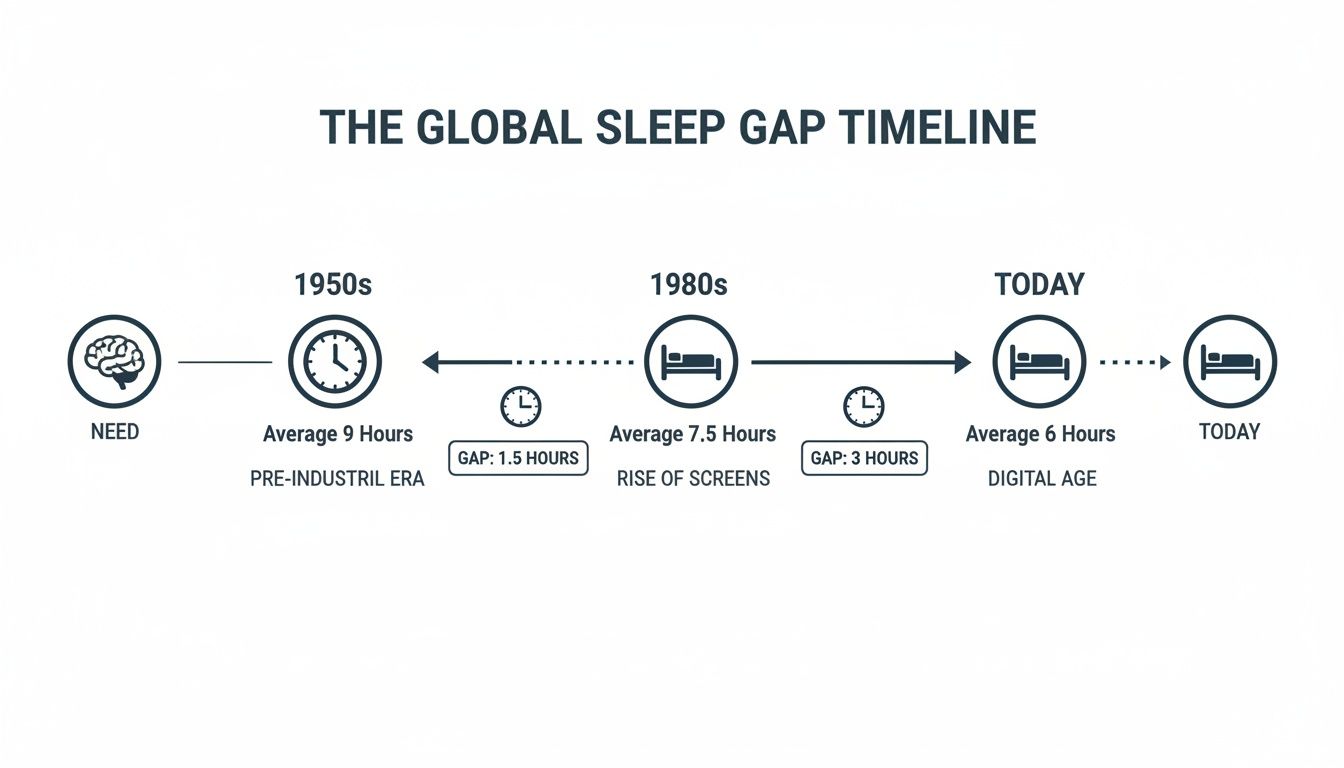
As you can see, that gap has been growing for decades. Intentional routines are how we start to reclaim our rest.
Lower the Lights, Cool the Room
Just as you've dimmed your screens, start dimming the lights in your home. Swapping harsh overhead lights for soft lamps creates a calm, relaxing atmosphere and encourages melatonin release, reinforcing the message that sleep is on its way.
Your core body temperature also needs to drop to initiate sleep. For example, try setting your thermostat to between 65-68°F (18-20°C). This small change can give your body the nudge it needs to fall asleep faster. This is especially critical on warmer nights when an uncomfortable environment can fragment your rest. If you struggle with a hot room, check out these effective strategies to cool a room without AC.
Offload Your Mind: 45 Minutes Before Bed
A racing mind is one of the biggest roadblocks to falling asleep. The Global Wellness Institute's 2025 trends report highlights a growing crisis of "restless minds, sleepless nights," as digital overload and constant stress fuel anxiety for millions. In fact, one study found nearly 40% of Gen Z deal with this multiple times a week.
But the data also shows that simple habits work wonders. People who report getting good sleep are flourishing 88% of the time, a huge jump from just 47% for poor sleepers. Simple things like journaling or slow breathing can make a massive difference. You can find more details in the Global Wellness Institute's 2025 trends report.
To quiet the mental noise, try a quick "brain dump" in a notebook. This isn't about writing a novel; it's about getting things out of your head.
- Gratitude: List three specific things that went well today. (e.g., "I'm grateful for the productive meeting with my team," or "I'm thankful for the quiet walk I took this evening.") This shifts your focus from what’s wrong to what’s right.
- Worry Dump: Write down everything you're worried about. Just getting it on paper helps release its grip on you.
- Tomorrow’s Plan: Jot down your top three priorities for the next day. This provides a sense of control and prevents late-night strategizing.
This whole process takes just a few minutes but is incredibly effective at calming the anxiety that keeps you staring at the ceiling. For more techniques, our guide on regulating stress and anxiety for sleep is a great resource.
Sip Something Calming: 30 Minutes Before Bed
The final piece of your wind-down is a warm, calming beverage. A magnesium-based drink like Restore+ is an excellent choice because it helps with muscle relaxation and promotes a sense of calm without relying on melatonin.
Magnesium plays a critical role in regulating the neurotransmitters that quiet your nervous system down. As your body absorbs it, it helps ease physical tension and turn down the mental volume.
This nightly drink becomes a powerful sensory cue. Over time, the warmth, the taste, and the ritual itself become a final, comforting signal to your brain that it's time to sleep.
As you sip your drink, practice some slow, deep breathing. Inhale through your nose for a count of four, hold for a moment, and then exhale slowly through your nose for a count of six. This simple exercise physically lowers your heart rate and readies you for a night of truly restorative sleep.
Unlock Better Sleep Through Nasal Breathing
How you breathe at night might be the single most overlooked factor in how you feel in the morning.
If you’ve dialed in your wind-down routine but still wake up feeling like you barely slept, the problem might not be what you do before bed, but how you breathe during it. The difference between breathing through your nose versus your mouth is massive, and making the switch is one of the keys to truly deep, restorative rest.

When you breathe through your mouth, you're pulling in raw, unfiltered air. This is what causes that classic dry mouth, a scratchy throat, and a much higher chance of snoring. More importantly, it encourages shallow, inefficient breathing that constantly pulls you out of the deep sleep stages your body needs for recovery.
Nasal breathing, on the other hand, is your body’s built-in purification system. Your nose warms, filters, and moistens incoming air, preparing it for your lungs. This process also boosts nitric oxide production—a vital molecule that improves oxygen circulation and helps you stay in those deep, restorative sleep cycles for longer. Learning about the power of nasal breathing can completely change how you think about sleep.
Why Mouth Breathing Sabotages Your Sleep
So many people are "mouth breathers" at night and have no idea. They just know they wake up with a parched mouth, a sore throat, or a partner who complains about their snoring. These are all telltale signs that your default airway during sleep is your mouth, not your nose.
This habit does more than just cause minor annoyances. Mouth breathing disrupts the delicate architecture of your sleep, preventing you from spending enough time in the crucial REM and deep sleep stages. The result is waking up feeling drained, no matter how many hours you logged in bed.
Mouth breathing is a common culprit behind fragmented sleep. It can contribute to snoring and even sleep-disordered breathing by causing the airway to be less stable. Training your body to breathe nasally is one of the most effective ways to improve sleep quality and wake up with more energy.
For instance, a chronic snorer might just assume it's an inevitable part of getting older. But in many cases, that snoring is just air vibrating the soft tissues in their throat—a problem made way worse by mouth breathing. By encouraging airflow through the nose, they can often reduce or even eliminate snoring, leading to quieter nights and much deeper rest for everyone involved.
Practical Tools for Effortless Nasal Breathing
The great news is that you can gently train your body to default back to nasal breathing. Two simple, non-invasive tools can make a huge difference right away: hydrating mouth tape and nasal strips. They work together to create the ideal conditions for steady nasal airflow all night long.
-
Hydrating Mouth Tape: This isn't just any old tape. Products like SleepHabits' mouth tape use a gentle, skin-safe adhesive and often include a small breathing vent for peace of mind. It works by creating a soft seal that encourages your jaw to relax and your lips to stay closed, naturally redirecting your breathing up through your nose.
-
Aromatic or Transparent Nasal Strips: These are external strips you place over the bridge of your nose. They use a spring-like action to gently lift your nasal passages open, instantly increasing airflow. This makes breathing through your nose easier and more comfortable, especially if you deal with any minor congestion.
These tools aren't about forcing a change; they're about providing gentle encouragement. They help your body rediscover its natural, more efficient way of breathing while you sleep.
A Simple Start for Better Breathing Tonight
Getting started is simple. Just think of it as adding two final steps to your wind-down routine.
- Prep Your Skin: Make sure the skin on your nose and around your mouth is clean and dry. Any lotions or oils can keep the adhesive from sticking properly.
- Apply the Nasal Strip: Place the strip across the bridge of your nose, positioning it to gently open your nostrils. You should feel a subtle, immediate increase in airflow.
- Apply the Mouth Tape: Relax your lips and place the mouth tape horizontally over the center of your mouth. Press gently to make sure it's secure. The goal is a light seal, not a restrictive one.
Many people notice a difference on the very first night. An athlete might find they wake up feeling more recovered, a direct result of improved oxygenation during sleep. Mouth breathing is known to disrupt deep sleep, but switching to nasal breathing can significantly deepen REM sleep. Athletes who make the switch often report waking with 41% better concentration and a 42% enhanced mood. You can dig into more of these global sleep study findings on respiratory-therapy.com.
Ultimately, mastering nasal breathing is a fundamental step toward unlocking the kind of deep, uninterrupted rest that allows you to wake up feeling genuinely refreshed and ready for your day.
Fueling Restorative Sleep with Smart Nutrition
What you eat—and when you eat it—has a massive impact on how well you sleep. To wake up feeling genuinely refreshed, your nutrition strategy has to go beyond just cutting out that 3 PM coffee. The choices you make in the hours before bed can either set you up for a night of deep, restorative rest or leave you tossing and turning for hours.
This isn't about some restrictive diet. It’s about understanding how specific foods and nutrients support your body’s natural sleep processes, helping you fall asleep faster and stay asleep longer.
We'll move past the obvious stuff like caffeine and get into the specific, actionable habits that fuel real overnight recovery. This means timing your meals correctly and choosing foods that actively tell your body it's time to calm down.
Timing Your Last Meal for Optimal Rest
Eating a huge, heavy meal too close to bedtime is a recipe for terrible sleep. Plain and simple. When your digestive system is working overtime, your body can't fully relax into those deep, restorative sleep stages. It’s like your digestive system and your sleep system are in a fight, and nobody wins.
As a general rule, try to finish your last big meal at least three hours before you plan to sleep. This gives your body plenty of time to digest, preventing things like acid reflux or that uncomfortable "too full" feeling that can jolt you awake.
So if your target bedtime is 10:30 PM, you should be wrapping up dinner by 7:30 PM. It’s a simple adjustment, but it can make a night-and-day difference in how soundly you sleep.
Foods and Nutrients That Promote Sleep
While timing is a big piece of the puzzle, what you eat is just as important. Some foods are packed with nutrients that help calm your nervous system and support the production of sleep-inducing hormones. Weaving these into your evening can be a total game-changer.
Here are a few sleep-friendly powerhouses:
- Foods Rich in Magnesium: This mineral is a relaxation powerhouse. It helps regulate neurotransmitters that promote calm and can ease muscle tension. Practical example: A handful of almonds or a few squares of dark chocolate in the evening.
- Foods with Tryptophan: This is the amino acid that acts as a precursor to serotonin and melatonin—both critical for sleep regulation. Practical example: A small serving of cottage cheese or a glass of warm milk.
- Complex Carbohydrates: A small bowl of oatmeal or a piece of whole-wheat toast can actually help make that tryptophan more available to your brain.
Think of your pre-sleep nutrition as a tool for relaxation. You're not just filling your stomach; you're giving your body the raw materials it needs to properly wind down and repair itself overnight.
Understanding the specific role these nutrients play is key. For a deeper dive, you can learn more about how a magnesium supplement for sleep can slot into your nighttime routine.
The Restore+ Advantage for Calm and Recovery
While whole foods are your foundation, a targeted supplement can deliver a concentrated dose of these key nutrients. This is exactly where a product like Restore+ comes into play. Its formula was built specifically to enhance calm and support overnight recovery without relying on melatonin.
The blend combines superfoods and nutrients that work together to prep your body for rest. The magnesium in Restore+ helps quiet the nervous system, while other ingredients support nitric oxide production, which aids circulation and recovery while you sleep. Mixing it into a warm drink as part of your wind-down ritual sends a powerful signal to your body that it's time to shut down.

Common Pitfalls That Fragment Your Sleep
Just as important as what you should eat is what you need to avoid. Certain foods and drinks are notorious sleep saboteurs, even if their effects aren't immediately obvious.
- Hidden Sugars: That late-night bowl of ice cream or a sugary snack can cause a blood sugar spike, followed by a crash. This rollercoaster can trigger the release of stress hormones like cortisol, jolting you awake in the middle of the night.
- Alcohol: A lot of people use alcohol to help them doze off. While it might make you feel drowsy at first, it completely wrecks your sleep architecture later in the night. Alcohol suppresses REM sleep—the stage crucial for mental restoration—leading to fragmented, unrefreshing rest. You fall asleep faster but pay for it with garbage sleep quality.
- Spicy or Acidic Foods: These are the usual suspects for heartburn and indigestion, which are guaranteed sleep disruptors. It’s best to save the spicy curry or tomato-heavy pasta for lunch or an early dinner.
By being mindful of these pitfalls and focusing on nutrient-dense, calming foods, you can create a nutritional environment that actively supports your goal of waking up feeling truly refreshed.
Customizing Your Sleep Strategy for Your Lifestyle
There’s no universal manual for perfect sleep because there’s no universal lifestyle. The advice that works for a nine-to-fiver might be totally impractical for a night-shift nurse or a competitive athlete. To truly learn how to wake up feeling refreshed, you have to stop looking for a magic bullet and start adapting the core principles to your own reality.
This is where most sleep advice falls flat. Instead of another one-size-fits-all list, let’s get specific. Let's dig into the roadblocks real people face and build practical strategies that actually fit into your life.
For the Insomniac: Breaking the Anxiety-Sleep Spiral
If you struggle with insomnia, your bed probably feels less like a sanctuary and more like a battleground. The core issue is often a vicious cycle: you're anxious about not getting enough sleep, and that anxiety is precisely what's keeping you awake. Your job is to break this pattern by retraining your brain to associate your bedroom with rest, not worry.
Here's what that looks like: Sarah is a project manager who dreads going to bed. She finishes work, eats dinner, and immediately starts worrying about the night ahead. She gets into bed at 10 PM, but her mind races with tomorrow's to-do list and the familiar fear of another sleepless night. By 1 AM, she's wide awake, frustrated, and completely exhausted.
A new strategy for Sarah:
- Enforce a "No Work in Bed" Rule: Your bed is for sleep and intimacy, period. This is a non-negotiable first step to help your brain rebuild the connection between your bedroom and rest.
- The 20-Minute Rule: If you’re still awake after 20 minutes, get out of bed. Go to another dimly lit room and do something quiet and calming—read a boring book, listen to some ambient music—until you feel sleepy again. Then, and only then, return to bed.
- Do a "Brain Dump" Before Winding Down: At least an hour before you even start your wind-down routine, grab a journal. Write down every worry, task, and random thought cluttering your mind. Offloading it onto paper clears your mental slate long before your head hits the pillow.
For the Mouth Breather: Unlocking Nasal Airflow
As we’ve covered, mouth breathing is a saboteur of good sleep. It leads to a dry mouth, snoring, and fragmented rest that leaves you feeling drained. For chronic mouth breathers, the goal is to make nasal breathing feel so easy and natural that it becomes your automatic default all night long.
Here's what that looks like: Mark wakes up every single morning with a painfully dry throat and a dull headache. His partner complains about his loud snoring, and despite getting eight hours in bed, he feels groggy and un-rested. He has no idea he's breathing through his mouth all night.
A new strategy for Mark:
- Practice During the Day: Pay attention to your breathing while you work or watch TV. Are you breathing through your nose? Make a conscious effort to do so. Daytime habits build nighttime reflexes.
- Use Your Tools Consistently: Hydrating mouth tape and nasal strips are your best friends here. Use them every single night. These tools provide the gentle, consistent encouragement your body needs to keep your mouth closed and nasal passages open.
- Clear the Airways: If allergies or congestion are forcing you to mouth breathe, fight back. A simple saline nasal spray or a humidifier in your bedroom can make a huge difference in keeping your nasal passages clear.
For the mouth breather, consistency is everything. Using tools like mouth tape and nasal strips isn't a quick fix; it's a retraining process that helps your body rediscover its natural and more efficient way of breathing during sleep.
For the Athlete: Dialing in Recovery
Athletes don't just need sleep; they need profoundly restorative sleep. This is when muscle repair happens, motor skills are consolidated, and the body prepares for peak performance. For an athlete, sleep isn't just rest—it's a critical part of the training regimen.
Here's what that looks like: Maria is a marathon runner deep in a heavy training block. She's physically exhausted but often finds her mind is too wired to fall asleep easily. She wakes up sore, knowing her recovery is lagging, which she feels on her run the next day.
A new strategy for Maria:
- A Targeted Pre-Bed Snack: That post-workout meal is important, but a small, targeted snack about 90 minutes before bed can supercharge recovery. A handful of almonds with a small banana is perfect—it delivers magnesium for muscle relaxation and tryptophan to support sleep.
- Add a Magnesium Drink: A recovery-focused drink like Restore+ is ideal for athletes. The high-quality magnesium helps with muscle relaxation and eases soreness, directly supporting the physical repair processes that happen overnight.
- Incorporate Gentle Stretching: Just a few minutes of light, static stretching as part of your wind-down can help release the physical tension built up during a hard workout, signaling to your body that it's time to recover.
For the Shift Worker: Managing a Fluctuating Clock
Shift workers face the toughest sleep challenge of all: a constant battle against their body's internal clock, or circadian rhythm. The goal isn't to force a "normal" schedule but to create as much consistency as possible within an inherently inconsistent one.
Here's what that looks like: David is an ER nurse who works rotating shifts. After a night shift, he drives home as the sun is rising, fighting to stay awake. He then struggles to fall asleep in a bright, noisy house and manages only a few hours of choppy, unsatisfying rest. He feels perpetually jet-lagged.
A new strategy for David:
- Create a Sleep Cave: Your sleep environment has to be non-negotiable. Blackout curtains, a comfortable eye mask, and earplugs are essential. You have to trick your body into thinking it's the middle of the night, even if it's noon.
- Be Strategic with Light: Wear sunglasses on the drive home from a night shift to block the morning light, which tells your brain to wake up. Conversely, when you need to wake up before your next shift, expose yourself to bright light immediately to signal "go time."
- Anchor Your Sleep Schedule: Even on your days off, try to keep your sleep and wake times as close to your work schedule as you can. Avoiding wild swings helps stabilize your internal clock and makes the transition back to work less brutal.
Got Questions? Let's Clear a Few Things Up
Adopting new habits around sleep always brings up a few questions. That's completely normal. Let's tackle some of the most common ones we hear, so you can feel confident starting your journey to better mornings.
Is Mouth Tape Actually Safe?
It’s one of the first questions people ask, and it’s a good one. The idea of taping your mouth shut can sound a little strange at first, but modern sleep tapes are designed specifically with safety and comfort as the top priority.
For instance, our SleepHabits' hydrating mouth tape uses a gentle, skin-safe adhesive that’s easy to remove. It also features a small central vent, just for an added layer of peace of mind. The goal isn’t to forcefully seal your mouth; it’s simply to encourage your jaw to relax and your lips to stay comfortably closed, promoting the natural nasal breathing your body was designed for.
Pro Tip: If you're new to mouth tape, try wearing it for just 10-15 minutes while you're awake and reading a book. This helps you get comfortable with the sensation before you even try it overnight. Of course, if you have a known medical condition like severe nasal obstruction, it’s always best to chat with your doctor first.
How Long Until I Actually Feel More Refreshed?
This is the big one. While some people report a huge difference in their snoring and sleep quality after just one night, for others, the benefits build more gradually. The single most important factor is consistency. You're retraining years of habits, and that takes a little time.
We recommend committing to your new wind-down routine—including Restore+, mouth tape, and nasal strips—for at least 21 consecutive nights. That’s generally the timeframe it takes for your body and brain to truly adapt and lock in the new habit.
Many of our 82,000+ users tell us they feel a significant shift in their morning energy within the first one to two weeks. And remember, our 60-night guarantee gives you plenty of runway to experience the full benefits without any pressure.
Can I Take Restore+ with My Other Supplements?
Restore+ is an all-natural formula without any melatonin. It’s built on superfoods and essential nutrients like magnesium, making it generally safe to add to an existing wellness routine.
That said, we always recommend having a quick chat with your healthcare provider before starting any new supplement. This is especially true if you are pregnant, nursing, or taking prescription medications. They can give you personalized advice based on your full health picture and make sure there are no potential interactions. Your doctor's green light is the best way to ensure your entire supplement regimen is working for you.
Ready to stop feeling like you're running on empty? The complete SleepHabits system, featuring Restore+, hydrating mouth tape, and nasal strips, gives you the tools to build a powerful nighttime routine that actually works.
Reclaim your rest and discover what it feels like to wake up truly refreshed.
Start your 60-night risk-free trial today at https://sleephabits.com.