

The most common advice for nighttime breathing is to focus on snoring: try to quiet it, open the nose, or change sleep position. Those steps may help some people, but quiet breathing doesn't prove that breathing is effective. A person can sleep without obvious gasping and still have a breathing problem that deserves attention.
If you spend what feels like a full night in bed and wake with a headache, dry mouth, fatigue, or brain fog, sleep duration may not be the whole story. The depth and pattern of your breathing can matter too. Understanding the difference between normal changes during sleep and clinically significant breathing problems can help you decide what to track, what to try safely, and when to speak with a clinician.
Why Shallow Nighttime Breathing Deserves a Second Look
Breathing naturally changes as you fall asleep. In healthy adults, minute ventilation typically decreases by about 15% when wakefulness shifts to non-rapid-eye-movement sleep, then decreases further during rapid-eye-movement sleep (clinical review of sleep-related hypoventilation). That change is part of ordinary sleep physiology. It becomes concerning when ventilation falls too far, or when the body can't compensate.
Think of ventilation as the air exchange that helps the body bring in oxygen and remove carbon dioxide. If breathing becomes too shallow or otherwise inadequate, carbon dioxide can build up. That problem may not sound dramatic from across the bedroom. A quiet night, no loud snoring, and no remembered choking don't tell you how well air is moving in and out of the lungs.
When a full night doesn't feel restorative
Suppose you've been in bed for what seems like eight hours, but you wake with a dull headache and struggle to concentrate. You may assume you need more sleep. Yet poor-quality breathing can also disrupt rest or affect how you feel on waking, and you might not remember any disturbance overnight.
Morning headaches, fatigue, dry mouth, and difficulty focusing are clues, not diagnoses. Each can have many explanations. Their value lies in the pattern: symptoms that persist, especially alongside witnessed breathing changes or relevant health conditions, are worth discussing with a clinician.
Practical rule: Don't use the bedroom's quietness or your memory of the night as a breathing test.
The distinction matters because the ordinary dip in ventilation during sleep is not the same as sleep-related hypoventilation. Clinicians assess whether breathing is adequate and whether carbon dioxide is rising, rather than deciding from sound or a person's impression alone. A sleep study may be appropriate, and some evaluations need direct carbon-dioxide measurement. The right next step depends on symptoms, medical history, and the suspected cause.
What Clinicians Mean by Shallow Breathing in Sleep
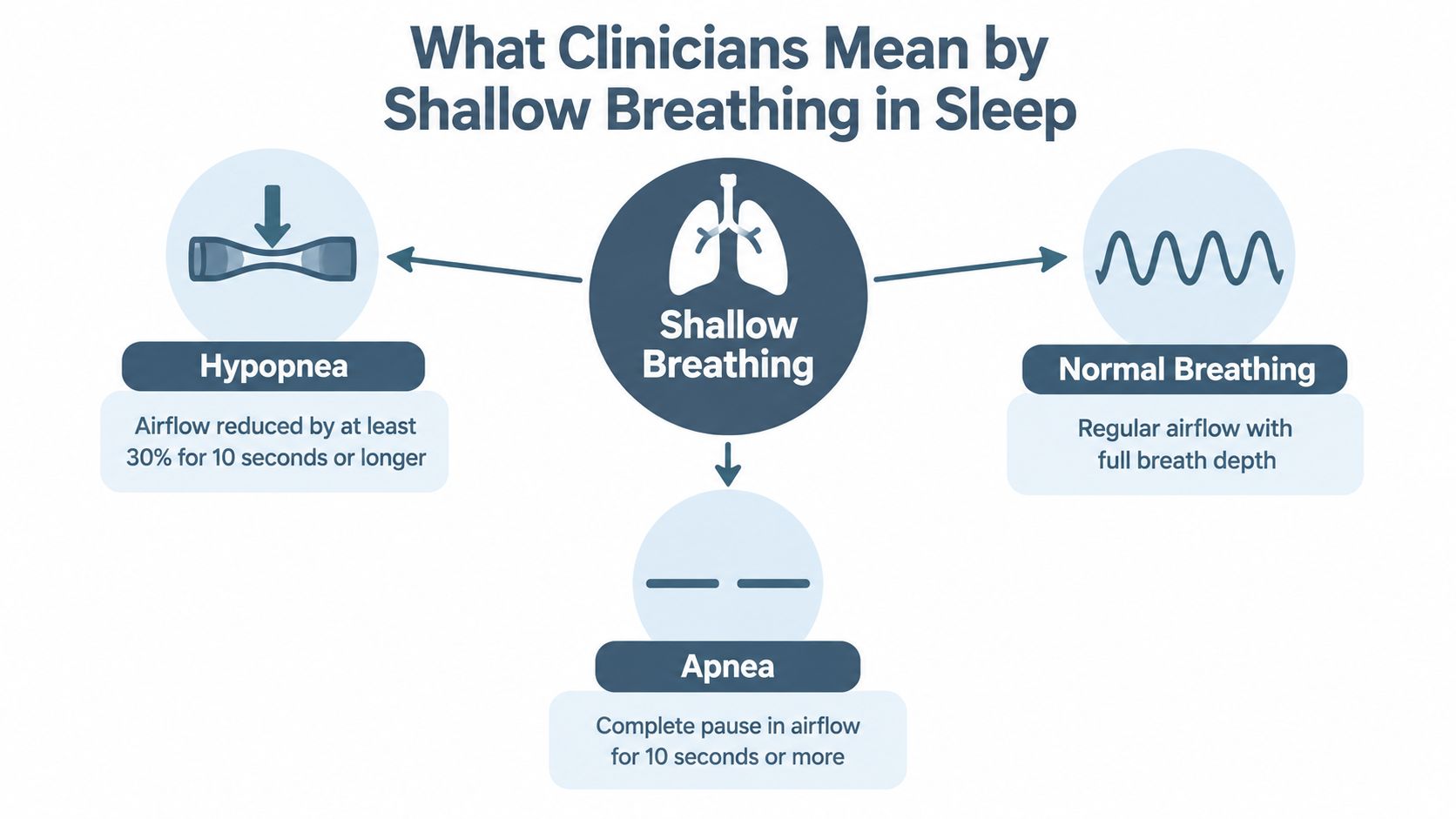
“Shallow breathing” is an everyday description, not a diagnosis. To understand what a sleep evaluation may find, it helps to separate hypopnea, apnea, and sleep-related hypoventilation. They describe different patterns, and they don't all show up in the same way.
A useful analogy is a window. A hypopnea is like a window that's partly closed: some air still passes through, but airflow is reduced. A sleep-study definition requires airflow to fall by at least 30% for at least 10 seconds, with continued breathing effort. Under the American Academy of Sleep Medicine's recommended adult scoring rule, the event must also be accompanied by at least a 3% oxygen drop or an EEG-detected arousal (AASM hypopnea scoring guidance).
Three terms, three different patterns
An apnea is more like a window or doorway that's fully blocked: airflow stops or nearly stops, even though the person may still be making an effort to breathe. A hypopnea is a partial reduction, not a complete pause. A quiet breath or brief change in breathing that you notice by sight or sound doesn't establish either diagnosis; clinicians need measurements taken over time.
Sleep-related hypoventilation is different again. The central issue is insufficient ventilation and a rise in carbon dioxide, which can occur with shallow or slow breathing, airway problems, or reduced respiratory drive. It isn't another name for apnea, and an oxygen reading alone may not identify it.
Adult scoring criteria for sleep-related hypoventilation include carbon-dioxide thresholds. It may be scored when carbon dioxide exceeds 55 mmHg for at least 10 minutes, or rises by at least 10 mmHg during sleep to more than 50 mmHg for at least 10 minutes (clinical review of sleep-related hypoventilation). The review notes that the duration threshold reflects expert consensus, and that the boundary between normal sleep-related carbon-dioxide changes and pathological hypoventilation remains debated.
Some reports also use a 4% oxygen-desaturation rule, which remains acceptable in certain settings. That can lead to different hypopnea counts from a report using the 3% rule. If you're reviewing results, ask which scoring rule was used and how the findings relate to your symptoms.
The Four Main Reasons Breathing Becomes Shallow at Night
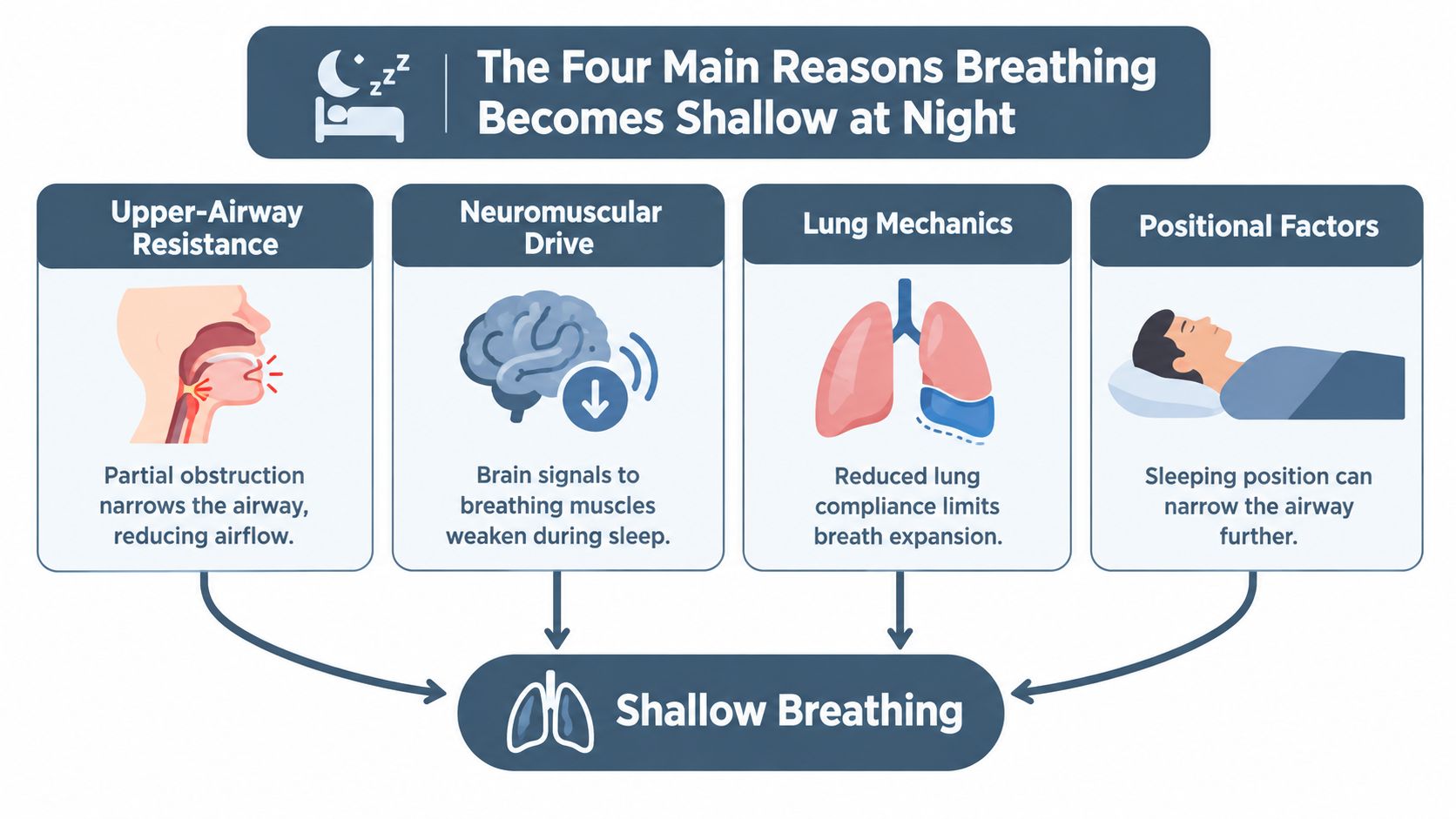
Shallow breathing is a finding, not a diagnosis. It can come from a partly narrowed airway, a blocked nose, a dulled breathing drive, stiff lungs, or the position someone sleeps in, which is why a remedy that helped a friend may do nothing for you. Clinicians generally work through four groups of causes.
A narrowed airway, from the nose down
When the upper airway narrows during sleep, airflow drops even though breathing effort continues. That pattern is one pathway to hypopneas and obstructive sleep apnea. A bed partner may notice snoring, a snort, or restless shifting, though snoring by itself cannot establish the cause.
A blocked nose pushes breathing toward the mouth, which can make sleep feel less comfortable and contribute to snoring or a dry mouth on waking. If nighttime stuffiness is part of your pattern, these nighttime nasal congestion remedies may help you think through possible triggers and options. Clearing congestion can ease the symptom, but it cannot tell you why airflow is reduced.
The signal and the machinery
Breathing needs two things working together: the brainstem sending the signal and the muscles carrying it out. Anything that blunts the drive or weakens the pump shrinks each breath, and it changes what a clinician needs to check first rather than what an app suggests trying.
Medicines belong in this group too. Opioids and other central-nervous-system depressants can dampen the drive enough to matter, so mention them specifically during an evaluation. Never stop a prescribed medicine on your own; ask the prescriber whether it could affect breathing.
The lungs and chest wall are the hardware. Damaged lung tissue or a chest that cannot expand freely moves less air per breath. COPD is the familiar example; obesity hypoventilation, where extra load restricts the bellows, is another. Persistent fatigue or morning headaches alongside these conditions deserve attention rather than dismissal.
Position, and why it is not the whole story
Lying on the back makes airway narrowing more likely for some people, so positional advice sometimes helps. Repositioning cannot strengthen a weak drive, open stiff lungs, or undo a medication effect. Each cause needs its own answer.
Obstructive sleep apnea is common enough that large population studies have tried to count it, but prevalence figures describe obstructive events, not every form of shallow breathing. The distinction matters because a normal-looking oxygen number does not settle the question either; oxygen and carbon dioxide follow different curves. For readers weighing weight-related care alongside a medical assessment, this overview of semaglutide for sleep apnea patients may add useful context.
Signs Worth Tracking Through the Week
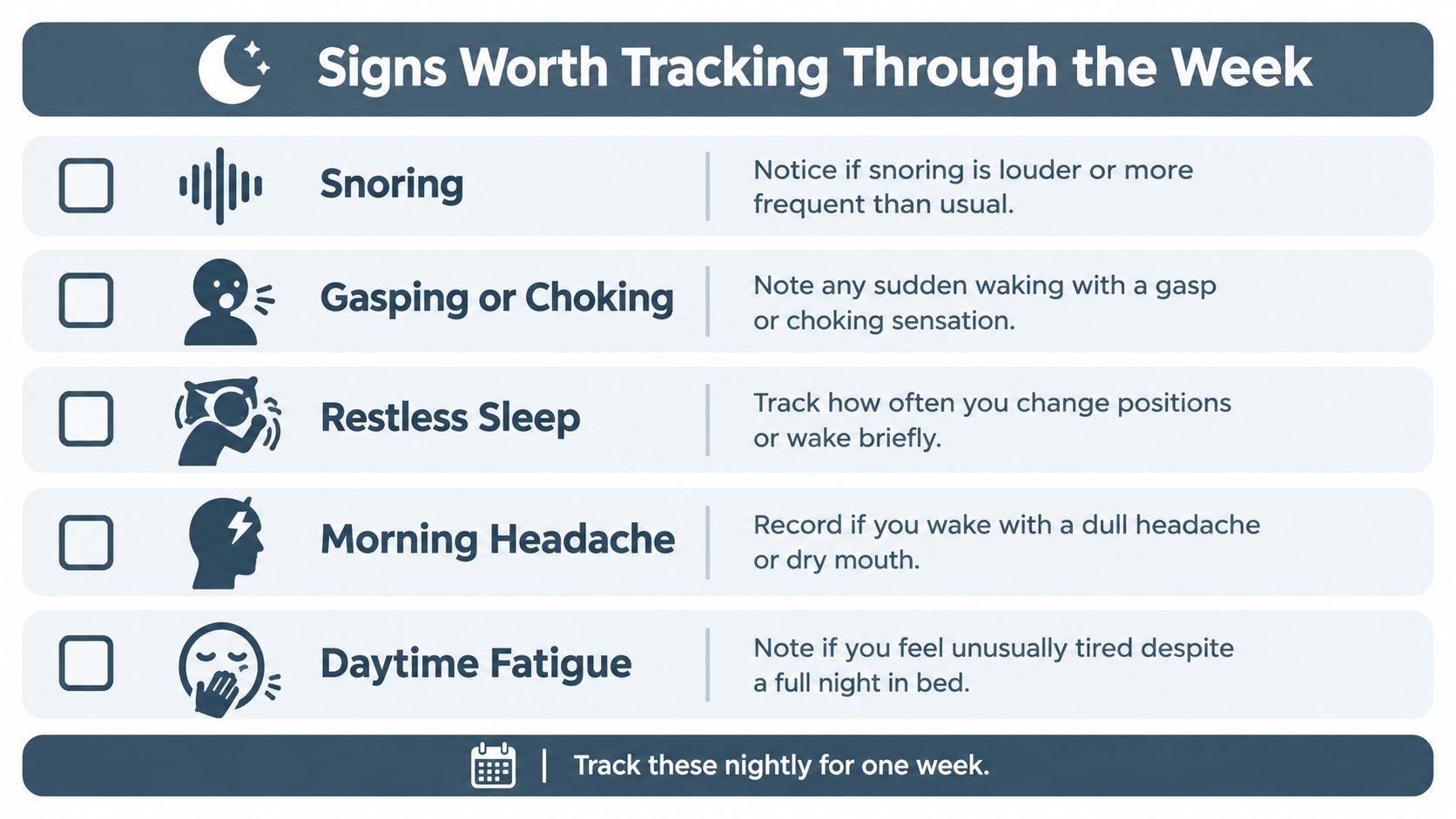
A partner might notice light snoring, an open mouth during sleep, restless turning, or an occasional sudden deep breath. You may notice none of it yourself. Your first clue often arrives in the morning instead: a dry mouth, a headache, or the flat sense that sleep did not restore you.
Each sign is evidence that something happened, not an answer about what caused it. Snoring, gasping, or choking can accompany partial or complete airway obstruction. Morning headaches, fatigue, and poor concentration can accompany several sleep problems, including ventilation that stays too shallow for too long. That overlap is exactly why shallow breathing gets mistaken for hypopnea or apnea, and why a written record beats a single remembered night.
Keep a simple record
For several nights, write down what a partner observes rather than trying to interpret it in the moment. Sleep clinicians routinely ask patients for a diary before an evaluation, because a written record shows repetition, and repetition is what separates one odd night from a pattern.
A useful entry can include:
- Nighttime observations: Snoring, mouth opening, gasping, choking, or frequent position changes.
- Morning symptoms: Headache, dry mouth, or waking unrefreshed.
- Daytime effects: Sleepiness, fatigue, or difficulty concentrating.
- Sleep timing: Bedtime, estimated time to fall asleep, awakenings you remember, and the position you slept in.
If any of the risk factors described earlier apply to you, write them at the top of the diary so a clinician sees them first. You do not need to explain or interpret them; just make them visible.
A diary cannot confirm hypopnea, apnea, or sleep-related hypoventilation, and it cannot measure carbon dioxide. What it can do is show whether symptoms repeat, whether a partner notices breathing changes, and how each night connects to the way you feel the next day. That is information a clinician cannot gather in one office visit.
What Wearables and Oximeters Can and Cannot Tell You
An oxygen reading can look perfectly normal while breathing stays too shallow to clear carbon dioxide properly. That gap trips people up, so it helps to separate what each device measures.
Oxygen saturation and carbon dioxide are two different bookkeeping systems. Saturation tracks how much oxygen your blood carries, while ventilation quality depends on how well the lungs move air, the job that clears carbon dioxide. Shallow breathing can raise carbon dioxide while oxygen saturation still reads normal, particularly in milder cases.
A fingertip oximeter has no way to flag that.
The same gap explains why wearables cannot tell these conditions apart. Apnea means airflow stops. Hypopnea means airflow drops enough to lower oxygen or trigger an arousal. Sleep-related hypoventilation means carbon dioxide climbs during sleep. A watch that estimates breathing rate captures neither airflow depth nor carbon dioxide, so a smooth-looking graph can sit on top of any of the three.
| Tool or signal | What it measures | What it can miss |
|---|---|---|
| Smartwatch breathing estimate | An estimate of breathing rate or related signals | Carbon dioxide, airflow depth, and the cause of a breathing change |
| Pulse oximeter | Oxygen saturation | Carbon-dioxide retention and whether ventilation is adequate |
| Airflow and effort sensors | Air movement and breathing effort during testing | Carbon-dioxide changes unless the test also measures them |
| Carbon-dioxide monitoring | Carbon dioxide, using methods such as arterial, end-tidal, or transcutaneous monitoring | The full clinical picture without symptoms and other test information |
Home sleep apnea tests can be useful in selected situations, yet they measure airflow and oxygen, which leaves carbon dioxide unchecked and lets non-obstructive problems slip past. As noted earlier, clinical guidance favors attended polysomnography when sleep-related hypoventilation is suspected, because the lab records more signals at once.
Wearables still earn their place as record-keepers. Trends across many nights give a clinician more to work with than one office measurement, and the best health tracking smartwatch guide walks through which sensors different consumer watches include. Bring the trends and your written record to the appointment, and let persistent symptoms outweigh any reassuring number on a screen.
Breathing Retraining and Nasal-Breathing Fixes You Can Try
Low-risk habits may support comfortable nasal breathing, but they're not a treatment for every cause of shallow breathing. If you suspect repeated pauses, hypoventilation, or a medication-related problem, seek medical advice rather than relying on a breathing aid.
A cautious evening routine
Start by addressing nasal comfort. If congestion is the main issue, consider whether allergies, a cold, or bedroom air may be contributing. Humidity support may make the air feel less dry, and gentle nasal breathing practice can help you notice whether breathing through your nose feels comfortable while awake. For technique ideas, see these nasal breathing techniques.
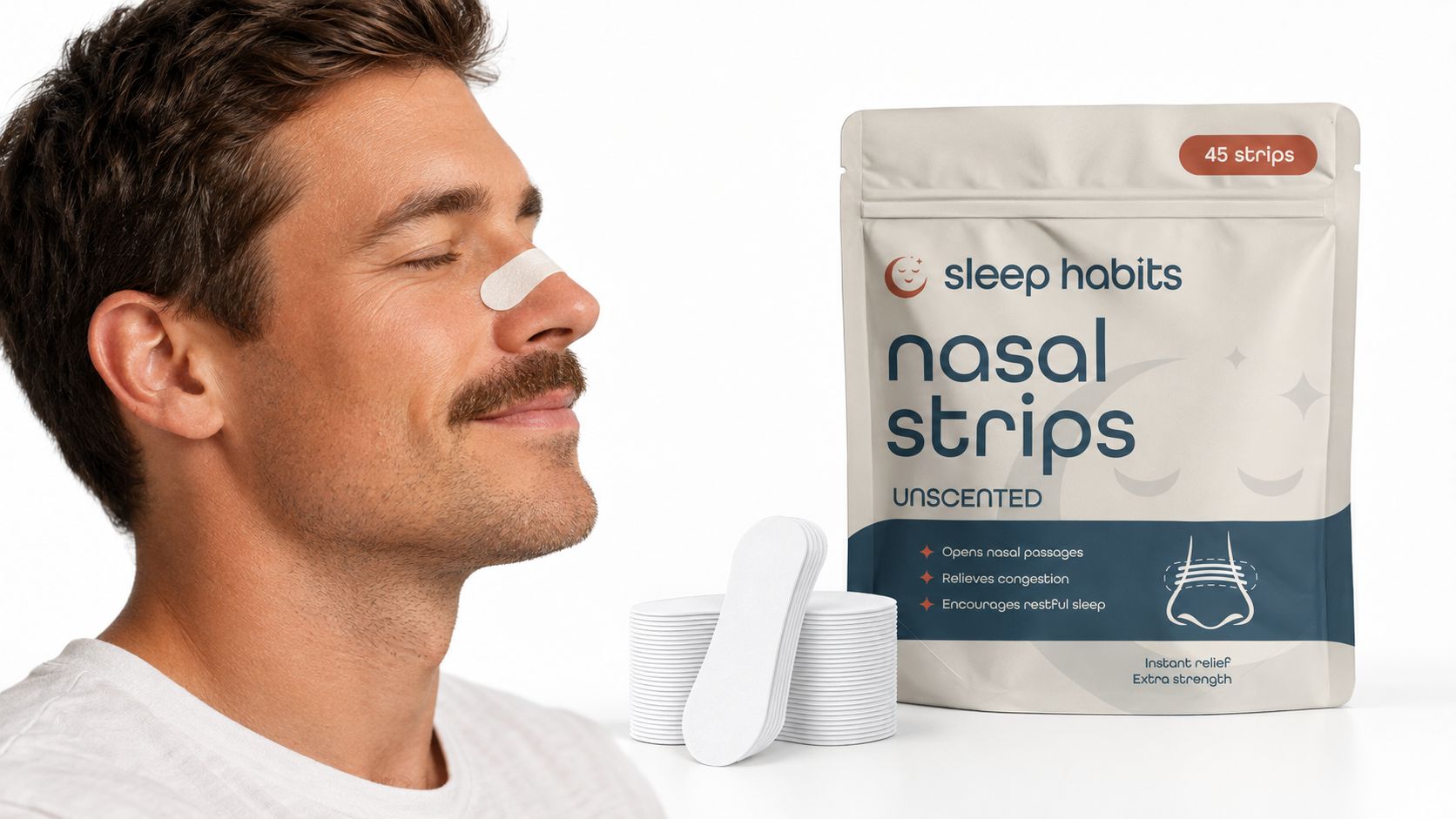
A nasal strip may gently open the nasal passages for some people. The Nasal Strips are one example of a non-medication tool intended to support smoother nasal airflow. If sinus symptoms persist, this دليل علاج الجيوب الانفية can provide additional context about sinus care.
Before bed, try a brief, gentle slow-breathing drill while you're awake. Breathe comfortably, without forcing a deep inhale or holding your breath. If counting helps, use an easy rhythm, such as breathing in and out slowly for a few minutes. Stop if you feel light-headed or uncomfortable.
Side-sleeping may help some people whose airway narrows more when they lie on their back. It's a reasonable experiment, not proof that an airway problem has been fixed. Likewise, reducing nasal congestion may make breathing more comfortable without addressing carbon-dioxide retention or a central breathing issue.
Be cautious with mouth taping
Mouth taping isn't a safe default for everyone. Don't seal your mouth if you can't breathe comfortably through your nose, have unexplained nighttime breathing symptoms, or haven't considered whether a medical condition may be involved. Ask a clinician before trying it if you have concerns about your airway or breathing.
Use self-care for comfort, not as a substitute for diagnosis. If symptoms persist, worsen, or include witnessed pauses, arrange a medical assessment.
When Self-Care Is Not Enough and a Clinician Should Weigh In
Nighttime breathing has two jobs: moving air and exchanging gases. Hypopnea means airflow becomes too shallow or reduced, apnea involves pauses in airflow, and sleep-related hypoventilation means ventilation is inadequate overall. A normal-looking smartwatch or oximeter reading can still miss shallow airflow or carbon-dioxide retention.
Do not wait for a wearable to confirm a problem if someone has witnessed prolonged pauses, or if you regularly wake gasping or choking. Marked daytime sleepiness and severe morning headaches also justify assessment. Chest pain, blue lips, confusion, or severe breathlessness requires urgent care.
When an existing condition or medication may affect breathing, the evaluation itself can change. A clinician may need to measure carbon dioxide directly, assess chest mechanics and breathing drive, or review medicines that can blunt ventilation rather than relying on a standard home test.
Bring the symptom log described earlier, along with a medication and supplement list and any wearable or oximeter data you have. These records help connect what you experienced with what the device recorded, although neither replaces a clinical diagnosis.
Polysomnography can measure airflow, breathing effort, oxygen, and sleep stages; carbon-dioxide monitoring may be added when hypoventilation is suspected. For a clearer view of how these problems relate, see this guide to sleep-disordered breathing.
If you're working on more comfortable nighttime breathing, SleepHabits offers educational resources and tools such as nasal strips and mouth tape to support nasal-breathing routines. Persistent symptoms remain a reason to arrange a medical assessment.