

Sleep aids often feel gentle on the night you take them, then show their real cost the next morning. Cleveland Clinic reports that approximately 8 out of 10 people experience a next-day hangover effect after taking sleep medicine, with residual drowsiness, muddled thinking, dizziness, or balance problems the following day, so the tradeoff is built in from the start (Cleveland Clinic).
That's why a useful way to judge any product is to ask three questions. How does it work? What does it cost you the next day? What does it cost you at week four? If you keep those questions in view, OTC tablets, prescription sedatives, herbal products, and mineral-based options stop looking like separate aisles and start looking like different versions of the same decision.
Why Sleep Aid Side Effects Deserve a Closer Look
A sleep aid is not just a “sleep on switch.” It's a chemical nudge that changes alertness, memory, balance, breathing, or body temperature while you're trying to rest. Cleveland Clinic's 8 out of 10 hangover-effect figure matters because it shows that sleep aid side effects aren't rare exceptions, they're part of routine use for many people (Cleveland Clinic).
The three-question test makes the comparison cleaner. How does it work? tells you whether the product is acting like an antihistamine, a GABA enhancer, a circadian signal, or a mineral. What does it cost you the next morning? tells you whether you're likely to feel foggy, dry-mouthed, dizzy, or unstable. What does it cost you at week four? tells you whether a product that seemed harmless on night one starts to look more like a burden than a fix.
Why the “natural” label can be misleading
Harvard Health notes that the American Academy of Sleep Medicine in 2017 recommended against chronic use of common over-the-counter antihistamine and analgesic sleep aids, along with herbal and nutritional substances such as valerian and melatonin, for chronic insomnia because of insufficient evidence for safety and effectiveness (Harvard Health). That recommendation doesn't mean every occasional dose is dangerous. It does mean “over the counter” and “natural” are not the same as safe for long-term insomnia management.
A lot of confusion comes from mixing up purpose and mechanism. Some products sedate, some shift circadian timing, and some add magnesium or other nutrients that may support relaxation. Those differences matter because the body pays for each one differently, especially the next day and with repeated use.
Practical rule: if a product promises sleep but leaves you less alert, less steady, or less clear-headed in the morning, the effect you're buying is bigger than the effect you wanted.
The rest of the guide keeps that filter in place. That makes it easier to compare a pharmacy shelf, a prescription bottle, a herbal capsule, and a mineral drink without getting lost in marketing language.
Over-the-Counter Antihistamines and Analgesics
The most common pharmacy sleep products usually lean on diphenhydramine or doxylamine, sometimes with an added pain reliever for nighttime use. These drugs work by blocking histamine signals, which helps make you sleepy, and by blocking acetylcholine, which is part of the reason they can also leave you with a dry mouth, blurry vision, constipation, urinary retention, or a foggy head the next day. That anticholinergic burden is the hidden cost people often miss.
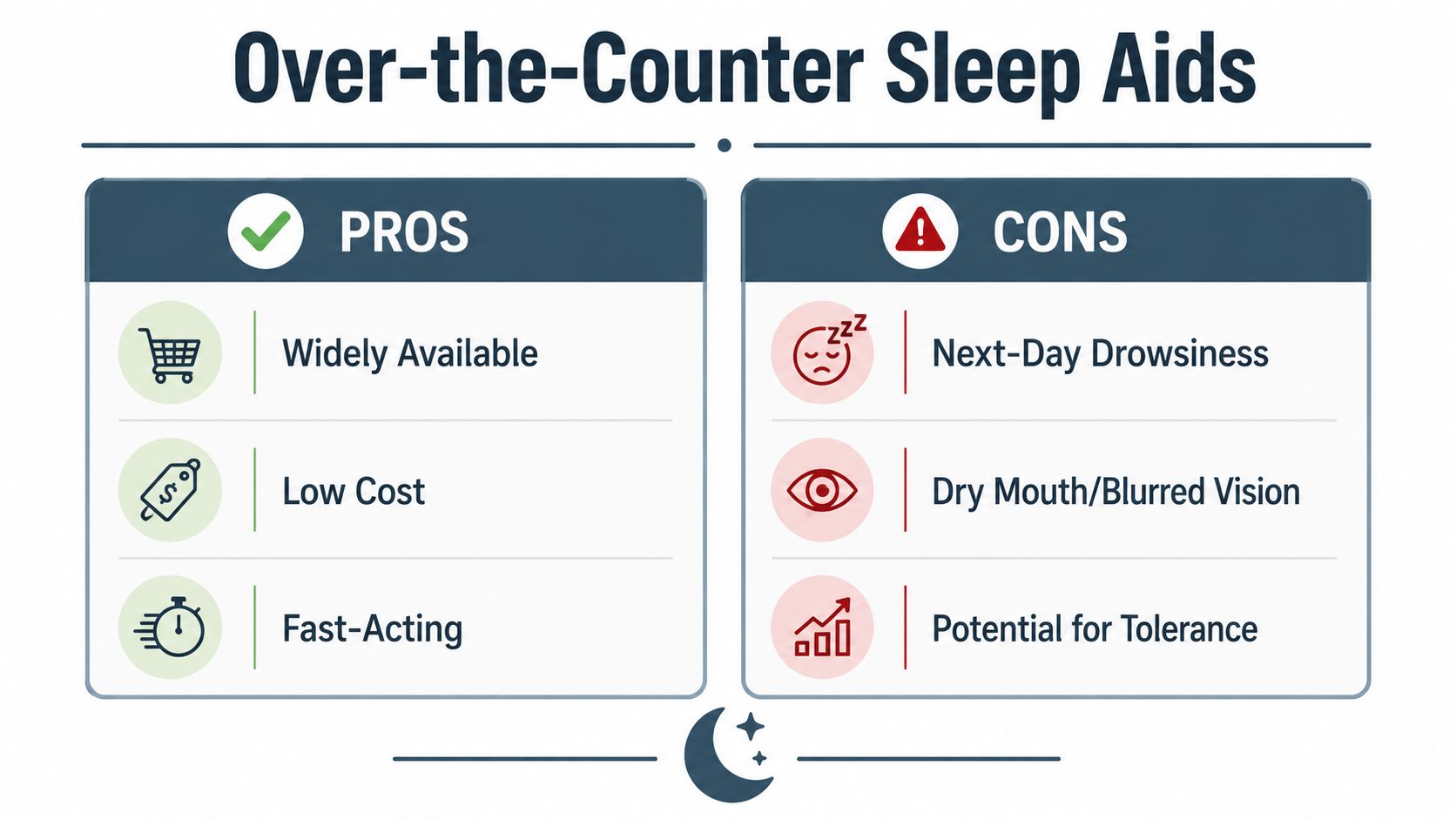
Cleveland Clinic lists common side effects of OTC and prescription sleep medicines as dry mouth, headaches, constipation or diarrhea, muscle weakness, digestive upset, and worsening of snoring or sleep apnea (Cleveland Clinic). That list matters because it shows the downside isn't limited to “feeling a little groggy.” For some people, especially anyone already prone to dry eyes, constipation, urinary symptoms, or airway obstruction during sleep, the side effects are part of the main pharmacology.
Who feels the cost fastest
Older adults usually feel the tradeoff sooner because their brains and bodies clear sedating drugs more slowly, and because anticholinergic effects can land harder on cognition and balance. That's one reason OTC sleep aids are a poor fit for people who already feel unsteady, have glaucoma, live with prostate symptoms, or have untreated sleep apnea. If breathing is already fragile, a sedating antihistamine can add another layer of trouble.
The same logic applies to combination pain-and-sleep products. If the pain reliever isn't the primary problem, you may be swallowing extra drug burden for no sleep benefit at all. That's why it helps to read the active ingredients, not just the front label.
For a practical note on nighttime breathing support, Hydrating Mouth Tape is designed to support quieter nights with reduced snoring and encourage nasal breathing, which is a very different goal from chemically forcing drowsiness. It's a reminder that not every sleep-related tool works by sedation.
The safest question to ask a pharmacy sleep product is simple, “What am I paying for the next morning?” If the answer is dry mouth, slowed thinking, or worse snoring, the product may be solving the wrong problem.
Prescription Sedatives and Z-Drugs
Prescription hypnotics raise the stakes because they're built to change brain signaling more directly. Benzodiazepines and the Z-drugs such as zolpidem, zopiclone, eszopiclone, and zaleplon all act through GABA-related sedation, which is why they can work fast and why they can also blur the line between sleep and impaired waking function. A drug that helps you fall asleep doesn't automatically stop affecting the brain by morning.
A large systematic review and network meta-analysis of 102 trials found that zolpidem was linked to higher adverse-effect rates than placebo for somnolence (RR 1.85), dizziness (RR 2.33), headache (RR 1.26), dry mouth (RR 1.92), and anxiety (RR 3.32). The same review found zopiclone increased somnolence (RR 2.02) and dizziness (RR 2.33), while eszopiclone was linked to dry mouth (RR 4.39) (systematic review and network meta-analysis).
Why week four can feel different from night one
The FDA label for zolpidem (Ambien) shows how that cost can shift with continued exposure. In short-term trials of up to 10 nights at doses up to 10 mg, the most common statistically significant adverse reactions versus placebo were drowsiness (2%), dizziness (1%), and diarrhea (1%). In longer-term treatment of 28 to 35 nights, dizziness rose to 5% and drugged feelings to 3% (FDA label).
That pattern is the practical point. A short-acting hypnotic can still leave a waking tail, and that tail can matter more as use continues, especially if bedtime drifts later, sleep time gets shorter, or other sedatives are added. If someone is trying to stop or reduce zolpidem after regular use, a careful taper plan is worth discussing with a clinician, and how to safely stop Ambien is a useful starting point for that conversation.
The injury data make the safety issue harder to ignore. Independent clinical evidence has associated zolpidem with increased odds of falls in hospitalized patients (OR 4.28) and a higher risk of hip fractures (RR 1.92), which is especially important for older adults and people with balance problems (systematic review and network meta-analysis).
If you need a simple mental model, think of these drugs like a strong dimmer switch. They can turn the lights down, but if the switch stays on too long, the room you walk through in the morning is still darker than it should be.
A product like Transparent Nasal Strips takes a different route by aiming to improve airflow for easier nighttime breathing and support nose breathing habits, which can be relevant when airflow, not sedation, is the core bottleneck. That distinction matters because not every sleep problem is a “more sedative” problem.
Parasomnias and Memory Effects Most People Miss
A person takes a Z-drug, falls asleep, and wakes up to a kitchen full of snack wrappers they don't remember touching. That kind of event sounds unusual until you look at how often sleep-related behaviors are reported with these drugs. Mayo Clinic, Johns Hopkins, and Sleep Foundation all describe sleepwalking, sleep-driving, sleep-eating, hallucinations, agitation, and memory problems as recognized sleep-aid effects, and Sleep Foundation notes that these parasomnias are among the most common abnormal behaviors linked with sleep aids (Johns Hopkins Medicine).
Why the memory gap matters
The memory piece is what makes parasomnias so slippery. People often don't report them because they can't remember them, and family members may only notice the aftermath. Missing food, unexplained texts, a sore body in the morning, or signs that someone was up and moving around at night can be the only clues.
These behaviors are more likely to show up when sedation is heavier, sleep is fragmented, or the drug is mixed with alcohol or other sedating substances. In plain English, the brain is partly asleep and partly awake, which is a bad state for decision-making, balance, and memory formation.
If a sleep aid produces an activity you can't remember, treat that as a safety signal, not a quirky side effect.
Hallucinations and agitation deserve attention for the same reason. They're not just odd reactions, they suggest the brain isn't tolerating the drug cleanly. If someone is finding evidence of nighttime behavior without a memory of it, that's a reason to stop guessing and tell a clinician exactly what happened, when it happened, and what else was taken that night.
Melatonin and Herbal Sleep Aids
Melatonin is often described as if it were a mild sedative, but that's not quite right. It works more like a circadian signal, helping tell the brain that night has arrived, which is why it tends to fit timing problems better than it fits every kind of insomnia. That difference matters because a clock cue and a chemical knockout are not the same intervention.
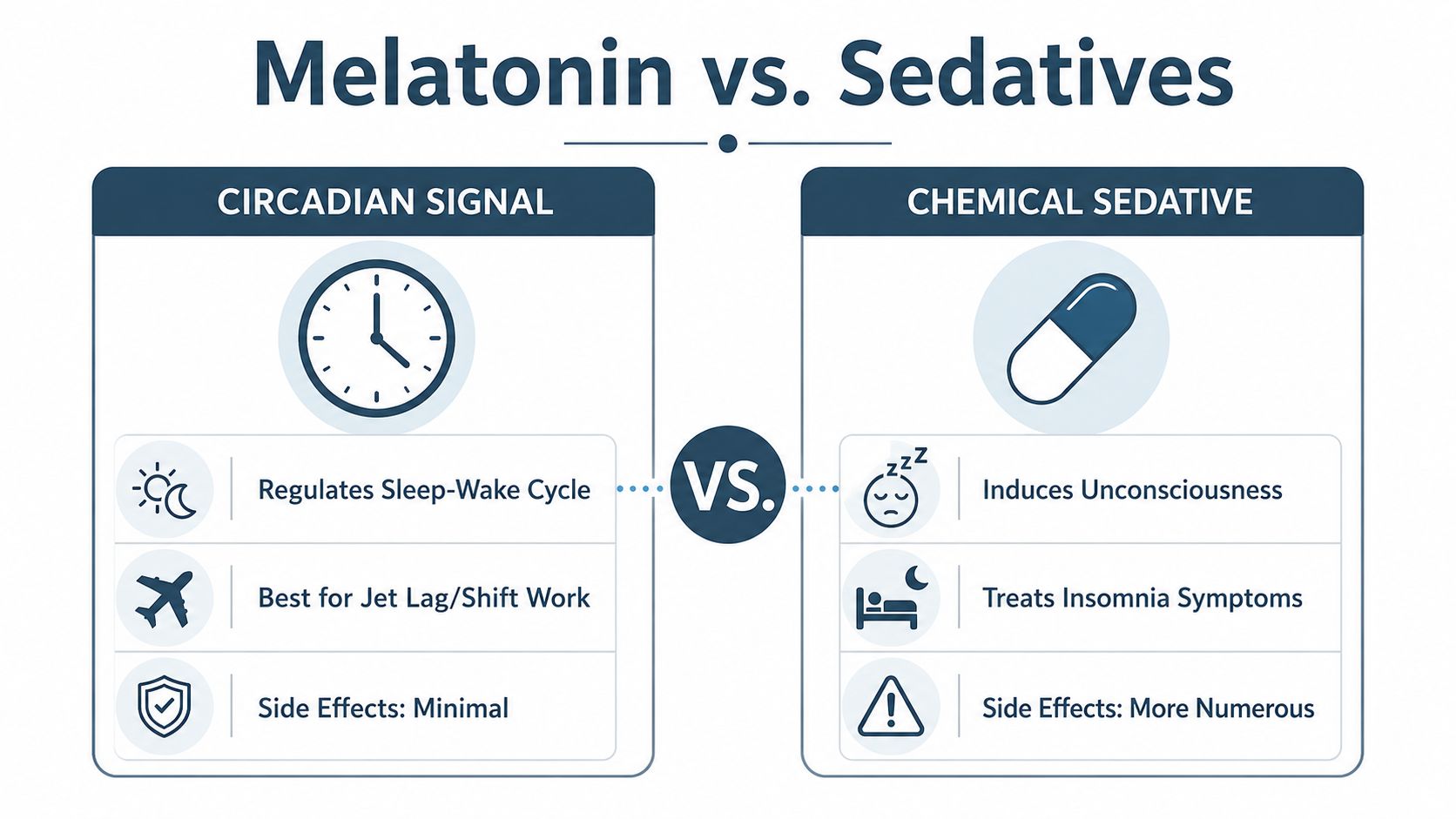
Harvard Health notes that the American Academy of Sleep Medicine in 2017 recommended against chronic use of common over-the-counter antihistamine and analgesic sleep aids, as well as herbal and nutritional substances such as valerian and melatonin, for chronic insomnia because of insufficient evidence for safety and effectiveness (Harvard Health). That doesn't make melatonin useless. It does mean “natural” doesn't automatically mean appropriate for long-term nightly use.
For a plain-language look at common melatonin reactions, common melatonin reactions can help people understand why morning grogginess, vivid dreams, headaches, and mood changes come up so often in conversation. If you want a broader consumer overview of the same topic, this guide is also useful: side effects of melatonin supplements.
Herbal options are gentler, not magical
Valerian, chamomile, lavender, passionflower, and lemon balm are usually framed as calming rather than sedating. That framing is partly fair, but it can hide the interaction risk. Valerian can amplify other sedatives, which is a problem if someone is already taking an antihistamine sleep aid, a prescription hypnotic, or even drinking alcohol.
The most useful way to think about these herbs is by fit. Something that may help a person with bedtime tension or mild wind-down trouble won't necessarily help someone who wakes repeatedly at 3 a.m. and then lies awake for two hours. The stronger the insomnia pattern, the less likely a mild herbal nudge is to solve it alone.
If you want a more detailed side-by-side explanation of timing and use, alternatives to melatonin for sleep is a helpful companion resource. The broader lesson stays the same, natural can still mean side effects, and mild still means you need to know what the product is doing in your body.
Magnesium and Mineral-Based Sleep Support
Magnesium sits in a different category from sedatives. It doesn't force unconsciousness, it supports the body's relaxation machinery, especially by helping the parasympathetic nervous system settle down and by easing muscle tension. That's why many people find it feels more like a wind-down tool than a knockout tool.
Choosing the form matters
Different magnesium forms behave differently in the gut. Magnesium glycinate is usually the easiest on digestion and often the preferred option for evening use. Magnesium citrate absorbs well for many people but can be more likely to loosen stools. Magnesium oxide is less bioavailable and more likely to upset the stomach. Magnesium threonate is often discussed for brain-related uses, but people still need to pay attention to their own tolerance.
A practical way to compare them is to ask what problem you're trying to solve. If the goal is calm without morning drag, glycinate often makes the most sense. If constipation is part of the picture, a clinician may think differently, but bedtime shouldn't become a battle with your stomach.
| Option | Typical Dose | Onset | Common Side Effects | Avoid If |
|---|---|---|---|---|
| Magnesium glycinate | Varies by product | Gradual | Loose stools are less common, mild stomach upset can still happen | You have kidney disease or magnesium restrictions |
| Magnesium citrate | Varies by product | Gradual | Diarrhea, cramping | You already have loose stools or GI sensitivity |
| Magnesium oxide | Varies by product | Gradual | More digestive upset, less predictable absorption | You need a gentle evening option |
| Magnesium threonate | Varies by product | Gradual | Mild GI upset | Your clinician has told you to limit magnesium |
| Valerian | Varies by product | Gradual | Drowsiness, next-day heaviness, interaction with sedatives | You use alcohol or other sedatives |
| Glycine | Varies by product | Gradual | Mild GI upset in some people | You have specific dietary restrictions |
| L-theanine | Varies by product | Gradual | Usually mild, occasional headache or stomach upset | Your clinician advises against supplements |
| Tart cherry | Varies by product | Gradual | GI sensitivity in some people | You're avoiding sugar or certain fruit products |
| Lemon balm | Varies by product | Gradual | Mild drowsiness or stomach upset | You take other calming agents |
Magnesium, glycine, L-theanine, tart cherry, and lemon balm often appear together in wind-down formulas because they're trying to support relaxation without the next-day hangover effect that comes with stronger sedatives. The value of that approach is not that it's dramatic. It's that it can be consistent.
For a closer look at dosing logic and form differences, magnesium supplement for sleep is a good reference point. In the same vein, a magnesium-based drink can make sense as part of a routine if it stays in the category of a ritual, not a rescue pill.
Recognizing Serious Reactions and Knowing When to Act
Some sleep aid side effects are annoying. Some are emergencies. The line usually becomes clear when balance, breathing, consciousness, or mood are affected.
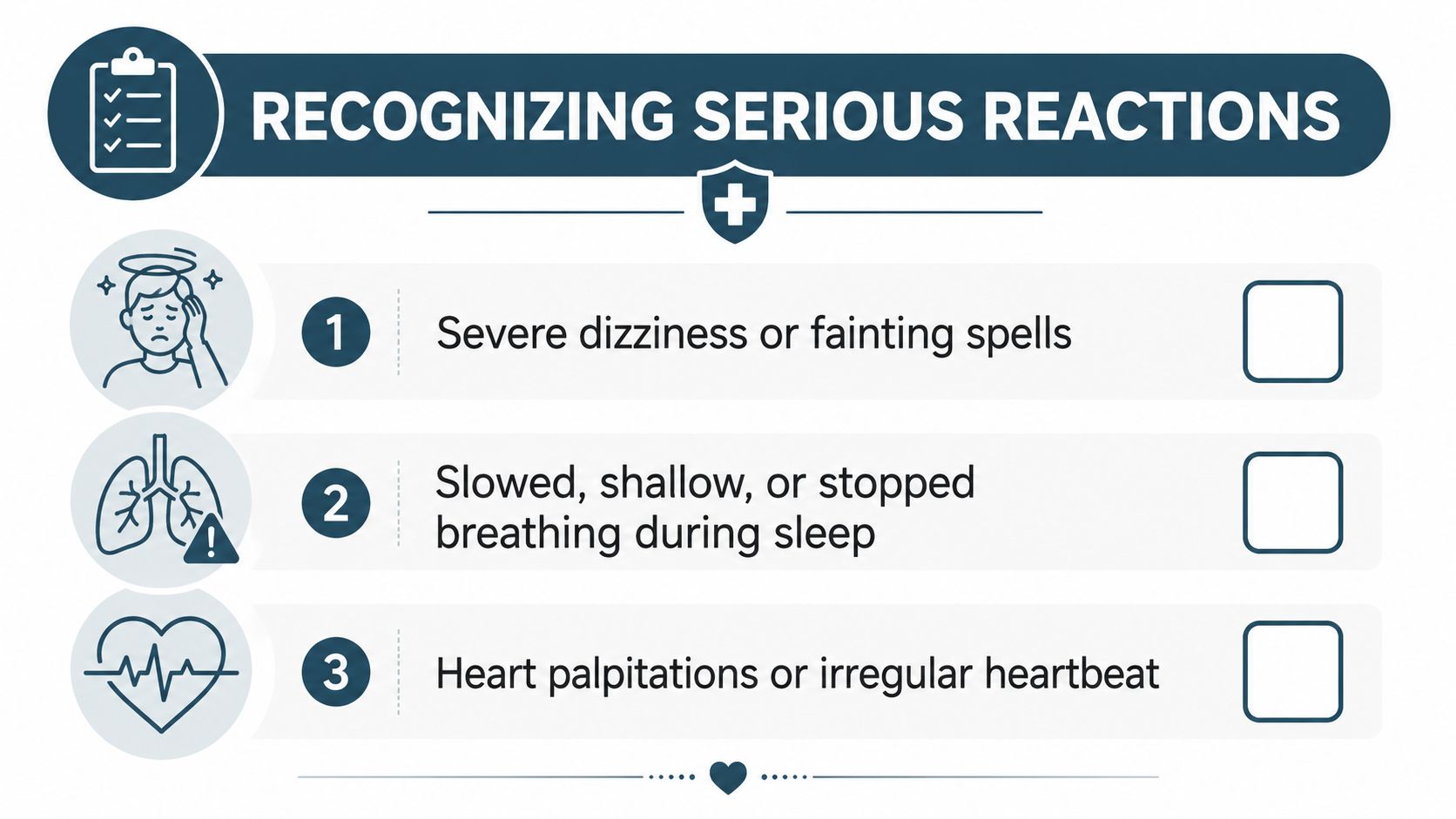
Call for help now if a sleep aid is tied to severe dizziness, fainting, slowed or stopped breathing, or a reaction that looks like an allergy.
If someone has severe dizziness or fainting, they should stop taking the drug and get medical care quickly. If breathing seems slowed, shallow, or stopped during sleep, treat that as an urgent emergency, especially if alcohol, opioids, or another sedative was involved. If there's intense confusion, hallucinations, or complex behaviors with no memory, the drug should be discussed with a clinician right away.
The same goes for rash, swelling, trouble breathing, worsening depression, or suicidal thoughts. If overdose is suspected, poison control or emergency services should be contacted immediately. When speaking to a clinician, the most useful details are the drug name, dose, timing, and any other substances taken that night.
One combination deserves special caution every time, sedatives plus alcohol. Another is sedatives plus opioids. A third is mixing one sleep aid with another antihistamine, because the sedative and anticholinergic burden can stack faster than people expect.
Safer Wind-Down Routines and Melatonin-Free Alternatives
The calmer route to better sleep starts before bedtime, while your nervous system is still awake enough to respond to cues. Lower the lights an hour before bed, put the phone away, write down the thoughts that keep looping, and use slow nasal breathing to help your body shift gears. If mouth breathing and snoring are part of the problem, tools like Hydrating Mouth Tape and Transparent Nasal Strips can support nasal breathing without adding sedation.
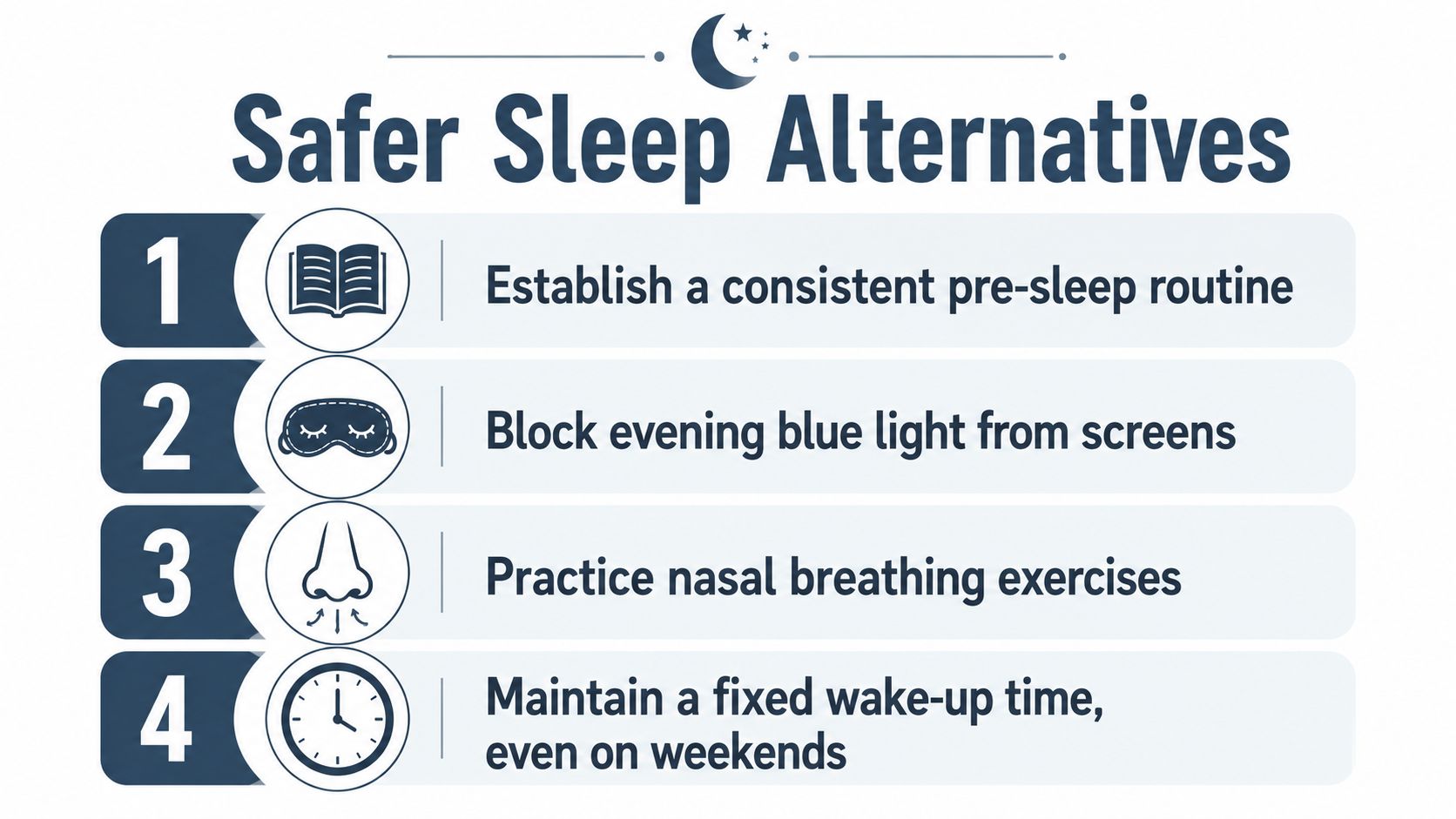
A melatonin-free routine works best when it is boring in a good way. Keep a fixed wake-up time, even after a rough night, and use your evening drink, if you want one, as a cue for relaxation. A magnesium-based formula can fit that pattern well because it supports the body's wind-down state without trying to do the whole job of sleep hygiene. If you're working on improving sleep for St. Petersburg adults, or anywhere else, a steady schedule matters more than any single supplement.
The practical part matters more than the perfect supplement stack. The team at SleepHabits focuses on melatonin-free sleep support, including magnesium-based wind-down products and breathing tools that fit into a calmer evening rhythm. For a lower-risk place to start, visit alternatives to melatonin for sleep and compare what is designed to support relaxation, breathing, and nighttime recovery without heavy sedation.