

Sleep hygiene is less about discovering one perfect hack and more about repeating signals that tell your body when to be alert and when to wind down. That matters because sleep hygiene began as a behavioral treatment approach for mild to moderate insomnia, and modern guidance still treats it as a first-line framework built around timing, light, stimulation, and the sleep environment (historical and clinical overview).
The most useful sleep hygiene rules work as a coordinated system. First, anchor your body clock with a consistent schedule and morning light. Then remove common disruptors such as late caffeine, bright screens, noise, and excess warmth. Finally, give your mind and body a reliable path into rest through journaling, slow breathing, and muscle relaxation.
That sequence can help whether your evenings are busy, anxious, or irregular. It also keeps expectations realistic. Sleep hygiene education can improve insomnia severity, but the average improvement is modest, about 3.4 points from before to after treatment, so these habits shouldn't be treated as a universal cure or a replacement for clinical care when symptoms persist (meta-analytic evidence).
1. Establish a Consistent Sleep Schedule
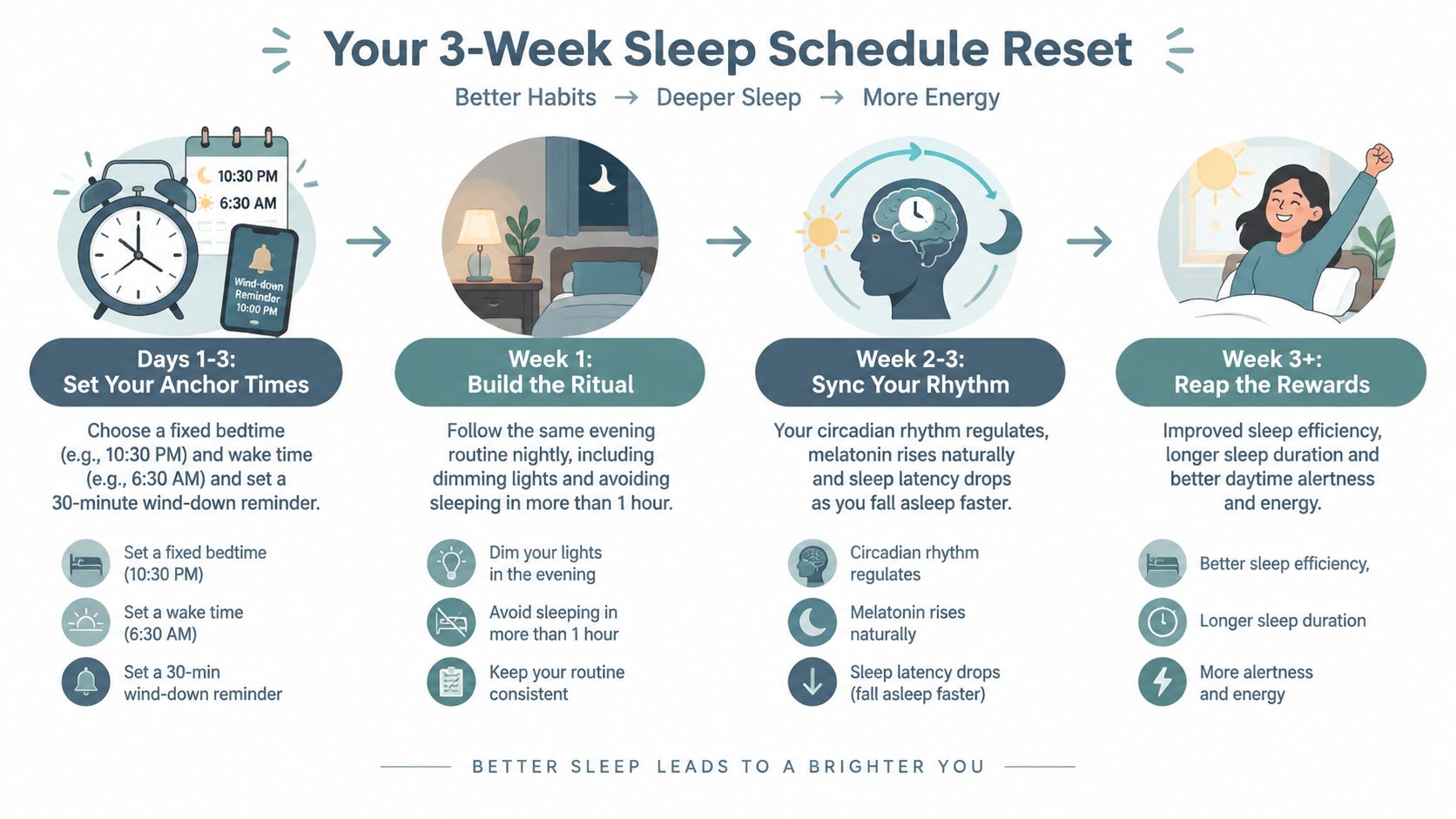
A stable wake time gives the rest of your nighttime system a dependable anchor. Your body uses repeated sleep and wake times to anticipate alertness and sleepiness, so regular timing can make the transition to bed more predictable. Adults are generally advised to allow 7 to 9 hours for sleep each night. Keeping bed and wake times within about 30 minutes can also make the pattern steadier (sleep-hygiene guidance).
A busy professional might aim for a 10:30 p.m. bedtime and a 6:30 a.m. wake time, including on days away from work. A shift worker may need different hours, yet can still protect a repeatable sleep window whenever the work pattern permits. The goal is to reduce sharp swings, not to follow an ideal schedule perfectly.
Build the schedule around your wake time
Begin with the morning. Wake time is often easier to protect than the moment you fall asleep, and it provides a fixed point from which to plan the evening. Set a phone reminder 30 minutes before your intended bedtime. Use it as a cue to dim the lights, stop work, and start quieter activities, rather than as a demand to fall asleep immediately.
A practical setup looks like this:
- Choose a realistic anchor: Pick a wake time you can maintain most days.
- Protect the weekend: Keep non-work days reasonably close to your usual rhythm.
- Record the pattern: Note bedtime, wake time, and morning energy in a sleep journal.
- Review without judging: Look for repeated late nights, long lie-ins, or evening habits that delay sleep.
For example, if Sunday night sleep is difficult after sleeping late on Saturday, shorten the weekend shift gradually instead of forcing an early bedtime. A step-by-step guide to fixing your sleep schedule can help you adjust timing in a more orderly way.
A consistent schedule cannot resolve congestion, anxiety, noise, or an untreated sleep disorder by itself. If you still wake repeatedly or feel exhausted during the day, treat that pattern as useful information and consider professional guidance rather than assuming you need more discipline.
2. Create a Dark, Cool Sleep Environment
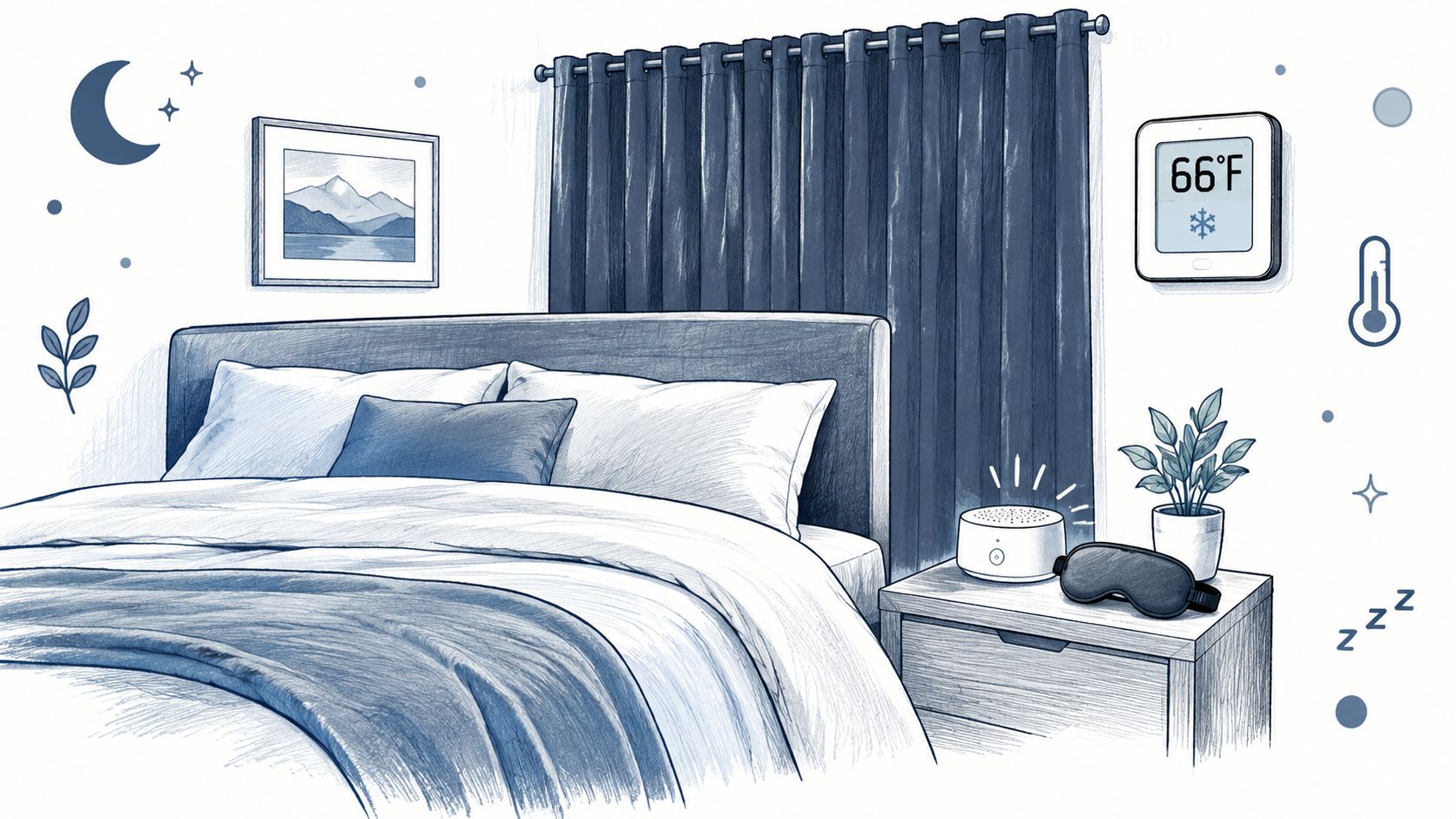
A dark, cool bedroom removes obstacles before they disturb sleep. Lower light supports the body's nighttime timing, while a comfortable temperature helps it release heat as sleep begins. General sleep guidance uses 65 to 68°F as a practical cool-room range. The room does not need to feel cold, it needs to feel steady and comfortable.
Start with the problem you notice most. If a streetlamp shines through thin curtains, use blackout curtains or an eye mask. If a phone flashes beside the bed, cover its indicator or charge it across the room. Unpredictable traffic or household noise may become less disruptive with earplugs or a consistent sound machine.
A simple evening example: set the thermostat before brushing your teeth, close the curtains from the pillow's viewpoint, and remove bright devices from arm's reach. This turns the bedroom into a clear nighttime cue instead of a place where you keep adjusting conditions.
Use this quick check:
- Temperature: Cool the room before bed, then adjust bedding for personal comfort.
- Light: Test for glare while lying down, not while standing at the doorway.
- Sound: Choose earplugs or steady background sound when sudden noise is the main interruption.
- Comfort: Check pillows, bedding, and airflow so discomfort does not prompt repeated repositioning.
A cooler, darker room supports the larger nighttime system, but it cannot resolve every sleep problem. Late caffeine, worry, congestion, or breathing pauses may still interrupt rest. Treat the environment as a foundation, then address symptoms that continue rather than expecting one change to work as a universal cure. This bedroom blackout curtain guide may help if outdoor light is the main difficulty.
3. Implement a 30 to 60 Minute Digital Sunset
A digital sunset protects the transition into sleep. Screens can expose you to stimulating light, while messages, videos, and work updates keep the mind alert when the body needs a slower pace. NCBI lists no screens for one hour before bed as a strong recommendation, and NHS guidance advises reducing screen use during the one to two hours before sleep (NCBI screen guidance).
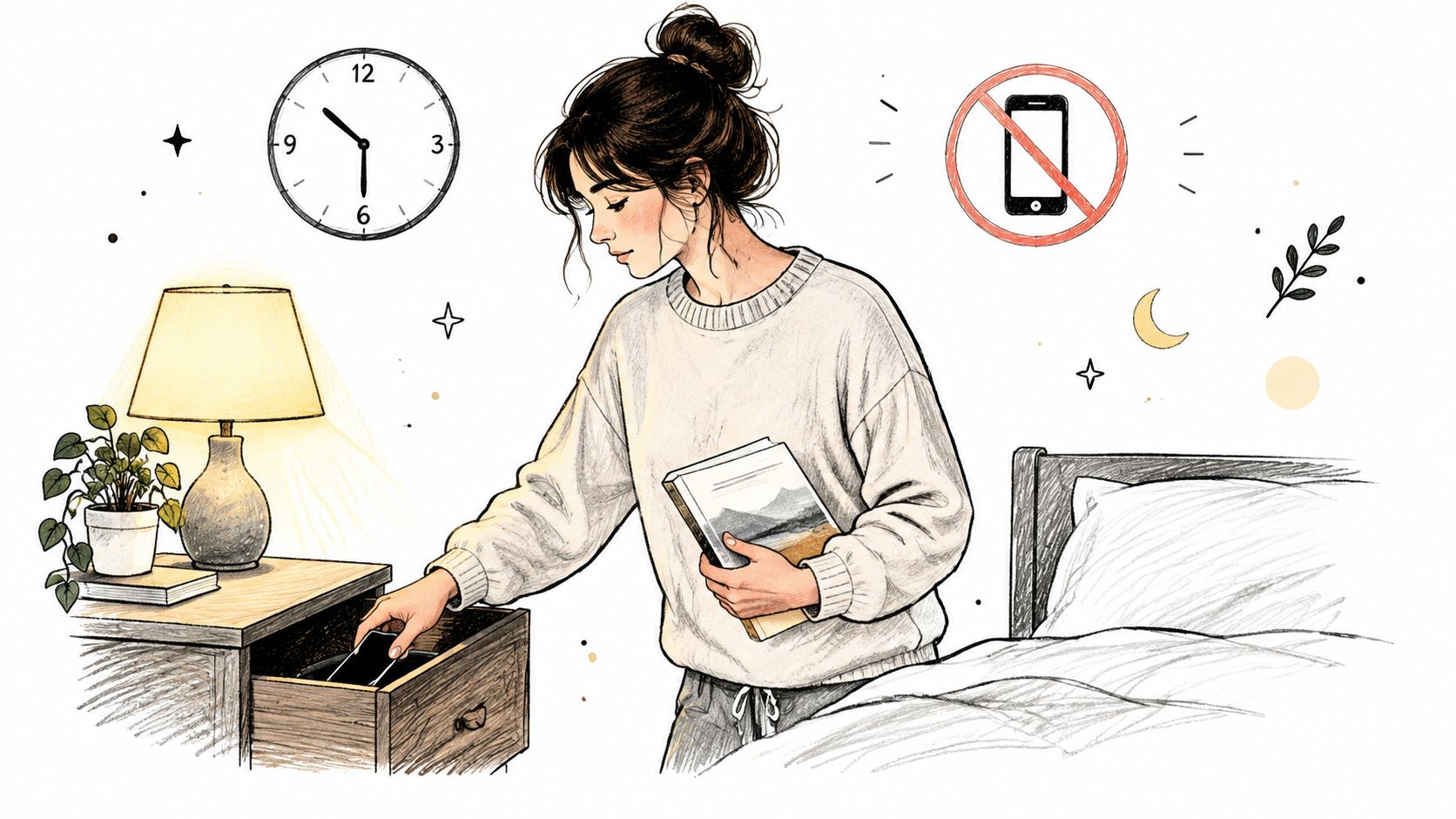
The goal is a predictable handoff, similar to closing a shop before locking the door. A shift worker might stop checking work email at 9 p.m., then spend the next 45 minutes showering, reading on paper, and stretching. A parent with a crowded evening could activate Do Not Disturb, place the phone in a drawer, and prepare clothes for the morning instead of scrolling in bed.
Build a replacement routine
Removing a screen leaves an empty space, so fill it before the evening begins. Keep a paper book on the sofa, place a notebook nearby, or choose gentle stretching that does not require a device. Quiet audio can also work if selecting it does not lead to more browsing.
Use this sequence as a starting point:
- Mark the beginning: Set an alarm for the start of the screen-free period.
- Create distance: Put the phone outside reach, preferably outside the bedroom.
- Choose an analog activity: Read, journal, prepare for tomorrow, or listen to quiet audio.
- Close work access: Keep work email out of the final part of the evening.
If device use is unavoidable, silence notifications and lower brightness. These changes reduce stimulation, but blue-light lenses are a secondary measure, not a replacement for ending screen use. A practical explanation of the evening cutoff is available in this guide to screen time before bed.
Screen avoidance cannot correct an irregular schedule, an uncomfortable bedroom, or persistent anxiety by itself. Nor should a genuine emergency create guilt about using a device. Treat the digital sunset as one coordinated part of the nighttime system, then adjust other rules if sleep remains difficult.
4. Prioritize Nasal Breathing Over Mouth Breathing
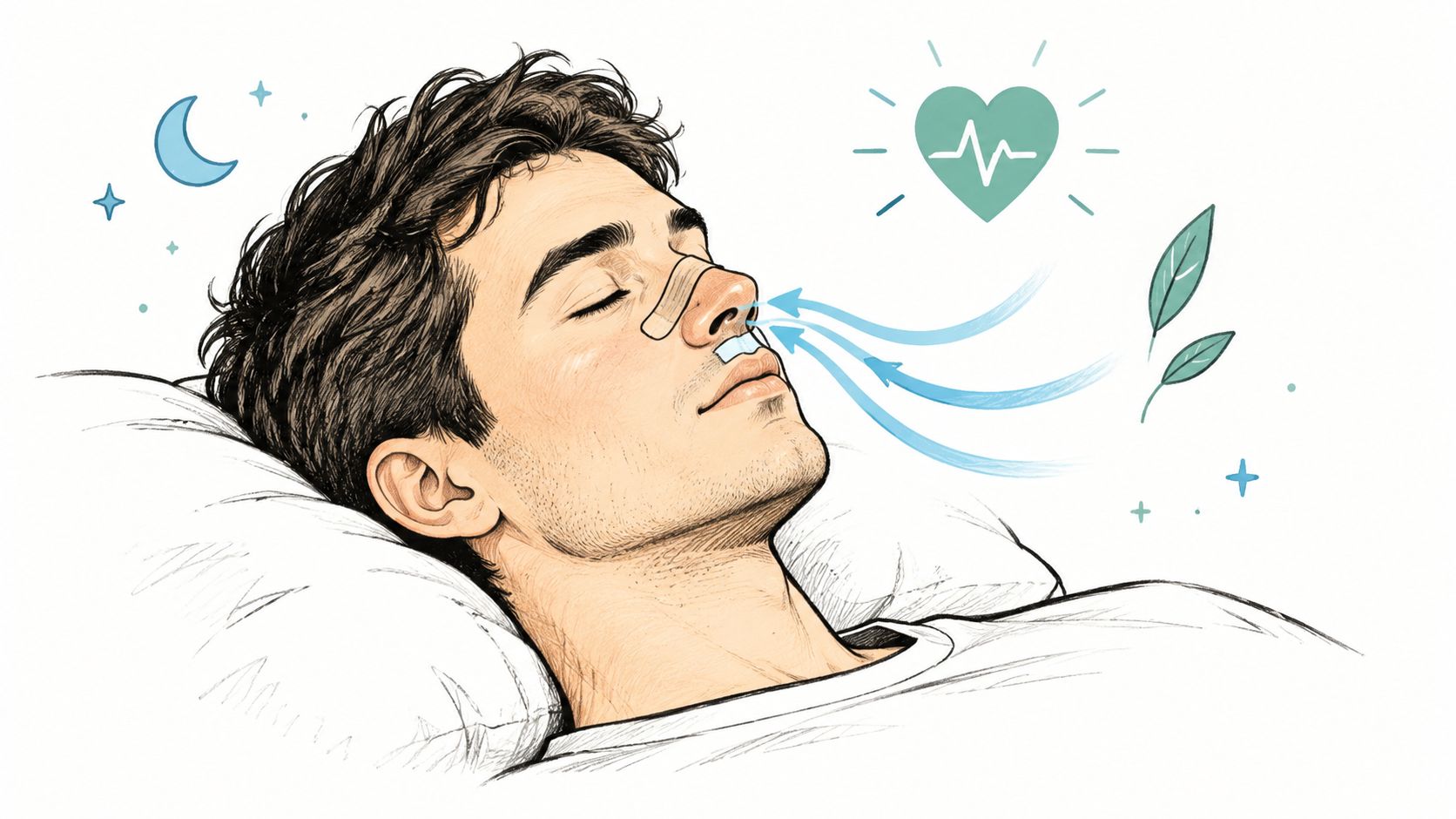
Breathing deserves attention when sleep is restless, noisy, or repeatedly interrupted. A blocked nose can encourage mouth breathing, while congestion, snoring, and an uncomfortable airway can make a calm wind-down much harder. Nasal breathing is therefore a useful part of the nighttime system, but it shouldn't be presented as a guaranteed treatment for snoring or sleep-disordered breathing.
Consider someone who notices a dry mouth every morning and whose partner reports loud snoring. That person might begin by addressing congestion, testing a nasal strip, and discussing persistent symptoms with a healthcare professional. The objective is to make nasal airflow easier, not to force the mouth closed despite an obstructed nose.
Make airflow the first priority
Try saline rinsing when congestion is present, then use a nasal strip according to its instructions. During the wind-down, practice gentle breathing through the nose at a comfortable pace. A side-sleeping position may feel more natural for some people, but body position and airway symptoms vary.
The Hydrating Mouth Tape catalog description focuses on quieter nights with reduced snoring, deeper restorative rest, oral care, tongue posture, and nitric oxide-supportive breathing. If you use mouth tape, check that nasal breathing is comfortable first, never use it to ignore blocked passages, and stop if breathing feels restricted.
Safety first: Loud snoring, witnessed breathing pauses, gasping, or unexplained daytime fatigue call for medical evaluation, not simply another breathing accessory.
Nasal breathing can support a calmer ritual, but it isn't a universal cure. Persistent snoring or breathing interruptions may indicate a sleep disorder that requires assessment.
5. Consume Magnesium-Rich Nutrients in the Evening
Magnesium can support an evening wind-down, but it works as one part of the nighttime system. Spinach, pumpkin seeds, and almonds offer food-based options, while a light snack can provide a predictable transition into bedtime. The broader sleep-hygiene literature includes food intake in 29% of intervention studies and caffeine timing in 36%, so nutrition matters, although it is not the most consistently studied component (scoping review of 298 studies).
A realistic routine might mean preparing almonds or pumpkin seeds before the evening gets busy, drinking water during the day, and choosing a consistent point for any supplement. Repetition gives the body a familiar cue, much like dimming the lights signals that the household is closing for the night.
Build the routine around food first
Use the digital sunset for a calm snack or drink rather than consuming it while answering messages. For example, prepare the option after dinner, place it where it is easy to find, and take a moment to notice digestion and comfort. This keeps the habit connected to the wider wind-down instead of turning one ingredient into a standalone solution.
Restore+ Magnesium Sleep Aid is described in its catalog as a melatonin-free magnesium wind-down drink containing magnesium, L-theanine, tart cherry, lemon balm, glycine, and nitric oxide-supporting ingredients. The description presents it as using all-natural or organic ingredients and fitting an evening routine without melatonin.
If you choose a formulation, read the label, follow its directions, and consider third-party testing and certifications. Medical conditions, medication interactions, or uncertainty about supplementation are reasons to ask a healthcare professional first.
Keep a brief record of digestion, sleep quality, and morning energy. A magnesium supplement for sleep may fit some routines, but magnesium will not compensate for late caffeine, an unstable schedule, or breathing problems. If it causes discomfort, change the timing or stop and reassess rather than forcing the ritual.
6. Practice Progressive Muscle Relaxation Before Sleep
Progressive muscle relaxation, or PMR, gives anxious attention a physical task. You tense one muscle group briefly, release it, and notice the contrast. That sequence can help someone who lies down physically tired but mentally stuck in a loop of planning, reviewing, or anticipating.
An insomniac might use PMR during a screen-free wind-down instead of reaching for a phone. A shift worker can use the same sequence during a shorter pre-sleep window, even when the clock changes from day to day. The technique doesn't require a perfect bedroom or a special product, which makes it a useful low-cost support.
Follow a repeatable body scan
Work from toes toward the face. Tense each group gently for about 5 seconds, then release without straining. Move through the calves, thighs, glutes, abdomen, chest, hands, shoulders, neck, and face. Notice warmth, heaviness, or softening after each release.
Combine the exercise with slow nasal breathing at a comfortable pace. If the method feels unfamiliar, a guided recording can help during the first few practices, but you can gradually learn to perform it without a device.
Tension is the signal to release, not a target to maximize. PMR should feel controlled and comfortable.
A short practice won't necessarily end chronic insomnia, and some people find that focusing on the body initially makes them more aware of discomfort. If that happens, reduce the intensity, shorten the sequence, or use quiet breathing instead. The embedded guided session below offers one way to learn the rhythm.
7. Eliminate Caffeine After 2 PM
A cup of coffee at 4 PM can still affect the night, even after its stimulating feeling fades. Sleep-hygiene guidance uses 2 PM as a practical cutoff, while UNC guidance recommends noon and explains that caffeine's half-life is around 6 hours. About half may remain after that period, with roughly a quarter remaining 8 to 10 hours later (UNC sleep-hygiene sheet).
The result is easy to miss. You may fall asleep normally yet sleep less continuously or wake feeling unrefreshed. Sensitivity varies, so the cutoff works best as an adjustable setting within the wider nighttime system, not as a universal cure.
Start with a simple afternoon record. Note coffee, tea, cola, energy products, and dark chocolate, including items marketed as gentle or natural that may still contain stimulants. If your usual intake is high, taper gradually to make the change more comfortable.
Try this practical sequence:
- Set a default boundary: Finish caffeinated drinks by 2 PM.
- Test an earlier time: Move the boundary to noon if evening sleep remains difficult.
- Preserve the ritual: Replace the afternoon drink with water, a non-caffeinated herbal drink, or another calming routine.
- Review the pattern: Compare timing with how quickly you fall asleep and how alert you feel in the morning.
Keep the morning drink if you enjoy it. Caffeine reduction cannot correct an irregular sleep schedule or resolve snoring. Adjust the experiment according to your sleep response rather than assuming everyone processes caffeine at the same rate.
8. Journal Worries and Goals Before Bed
A short, structured journal entry can keep the bed from becoming a planning desk. Bedtime is often the first quiet moment of the day, so unfinished tasks and worries may become more noticeable. Writing them down gives your mind a clear place to store them, although it does not resolve the underlying problem.
Use the practice as the final mental step in the nighttime system, after reducing common sleep disruptors and preparing the bedroom. For example, after shutting down work, a busy professional can record tomorrow's priorities. An anxious sleeper can name the concern, write one practical next action, and identify what can wait. This keeps the exercise focused instead of turning it into open-ended rumination.
A useful page has four parts:
- Three concerns: Name the worries currently holding your attention.
- Three accomplishments: Record what you completed or handled today.
- Three priorities: Select realistic actions for tomorrow.
- A clear stopping point: Set a timer for 5 to 10 minutes and stop when it rings.
Keep the journal and pen beside the bed. If a thought returns later, write a brief reminder rather than restarting the analysis. Then shift from words to the body with slow nasal breathing or PMR, allowing the final part of the routine to become quieter.
Watch your response. Journaling is not a universal cure for insomnia, and emotionally intense writing may increase arousal for some people. If you feel more alert, move the exercise earlier in the evening or use a simple task list without exploring the worry in detail.
8-Point Sleep Hygiene Comparison
| Item | 🔄 Implementation complexity | ⚡ Resource requirements | ⭐ Effectiveness / quality | 📊 Expected outcomes | 📌 Ideal use cases | 💡 Key insights / tips |
|---|---|---|---|---|---|---|
| Establish a Consistent Sleep Schedule | Moderate, requires daily discipline | Low, alarms, time, optional journal | ⭐⭐⭐⭐ | Reduced sleep latency, improved duration & daytime alertness within 2–3 weeks | Insomnia, irregular schedules, adaptable shift workers | Set reminders 30 min before bed, limit weekend oversleep, track with a sleep journal |
| Create a Dark, Cool Sleep Environment | Low–Moderate, one-time setup, partner coordination | Moderate, blackout curtains, thermostat, noise machine | ⭐⭐⭐⭐ | Faster sleep onset, improved REM/deep sleep, fewer awakenings (1–2 weeks) | Light-sensitive sleepers, those with poor temperature control | Aim 65–68°F, install blackout curtains/eye mask, remove LEDs and use white noise |
| Implement a 30–60 Minute Digital Sunset | Moderate, behavior change in a connected culture | Low, alarm, alternative activities (book, journal) | ⭐⭐⭐⭐ | Increased melatonin, reduced cognitive arousal, faster sleep onset (days) | Heavy screen users, anxious sleepers, pre-bed workers | Set a “digital sunset” alarm, enable Do Not Disturb, replace screens with journaling or reading |
| Prioritize Nasal Breathing Over Mouth Breathing | Moderate, retraining and congestion management | Low, mouth tape, nasal strips, saline rinses | ⭐⭐⭐⭐⭐ | Reduced snoring and breathing events, deeper sleep and fewer awakenings in days | Mouth breathers, snorers, athletes, those with sleep-disordered breathing | Use gentle mouth tape and nasal strips, address congestion, practice slow nasal breathing exercises |
| Consume Magnesium-Rich Nutrients in the Evening | Low, take supplement 60 min before bed | Low–Moderate, quality supplement (e.g., Restore+), magnesium-rich foods | ⭐⭐⭐⭐ | Improved relaxation, deeper sleep, reduced muscle tension in 3–7 days | Those with possible deficiency, athletes, people avoiding melatonin | Take 60 minutes before sleep, pair with wind-down routine, verify dosing and third-party testing |
| Practice Progressive Muscle Relaxation (PMR) Before Sleep | Moderate, requires guided practice and attention | Very low, time; optional guided audio | ⭐⭐⭐⭐ | Immediate calming effects; reduced arousal and faster sleep onset within sessions | Anxious sleepers, those with physical tension, non-pharma seekers | Follow toes→face sequence, hold 5s then release, combine with slow nasal breathing and guided audio |
| Eliminate Caffeine After 2 PM | Low, habit cutoff; may need taper | Very low, alternative beverages (herbal tea) | ⭐⭐⭐⭐ | Reduced sleep latency and improved REM/deep sleep within days | Regular caffeine consumers, poor sleepers | Set a hard cutoff (12–2 PM based on bedtime), watch hidden caffeine, taper gradually if heavy user |
| Journal Worries and Goals Before Bed | Low, 5–10 minutes of structured writing | Very low, pen and paper or notebook | ⭐⭐⭐ | Reduced cognitive arousal, faster sleep onset within sessions | Anxious/overthinking sleepers, planners | Use a 3-part structure (worries, accomplishments, priorities), limit to 5–10 minutes and set a timer |
Turn Eight Rules Into One Repeatable Night
The eight sleep hygiene rules work best as a sequence rather than a collection of disconnected tasks. Protect a consistent wake time first. Stop caffeine early enough for your body to clear it. As evening arrives, dim the lights, end screen use, cool and darken the room, and give your mind a place to put tomorrow's concerns.
A realistic evening might look like this:
- Anchor the schedule: Wake and go to bed at broadly consistent times.
- End stimulation: Stop caffeine by the afternoon cutoff and begin the digital sunset before bed.
- Prepare the room: Cool the bedroom, block light, and reduce unpredictable sound.
- Unload the mind: Journal worries and priorities for a short, defined period.
- Downshift physically: Use slow nasal breathing or PMR.
- Protect the bed: Treat it as a place for sleep rather than work, scrolling, or prolonged frustration.
Don't change every variable at once if you already feel overwhelmed. Start with one or two habits, such as a stable wake time and the afternoon caffeine cutoff. Once those feel automatic, add the darker room or the screen-free wind-down. This approach makes it easier to identify what helps and prevents the routine from becoming another evening obligation.
Track bedtime, wake time, caffeine timing, and morning energy in a simple journal. Don't turn the record into a nightly performance score. The purpose is pattern recognition, especially when a busy week, travel, shift work, or anxiety changes the result.
Sleep hygiene has limits. If insomnia continues despite consistent habits, or if you have loud snoring, breathing pauses, gasping, or unexplained daytime fatigue, seek professional evaluation. Sleep hygiene education can be a useful foundation, but persistent symptoms may require assessment and treatments such as cognitive behavioral therapy for insomnia. You can also review these practical tips for better sleep hygiene as you refine your routine.
Start tonight with the smallest complete sequence you can repeat: choose tomorrow's wake time, stop caffeine at the appropriate afternoon boundary, put your phone away, dim the room, write down your worries, and finish with slow breathing or PMR. A coordinated routine is more useful than chasing a different sleep hack every night.
SleepHabits offers melatonin-free nighttime options and breathing-focused tools that can fit into the routine described here, including Restore+, hydrating mouth tape, and nasal strips. Visit SleepHabits to explore these products and educational resources, then choose the habits that support your own schedule, breathing, and evening wind-down.