

That stuffy, blocked-up nose that greets you the moment your alarm goes off isn't just a random annoyance. Waking up congested every morning is often a direct result of things in your bedroom and processes inside your body that get amplified while you sleep. Think of it as a nightly traffic jam in your airways.
The Hidden Reasons You Wake Up Congested Every Morning

It’s a frustratingly common routine for so many people. Instead of starting the day refreshed, you’re left in a groggy struggle just to breathe clearly. This isn't a coincidence; it's a signal that something is causing inflammation and mucus buildup while you're asleep.
Imagine your nasal passages are a highway. During the day, traffic usually flows just fine. But at night, this highway can get completely jammed up by debris like dust and pollen, or internal issues like inflammation and poor fluid drainage.
To help you get to the bottom of your morning stuffiness, here's a quick overview of the most common culprits.
Common Causes Of Morning Congestion At A Glance
| Category | Potential Cause | How It Contributes Overnight |
|---|---|---|
| Environmental | Allergens (dust mites, pet dander, mold, pollen) | Constant exposure in the bedroom triggers an immune response, leading to inflammation and mucus. |
| Environmental | Dry or Polluted Air | Low humidity dries out and irritates nasal passages, prompting your body to produce excess mucus. |
| Medical/Internal | Silent Reflux (LPR) | Stomach acid travels up the esophagus and irritates the throat and nasal passages while you're lying down. |
| Medical/Internal | Gravity & Blood Flow | Lying flat for hours allows mucus to pool and blood to rush to your head, swelling nasal tissues. |
| Medical/Internal | Chronic Mouth Breathing | Bypasses the nose's natural filtering system, leading to dry, irritated airways and more congestion. |
Let's unpack these primary culprits so you can pinpoint what might be going on.
Unpacking The Primary Culprits
Understanding the root cause is the first real step toward waking up clear and refreshed. The most common factors behind that morning stuffiness usually fall into one of these categories:
-
Bedroom Allergens: Dust mites in your bedding, pet dander clinging to fabrics, and hidden mold spores can all trigger a persistent inflammatory response while you sleep. For example, that cozy down comforter you love could be a haven for dust mites, exposing you to allergens for eight hours straight.
-
Dry or Polluted Air: Air with low humidity is a major irritant for your nasal passages. Your body's response? To overproduce mucus to compensate. Pollutants that sneak indoors, like fine particulate matter (PM2.5) from nearby traffic, can also cause significant overnight inflammation. A 2023 study confirmed that evening rush hour pollution makes indoor air quality much worse.
-
Nighttime Body Processes: Things change when you lie down for the night. Conditions like silent reflux can allow stomach acid to creep up and irritate your airways. The simple effect of gravity also plays a role, causing mucus and fluids to pool in your sinuses instead of draining properly. Think of it like a tilted bottle—when upright, liquid flows out easily; when laid flat, it stays put.
-
Breathing Habits: If you're a chronic mouth breather at night, you're bypassing your nose's incredible built-in filtering system. This leads to irritation, dryness, and—you guessed it—even more congestion. If this sounds like you, you can learn more about how to stop mouth breathing in our detailed guide.
By figuring out which of these factors are at play, you can start to reclaim your mornings from that stuffy, congested feeling. This guide will walk you through exactly how to do that, so you can finally start your day breathing freely.
Your Bedroom Environment and Its Hidden Triggers
Think of your bedroom as a sealed chamber. For roughly eight hours a night, you’re breathing in whatever is floating around in that space. If that air is loaded with irritants, it’s no surprise you wake up stuffy and congested. Your sleep space can unknowingly concentrate the very things that cause your nasal passages to swell up while you rest.
Most of the time, the culprits are microscopic particles you can’t even see. These troublemakers create an environment where your body is constantly on the defensive, leading to that all-too-familiar blocked-up feeling when your alarm goes off.
Identifying Airborne Irritants
The most common triggers are allergens you inhale all night long. Because you’re in one enclosed space for such a long stretch, the exposure really adds up.
- Dust Mites: These tiny creatures love bedding, mattresses, carpets, and upholstered furniture. Their waste products are a primary cause of indoor allergies and trigger inflammation in your airways.
- Pet Dander: If you share your home with furry friends, their dander (minuscule flecks of skin) can settle on every surface in your bedroom, even if your pet isn't allowed on the bed.
- Pollen and Mold: Pollen can easily drift in through open windows and land everywhere, while mold spores can thrive in damp spots, like near windows with condensation or in a poorly ventilated bathroom nearby.
Practical Example: If your congestion gets worse in the spring, it's likely pollen drifting in. If it’s a year-round problem, dust mites in your old mattress or pillow are a more probable cause. Your body fights back by ramping up mucus production and swelling your nasal tissues to trap these invaders, resulting in serious morning congestion.
The Critical Role of Air Quality and Humidity
Beyond specific allergens, the quality of the air itself plays a huge role. The amount of moisture in your room—the humidity—can either soothe or irritate your nasal passages. It's a delicate balancing act.
Air that’s too dry acts like fine sandpaper on your sensitive nasal lining. This irritation prompts your body to produce thick, sticky mucus as a protective measure. On the flip side, air that’s too humid creates a five-star resort for mold and dust mites, making allergy symptoms even worse.
Finding the best humidity level for home is crucial, as both extremes can contribute to congestion. The ideal sweet spot is generally between 40% and 50%.
Actionable Steps for a Clear-Breathing Zone
You can absolutely turn your bedroom into a sanctuary for clear breathing with a few strategic moves. These practical steps can drastically cut down your exposure to environmental triggers.
- Purify Your Air: An air purifier equipped with a HEPA filter is one of the best tools you can have. It captures airborne particles like dander, pollen, and dust mite debris before you have a chance to breathe them in. Actionable Tip: Place the purifier near your bed and set it to a low, quiet setting to run all night for maximum benefit.
- Wash Bedding in Hot Water: At least once a week, wash all your bedding—sheets, pillowcases, and blankets—in water that is 130°F (54°C) or hotter. That temperature is high enough to kill dust mites and wash away the allergens they leave behind.
- Use Allergen-Proof Covers: Zip your mattress, box spring, and pillows into dust-mite-proof covers. This creates a barrier that stops mites from setting up camp in your bedding in the first place.
- Control Humidity: Use a humidifier if your air is too dry or a dehumidifier if it’s too damp. A simple, inexpensive device called a hygrometer can help you monitor the room’s humidity levels and keep them in that ideal range.
How Your Body's Nighttime Processes Cause Congestion
While your bedroom environment plays a huge role, sometimes the answer to "why do I wake up congested every morning" lies within your own body. Your internal biology and mechanics can create the perfect storm for stuffiness, especially when you’re lying down for hours.
Think of it like a slow-draining sink. When you’re horizontal, mucus and inflammatory fluids don’t drain properly and can easily back up in your sinuses.
This is especially true for conditions like rhinitis, which is simply inflammation inside your nose. It can be allergic (triggered by things like pollen or dust) or non-allergic (triggered by irritants like smoke or weather changes). Either way, lying flat for eight hours allows blood to pool in your head, causing the blood vessels in your nose to expand and making the swelling even worse.
When Anatomy and Gravity Work Against You
Your physical structure can also turn minor nighttime swelling into a major blockage. A common culprit is a deviated septum, where the thin wall between your nasal passages is pushed to one side. You might not even notice it during the day, but at night, even the slightest inflammation can completely block the narrower passage.
Another major contributor is understanding Obstructive Sleep Apnea (OSA), a condition where throat muscles relax and block your airway while you sleep. This forces you to breathe through your mouth, leading to dryness and irritation that just makes the congestion worse.
This decision tree helps visualize how to troubleshoot common bedroom triggers that can aggravate these internal processes.
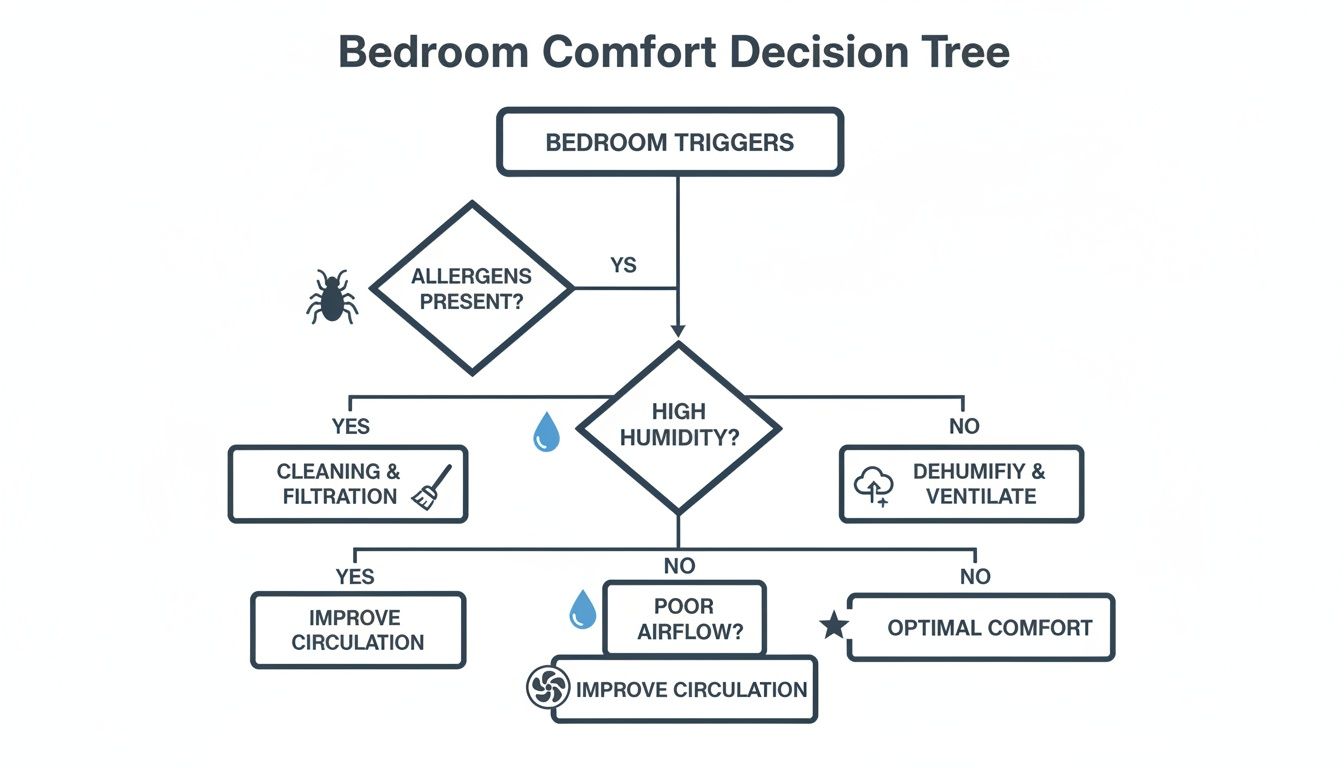
As the chart shows, dialing in your bedroom's air quality, humidity, and airflow is the first line of defense before digging deeper into potential medical causes.
The Impact of Silent Reflux and Medications
Sometimes, the problem isn't in your nose at all—it's coming from your stomach.
Laryngopharyngeal reflux (LPR), often called silent reflux, happens when stomach acid travels up your esophagus and irritates your throat and nasal passages. You might not feel classic heartburn, but the aerosolized acid can cause significant inflammation while you sleep, leading directly to a stuffy nose in the morning. Actionable Tip: Try avoiding large meals or acidic foods (like tomatoes and citrus) for at least three hours before bedtime to see if it makes a difference.
Finally, take a look at your medicine cabinet. Certain medications are well-known for causing nasal congestion as a side effect. This includes some blood pressure medications, anti-inflammatories, and even over-the-counter decongestant nasal sprays. Overusing them can cause a frustrating cycle called rebound congestion.
To help you sort through the possibilities, this table breaks down the differences between environmental and medical triggers.
Comparing Medical And Environmental Congestion Triggers
This table helps you differentiate between symptoms that suggest an environmental issue versus a potential underlying medical condition, guiding you on what to observe.
| Symptom Or Pattern | Likely Environmental Cause | Potential Medical Condition |
|---|---|---|
| Congestion clears up when you leave the house. | Allergens like dust, mold, or pet dander in your bedroom. | Less likely; symptoms would probably persist elsewhere. |
| Congestion is on one side only. | Sleeping position that blocks one nostril. | A structural issue like a deviated septum. |
| You also have a sore throat or hoarseness. | Dry air irritating your airways. | Silent reflux (LPR) irritating your throat. |
| Symptoms are year-round, not seasonal. | Indoor allergens like dust mites or mold. | Chronic non-allergic rhinitis or sinusitis. |
By connecting your specific symptoms to these potential causes, you can start to piece together why you wake up feeling so congested and take more targeted steps toward relief.
The Surprising Impact Of Your Sleep Habits On Breathing
Often, the answer to "why do I wake up so congested?" isn't just about what's floating around in your bedroom—it's about how you're positioned in it. Your sleep habits, especially your go-to sleeping position and whether you breathe through your nose or mouth, have a direct and powerful influence on your airways.
Sometimes, the difference between waking up stuffy and waking up clear comes down to a few simple tweaks.
During the day, gravity is on your side, helping mucus drain naturally down and away. But once you lie down, that advantage disappears. Mucus can start to pool in your sinuses, and blood flow to your head increases, which can cause the delicate tissues inside your nose to swell. It's the perfect recipe for a blocked-up morning.
How Your Sleeping Position Affects Airflow
The way you sleep can either help keep your airways open or accidentally make congestion worse. While comfort is always the goal, a few small adjustments can make a huge difference in how easily you breathe all night long.
- Back Sleeping: For congestion, this is often the worst offender. Lying flat on your back allows postnasal drip to collect at the back of your throat and makes it easier for nasal passages to swell shut.
- Side Sleeping: This is generally a better option, as it allows for more effective drainage from at least one nostril. Practical Tip: If you notice the lower nostril gets stuffy, try switching sides halfway through the night if you wake up.
- Elevated Sleeping: This is the gold standard for combating congestion. Propping your head and shoulders up with an extra pillow or a dedicated wedge pillow puts gravity back to work for you, promoting drainage and reducing that inflammatory swelling.
Try this tonight: Stack a second pillow under your usual one, or place a few books under the head of your bed legs to create a gentle, consistent slope. This can dramatically improve sinus drainage and reduce the nasal tissue swelling that leads to morning blockages.
The Hidden Consequences Of Mouth Breathing
Beyond your posture, how you breathe during sleep is a critical piece of the puzzle. Your nose is your body’s built-in air purifier and humidifier. It’s designed to warm, filter, and moisturize every single breath you take. When you switch to mouth breathing at night, you bypass this entire essential system.
This detour has immediate consequences. Breathing through your mouth all night leaves you with a dry mouth and a scratchy, irritated throat. But ironically, it also makes your nasal congestion worse. As your nasal passages dry out from disuse, your body may overproduce thick mucus to try and compensate for the irritation.
This creates a frustrating vicious cycle: congestion forces you to breathe through your mouth, which in turn leads to even more congestion. It's one of the most common reasons people wake up feeling completely stuffed up. For a deeper dive, you can learn more about the power of nasal breathing in our complete guide.
Breaking this cycle is key.
Simple tools like nasal strips can help gently open up your airways, making it easier and more natural to keep your mouth closed. Reclaiming your nasal breathing won't just help you wake up clearer—it's a cornerstone of deeper, more restorative sleep.
Actionable Steps For A Congestion-Free Morning

Understanding why you wake up congested is the first half of the battle. Now it's time to build a practical playbook to actually do something about it.
These are straightforward strategies you can put into action tonight. We’ll break them down into three key areas you can control: your sleep environment, your nasal hygiene, and how you breathe at night.
Optimize Your Sleep Environment
Your bedroom should be a sanctuary for rest, not an obstacle course for your airways. A few simple tweaks can make a huge difference in calming overnight inflammation and mucus production.
-
Dial in the Humidity: Your nasal passages hate dry air. It’s irritating and makes congestion worse. Example: In winter, indoor heating can drop humidity levels below 30%. Running a humidifier to bring it up to 45% can stop your nasal passages from drying out and overproducing mucus. The sweet spot is a humidity level between 40% and 50%.
-
Get Serious About Bedding Hygiene: Wash your sheets, pillowcases, and blankets at least once a week in hot water—130°F (54°C) is the magic number to kill dust mites. For an extra layer of defense, zip your mattress and pillows into allergen-proof covers. This creates a physical barrier that keeps irritants from getting near your face.
-
Purify Your Air: Think of a HEPA filter air purifier as a silent bodyguard for your sinuses. Running one in your bedroom while you sleep captures airborne dust, pollen, and pet dander before you have a chance to breathe them in.
Master Your Nasal Hygiene
Just like you brush your teeth to clear away the day's debris, a quick nasal hygiene routine can do the same for your airways. It's a proactive step that preps your nose for a night of clear breathing.
A simple saline rinse before bed is one of the most powerful habits you can build. Using a gentle saline spray or a neti pot flushes out allergens, thins mucus, and moisturizes your nasal tissues. It's a total reset for your sinuses.
How It Works: A saline solution is basically saltwater that matches your body’s natural fluids, making it incredibly gentle. The rinse physically washes out the microscopic pollen, dust, and other gunk that collected in your nose all day. This stops irritants from sitting in your sinuses overnight and causing inflammation while you sleep.
Practical Example: If you spent the afternoon gardening, a saline rinse before bed can wash away all the pollen that’s hitched a ride in your nasal passages, preventing an allergic reaction from brewing overnight and letting you wake up clear.
Adopt Better Breathing Habits
Finally, let’s talk about how you’re actually breathing. Your body is designed to breathe through the nose—it’s our built-in air filter and humidifier. Getting back to that natural pattern is a game-changer for morning congestion.
One of the easiest changes is simply elevating your head. Propping yourself up on an extra pillow or a wedge uses gravity to your advantage, preventing mucus from pooling in your sinuses while you lie flat. This tiny adjustment to your sleeping posture can have a massive impact.
Supporting open airways is also key. For many people, nasal passages can narrow or collapse slightly during sleep, forcing them to switch to mouth breathing. This is where external nasal strips can be incredibly effective. These adhesive strips gently lift the sides of your nose, instantly opening up your airways for better airflow.
You can learn more about how nasal strips for snoring and congestion work in our guide. By making it easier to breathe through your nose, they help you break the cycle of mouth breathing that so often leads to waking up congested and dry.
When To See A Doctor About Morning Congestion
Most of the time, a stuffy nose in the morning is just an annoyance you can handle at home. But sometimes, it’s your body’s way of signaling that something more is going on. Ignoring a problem that just won’t quit can lead to bigger issues down the road, so knowing when to call in a professional is a key part of taking care of yourself.
If your stuffy nose has become a long-term roommate that overstays its welcome, it's time to get an expert opinion. After all, a constantly blocked nose can seriously tank your sleep quality, leaving you drained and foggy all day.
Red Flags That Warrant A Doctor’s Visit
Think of these symptoms as your body sending up a flare. If you’re dealing with any of the following, it’s a good idea to schedule an appointment:
- Congestion Lasts Over 10 Days: If your stuffiness isn’t getting any better after a week and a half of trying home remedies, it might point to a stubborn sinus infection or another underlying condition that needs a closer look.
- Severe Facial Pain or Pressure: A dull ache is one thing, but if you’re feeling sharp, persistent pain around your eyes, across your forehead, or in your cheeks, it can be a sign of significant sinus inflammation or a brewing infection.
- High Fever: When morning congestion shows up with a fever, it often means there's a bacterial or viral infection at play that needs medical treatment to resolve.
- Thick, Colored Nasal Discharge: Noticing thick green or yellow mucus, especially if it comes with facial pain, is another classic sign that you’re fighting off an infection.
A doctor can help you figure out why you wake up congested every morning when the usual tricks aren't working. They can identify issues you can't see, like a deviated septum, nasal polyps, or severe allergies, and recommend targeted treatments like prescription sprays or allergy testing to finally bring you some real, lasting relief.
Common Questions About Morning Congestion
We get a lot of questions about why congestion seems to hit hardest right after waking up. Here are a few of the most common ones, broken down.
Can Being Dehydrated Make Me Wake Up Congested?
Absolutely. Think of mucus like honey. When you’re well-hydrated, it’s thin and flows easily. When you’re dehydrated, it gets thick, sticky, and hard to move.
Overnight, your body loses water through breathing and perspiration. If you start the night even slightly dehydrated, that mucus in your nasal passages is going to get even thicker, making it much harder to clear. Waking up stuffy is a direct result. Practical Tip: Keep a glass of water by your bed and drink it first thing upon waking. Aim to drink consistently throughout the day rather than chugging water right before bed.
Why Is My Congestion Only Bad In The Morning?
This is a classic pattern, and it almost always points to one of two things: your sleeping position or your bedroom environment.
Lying flat for 6-8 hours is an open invitation for mucus to pool in your sinuses. Gravity isn’t helping you drain it away like it does when you're standing. The moment you get out of bed and stand up, gravity goes back to work, and things start to clear out. This is also why congestion often feels better an hour or so after you wake up.
The other major factor is prolonged exposure. You spend more consecutive time in your bedroom than anywhere else. If there are dust mites in your bedding, pet dander on the floor, or pollen coming through the window, you’re breathing it in all night long, triggering a low-grade inflammatory response that peaks by morning.
Could My New Pillow Be Causing My Congestion?
It’s a strong possibility, and something people often overlook. If your stuffy mornings started right around the time you got a new pillow, it's worth investigating.
New pillows can off-gas chemicals from manufacturing, or they might be made from materials you're sensitive to (like certain foams or feathers). Even if the material itself isn't the issue, a fresh pillow can quickly become a five-star hotel for dust mites. Actionable Step: Try putting a hypoallergenic, mite-proof cover on it and see if that makes a difference over the next week. If not, consider switching back to your old pillow temporarily to see if the congestion resolves.
At SleepHabits, our focus is on simple, effective tools that support better breathing while you sleep. Our nasal strips and mouth tape are designed to encourage your body’s natural ability to breathe through the nose, helping you wake up clearer and more refreshed. Discover how these solutions can transform your sleep by visiting SleepHabits.