

Clinical evidence shows that chin straps don't work as a standalone treatment for snoring or sleep apnea. In a 2014 study of 26 patients, a chin strap failed to improve apnea severity, oxygenation, or snoring, and forcing the mouth closed can be dangerous when the nasal passages are blocked.
The popular advice sounds logical: keep the jaw shut, stop mouth breathing, and the noise should disappear. That reasoning misses the main problem in many cases. Snoring usually reflects restricted airflow and vibration deeper in the upper airway, so changing lip or jaw position alone often leaves the obstruction untouched.
As a sleep wellness practitioner, I look at chin straps as limited mouth-closure aids, not as dependable anti-snoring treatment. The more useful question isn't “does the snoring chin strap work?” It's whether your nose is open, whether your throat is collapsing during sleep, and whether symptoms point to obstructive sleep apnea.
The Clinical Reality of Snoring Chin Straps
A chin strap can hold the lower jaw upward and encourage the lips to remain together. That visible mechanical action makes the product seem more powerful than it is. A closed mouth doesn't automatically mean an open airway.
The clearest direct evaluation came from a 2014 clinical study involving 26 patients with obstructive sleep apnea. The researchers found that a chin strap alone didn't improve apnea severity, oxygenation, or snoring. The device also failed to produce meaningful improvement across sleep measures that included the apnea-hypopnea index, REM sleep, and supine sleep. The authors concluded that it was ineffective for both obstructive sleep apnea and snoring. The clinical study in the Journal of Clinical Sleep Medicine remains especially relevant because it tested the strap in a sleep-clinic population rather than only among people reporting ordinary snoring.
What the study actually tells you
The result doesn't mean every person who snores will experience exactly the same response. The sample was small, and snoring has multiple causes. It does mean that holding the jaw closed isn't a reliable standalone strategy, including for people whose snoring occurs alongside diagnosed airway obstruction.
The distinction matters. A strap may reduce the sound created by an open mouth in a particular person, yet fail to address vibration from the soft palate, narrowing behind the tongue, or collapse in the throat. A quieter night also doesn't prove that breathing has become safer.
Practical rule: Treat a chin strap as a comfort experiment at most, never as evidence that suspected sleep apnea has been corrected.
People often spend considerable effort testing gadgets before examining nasal airflow, sleep position, alcohol use, or signs of disordered breathing. A calm bedtime routine, including relaxing spa care for snorers, may support general relaxation, but relaxation alone won't replace an evaluation when snoring is persistent or accompanied by gasping, choking, or witnessed breathing pauses.
The clinical baseline is therefore straightforward. A snoring chin strap isn't a dependable treatment for snoring or obstructive sleep apnea, and the negative findings shouldn't be dismissed because the product feels simple, inexpensive, or easy to wear.
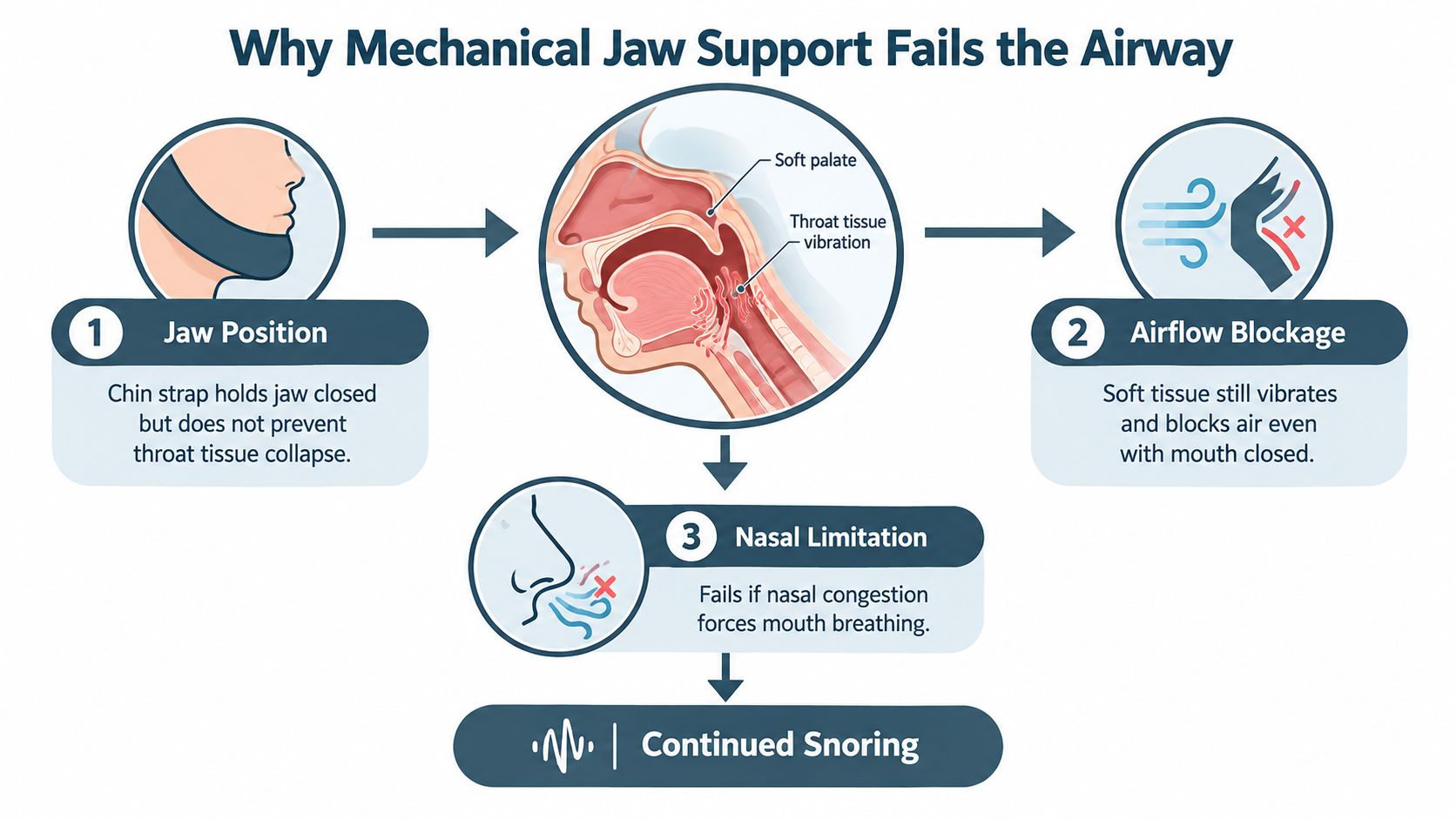
Why Mechanical Jaw Support Fails the Airway
Snoring happens when airflow moves through a narrowed upper airway and causes relaxed tissues to vibrate. The soft palate, throat walls, and tissues around the tongue can all contribute. The mouth opening may amplify the sound, but it isn't necessarily the source of the restriction.
A chin strap addresses jaw position, while the obstruction may be located farther back. It's similar to closing a door in a hallway while a blocked vent remains at the end of the passage. The door changes one part of the airflow route, but it doesn't clear the obstruction.
Mouth closure is not airway support
When nasal breathing is easy, keeping the lips gently together may reduce the rushing airflow associated with mouth breathing. But if the nose is congested, the sleeper may struggle against the strap or repeatedly wake to open the mouth. If the throat narrows during sleep, closing the mouth doesn't mechanically move the lower jaw forward or stabilize the tissues.
That's why a strap can change the route of air without improving the space available for air. Those are different physiological outcomes. Nasal strips can help support airflow through the nose when congestion or narrow nasal passages contribute to mouth breathing. For example, Transparent Nasal Strips are described as supporting easier nighttime breathing, reducing congestion related to colds, allergies, or dry air, and encouraging nasal breathing habits. They may be paired with mouth tape, but neither should be used to conceal breathing problems that need clinical assessment.
The broader evidence remains weak. A 2025 systematic review of mouth-closure approaches found that only 2 of 10 studies showed a significant reduction in snoring or sleep-apnea measures, while the overall evidence was rated poor quality across 213 participants. The systematic review in PLOS ONE supports a cautious interpretation rather than a product-driven promise.
The airway-first interpretation
The review included mouth-occlusion approaches, not just traditional fabric straps, so its findings shouldn't be treated as a perfect test of every chin strap design. They do reinforce a central point: mouth closure has not produced consistent, high-quality evidence as a standalone answer.
A more sensible approach begins with nasal patency, sleep position, and symptoms. If the nose is blocked, improve the nasal route first. If snoring persists across positions or includes breathing pauses, investigate the airway rather than tightening the strap.
The Narrow Exception for CPAP Users
Chin straps have a legitimate role when they're used for a specific technical problem during positive airway pressure therapy. Some people using nasal CPAP open their mouths during sleep. Air can then escape through the mouth instead of remaining within the intended pressure pathway, creating mouth leak and making the mask experience less effective or less comfortable.
In that setting, the chin strap isn't being asked to cure snoring. It's being used to help keep the mouth closed while the PAP device treats the underlying breathing disorder. An AASM-cited study reported lower mask leak and better adherence among sleep apnea patients using PAP with a chin strap. The Journal of Clinical Sleep Medicine discussion of chin straps with PAP supports this narrow adjunctive use.
Don't transfer CPAP evidence to ordinary snoring
The distinction is easy to lose in product descriptions. If a chin strap helps prevent air escaping from a CPAP mask, that doesn't show that it opens the throat or treats snoring in someone who isn't using PAP. The device may improve the seal around a prescribed therapy without improving the anatomy that causes airway vibration.
A separate study of nasal CPAP users described the strap as a mouth-closing aid intended to reduce mouth opening and leak, not as a standalone anti-snoring intervention. The study on chin straps and nasal CPAP is useful for understanding that distinction.
For CPAP users: Don't add, tighten, or abandon a chin strap based only on the sound of snoring. Check leak data, dryness, comfort, and treatment response with your sleep clinician or equipment provider.
The trade-off can also run in the wrong direction. One published report found that chin strap use with CPAP reduced mouth leak, while snoring time increased significantly from 6.7% to 24.0% of total sleep time. The report on snoring time during chin strap use with CPAP shows why changing jaw position doesn't guarantee quieter breathing.
For someone using PAP, the correct question is whether the strap improves therapy delivery and tolerance. For someone without PAP, the evidence doesn't justify treating a chin strap as a substitute for nasal treatment, an oral appliance evaluation, or sleep testing. If you're exploring alternatives to PAP, review options with a qualified professional through this overview of sleep apnea treatments beyond CPAP.
A gentle lip-seal approach is a different conversation, but it still requires an open nose and careful screening. Hydrating Mouth Tape is positioned as a tool for encouraging a quieter, mouth-closed breathing habit, along with tongue posture and nitric oxide-supportive breathing. It shouldn't be treated as a CPAP replacement or applied when nasal breathing is unreliable.
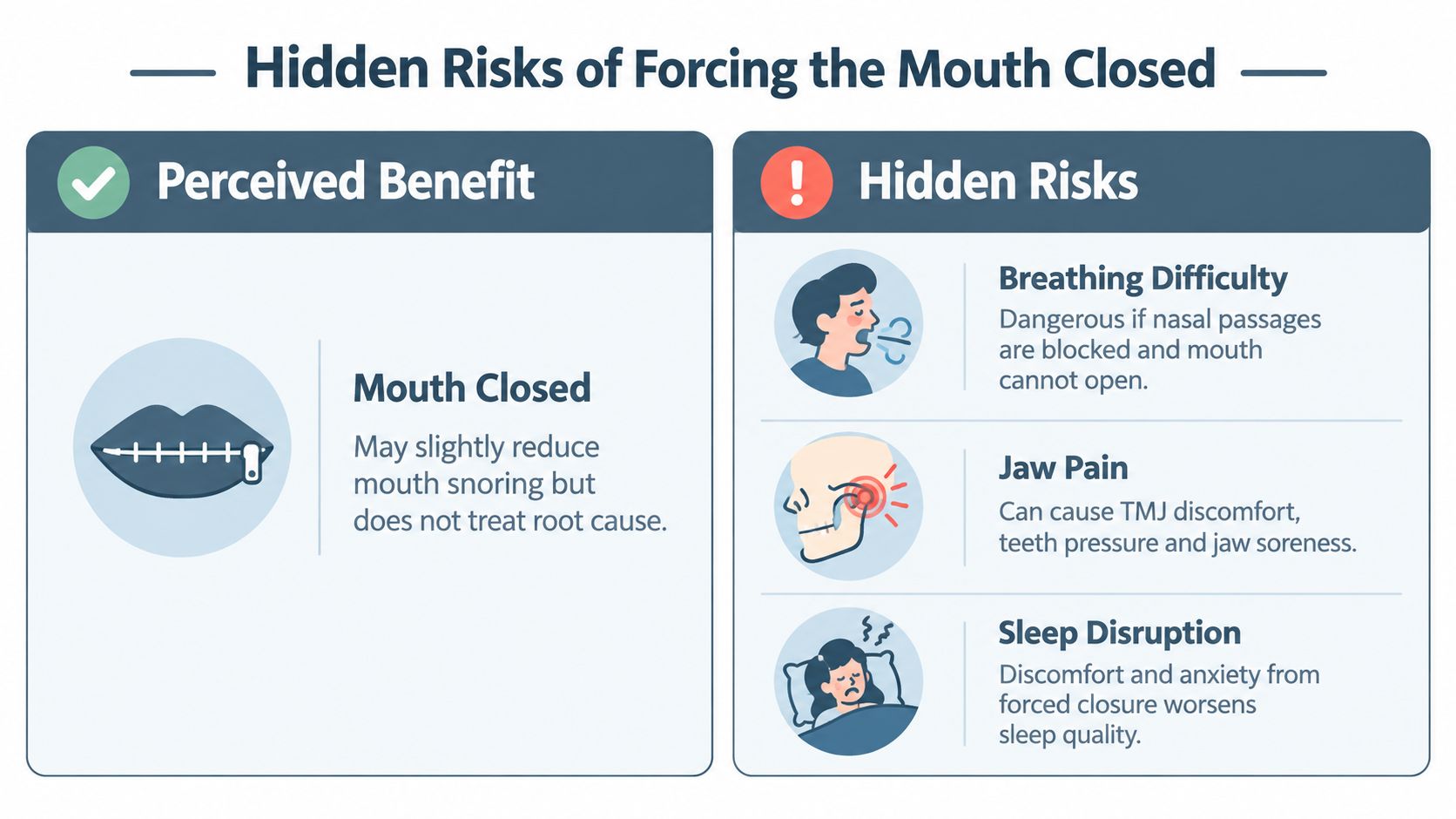
Hidden Risks of Forcing the Mouth Closed
The main safety issue is simple: the mouth may be serving as a backup airway. If allergies, a cold, a deviated nasal passage, dry air, or another obstruction limits nasal airflow, a strap can make it harder to switch to mouth breathing when the body needs that option.
Independent coverage notes that chin straps may feel tolerable while doing nothing for the actual snoring. It also reports a sleep specialist's warning that forcing the mouth closed can be problematic when nasal breathing is blocked. The Prevention review of anti-snoring devices reflects the safety gap that many gadget guides overlook.
Comfort problems are clinical clues
A strap that creates jaw pressure, tooth pressure, or soreness isn't harmless because the discomfort seems manageable. Forced closure can provoke tension around the jaw joint, encourage clenching, or make a sleeper more aware of breathing. Repeated adjustment and partial awakenings can undermine the restorative sleep the product is supposed to support.
Stop using a chin strap if you experience breathing difficulty, panic, chest discomfort, significant jaw pain, or a sense that you can't open your mouth normally. Don't test it during a night of severe congestion, and don't cover the nose or mouth with any device.
When snoring deserves evaluation
Snoring can occur without sleep apnea, but certain patterns deserve more than an over-the-counter experiment. Seek medical evaluation when you notice:
- Breathing pauses: A partner reports repeated pauses, gasping, or choking during sleep.
- Morning effects: You wake with headaches, dry mouth, or a sense that sleep hasn't restored you.
- Daytime impairment: You struggle with unusual sleepiness, concentration, or alertness.
- Persistent noise: Snoring continues despite position changes and reasonable nasal care.
These signs don't diagnose sleep apnea by themselves. They do indicate that reducing noise isn't enough as a treatment goal. A strap can potentially make the mouth quieter while leaving airway obstruction untouched, which is why self-testing shouldn't delay appropriate assessment.
Guidance on mouth taping and sleep can help explain the difference between encouraging a gentle lip seal and mechanically forcing the jaw closed. The safety principle remains the same for both approaches: never restrict the mouth when you can't breathe comfortably through your nose.
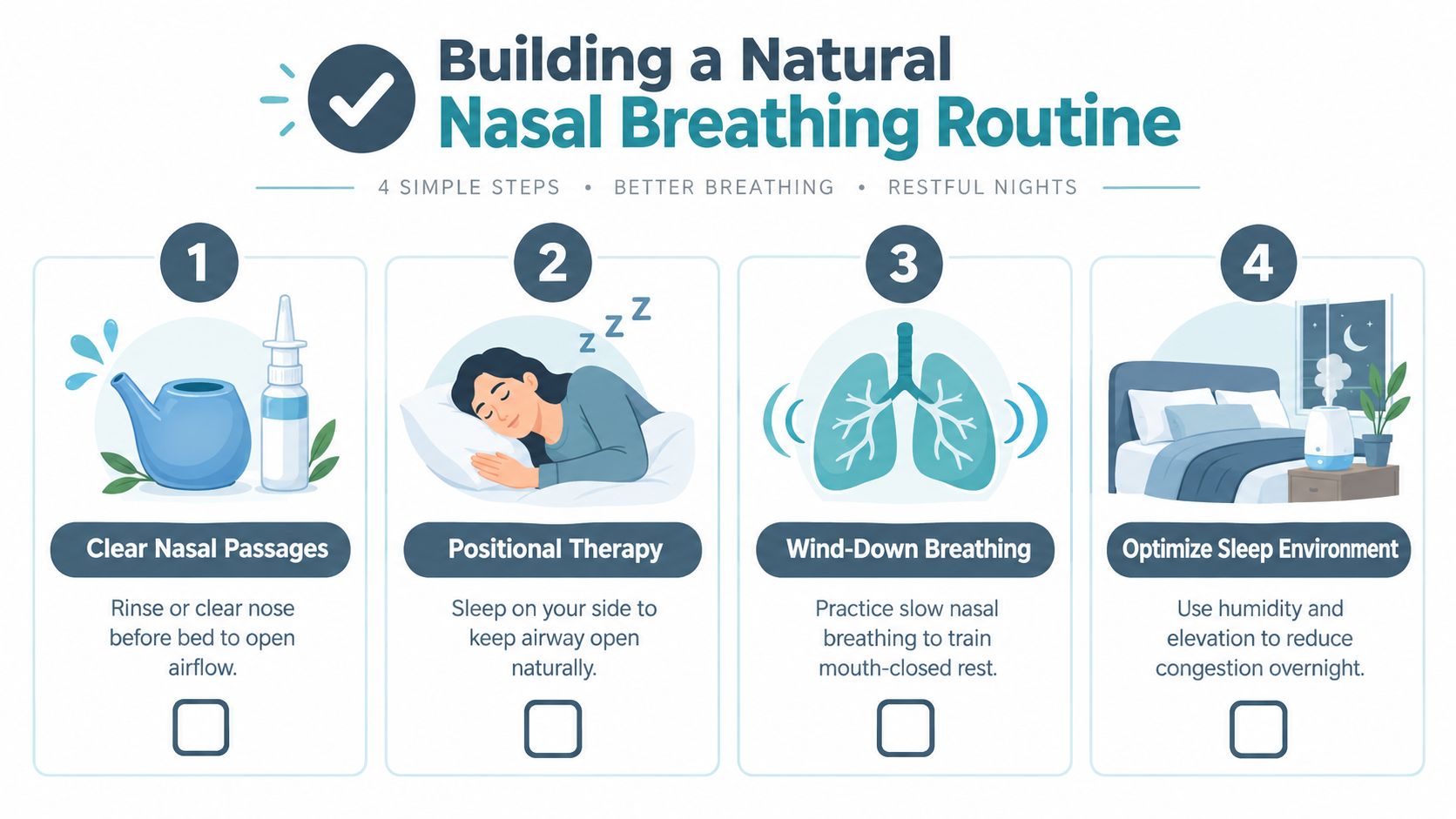
Building a Natural Nasal Breathing Routine
A useful evening routine should improve the breathing route before it asks you to keep the lips together. The aim isn't to clamp the jaw shut. It's to make nasal breathing comfortable, support relaxed tongue posture, and reduce the conditions that encourage mouth opening.
A practical four-part wind-down
- Clear the nasal passages. Address obvious congestion before bed with the approach that suits your health needs. A humidified room, a saline rinse used correctly, or a nasal strip may make nasal breathing feel more accessible. Don't use a mouth-closure device while the nose remains blocked.
- Choose a side-sleeping position. Back sleeping can make airway narrowing more likely for some people. Side sleeping is a low-tech positional experiment that costs nothing and gives you useful information about whether posture affects the sound of your breathing.
- Practice slow nasal breathing. Sit comfortably and take unforced breaths through the nose. Keep the jaw relaxed, place the tongue gently against the roof of the mouth without pressing hard, and avoid breath holds that create strain. The purpose is to rehearse quiet breathing, not to force a performance.
- Make the room support the routine. Reduce irritants, keep the bedroom comfortable, and consider gentle elevation if congestion worsens when you lie flat. If a bedroom change causes dryness or irritation, reverse it. Comfort is part of adherence.
A simple sequence might look like this: clear the nose, apply a nasal strip if appropriate, spend several minutes breathing slowly through the nose, then sleep on your side. If nasal breathing stays easy, some adults may consider a purpose-designed mouth tape product rather than a firm chin strap, but only after checking that they have no red flags for sleep-disordered breathing.
Where magnesium and relaxation fit
Calm sleep habits can reduce restless movement and help you follow a consistent routine, but they don't mechanically correct an obstructed airway. SleepHabits offers Restore+, a melatonin-free magnesium sleep aid formulated with sleep doctors and described by the publisher as combining magnesium, nitric oxide support, superfoods, and sleep nutrients. Use any supplement according to its label and your clinician's advice, especially if you have a medical condition or take medication.
Breathing comes first. A relaxed bedtime routine can support better sleep, but it shouldn't be used to explain away gasping, choking, or witnessed breathing pauses.
For more practice ideas, use nasal breathing techniques for sleep. The routine below offers a guided visual option for readers who prefer following paced instruction.
The strongest habit is the one you can perform without strain. If you need to gasp, remove tape, loosen a strap, or repeatedly wake to breathe, stop and address the nasal or airway problem instead.
Choosing the Right Approach for Your Anatomy
Your snoring pattern should determine the next step, not the popularity of a gadget. Start by separating mouth-opening noise from signs of airway obstruction. If your mouth falls open, your nose feels clear, and you have no symptoms suggesting sleep apnea, a gentle nasal-breathing routine may be reasonable to try. Nasal strips can support the nasal route, while carefully used mouth tape may encourage a lip seal. Neither option should feel restrictive.
A chin strap belongs in an even narrower category. It may be considered as an adjunct for a person using PAP who has mouth leak, with therapy data and comfort monitored by a clinician. That use is different from wearing the strap alone to treat ordinary snoring. If the strap increases noise, creates jaw discomfort, or makes breathing feel difficult, it isn't a useful solution for you.
A practical decision path
- Clear nose, mild mouth breathing, no warning signs: Begin with nasal airflow support, side sleeping, and slow nasal breathing. Introduce only one change at a time so you can tell what affects comfort.
- Nasal blockage or recurring congestion: Solve the nasal problem before trying mouth tape or a chin strap. A blocked nose makes forced closure an unsuitable experiment.
- Snoring in every position: Consider evaluation for structural airway narrowing. A qualified clinician may discuss an oral appliance or other treatment rather than relying on jaw restraint.
- Gasping, choking, pauses, or marked daytime sleepiness: Arrange a sleep evaluation. Don't use a chin strap as a substitute for testing or prescribed therapy.
- Nasal CPAP mouth leak: Discuss a chin strap with your PAP team. The goal is to support mask therapy, not to claim that the strap treats apnea independently.
The answer to “does the snoring chin strap work?” is therefore conditional but clear. It doesn't work reliably as a standalone snoring or sleep apnea treatment. It may have a specific role in reducing mouth leak during PAP, while nasal breathing support, positional habits, appropriate oral appliances, and clinical evaluation better match the underlying cause for many other sleepers.
SleepHabits offers melatonin-free sleep support, hydrating mouth tape, and nasal strips designed to fit a breathing-focused wind-down routine. Visit SleepHabits to explore those tools and its educational sleep resources, then choose an approach that keeps your nose open and treats warning signs seriously.