

You wake after a full night in bed with a dry mouth, a scratchy throat, and the uncomfortable sense that sleep never became restorative. Your partner says you snored, while you wonder why eight hours of rest left you foggy. Mouth tape strips can look like an obvious answer because they encourage the lips to stay closed, but the clinical question is more important than the viral appeal: can your nose carry your breathing safely all night?
The answer depends on your nasal airway, your symptoms, and whether mouth breathing is a habit or a compensation for obstruction. Mouth taping may help some people with mild symptoms, yet it can be unsafe when nasal breathing is unreliable. The practical approach is to treat it as a cautious experiment, not a cure for snoring or sleep apnea.
Why Mouth Breathing Sabotages Your Sleep
You may recognize the pattern. You fall asleep with your lips apart, wake with a parched mouth, drink water, and still feel as though you barely rested. During the night, oral breathing lets air bypass the nose, which normally filters, warms, and humidifies incoming air. That change can leave the mouth and throat dry and may make snoring more noticeable.
Nasal breathing also supports the movement of air through a narrower, more regulated passage. When the mouth becomes the default route, the jaw and tongue may settle in a less favorable position, while the tissues of the mouth lose moisture. These effects don't prove that taping will solve the underlying problem, but they explain why someone might feel better after reducing mouth leak.
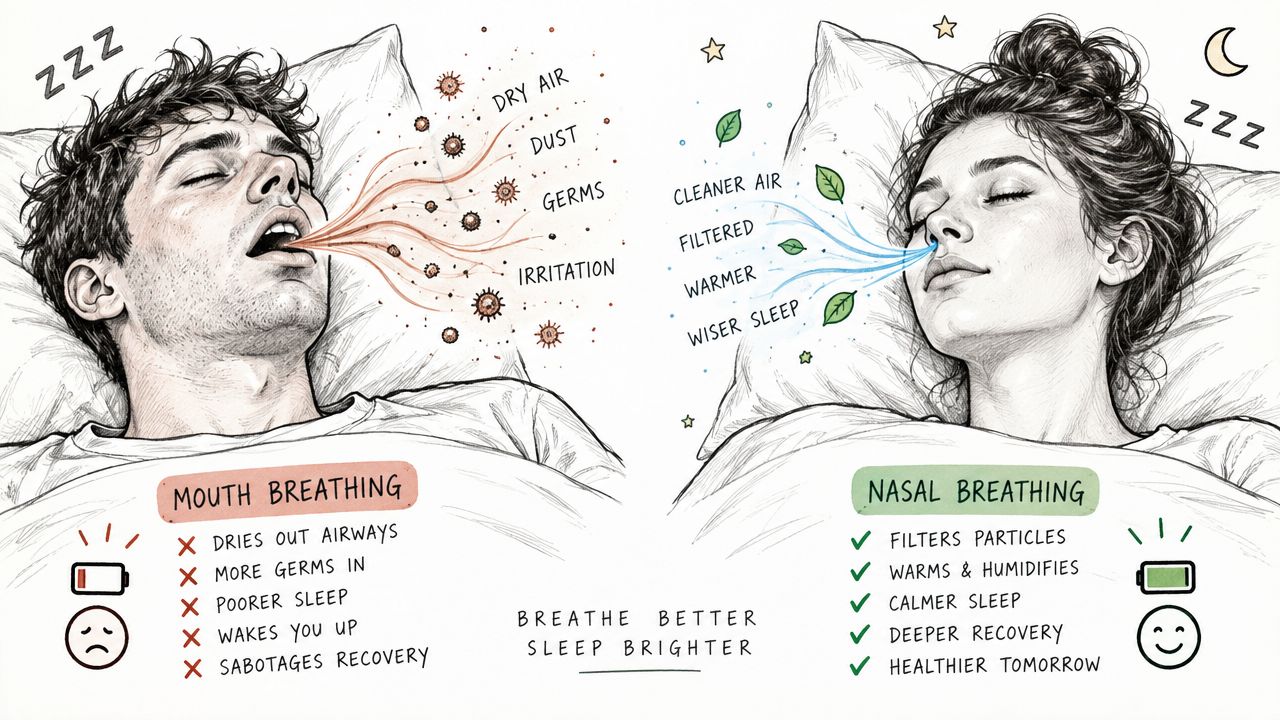
A dry mouth alone doesn't diagnose a breathing disorder. Allergies, a blocked nose, sleeping position, alcohol, medication, and structural nasal problems can all influence nighttime breathing. If snoring is loud, persistent, or accompanied by gasping, morning headaches, or significant daytime sleepiness, the priority is assessment rather than sealing the lips.
The nasal route matters
The nose is not just an alternative opening. It conditions air before it reaches the lower airway and contributes to the chemistry of inhaled air. That makes nasal breathing a useful target for gentle habit training, provided the nasal passages are open.
For a broader discussion of practical ways to address noisy nighttime breathing, Seven Oaks Dentistry and Sleep Medicine offers this guide on how to stop snoring. A comparison of the two breathing routes is also available in this resource on nasal breathing versus mouth breathing.
Mouth tape strips shouldn't force air through a blocked nose. They should only reduce an unnecessary opening when nasal breathing already feels comfortable.
A short visual explanation can help make that distinction clearer:
The Science Behind Mouth Tape Strips
Mouth tape strips work through a simple mechanical action. A correctly applied strip provides a low-tension seal across the lips, discouraging the mouth from falling open during sleep. It doesn't widen the nasal passages, remove swollen tissue, or correct a deviated septum. If the nose can't provide enough airflow, the tape can turn a compensatory mouth-breathing route into a dangerous restriction.
The intended benefit is therefore narrower than many advertisements suggest. The strip may help a person who can already breathe comfortably through the nose but habitually loses the seal between the lips. With less oral leakage, the tongue and lower jaw may remain in a position that supports nasal breathing more consistently.
Nasal breathing is associated with nitric oxide production in the upper airway, and product information for Mouth Tape describes the product as a way to encourage nasal breathing while keeping the lips comfortably sealed. Those physiological ideas are plausible, but they shouldn't be stretched into a promise of deeper sleep for everyone.
What the seal can and can't do
The tape can discourage habitual mouth opening. It can't provide treatment equivalent to a prescribed therapy, and it can't tell whether a person has obstructive sleep apnea. Snoring often reflects vibration in a narrowed upper airway, so quieter sound doesn't necessarily mean the airway is healthy.
A sensible technical aim is lip closure, not force. The mouth should rest gently closed, the adhesive shouldn't pull the skin tightly, and removal should be easy. A strip that feels restrictive while you're awake is a poor candidate for overnight use.
Practical rule: If you need the tape to overcome nasal blockage, you're addressing the wrong problem. Improve or evaluate nasal airflow first.
This distinction also explains why results vary. Some people may reduce mouth leak and snoring, while others may struggle when the mouth is no longer available as a backup route. The method is better understood as a controlled behavioral cue than as an airway-opening device.
What Research Actually Shows
The evidence is promising in places, but it isn't strong enough to support broad recommendations. A 2025 systematic review identified 10 eligible studies involving 213 patients, and all included studies were rated poor quality. Only limited benefit appeared across the review, with two studies reporting statistically significant improvement in standard sleep-apnea markers such as the apnea-hypopnea index or oxygen desaturations, while other studies found no meaningful difference. These findings are reported in the systematic review of mouth taping and related mouth-closure methods.
The early pilot studies help explain the enthusiasm. One frequently cited study involved 30 adults with mild obstructive sleep apnea who regularly breathed through their mouths. After one week of mouth taping, breathing interruptions and snoring decreased by just under half. A separate small study involving 36 people with asthma found no change in their condition, while a 2022 report involving 10 participants observed that some still attempted to mouth-breathe with their mouths taped, a behavior described as mouth puffing. The Cleveland Clinic summarizes these small and mixed findings in its clinical overview of mouth taping.

Read the results in context
A 2022 clinical study of 20 mouth-breathers with mild obstructive sleep apnea reported that 3M mouth taping reduced both AHI and snoring index by nearly half during sleep. Larger baseline severity was associated with larger absolute improvements, but that result came from a small, specific group. The study is available in the published clinical report on mouth taping in mild obstructive sleep apnea.
The central limitation is heterogeneity. A person with mild mouth leak and a clear nose isn't equivalent to someone with congestion, significant snoring, or suspected apnea. The review also raised a serious safety concern: oral occlusion may create a risk of asphyxiation when nasal obstruction or regurgitation is present.
Some people pair breathing-focused habits with other sleep products. For example, Restore+ Sleep Aid is described as a melatonin-free product designed to support nitric oxide production, nervous system regulation, and overnight oxygen delivery. It shouldn't be treated as a substitute for evaluating disrupted breathing.
How to Apply Mouth Tape Safely
Safety starts before the packet is opened. There are no official guidelines establishing a proven, standardized way to mouth tape safely, and current sleep guidance describes the evidence as limited. People with chronic congestion, nasal obstruction, obstructive sleep apnea, or other breathing problems shouldn't self-experiment without medical supervision, as explained in this cautious overview from the Sleep Foundation.
Use a pre-flight check
During the day, breathe through your nose while relaxed. If you can't do that comfortably, don't tape your mouth at night. A cold, severe congestion, nasal obstruction, regurgitation risk, or a sensation of air hunger is a clear reason to stop and address the underlying issue first.
If you snore heavily, wake gasping, or remain unusually sleepy despite adequate time in bed, arrange a clinical evaluation. Mouth tape shouldn't conceal symptoms that may point to sleep-disordered breathing.
Apply the strip with minimal tension
- Prepare the skin. Clean and dry the skin around the lips. Avoid applying tape over irritated, broken, or recently treated skin. Test adhesive tolerance before committing to overnight use.
- Choose a small, purpose-made strip. Use tape designed for skin and sleep, not household tape. The aim is a gentle reminder to keep the lips together, not a rigid seal.
- Close the lips naturally. Let the jaw rest rather than clenching it. Place the strip so it can be removed quickly and doesn't pull the corners of the mouth.
- Keep removal simple. Make sure you can peel it away without struggling. If you feel panic, shortness of breath, dizziness, chest discomfort, or worsening breathing, remove it immediately.
- Review the morning. Note skin irritation, nasal dryness, disturbed sleep, or a sense that breathing was restricted. Any concerning reaction is a reason not to repeat the trial without professional advice.
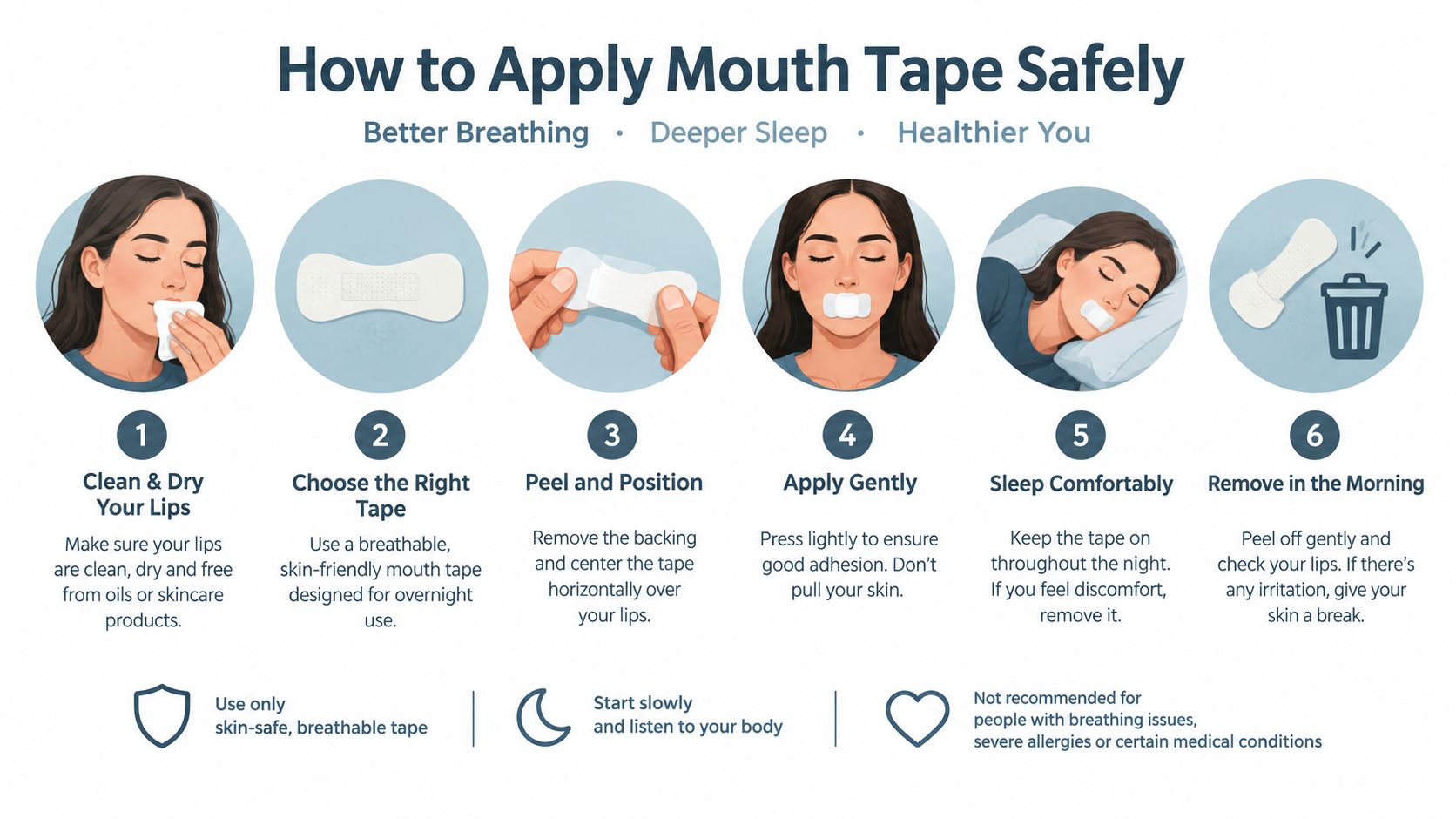
Stop immediately if the tape makes you feel trapped or you can't breathe comfortably through your nose. No sleep-habit experiment is worth overriding that signal.
Don't use mouth tape as a response to a new respiratory illness. Don't increase the seal because a small strip feels ineffective. If the problem is persistent snoring or suspected apnea, testing and treatment are more appropriate than escalating the adhesive.
Choosing the Right Mouth Tape for You
The useful distinction isn't between a fashionable strip and an unfashionable one. It's between materials and adhesive designs that suit your skin and your breathing situation. A gentle adhesive, easy removal, and low tension matter more than creating a perfectly sealed mouth.
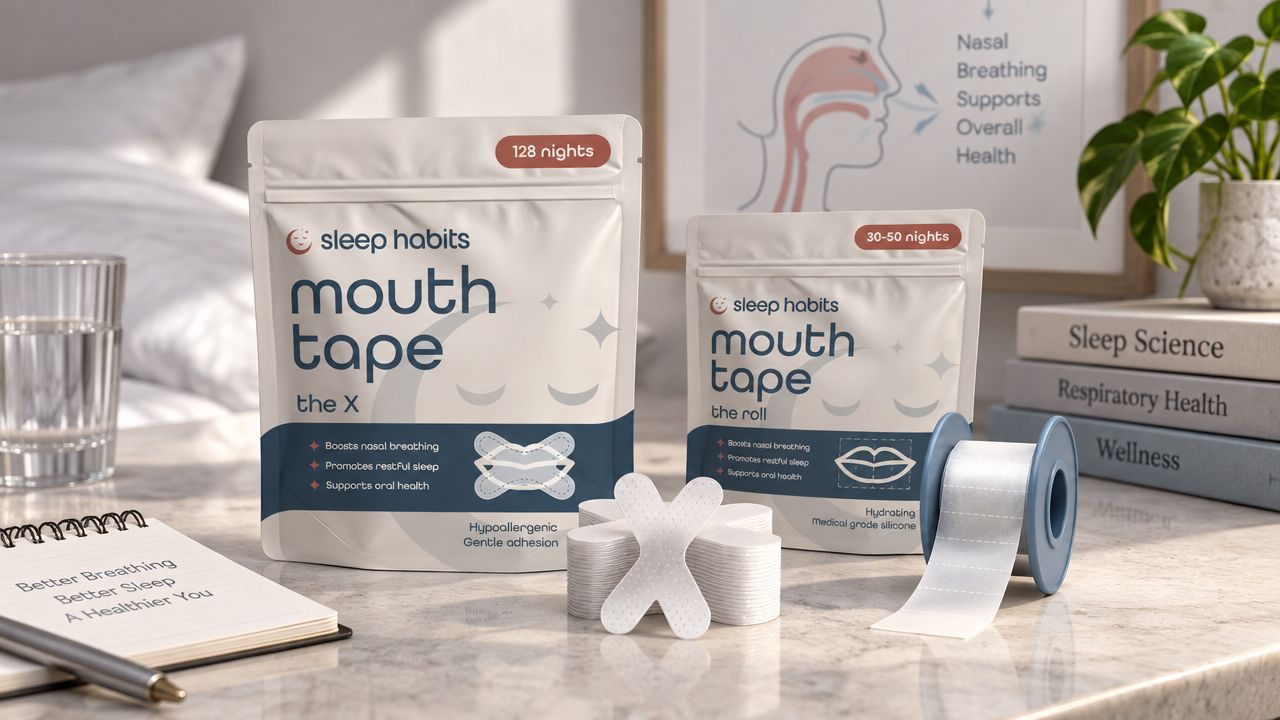
SleepHabits describes two options in its product snapshot, a lightweight X tape designed for sensitive skin and a hydrating medical-grade silicone Roll. The relevant choice depends on how your skin responds to adhesive, not on the assumption that one material can solve nasal obstruction.
Comparing Mouth Tape Options
| Feature | Lightweight Tape | Hydrating Silicone Tape |
|---|---|---|
| Material profile | Hypoallergenic and lightweight | Medical-grade silicone |
| Intended skin consideration | Designed for sensitive skin | Gentle adhesive with a hydrating feel |
| Practical priority | Secure, low-profile hold | Softer contact for people concerned about dryness |
| Product snapshot detail | The X format is described as lasting through 128 nights per pack | The Roll is described as covering 30 to 50 nights per roll |
| Screening standard | Third-party lab tested and free of PFAS, parabens, and phthalates | Third-party lab tested and free of PFAS, parabens, and phthalates |
The product snapshot provides those format details, but neither option changes the basic contraindications. If your nose is blocked, changing tape material won't make mouth taping safe.
Before adding a nasal aid, understand its limits through this practical explanation of whether nasal strips work. A nasal strip may support airflow for some users, but it doesn't diagnose or treat every cause of snoring.
Integrating Mouth Taping Into Your Routine
Mouth tape strips work best, if they work at all, as one part of a breathing routine. Start by identifying the barrier that leads you to open your mouth. Seasonal allergies, chronic congestion, an uncomfortable sleep position, and possible sleep apnea require different responses.
A sensible evening sequence is simple:
- Check the airway first. Your nose should feel open before you consider a strip.
- Reduce irritants. Address bedroom factors and known congestion triggers with appropriate medical guidance.
- Use a compatible support. Nasal Strips are described as tools that gently open the nasal passages to support smoother airflow, but they aren't a replacement for clinical evaluation.
- Keep the seal gentle. The strip should discourage mouth opening without creating a trapped sensation.
- Track your response. Pay attention to morning dryness, snoring reports, awakenings, and daytime alertness rather than relying on a single night.
Consistency matters for any habit, but repetition isn't a reason to ignore warning signs. If the tape causes discomfort, anxiety, or impaired breathing, stop using it. You can explore non-taping approaches in this guide to mouth taping alternatives, including strategies that don't physically limit oral breathing.
Clinical boundary: Mouth tape may encourage nasal breathing, but it isn't a reliable way to rule out sleep apnea. Persistent symptoms deserve assessment.
SleepHabits offers mouth tape, nasal strips, and the melatonin-free Restore+ formula as separate tools focused on nighttime breathing and recovery. Visit SleepHabits to compare those options, then choose only an approach that matches your nasal airflow, skin tolerance, and need for professional evaluation.