

Most advice about snoring remedies over the counter starts in the wrong place. It treats every snorer like they've got the same problem, then stacks strips, sprays, mouthpieces, and humidifiers as if they all do the same job. They don't.
The smarter question is simpler, what's causing your snoring? If your nose is blocked, a nasal strip or dilator may help. If you're a mouth-breather, a nasal-breathing cue may help. If you snore mainly on your back, position matters more than a nose product. If you have airway collapse, OTC fixes can soften the noise, but they won't solve the underlying problem.
| Remedy | Main job | Best fit | Evidence |
|---|---|---|---|
| Nasal strips and external dilators | Widen the nasal valve | Nasal congestion, narrow nasal passages | Modest, niche benefit |
| Internal nasal dilators | Support airflow from inside the nose | Nose-driven snorers | Mixed, small-study support |
| Mouth tape | Encourage nasal breathing | Habitual mouth-breathers with open nose airflow | Thin evidence, mechanism-based use only |
| OTC oral appliances | Advance the jaw a little | Mild positional or tongue-base snoring | Stronger than most OTC options |
| Topical nasal sprays | Reduce congestion or dryness | Allergy or congestion-driven snoring | Helpful for some, but not a cure |
| Humidifiers | Add moisture and reduce irritation | Dry air, mild congestion | Supportive, not standalone treatment |
The right way to shop is by mechanism, not packaging.
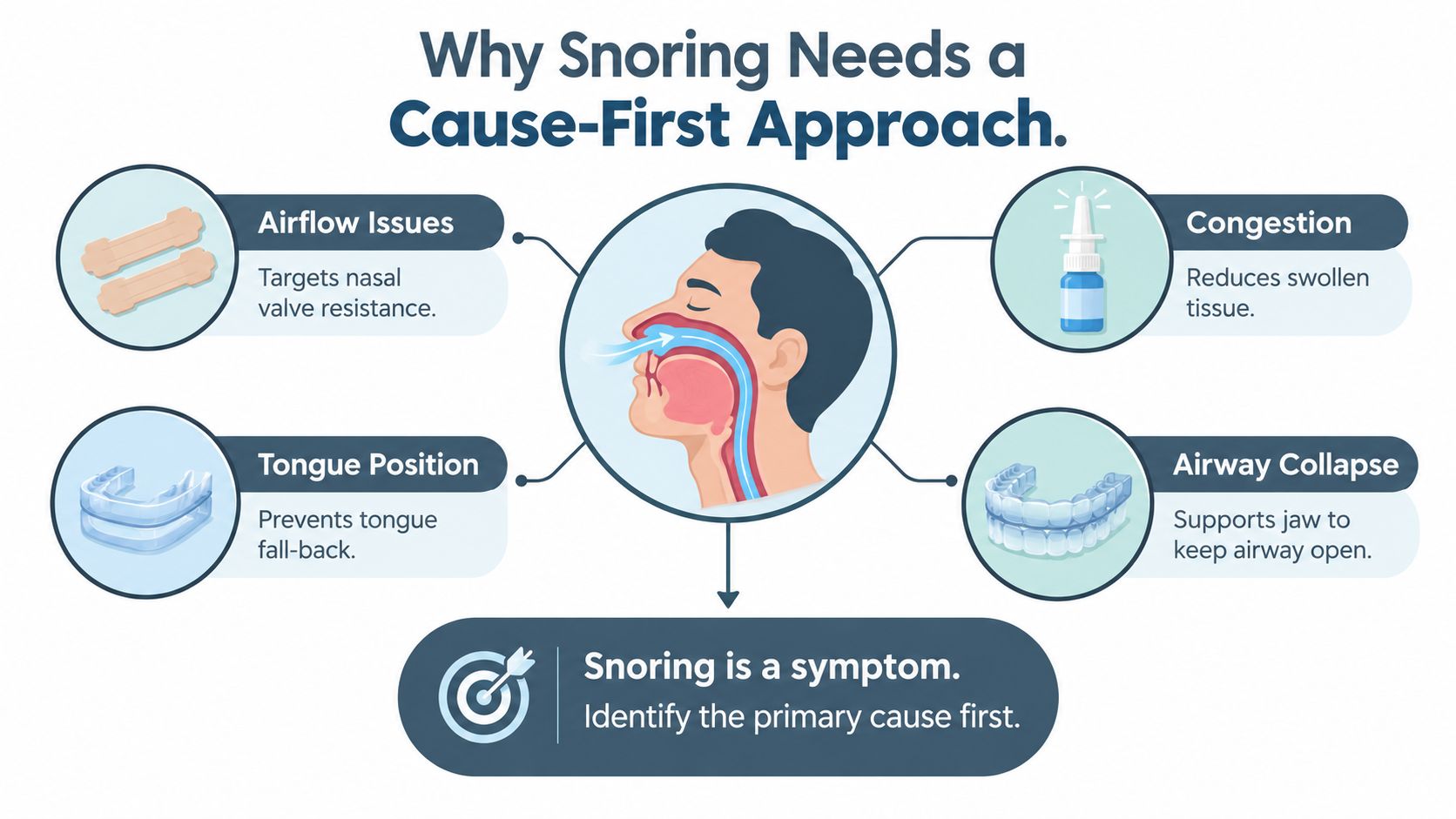
Why Snoring Needs a Cause-First Approach
Snoring is a symptom, not a category. That matters because the shelf is full of products that all promise quieter nights, but each one targets a different part of the airway. A strip changes nasal airflow, a spray changes swelling or moisture, and a mouthpiece changes jaw position. If you rank them side by side without asking what's driving the sound, you're comparing tools that don't do the same job.
The four patterns that drive most benign snoring
The first pattern is nasal obstruction. A blocked nose forces more resistance at the front of the airway, and that can push you into louder breathing or mouth breathing. The second is mouth-breathing habit, where the mouth falls open at night even when the nose is technically open.
The third is soft-tissue vibration in the throat, especially around the oropharynx. That's where some people get the classic rattly snore even if their nose feels fine. The fourth is position-dependent narrowing, which is why one person snores on their back and quiets down on their side.
Practical rule: if the snore changes dramatically with body position, jaw position, or nasal congestion, treat the trigger first instead of chasing a generic “anti-snore” product.
That's also why different OTC products can't be judged as if they compete on a single scoreboard. A nasal strip is trying to reduce resistance at the nostrils, while an oral appliance is trying to move the jaw forward. They are not interchangeable.
If you want a broader airway lens, a useful overview is the DME Superstore respiratory guide, which helps frame breathing problems as a systems issue rather than a one-product fix. The same logic applies here. You're not buying “snoring treatment”, you're matching a tool to a mechanism.
What OTC cannot fix is structural or medical snoring. Large tonsils, a deviated septum, and undiagnosed sleep apnea need clinical evaluation, not a pharmacy workaround. If the snoring is loud, persistent, or tied to breathing pauses, stop treating it like a nuisance and start treating it like a health signal.
The Six Main Categories of OTC Snoring Remedies
The six OTC families make more sense when you sort them by the mechanism they target. That's the whole game. If you're congested, moisture and decongestion matter. If your nostrils collapse, a dilator matters. If your jaw drops open, a mouth cue or oral appliance matters.
What each product is actually doing
Nasal strips and external nasal dilators mechanically widen the nasal valve. They fit best when the snoring is nose-driven, especially with congestion or narrow nasal passages. Evidence is modest, not magic, but they're simple, low-friction, and easy to test for a few nights.
Internal nasal dilators go inside the nose and try to hold the passages open from within. They suit people whose problem is clearly nasal resistance, and they may be worth trying if strips help only a little or slip off. The evidence is still limited, but the mechanism is sensible.
Mouth tape works as a nasal-breathing coach. It fits habitual mouth-breathers who can already breathe through the nose, but need a cue to stop sleeping with the mouth open. It should not be used as a shortcut for blocked nasal breathing.
OTC boil-and-bite oral appliances aim to advance the lower jaw slightly. They fit mild positional or tongue-base snoring better than nose problems. The evidence base is stronger than for most OTC options, though fit and comfort can be hit or miss.
Topical nasal sprays include saline, steroid, and menthol-style options. Saline can help dry, irritated noses, while decongesting or anti-inflammatory sprays may help people with allergy or congestion-driven snoring. They're useful support, but they won't fix throat collapse.
Humidifiers add moisture to the air. That helps when dryness or mild congestion irritates the nose and throat, especially in heated bedrooms. They're supportive, not curative.
Bottom line: the best OTC choice is the one that matches the cause, not the one with the loudest marketing claim.
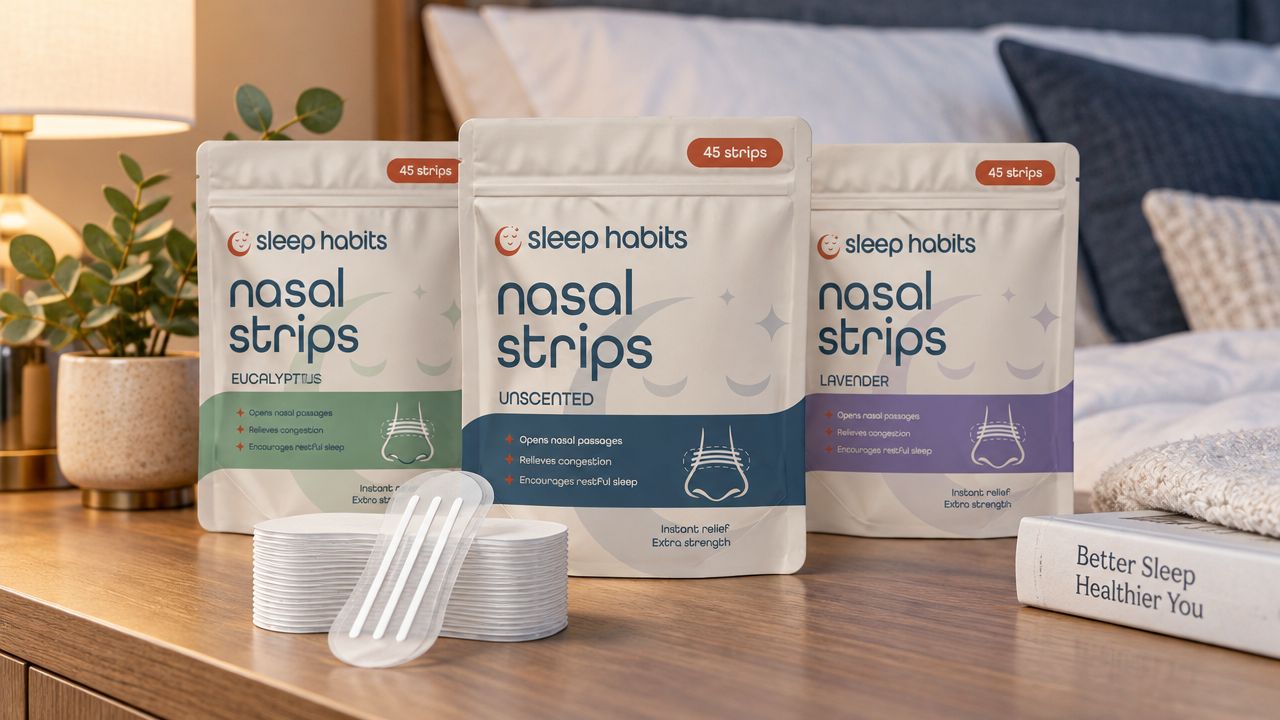
For a product-level example, Nasal Strips are a straightforward fit if your nose is the bottleneck, since they're designed to support smoother airflow when congestion pushes you toward mouth breathing. That makes them a reasonable test case, not a cure-all.
How the Leading OTC Options Compare
If you want the short version, the evidence gets thin fast once you leave nasal dilators and oral appliances. Mouth taping is more of a behavior hack than a medical fix, and most sprays are useful only when congestion is part of the problem. The table below makes the tradeoffs plain.
| Remedy | Mechanism | Best for | Evidence | Ease of use | Price range | Downsides | Trial period |
|---|---|---|---|---|---|---|---|
| Nasal strips | Widens nasal valve from outside | Nose-driven snoring, mild congestion | Modest, mixed | Very easy | Low | Can peel off, won't help throat collapse | 3 to 7 nights |
| Internal nasal dilators | Supports the nasal airway from inside | Narrow nostrils, nasal resistance | Mixed, limited | Moderate | Low to moderate | Can feel strange, needs insertion | 3 to 7 nights |
| Mouth tape | Keeps lips closed to encourage nasal breathing | Habitual mouth-breathers with open nose | Thin | Easy if well tolerated | Low | Unsafe if the nose is blocked, not for everyone | 3 to 7 nights |
| OTC oral appliances | Slight mandibular advancement | Mild positional or tongue-base snoring | Stronger than most OTC options | Moderate | Moderate | Fit issues, jaw discomfort | 1 to 2 weeks |
| Topical nasal sprays | Reduces dryness or congestion | Allergy, irritation, blocked nose | Mixed, mechanism-dependent | Easy | Low | Some products only help specific causes | 3 to 7 nights |
| Humidifiers | Adds moisture to the air | Dry room, mild nasal irritation | Supportive only | Very easy | Moderate | Won't fix airway collapse | 1 to 2 weeks |
The pattern is obvious. Nasal dilators are the cleanest option for nasal-valve problems, and OTC oral appliances have the best case when the issue sits lower in the airway. That's why small studies and evidence reviews keep giving nasal dilators a narrow role and oral devices a broader one, while lubricants and herbal-style approaches keep falling short of objective benefit as summarized in the evidence review on nasal dilators and OTC snoring therapies.
The rest are situational tools. A humidifier can make a bedroom easier to breathe in, but it won't stop airway collapse. A spray can calm congestion, but it won't reposition the jaw. That's not a flaw, it's just how these products work.
For a deeper product-oriented breakdown of nasal strips, the internal guide at nasal strips for snoring is worth reading after you've identified a nose-driven pattern. For mouth-breathing patterns, the article on mouth tape benefits fits naturally with the mechanism-first approach here.
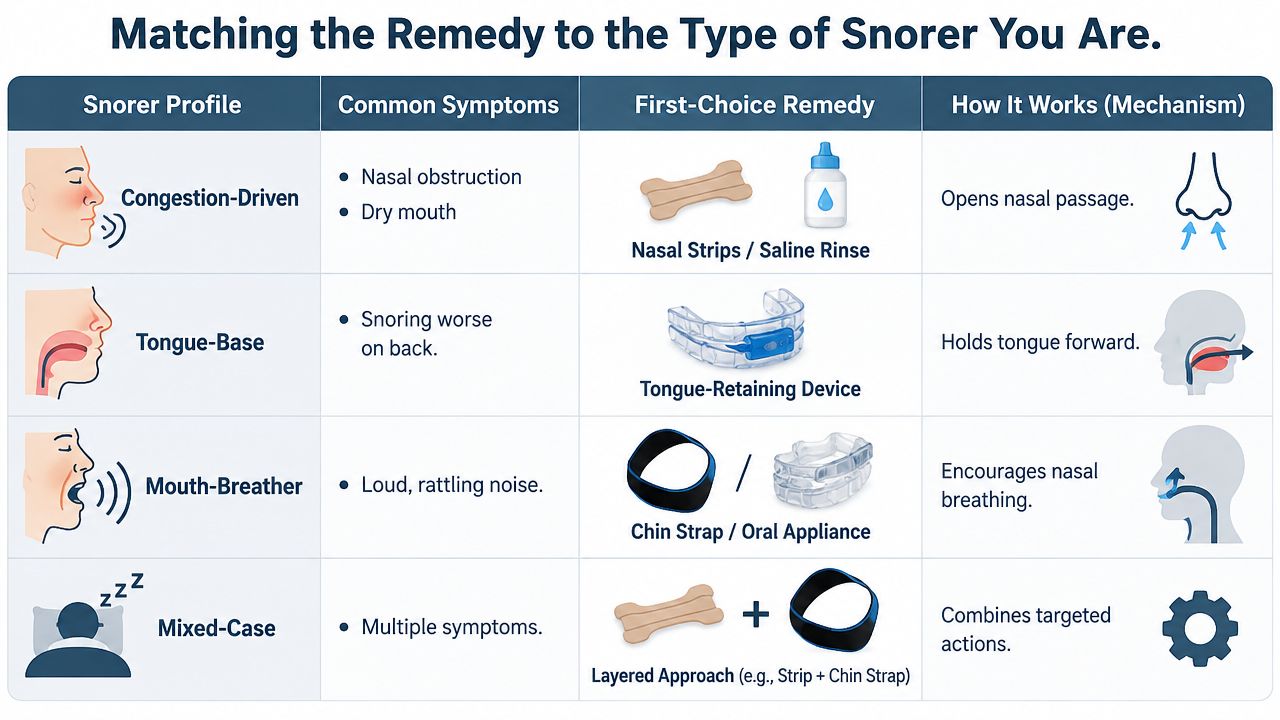
Matching the Remedy to the Type of Snorer You Are
The fastest way to waste money is to buy the product that sounds most medical instead of the product that matches your pattern. I'd sort snorers into four practical buckets and start from there.
If congestion drives the snoring
You wake with a stuffy nose, seasonal allergies flare up, or your snoring gets worse in dry rooms. Start with saline or another appropriate nasal spray, then add a nasal strip or internal dilator if the nose still feels restricted. A humidifier is the quiet third piece when the bedroom air is dry.
That combo makes sense because it addresses swelling, moisture, and airflow all at once. Don't expect silence. Expect a noticeable reduction in obstruction-related snoring if the nose is really the bottleneck.
If you're a mouth-breather
Your lips fall open, your mouth is dry in the morning, and the snore sounds louder when the jaw drops. If you can breathe comfortably through your nose, mouth tape can help retrain the pattern. If the jaw position seems to be the bigger issue, a gentle OTC oral appliance is the more rational first move.
Use mouth tape only when the nose is clearly open. If nasal blockage is the real problem, taping the mouth just forces a bad trade.
If you're a back-sleeper
Your snoring fades when you roll onto your side. That's not a nasal problem, it's a positional one. Positional devices, side-sleeping cues, or a pillow setup that keeps you off your back will usually beat a nasal product here.
If you're the partner of a loud sleeper
Your goal isn't theoretical perfection. Your goal is less transmitted noise and a plan the person will keep using. That usually means a layered approach, nasal aid plus positional coaching, instead of chasing one miracle item.
If you want a practical example of a layered product approach, the Restore+ Sleep Aid sits in the broader sleep-support space, but it doesn't replace a snoring strategy built around airway mechanics. That distinction matters.
For the loudest cases, I'd be blunt. If the snoring is loud regardless of position, the person wakes unrefreshed, or the pattern doesn't fit one of the buckets above, OTC is probably only buying time.
A Practical First-Week Plan to Test an OTC Remedy
Start with a baseline, not a product. On night one, skip the remedy and track four things, how loud the snoring seems, whether the mouth stayed open, how congested the nose felt, and how alert you felt in the morning. Keep it simple enough that you'll do it.
Nights two through four, add one product only. If the pattern is nose-driven, test a nasal strip or dilator. If the mouth opens during sleep, test a mouth-breathing fix or a gentle oral appliance if the jaw seems to be the trigger. Don't stack three changes at once, or you won't know what helped.
What to add during the second half of the week
Nights five through seven, keep the same product and add one support habit. Side-sleeping, a steamy shower before bed, or a saline rinse are all fair tests. If the snoring is congestion-linked, a humidifier may be the easiest addition.
The point is not to erase snoring in one week. The point is to see a clear direction of travel. If the sound drops a bit, the mouth stays closed more often, or morning alertness improves, you've found a useful lane.
If nothing changes by night seven, switch mechanisms. A nose tool that does nothing for a mouth-breathing pattern is the wrong tool. A mouth-focused device won't rescue true congestion, either.
Track change, not perfection. A partial response tells you more than a dramatic claim on a package ever will.
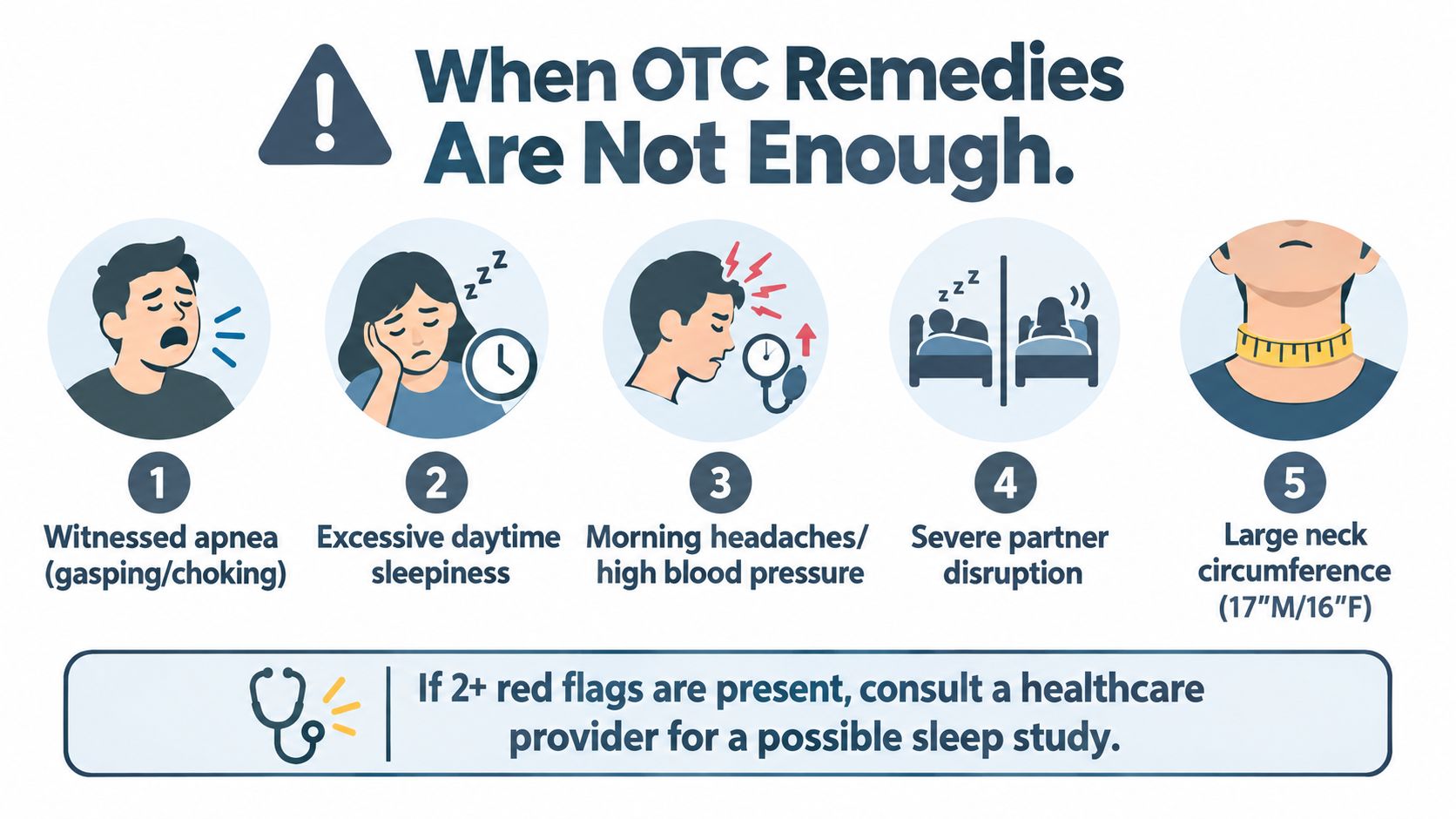
When OTC Remedies Are Not Enough
Some snoring belongs in a clinic, not a shopping cart. If anyone notices gasping, choking, or long pauses in breathing, stop treating it as a nuisance. Frequent loud snoring that doesn't improve with position change, plus restless sleep, is another clear warning sign.
Daytime symptoms matter just as much. Persistent sleepiness despite enough time in bed, morning headaches, brain fog, mood change, and rising blood pressure all point toward a sleep-breathing problem that OTC products won't solve. The difference between primary snoring and obstructive sleep apnea is simple in practice, primary snoring is noisy airflow, while sleep apnea means breathing is repeatedly disrupted.
Structural clues matter too. A visibly small jaw, a large tongue, or large tonsils make OTC fixes less likely to work because the problem isn't just airflow, it's anatomy. A product can't remodel the airway.
If you're not sure where you fit, start with primary care and ask about a home sleep apnea test or an in-lab polysomnography study. If treatment needs a device, prescription options like custom oral appliances or CPAP require medical evaluation, not a pharmacy run. For a practical reference on the broader condition, the internal overview on what is sleep-disordered breathing is a useful next read.
If you want a dental pathway for evaluation, the dental sleep apnea treatment NYC page from Prosth & Co. is a good example of how airway and jaw-based care gets handled clinically. The key point is simple, persistent loud snoring with daytime symptoms is a medical issue, not a product problem.
Choosing the Right Starting Point Tonight
Start with the mechanism, not the aisle. If the nose is the issue, choose a nasal dilator or strip. If the mouth falls open without nasal blockage, try mouth tape or a jaw-focused OTC appliance. If the snoring disappears on the side, make position the priority. If congestion is part of the picture, combine saline and a humidifier with the nasal tool.
My direct recommendation is this. Nose-driven snorers should begin with a nasal strip or internal dilator. Mouth-breathers should not reach for mouth tape unless the nose is open. Back-sleepers should fix position first. Congestion-driven snorers should add moisture and reduce swelling before blaming the throat.
The one scenario where OTC is the wrong move is loud snoring with breathing pauses, gasping, or clear daytime sleepiness. That needs a sleep study, not another gadget.
SleepHabits focuses on tools and routines that support nasal breathing, recovery, and more restorative sleep. If you want to match a product to a real snoring pattern instead of guessing, visit SleepHabits and use the same cause-first approach you'd use with any airway problem.