

You jolt awake at 3 a.m. Your tongue feels pasted to the roof of your mouth, your throat is scratchy, and your hand reaches for the water on the nightstand before you're fully conscious. You take a few sips, fall back asleep, and wake again feeling foggy, thirsty, and annoyed.
That pattern isn't just uncomfortable. Saliva protects teeth and gum tissue, so persistent dryness can contribute to bad breath, irritation, and a higher risk of oral problems. Nighttime dry mouth is usually a symptom of a larger problem, not a simple shortage of water. Mouth breathing, medication effects, dehydration, alcohol, caffeine, nasal congestion, and sleep apnea can all reduce the moisture your mouth needs overnight.
The practical answer is to stop treating each wake-up with another sip and identify what keeps your mouth open or suppresses saliva in the first place. This guide to dry mouth in the morning causes follows that approach. Fix the driver, then use hydration, humidity, oral care, and carefully chosen tools to support the result.
Why You Wake Up With a Dry Mouth Every Night
Saliva production naturally decreases during sleep. If you also breathe through your mouth, go to bed underhydrated, or take a medication that reduces salivary flow, your mouth spends the night with fewer defenses against friction, bacteria, and acidity.
Dry mouth affects about 1 in 5 people globally, and an ADA-cited systematic review estimated overall xerostomia prevalence at approximately 22% of the global population. It's often more common in older adults, partly because medication burden and chronic disease can affect saliva production. The American Dental Association's xerostomia guidance makes the important point that dryness often belongs to a broader health profile rather than existing as an isolated nuisance.
The four drivers I look for first
Mouth breathing is the most obvious mechanical cause. Nasal congestion, allergies, structural nasal narrowing, snoring, or an unstable airway can divert airflow across the tongue and cheeks for hours.
Medication side effects are another major contributor. Antihistamines, some antidepressants, blood pressure medicines, diuretics, and stimulant medications can reduce salivary flow. Don't stop a prescription yourself. Ask the prescriber whether dry mouth is a known effect and whether timing, dosage, or an alternative deserves discussion.
Dehydration and evening habits make the problem easier to trigger. Low fluid intake during the day, alcohol, caffeine, salty meals, and a dry bedroom can leave less moisture available when saliva production slows.
Obstructive sleep apnea deserves special attention. Repeated airway narrowing can force mouth breathing, while air escaping from a poorly fitted CPAP mask can dry the mouth further. Loud snoring, gasping, witnessed pauses, and daytime fatigue make this an airway issue, not a hydration issue.
The useful question isn't “How much water should I drink at bedtime?” It's “Why is my mouth losing moisture while I sleep?”
Start by observing the pattern. Do you wake with a blocked nose, a sore throat, cracked lips, a wet pillow, or a partner's complaint that your mouth hangs open? Those clues point toward different fixes, and the right prevention plan should follow the clue.
The Five Causes Behind Overnight Dry Mouth
The same dry-mouth symptom can come from very different mechanisms. Treating the wrong one wastes time. Water can help dehydration, but it won't correct nasal obstruction. A humidifier can improve room air, but it won't resolve untreated sleep apnea or a medication side effect.
Mouth breathing
Mouth breathing bypasses the nose's normal role in filtering and humidifying incoming air. Saliva and the oral lining then face a steady stream of moving air instead of the more protected conditions created by nasal breathing.
A peer-reviewed breathing-route study found that 120 minutes of oral breathing significantly increased subjective mouth dryness, while nasal breathing did not significantly change it. The study supports a straightforward conclusion: the route of airflow matters, not only the amount of water you drink. Clear the nose, improve nasal airflow, and investigate why the mouth opens.
Medication-related dryness
Antihistamines, antidepressants, diuretics, some blood pressure drugs, and ADHD stimulants can suppress salivary output or alter fluid balance. Review every prescription, over-the-counter medicine, and sleep product with a clinician or pharmacist. The correct intervention may be a medication review rather than a new mouth rinse.
Alcohol and caffeine
Alcohol can worsen dehydration and relax upper-airway muscles, which may increase snoring or mouth opening. Caffeine can also interfere with sleep and may leave some people feeling drier. Keep both away from your evening routine if you're testing whether habits are driving the symptom.
Dehydration
You may start the night behind on fluids because of a busy day, exercise, a salty dinner, illness, or a heated bedroom. The National Institute of Dental and Craniofacial Research guidance on dry mouth recommends regular water intake and keeping water nearby for symptoms that wake you. Spread fluids across the day instead of trying to compensate with a large drink at bedtime.
Obstructive sleep apnea
Sleep apnea can create repeated episodes of airway obstruction and mouth breathing. CPAP can help the airway, but a mask leak or insufficient humidification may leave the mouth painfully dry. If you snore loudly, gasp, wake with headaches, or feel unrefreshed despite enough time in bed, arrange an evaluation rather than covering the symptom with tape.
| Cause | How It Dries the Mouth | Prevention Lever |
|---|---|---|
| Mouth breathing | Air moves directly across oral tissue while saliva production is lower during sleep | Improve nasal breathing and investigate obstruction |
| Medication effects | Some medicines reduce salivary flow or alter fluid balance | Request a medication review |
| Alcohol and caffeine | Evening use can worsen dehydration, sleep disruption, or airway relaxation | Move them earlier or remove them from the evening |
| Dehydration | Less available fluid leaves the mouth more vulnerable to overnight moisture loss | Drink consistently during the day |
| Sleep apnea | Airway collapse and mouth breathing can dry the mouth, with mask leaks adding airflow | Seek sleep evaluation and optimize prescribed therapy |
For persistent symptoms, a dentist can also recommend gentle dry mouth therapy suited to your saliva level and oral-health risk. That's more sensible than rotating through random lozenges without knowing what's causing the dryness.
Build a Hydration Routine That Lasts Through the Night
Hydration should support your airway plan, not replace it. If you wake with a dry mouth, first ask whether you are losing moisture through mouth breathing, taking a medication that reduces saliva, drinking too little during the day, or dealing with possible sleep apnea. Water can ease thirst, but it will not correct a jaw that drops open or an untreated breathing problem.
Build your fluid routine before bedtime:
- Morning: Drink with breakfast and begin replacing fluids early. Starting the day behind makes late-night catch-up more likely.
- Daytime: Sip regularly and drink most of your fluids before evening. A commonly used dry-mouth target is 8 to 12 cups per day, approximately 64 to 96 ounces or 2 to 3 liters, but your needs vary with body size, activity, climate, illness, and medical conditions. The NIDCR dry-mouth resource supports regular sipping and keeping water nearby, not following one rigid prescription.
- Dinner: Drink normally with the meal, then reduce the amount to comfortable sips. Salty food and alcohol can increase thirst, so do not expect one glass of water to offset an evening that worsens dehydration or disrupts sleep.
- Before bed: Drink enough to feel comfortably hydrated. Avoid forcing a large volume immediately before lights-out, because bathroom trips can fragment sleep.
- Overnight: Keep a small bottle or glass within reach. Use it for occasional relief, not as the main solution if your mouth stays open throughout the night.
Cut evening alcohol while you identify the cause. Limit late caffeine when it delays sleep or creates lighter, broken rest. If saliva is low, frequent sugary drinks also raise oral-health risk. Brush carefully and choose plain water for nighttime sips rather than turning hydration into a repeated sugar exposure.
Room conditions can add to the problem. Heated, dry air increases evaporation, so a clean humidifier may make the mouth feel less parched. It cannot open a blocked nose, stop mouth breathing, or treat sleep apnea. If humidity helps only briefly, investigate the airway instead of increasing the room's moisture.
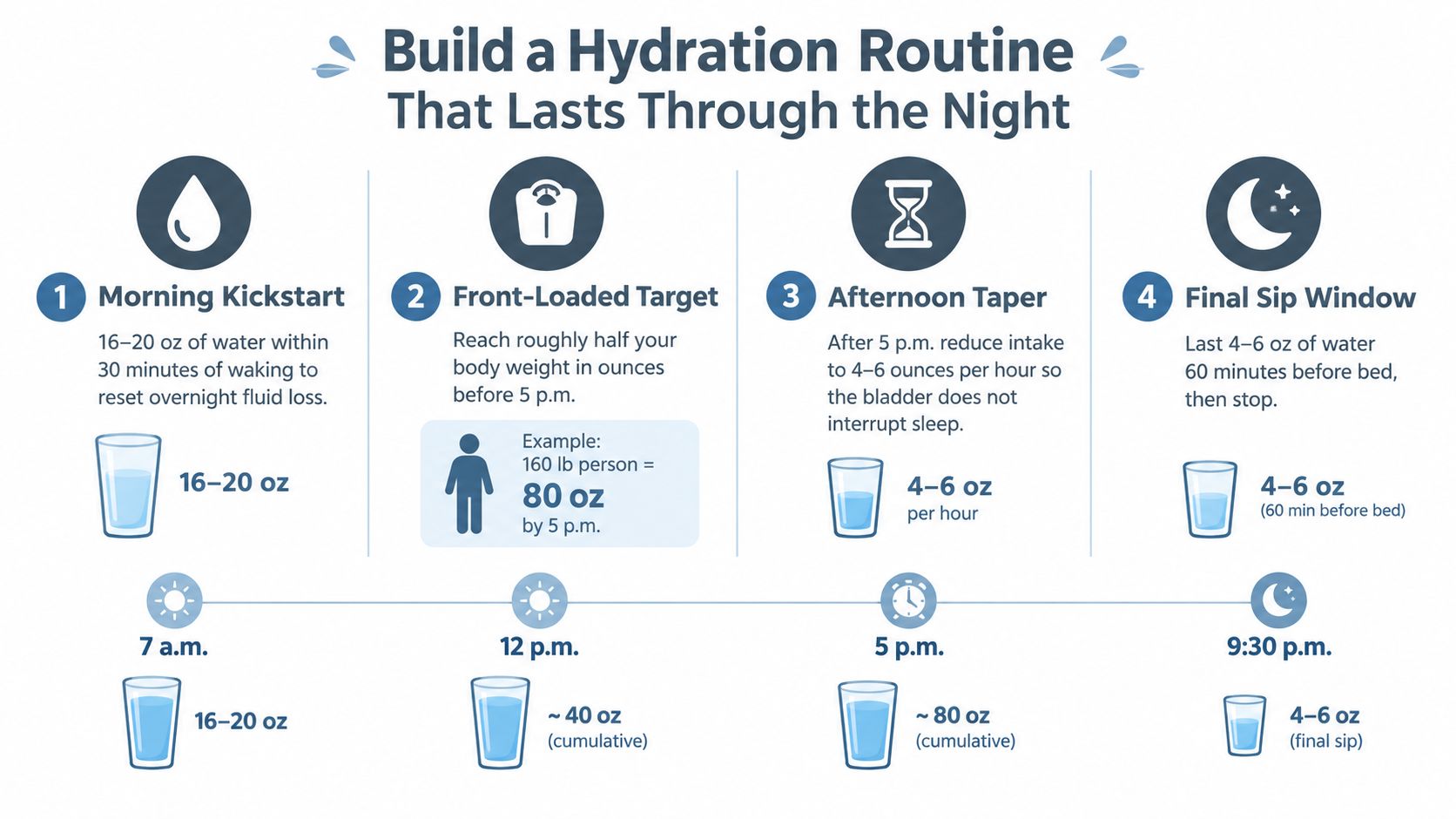
The trade-off is straightforward: steady daytime hydration can reduce thirst, while heavy late drinking can damage sleep continuity. Keep fluids consistent while awake, then address the driver, whether that is nasal blockage, medication, dehydration, or sleep-disordered breathing.
Train Nasal Breathing and Seal the Mouth Before Sleep
If you wake with a dry mouth, your lips may be opening because your nose cannot move enough air. Fix that airflow problem before trying to keep your mouth closed.
Start with the airway, not mouth tape. The nasal breathing techniques guide can help build the habit, but the order matters. Clear the nose, practice nasal breathing while awake, then consider a gentle lip seal. Tape cannot correct dehydration, medication-related low saliva, nasal blockage, or sleep apnea.
Open the airway first
About an hour before bed, address obvious congestion with a saline rinse or steamy shower. If allergies are contributing, ask a clinician or pharmacist about an appropriate nasal spray. Do not use a decongestant spray indefinitely without medical guidance, because overuse can worsen congestion.
External nasal strips can widen the nostrils and make nasal breathing easier. They will not correct sleep apnea, a deep structural obstruction, or inflammation deeper in the nasal passage. They are a reasonable low-risk test when the problem is narrowing near the front of the nose.
Use the wind-down period to rehearse the breathing pattern you want overnight. Try box breathing, with equal counts for inhalation, pause, exhalation, and pause. You can also keep your lips together and breathe softly through your nose while reading or using a screen. The aim is to make nasal breathing familiar before sleep relaxes the airway.
Add a gentle seal only when nasal breathing is reliable
After one full week of successful nasal breathing, a suitable adult may test a small strip of porous surgical tape across the center of the lips. Never use duct tape, cover the entire mouth, or tape over a blocked nose. Remove it immediately if you feel panic, air hunger, skin irritation, or poorer sleep.
Avoid mouth tape if alcohol is in your system, congestion is severe, sleep apnea is suspected, reflux is significant, or the breathing problem has no clear explanation. Get medical advice first. Mouth closure should support an open nasal airway, not conceal one that is failing.
If you choose a purpose-designed option, Mouth Tape is described as encouraging nasal breathing with a center-lip seal. Use it as a breathing aid, never as treatment for snoring or apnea.
A cool-mist humidifier several feet from the bed can ease dryness in a dry room. Clean it according to the manufacturer's instructions, and prevent visible moisture, mineral residue, or mold. Humidity supports irritated tissues, while nasal treatment addresses the airflow problem.
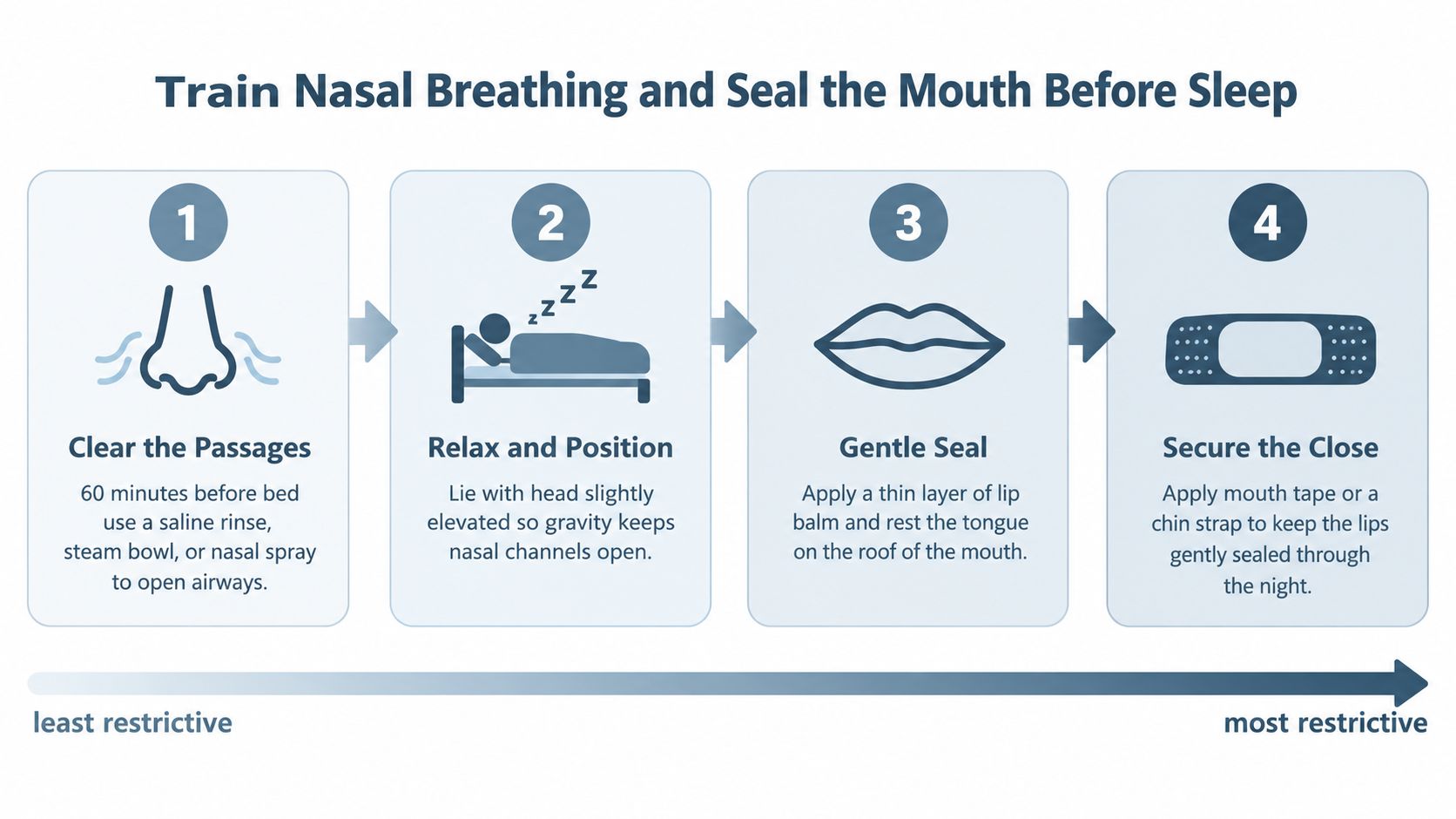
If you need tape to force your mouth closed because your nose cannot keep up, do not tape. Find out why the nose cannot keep up.
Choosing the Right Mouth Tape, Nasal Strips, and Humidifier
Buy for the specific issue you face. A sensitive nose, adhesive reaction, dry climate, and suspected airway disorder call for different choices.
For first-time mouth-tape users, porous surgical tape offers a low-cost way to test tolerance. Pre-cut hypoallergenic strips can provide a more consistent fit for people who dislike cutting tape each night. Avoid duct tape, kinesiology tape, and full-seal patches. If you have facial hair or react to adhesives, focus on improving nasal airflow before considering a lip seal.
For nasal support, external strips suit occasional congestion or a feeling that the nostrils collapse inward. Internal nasal cones can make more sense for people who don't tolerate adhesive. Nasal Strips are described as gently opening the nasal passages to support smoother airflow, but they aren't a substitute for an evaluation when snoring or fatigue suggests apnea.
Humidifier choice depends on the room. Evaporative units are practical for dry climates, ultrasonic models are appealing when quiet operation matters, and warm-mist units may feel comfortable in a cold room. Every type needs regular cleaning. A dirty humidifier can make the bedroom air worse, not better.
| Product | Best For | Pick | Avoid If |
|---|---|---|---|
| Mouth tape | Adults with reliable nasal breathing | Porous surgical tape or a small hypoallergenic center strip | Nasal blockage, suspected apnea, alcohol use, or breathing anxiety |
| Nasal strips | Front-of-nose narrowing or occasional congestion | External strip, or internal cone when adhesive is a problem | You expect it to treat sleep apnea |
| Humidifier | Dry bedroom air | Evaporative, ultrasonic, or warm-mist based on room needs | You won't clean it regularly |
Use the mouth tape for sleeping guide to think through safety and fit before making mouth closure part of your routine. The most expensive device is still the wrong purchase if the root problem is untreated congestion or apnea.
A Real Wind-Down Routine That Prevents Dry Mouth
A connected routine works better than a pile of disconnected tricks. Each step should make the next step easier.
At 7 p.m., finish your normal dinner fluids and move to small sips afterward. Keep alcohol out of the evening while you test the routine. This reduces the chance that thirst, airway relaxation, and sleep disruption will arrive together.
At 8 p.m., floss, brush with fluoride toothpaste, and clean your tongue. Low saliva makes oral hygiene more important because the mouth has less natural rinsing. At 8:15 p.m., use a saline rinse if congestion is present. Don't force nasal breathing through a blocked nose.
At 8:30 p.m., take a warm shower. The steam can make the nose feel more comfortable, and the later cooling of your body can support the transition toward sleep. At 9 p.m., dim the lights, put the phone away, apply a nasal strip if it helps, and practice several minutes of slow nasal breathing.
At 9:20 p.m., turn on a clean humidifier if the room is dry. Apply lip balm if your lips crack. If you've already established comfortable nasal breathing for a week and have no contraindications, use only a small center-lip strip. Otherwise, skip the tape and keep working on the airway.
At 9:30 p.m., lights out. Your mouth should be comfortable, your nose should be doing the breathing, and the water should remain a backup rather than the centerpiece.
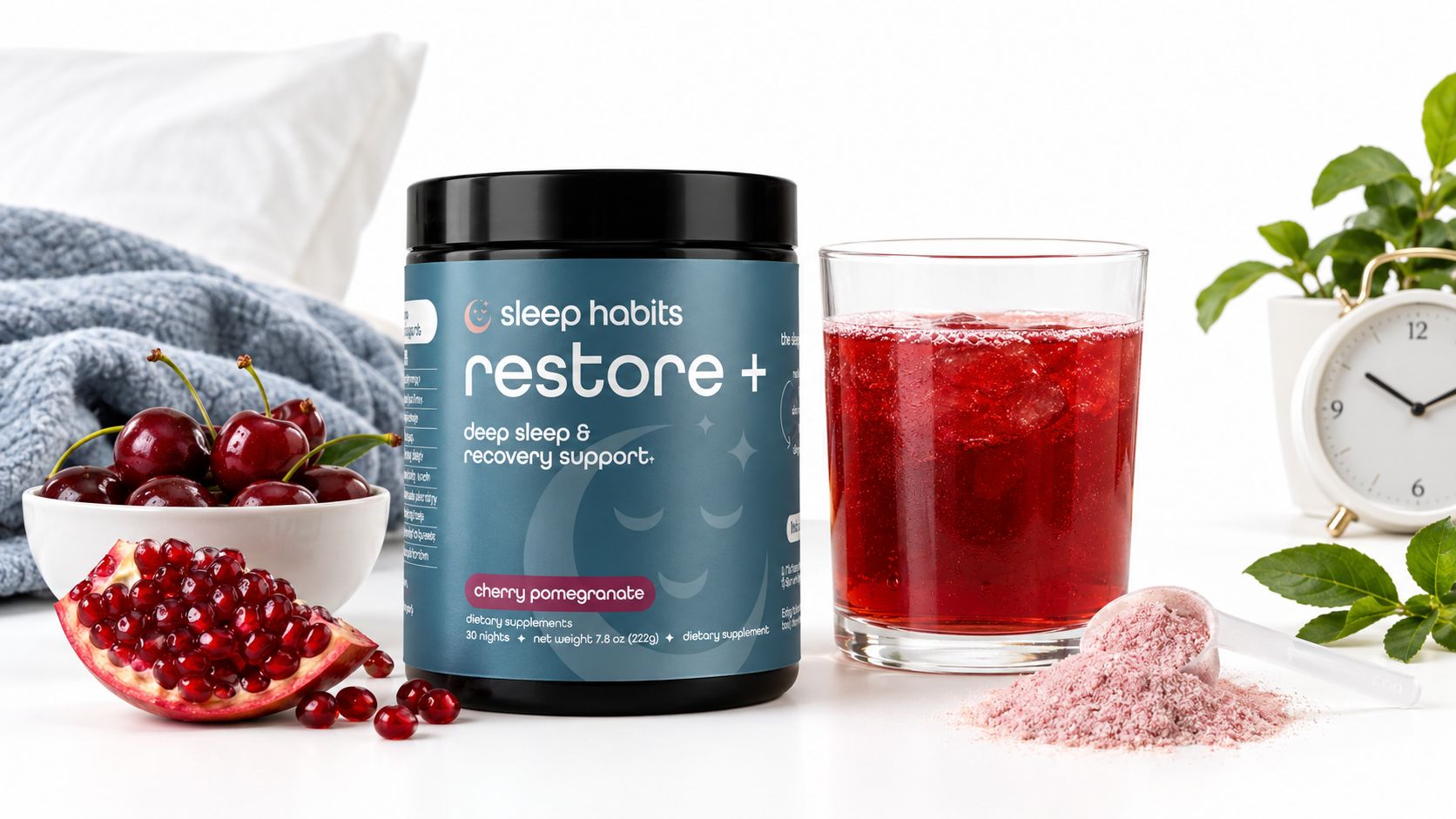
If you want a melatonin-free product in this routine, Restore+ Sleep Aid is described as supporting nitric oxide production, nervous-system regulation, and overnight oxygen delivery. It shouldn't replace evaluation of dry mouth, snoring, medication effects, or sleep apnea.
When to See a Doctor and Your Prevention Checklist
Persistent dry mouth deserves more than a better water bottle. If symptoms continue despite consistent hydration, nasal breathing practice, and appropriate humidity, arrange professional help.
See a dentist if you wake with cracked lips, tongue soreness or fissures, frequent cavities, persistent bad breath, difficulty chewing dry foods, or worsening irritation. A dentist can assess oral tissues, saliva function, tooth decay risk, fluoride needs, and whether a dry-mouth treatment is appropriate.
See a primary-care clinician or sleep specialist if you snore loudly, wake gasping, have witnessed breathing pauses, feel unusually tired or foggy during the day, or develop dryness after starting a new medication. Ask about sleep apnea, diabetes, autoimmune conditions such as Sjögren's syndrome, and medication-related xerostomia. Depending on the cause, a clinician may discuss prescription options such as pilocarpine, fluoride treatments, or a custom oral appliance.
Don't tape over a breathing disorder. Diagnose the obstruction first.
Use this checklist for the next several nights:
- Hydration timing: Drink consistently through the day and keep bedside water for occasional top-ups.
- Evening alcohol: Remove alcohol while you identify whether it worsens dryness or mouth opening.
- Caffeine control: Keep caffeine earlier if it disrupts sleep or leaves you feeling dry.
- Nasal clearing: Use saline or clinician-approved congestion treatment before bed.
- Mouth closure: Consider a small porous center strip only when nasal breathing is comfortable and sleep apnea has been ruled out.
- Humidifier care: Use a clean humidifier when bedroom air is dry.
- Bedroom conditions: Keep the room comfortable, and address allergens that block the nose.
- Dental follow-up: Maintain regular dental check-ins, and arrange an earlier visit when cavities or tissue irritation increase.
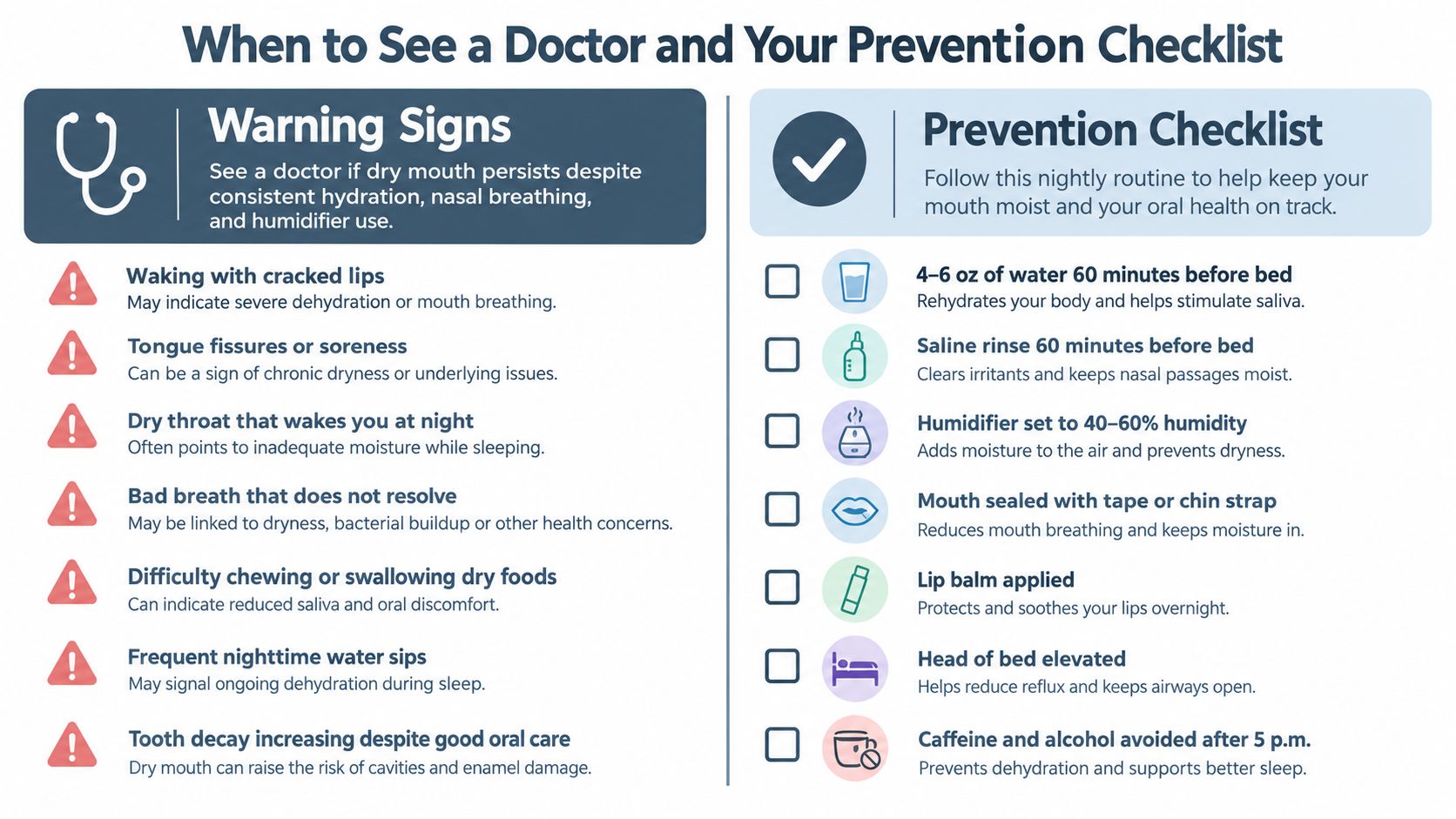
The most effective way to prevent nighttime dry mouth is to connect the pieces: hydrate before evening, keep the nose open, protect oral tissues, control bedroom dryness, and investigate snoring or medication effects. If the symptom persists, stop experimenting and get the cause assessed.
SleepHabits offers mouth tape, nasal strips, and a melatonin-free sleep-support option for adults building a more deliberate nighttime breathing routine. Visit SleepHabits to compare those tools and create a wind-down system that supports nasal breathing instead of chasing dry mouth with water after midnight.