

You're probably reading this because the pattern is familiar. You fall asleep first, your partner nudges you an hour later, and by morning you've heard some version of, “You were sawing logs again.” Or you wake with a dry mouth, a heavy head, and the vague sense that sleep happened, but recovery didn't.
Most men treat snoring like random noise. It usually isn't. It's a breathing-pattern problem caused by vibration in a narrowed upper airway. The useful question isn't just “how do I stop snoring?” It's “where is my bottleneck?” For some men it's a blocked nose. For others it's open-mouth breathing, back-sleeping, extra tissue around the airway, alcohol late in the evening, or a jaw and tongue position that collapses once sleep gets deeper.
That cause-first approach is what helps when you want to learn how to reduce snoring in men without harsh fixes, gimmicks, or buying three devices that solve the wrong problem.
Why Men Snore More and What Quiet Sleep Really Takes
At 2 a.m., the pattern is usually clear before the fix is. A man falls asleep flat on his back after a late dinner, one side of his nose is blocked, his mouth drops open, and the room gets loud within minutes. Age and body weight can raise the odds, but the nightly noise usually starts with airflow losing space somewhere in the upper airway.
Men snore more often than women, and the gap is well documented in clinical reviews, including a Clinical Chest Medicine summary on snoring and sleep-disordered breathing. In practice, the useful point is simpler. Male snoring often has a mechanical pattern you can identify.
That pattern usually falls into one main bucket, sometimes two:
- Nasal blockage: congestion, a deviated septum, swollen nasal tissue, or allergies force breathing through the mouth once sleep deepens.
- Mouth breathing: the lips part easily, the jaw drops, and the tongue sits in a position that makes the throat noisier.
- Position-related snoring: the airway gets narrower on the back and stays steadier on the side.
- Weight-related narrowing: extra tissue around the neck, tongue base, and trunk leaves less room for smooth airflow.
If you want a broader primer on the mechanics, this guide on what causes snoring at night gives the background.
I coach men to start with the bottleneck, not the gadget. A nasal strip will not do much for a man whose snoring shows up only on his back. Mouth tape is the wrong first move for a man who cannot move air well through his nose. Weight loss helps many men, but it is not the only lane, and it is rarely the fastest fix for tonight.
Habitual loud snoring also deserves more respect than occasional rough nights after a cold, drinks, or short sleep. The Merck Manual home guide to snoring notes that snoring can be linked to obstructive sleep apnea and other upper-airway problems. That is why quiet sleep usually takes matching the fix to the cause.
Open the nose if the nose is the choke point. Keep the mouth closed only after nasal airflow is good enough to support it. Change sleep position if gravity is the driver. Reduce airway load if body weight is part of the picture.
That is what works night to night. You do not chase the sound. You correct the breathing pattern causing it.
Daily Habits That Make Snoring Quieter
A common pattern looks like this. A man snores hardest after two drinks, a short night, and a day spent breathing through a blocked nose. Nothing about that pattern is random. The airway is easier to narrow when the breathing setup is already working against him.
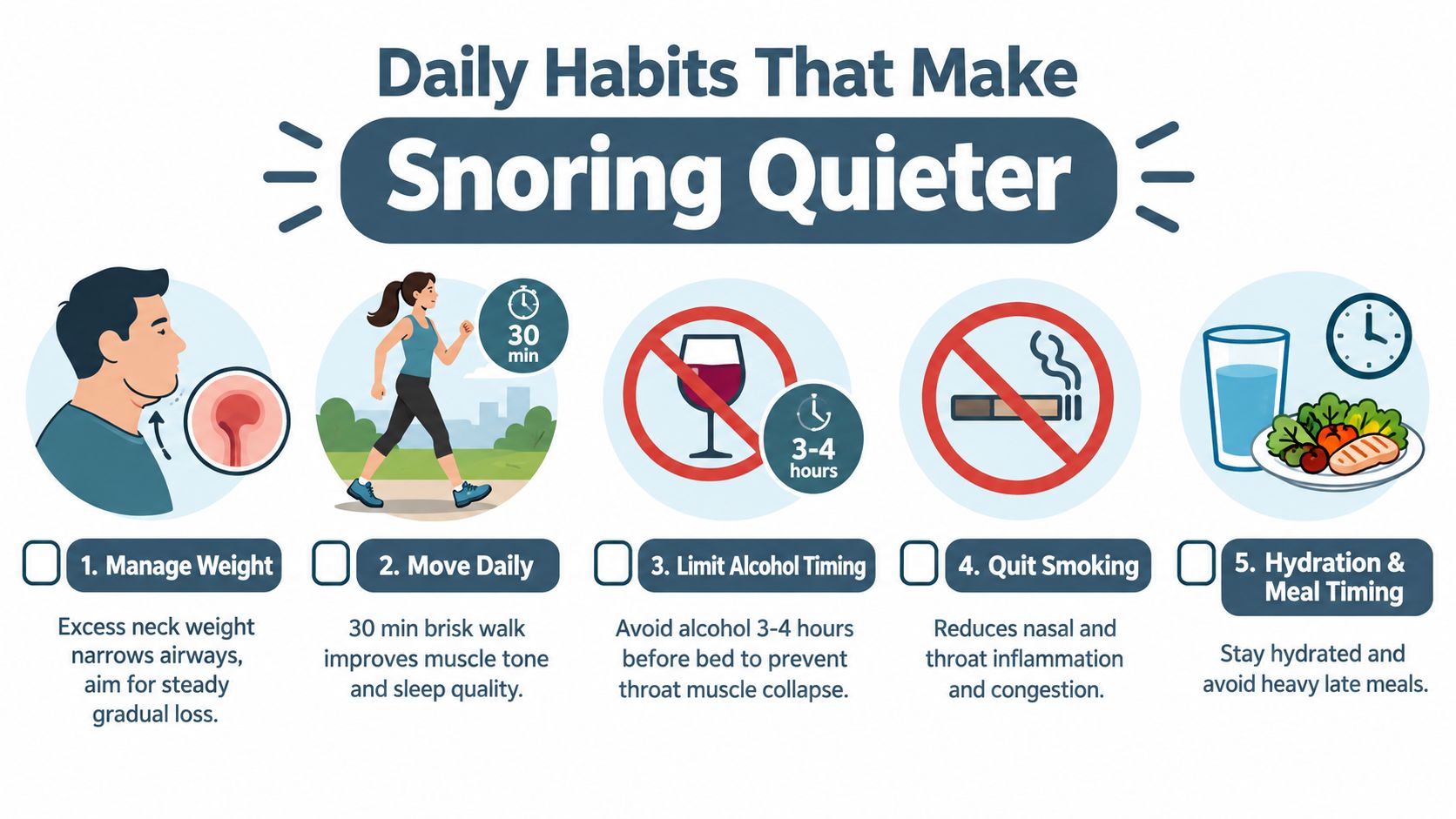
The men who make progress fastest usually stop treating snoring as a single problem. They look for the daytime pattern that sets up the night. If the nose stays congested, fix that first. If snoring got worse as body weight climbed, address airway load. If rough nights follow late alcohol, change the timing before buying another device.
One older study in heavily snoring men is still useful because it tested practical changes together: weight loss, side sleeping, and a nasal decongestant. The strongest improvement came from weight loss, especially in the men who lost more weight, which supports body weight as an important lever when snoring rose alongside neck size, abdominal weight, or both (peer-reviewed study on snoring interventions).
That does not make weight loss the only fix, and it is rarely the fastest fix for tonight.
Mayo Clinic and the Merck Manual both point in the same direction on day-to-day habits. Men who snore often do better when they reduce excess weight if needed, keep alcohol and sedatives away from bedtime when possible, avoid getting overtired, and treat nasal obstruction instead of ignoring it (Mayo Clinic snoring treatment guidance, Merck Manual professional snoring reference).
Daily levers that lower snoring intensity
| Habit | Why it helps snoring | Best fit |
|---|---|---|
| Weight management | Less tissue around the neck, tongue base, and trunk can leave more room for smoother airflow | Men whose snoring increased with weight gain |
| Alcohol timing | Alcohol relaxes upper-airway tissue and often makes snoring louder | Men whose snoring is worse on social nights |
| Sedative awareness | Sedating medications can reduce airway muscle tone | Men using evening sleep aids, antihistamines, or other sedating prescriptions |
| Regular sleep timing | Severe sleep loss often makes breathing less stable and snoring rougher | Men with late-night work, screen drift, or irregular bedtimes |
| Daytime nasal care | Better nasal airflow makes quiet nose breathing more realistic at night | Men with allergies, dryness, frequent congestion, or a blocked side of the nose |
What to do in real life
- If weight is part of the pattern: Treat it as airway management, not appearance. Slow, steady loss helps more than short bursts that do not last.
- If alcohol is the trigger: Keep it earlier in the evening, or skip it on nights when quiet sleep matters most. The trade-off is social convenience versus a narrower airway overnight.
- If you use sedating medication: Review the timing and need with your clinician. Some men sleep longer with a sedative but breathe worse and snore louder.
- If you are always overtired: Protect a more consistent bedtime for a week and listen for the change. I often see snoring become less erratic once sleep debt comes down.
- If your nose is unreliable during the day: Get more disciplined about allergy control, hydration, and irritant exposure before bed. Mouth breathing at night often starts with poor nasal airflow hours earlier.
- If sleep feels unrefreshing even when time in bed is adequate: A melatonin-free option like Restore+ Sleep Aid is designed to support nitric oxide production, nervous system regulation, and overnight oxygen delivery. That fits men who want breathing and recovery support, not a product that knocks them out.
A simple rule works well here. Match one habit to one likely cause and hold it steady for several nights. Randomly changing five things at once makes it harder to tell whether the issue is nasal blockage, mouth breathing, airway loading from weight, or a bedtime trigger like alcohol.
Sleep Position and Bedroom Setup That Keeps Airways Open
A common pattern looks like this. A man falls asleep breathing fairly well, rolls onto his back an hour later, his jaw slackens, and the room gets loud. That is not just a snoring problem. It is a breathing-pattern problem that changes with position.
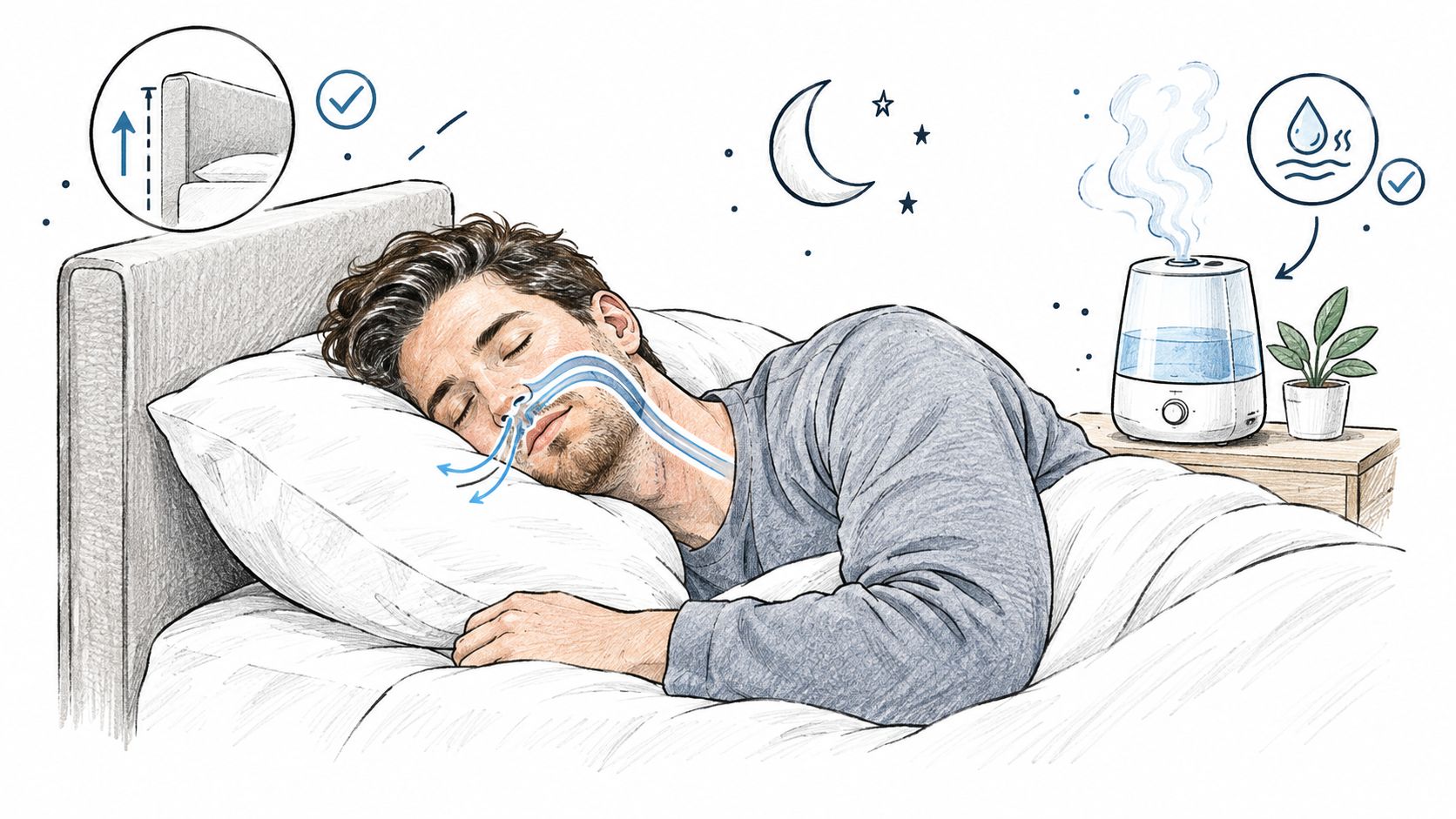
For many men, the fastest reduction in snoring comes from matching the setup to the cause. If snoring spikes on the back, start with position. If the nose blocks up after lights out, clean up the bedroom air and support nasal airflow. If the mouth keeps falling open, focus on head and neck support before reaching for gadgets.
Make side-sleeping easier to maintain
Back sleeping often narrows the airway because the tongue and soft tissues fall backward. Side sleeping usually gives those tissues less chance to collapse, but only if the position holds through the night.
Try these adjustments:
- Build a side-sleep barrier: Place a pillow behind your back so rolling flat feels less natural and less comfortable.
- Set your shoulders well: Keep the lower shoulder slightly forward instead of pinned under your chest. That usually makes side sleeping last longer.
- Use enough pillow height to keep the neck neutral: Too much height bends the neck. Too little lets the chin drift up or the mouth hang open.
- Have a travel version of your setup: A hotel bed can undo good progress fast. In practice, bringing your own pillow solves more problems than buying another device.
A simple test helps here. If a partner notices that the snoring drops as soon as you turn onto your side, positional work deserves attention before oral appliances or taping.
Adjust the room based on how you breathe
Bedroom setup matters most when the nose is unreliable at night. Dry air, dust, pet dander, and a hot room can push a man from nasal breathing into open-mouth breathing by the middle of the night. Once that happens, snoring usually gets rougher and more erratic.
Keep the room cool enough for steady sleep. Wash bedding regularly if allergies are part of the pattern. If the air feels dry and you wake with a dry nose or throat, a humidifier can help comfort, though it will not fix structural blockage in the nose. The trade-off is maintenance. A dirty humidifier can make the room worse, not better.
For men whose nasal passages narrow during sleep, Nasal Strips are one practical option. They're designed to gently open the nasal passages to support smoother airflow, which can matter when congestion or narrow nasal valves are pushing you toward open-mouth breathing.
A short visual guide can help if you need to reset your setup:
If snoring changes a lot between back sleeping and side sleeping, fix the position first. It is often the clearest sign that airway collapse, not just age or weight, is driving the noise.
Nasal Breathing Support and Oral Devices That Match Your Cause
A lot of men buy the wrong snoring tool first. They treat noise as the problem, when issue is usually the way air is moving once they fall asleep. Start by locating the bottleneck. Is the nose restricted, is the mouth falling open, is the jaw dropping back, or is there a broader airway issue that needs medical care?
When nasal support makes sense
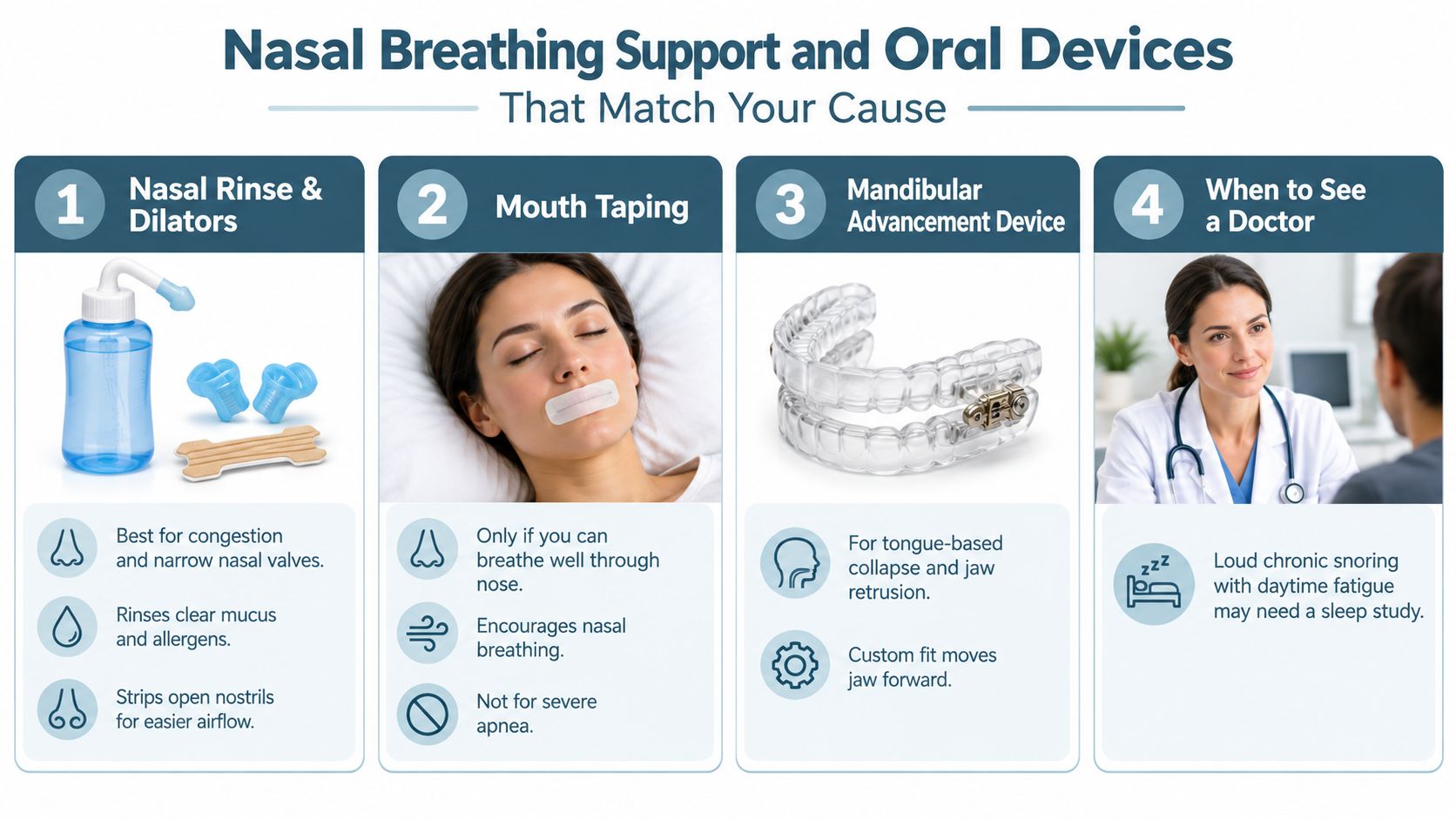
Use nasal support when the nose is clearly the weak point. Men who do well with nasal strips, internal dilators, saline rinses, or a clinician-recommended nasal spray usually describe a familiar pattern. One side plugs up in bed. Breathing is decent during the day but worse once they lie down. They start the night breathing through the nose and wake with a dry mouth because the nose stopped carrying the load.
If that sounds like you, fix airflow before trying to force mouth closure. Mouth breathing at night is often a downstream problem, not the first cause.
For a practical breakdown of strips, dilators, and other nasal breathing aids, use that guide alongside your own symptom pattern.
If snoring comes with chronic cough, shortness of breath, wheezing, or a history of smoking-related lung problems, step back and check whether snoring is only part of the picture. This plain-language guide to copd symptoms and treatment can help you separate upper-airway noise from a lower-airway breathing problem that needs proper evaluation.
Mouth taping has a narrow role
Mouth taping is easy to overuse because it sounds simple. In practice, it only makes sense when nasal breathing is already comfortable and reliable in bed. If the nose is blocked, tape does not solve the blockage. It can turn a restless, noisy night into a miserable one.
A recent review found limited evidence for mouth taping in most groups and raised concern about using it in people with nasal obstruction (review of mouth taping evidence).
I tell men to run a basic test first. Lie down, keep your mouth closed, and breathe through your nose for a few minutes without strain. If that feels difficult, skip the tape and work on the nose instead.
If the nose cannot carry airflow comfortably, do not tape the backup route shut.
When an oral appliance is the better tool
Some snoring is less about the nose and more about the jaw and tongue losing position during sleep. This group often snores even with a fairly clear nose. The sound is deeper, more throat-based, and more consistent across the night.
That is where a mandibular advancement device can help. Oral appliances move the lower jaw forward enough to reduce airway collapse in selected men, especially when the pattern fits mild obstructive sleep apnea or jaw retrusion. Research on oral appliances shows they can reduce snoring and help some cases of obstructive sleep apnea, but results depend on fit, adjustment, body size, and severity of the airway problem (oral appliance review and evidence summary).
The trade-offs are real. Cheap boil-and-bite versions are easier to get, but they are also more likely to fit poorly, strain the jaw, or end up in a drawer after a week. Custom devices usually work better because they can be titrated, but they cost more and need dental oversight.
Skip self-prescribing a jaw device if you have clear apnea symptoms, marked obesity, major bite issues, or frequent gasping awakenings. In those cases, testing and proper fitting matter more than trying another gadget.
A Simple Wind Down Routine and Exercises to Reinforce Quiet Nights
Most anti-snoring advice falls apart because it asks for too much effort at the wrong time. What works better is a short routine you can repeat when you're tired.
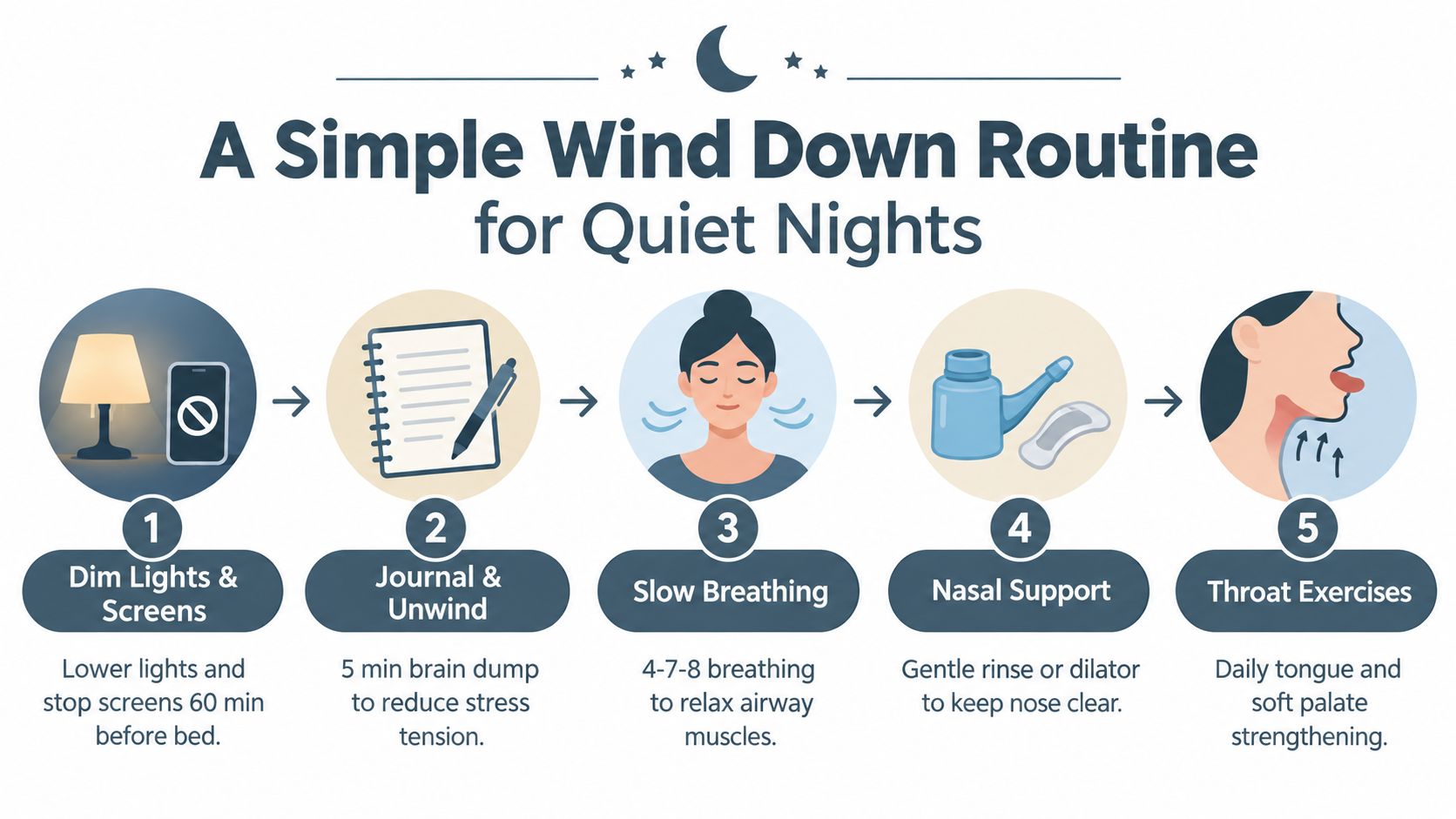
I'd keep this to 15 to 20 minutes. Long enough to clear the nose, settle the nervous system, and cue better airway posture. Short enough that you'll do it.
For a fuller pre-bed routine, this roundup of wind-down activities before bed fits well with snoring work.
A practical pre-bed sequence
-
Dim the room and stop stimulating input
If you go from bright screens straight to bed, jaw tension and mental overactivation often come with you. Lower the input before you ask the airway to settle. -
Do a quick brain dump
Five minutes of writing tomorrow's tasks can reduce that “I'm tired but still braced” feeling. Men who clench often also mouth-breathe more once they finally fall asleep. -
Use slow nasal breathing
Keep it simple. Inhale gently through the nose, exhale longer than you inhale, and don't force deep breaths. You're trying to reduce tension, not perform. -
Support the nose if it tends to fail at night
This may be a gentle rinse, steam from a shower earlier in the evening, or a nasal opening aid if that's the pattern that fits you. -
Finish with short airway exercises
The target is tongue posture and soft-palate control, not fatigue.
Exercises that are worth doing
You don't need an elaborate protocol. You need a few movements done consistently.
- Tongue to palate hold: Press the whole tongue to the roof of the mouth and hold while breathing calmly through the nose.
- Tongue slide: Keep the tongue in contact with the palate and slowly slide it backward, then forward.
- Soft-palate lift: Say a firm, controlled “ah” while focusing on lifting the back of the palate.
- Lip seal practice: Close the lips gently without jaw clenching and maintain easy nasal breathing.
Do these daily, not aggressively. The men who benefit usually notice that nighttime mouth opening becomes less automatic and that the throat feels less slack during sleep onset.
What to pair and what not to pair
A few combinations make sense:
- Clear nose plus side-sleeping: Strong option when the problem is congestion and back-sleep collapse.
- Nasal support plus gentle lip seal training: Reasonable when you can breathe well through the nose already.
- Exercises plus an oral appliance: Often useful when a clinician has already identified jaw or tongue-position issues.
A few combinations don't:
- Blocked nose plus mouth tape
- Late alcohol plus any anti-snoring device
- Severe daytime sleepiness plus self-treatment only
Consistency beats intensity here. A modest routine repeated nightly usually does more than a complicated plan you abandon after three days.
When to Get Checked and How to Track Real Progress
A common pattern goes like this. A man tries a wedge pillow, then tape, then a random mouthpiece, and the snoring still shows up because the problem was never identified. If the issue is unstable breathing during sleep, not simple noise, self-experimenting can waste months.
Some men need a proper evaluation early, especially when the snoring comes with signs that airflow is breaking down during the night. Loud habitual snoring, witnessed breathing pauses, waking with headaches, and clear daytime sleepiness all raise the stakes. At that point, treat snoring as a breathing problem first and get the cause checked.
Red flags that should move you out of DIY mode
Watch for these patterns:
- Pauses, gasping, or choking: A bed partner hears silence followed by a snort or struggle to breathe.
- Morning headaches or heavy brain fog: You were in bed long enough, but sleep did not restore you.
- Daytime sleepiness: You are fighting sleep while driving, in meetings, or every evening on the couch.
- Anatomy that may be narrowing airflow: A blocked nose, large tonsils, a recessed jaw, or long-term mouth breathing habits can all matter.
The right clinician depends on the pattern. Start with primary care if you need an overall screen. See an ENT if nasal blockage seems to be the main driver. See a dentist trained in sleep medicine if jaw position or an oral appliance looks relevant. A sleep specialist makes sense when pauses in breathing, major fatigue, or high blood pressure are part of the picture.
Track progress by cause, not by gadget count
Good tracking is simple. It also needs to be honest.
Use a short nightly log for two weeks. Record how loud the snoring was, what likely drove it, what you used that night, and how you felt the next morning. The useful detail is the cause category: blocked nose, mouth breathing, back sleeping, alcohol, late meal, weight-related airway crowding, or a mixed pattern.
That cause-based log matters more than collecting extra sleep scores. If snoring drops only on nights when the nose is clear, the nose deserves more attention. If it spikes on your back even with a clear nose, position is probably the bigger lever. If nothing changes despite good effort, stop stacking gadgets and get assessed.
If you already train and recover systematically, use the same mindset athletes use to use HRV and RPE for training. The value comes from repeatable patterns, not from chasing perfect numbers.
The men I see make faster progress when they match the fix to the cause and judge success by three things: less noise, fewer breathing disruptions, and better daytime function. Quiet sleep is the goal. Stable breathing is what gets you there.
SleepHabits offers breathing-focused sleep tools and education for people who want calmer nights without relying on heavy-handed sleep fixes. If your snoring gets worse when nasal breathing breaks down or your routine collapses, visit SleepHabits for practical resources and melatonin-free options that support better overnight breathing and recovery.