

You wake with your teeth feeling tender, your jaw tired, and a headache pressing behind your temples. Your partner says you were grinding during the night, yet you don't remember doing it. If you're searching for how to stop clenching your jaw at night, the most useful starting point isn't a promise of a guaranteed cure. It's a plan that lowers arousal, protects your teeth, and identifies problems, such as sleep apnea or joint irritation, that need professional attention.
Understanding Why You Wake Up With Jaw Pain
Nighttime jaw clenching is generally classified as sleep bruxism, a sleep-related pattern of jaw-muscle activity that can include clenching, grinding, or rhythmic movements. A 2013 systematic review of adult studies found that frequently reported sleep bruxism affected approximately 12.8% of adults, with variability of about ±3.1 percentage points. Estimates for broadly defined bruxism ranged from 8% to 31.4%, largely because researchers used different questionnaires, diagnostic thresholds, and populations. Those figures are reported in the systematic review of adult sleep bruxism.
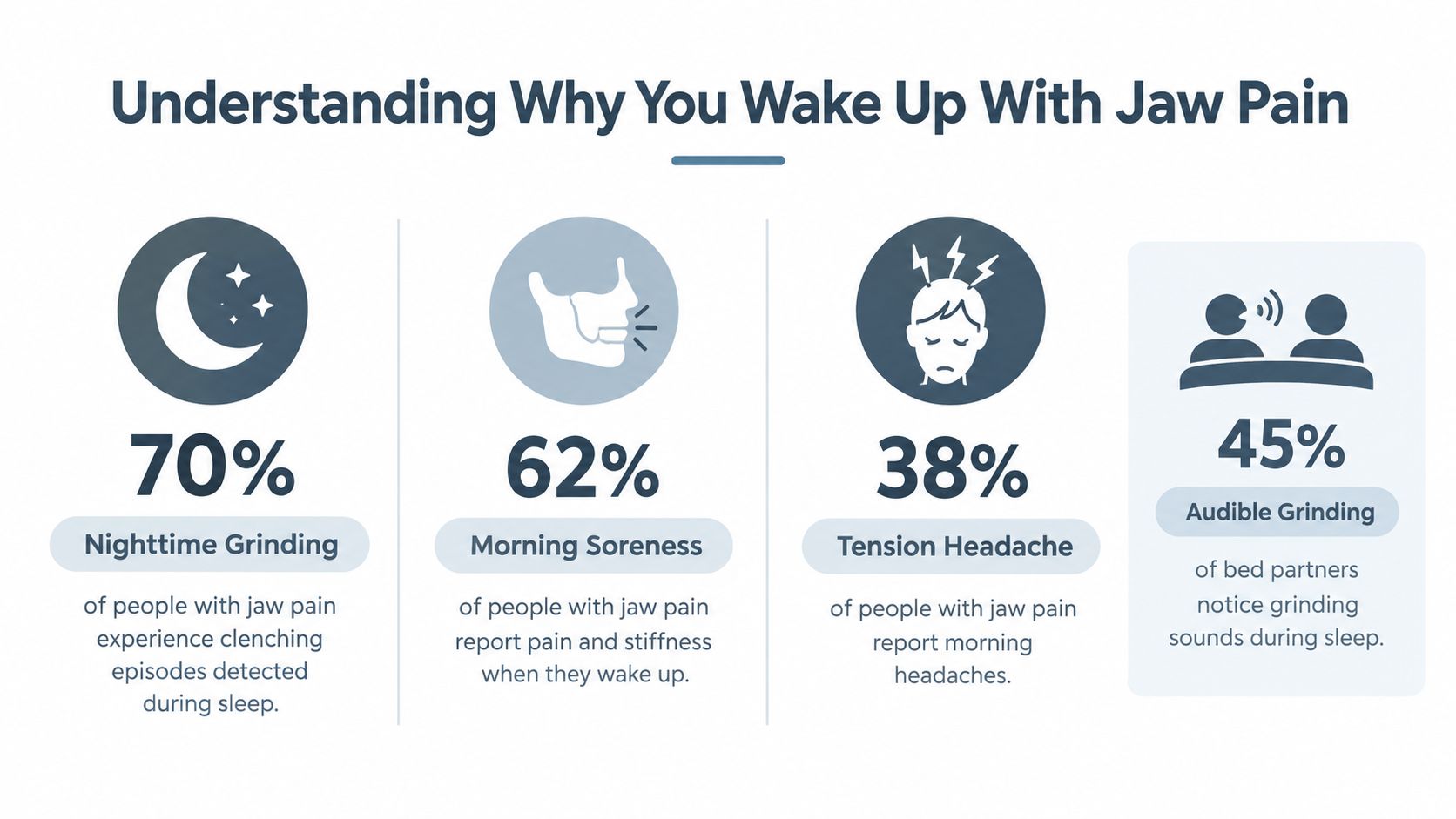
That variation matters. You may clench without making an obvious grinding sound, and self-reported symptoms can miss activity that happens during sleep. A bed partner might hear grinding, but someone sleeping alone may only notice the consequences the next morning.
What your morning symptoms can reveal
The jaw muscles, teeth, and temporomandibular joints absorb the mechanical load. Repeated activity may leave you with:
- Jaw soreness or fatigue: Especially when chewing breakfast or opening your mouth.
- Morning headaches: Often experienced as pressure around the temples or forehead.
- Tooth sensitivity: A response that deserves dental review, particularly when it's new or worsening.
- Flattened or damaged tooth surfaces: Wear, cracks, chips, looseness, or damaged restorations can indicate significant loading.
- A partner's observation: Audible grinding is useful information, even though its absence doesn't rule out clenching.
Sleep bruxism isn't automatically a disease that must be eradicated. Clinical management usually focuses on preventing consequences, including tooth wear, damaged restorations, temporomandibular symptoms, and facial pain. A practical overview of related symptoms is available in this guide to waking with a sore jaw.
Clinical perspective: The target is usually less damage and less discomfort, not perfect control over every jaw-muscle event.
If your symptoms persist, arrange a dental assessment rather than relying on sound, pain, or a store-bought guard as a diagnosis. Readers seeking a local resource can also review Santa Ana bruxism help from Bristol Dental, which offers context on teeth grinding and dental evaluation. No intervention has been proven to eliminate sleep bruxism itself, so the sensible approach combines low-risk self-care with escalation when signs point to tooth damage, jaw dysfunction, or a sleep disorder.
Building an Evening Routine That Calms Jaw Tension
If you reach bedtime already tense, an elaborate routine is unlikely to help. Set up a predictable wind-down that lowers general arousal and gives your jaw fewer reasons to stay active. Stress and anxiety are commonly associated with teeth grinding. The NHS guidance on teeth grinding recommends relaxation methods such as breathing exercises, music, and regular exercise, along with consistent bedtimes and a dark, quiet bedroom.
Start with stable sleep and wake times. A predictable schedule can reduce the overtired, wired feeling that follows repeated late nights. Keep the final part of the evening quieter and less stimulating rather than trying to compensate for a disrupted routine with forceful relaxation.
Review possible evening triggers as well. Avoid caffeine and alcohol close to bedtime, and avoid nicotine late in the day. If clenching started after a prescribed medicine, discuss the timing with a clinician. NIDCR identifies alcohol, caffeine, smoking, some medicines used for depression, seizures, or ADHD, and family history as associated factors. An association does not establish that a specific substance or medicine caused your bruxism. Do not stop prescribed treatment without medical advice.
A workable routine can be as simple as:
- Dim the environment: Keep the bedroom dark and quiet, and reduce bright light near bedtime.
- Lower body tension: Take a gentle walk, stretch, or listen to music that helps you settle.
- Slow the breath: Breathe comfortably, allowing the exhalation to become unhurried. Stop if you feel light-headed.
- Reduce tooth contact: Let your lips rest together while keeping your teeth slightly apart.
- Repeat the pattern: Use the same sequence often enough that bedtime requires fewer decisions.
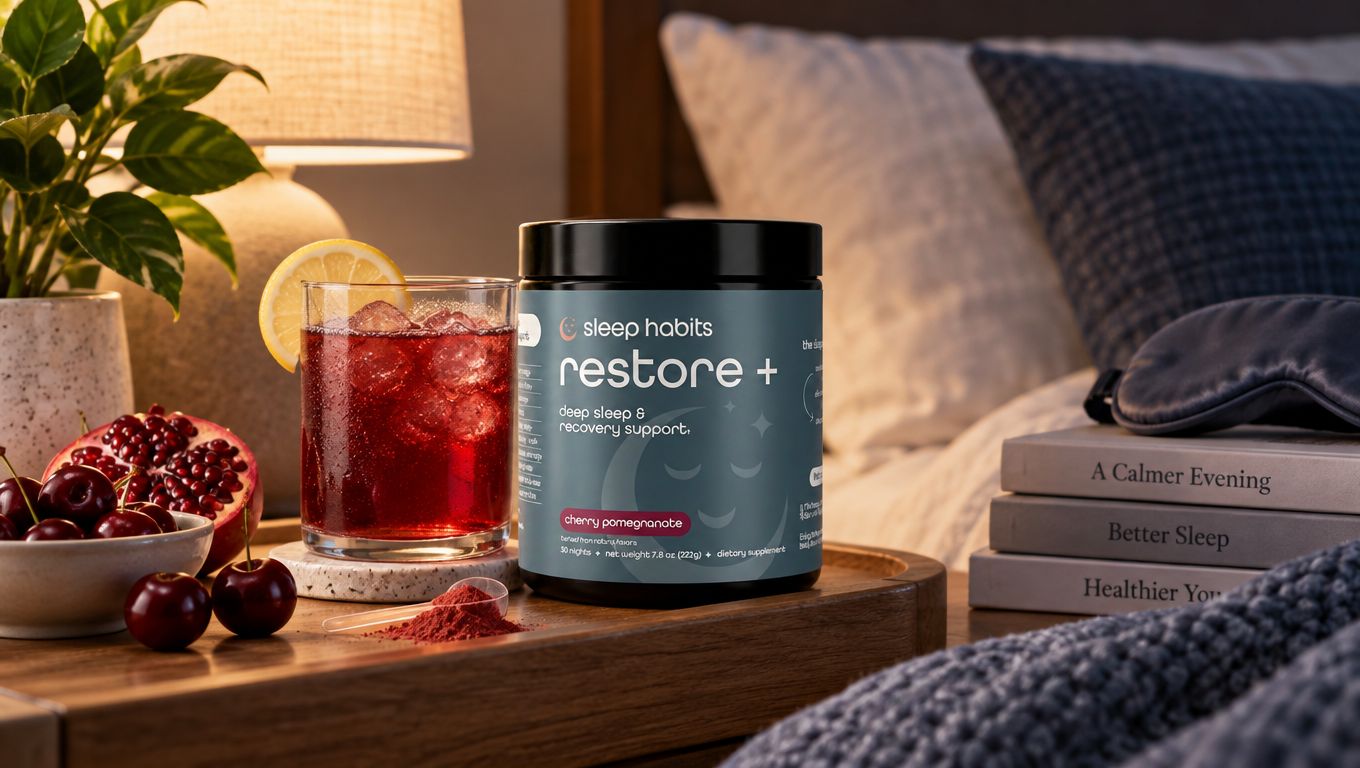
Some people consider the melatonin-free Restore+ Sleep Aid, which is described as supporting nitric oxide production, nervous system regulation, and overnight oxygen delivery. It is not a treatment for bruxism, and it should not replace dental or medical assessment.
These steps may improve sleep quality and reduce evening tension, but they cannot identify the cause of clenching or guarantee that it will stop. Track whether morning soreness, headaches, or tooth sensitivity change. If symptoms persist or worsen, use that information to decide when professional evaluation is needed.
Practicing Jaw Relaxation Techniques Before Bed
Jaw relaxation works best as a low-effort rehearsal of neutral posture, not as a forceful stretch. Pressing the mouth open can increase muscle guarding and make bedtime feel like another task. Let the jaw settle instead.
Rest the tongue lightly toward the roof of the mouth, keep the lips together without squeezing, and leave a small space between the upper and lower teeth. This position represents neutral posture while you are not chewing, speaking, or swallowing. It will not guarantee that nighttime clenching stops, but it can reduce unnecessary tooth contact before sleep.
A short jaw drill
An NHS jaw-joint guide recommends this sequence twice daily:
- Sit upright and release your shoulders.
- Place your tongue toward the roof of your mouth.
- Keep your lips gently together and your teeth slightly apart.
- Support the underside of your lower jaw with one hand.
- Press the lower jaw down lightly against your hand for one minute.
- Rest for one minute.
- Repeat the sequence.
Use one session before bed and the other earlier in the day, especially if you notice fatigue or tension. The jaw relaxation guidance for sleeping provides another way to practise the resting position. Keep the resistance light. The exercise should feel controlled, not painful or strenuous.
Protect the jaw during waking hours as well. Gum, toffee, tough meat, hard or chewy foods, and very wide yawning can irritate already-sensitive muscles. Choose softer foods temporarily if chewing hurts, and do not repeatedly test your maximum mouth opening.
Mouth Tape is intended to encourage nasal breathing by keeping the lips comfortably sealed during sleep. It does not treat bruxism. Avoid it if you have nasal obstruction, suspected sleep apnea, breathing difficulty, or unexplained nighttime gasping. Those symptoms require evaluation before trying to alter how the mouth stays closed during sleep.
Stop the exercise if pain, clicking, locking, or restricted opening increases. Persistent soreness, limited jaw movement, or worsening headaches calls for dental or medical assessment rather than more self-directed practice.
For a visual demonstration of gentle jaw positioning, use the following video as a supplement to professional advice:
When to Consider Dental Devices and Professional Care
A dental device and a behavioral routine serve different purposes. A night guard or stabilization splint protects the teeth. It may also reduce morning discomfort, but it shouldn't be presented as proof that the underlying clenching has stopped.
Arrange a dental examination if you notice flattened, chipped, cracked, loose, or sensitive teeth, or if you wake with jaw-muscle tenderness or headaches. A dentist can inspect enamel cracks, wear facets, restorations, masseter tenderness, and temporomandibular-joint symptoms. That examination is more informative than guessing from the sound of grinding alone.
A practical escalation path
Start with assessment. Your dentist can identify damage and determine whether a fitted appliance is appropriate. A hard-acrylic stabilization appliance is generally used primarily to protect teeth and restorations and to reduce discomfort.
Screen breathing symptoms before choosing a guard. Loud snoring, witnessed breathing pauses, gasping, morning headaches, and marked daytime sleepiness justify evaluation for obstructive sleep apnea. A generic mouthguard may not suit someone with airway obstruction, and an occlusal splint may worsen obstruction in some people. Formal sleep assessment should come before self-treating when these warning signs are present.
Use the appliance as protection, not a cure. Current clinical guidance indicates that oral devices protect against tooth wear and may reduce discomfort, but they don't reliably reduce the frequency of bruxism events. A dentist should check fit, jaw mobility, and symptoms after several weeks.
Reassess rather than endure. New joint pain, increasing stiffness, a change in your bite, or an appliance that feels uncomfortable deserves review. Don't keep wearing a device that causes worsening symptoms just because you paid for it.
If breathing is part of the concern, a discussion of anti-snore mouthpieces and how they work may help you distinguish airway-focused devices from tooth-protection appliances. These devices aren't interchangeable. A mandibular-advancement device may be preferable when clinically indicated for obstructive sleep apnea, while a stabilization appliance addresses dental protection.
A night guard can shield enamel while clenching, muscle pain, or an airway problem continues underneath.
Medication isn't a simple shortcut either. A 2024 review found only 9 studies involving 116 adults; clonidine produced the most consistent but modest short-term reduction, while benzodiazepines, dopaminergic drugs, and beta-blockers didn't show reproducible benefit. No medication was recommended for routine adult management in that review of pharmacological treatment (clinical review).
Exploring the Connection Between Breathing and Jaw Clenching
You may snore, wake with a dry mouth, and notice sore jaw muscles the next morning. Those symptoms can occur together, but they do not prove that one condition caused the other. A scoping review of sleep bruxism and obstructive sleep apnea concluded that adult research cannot currently confirm a causal relationship, partly because studies use inconsistent definitions and measurement methods. That evidence supports caution rather than a single explanation.
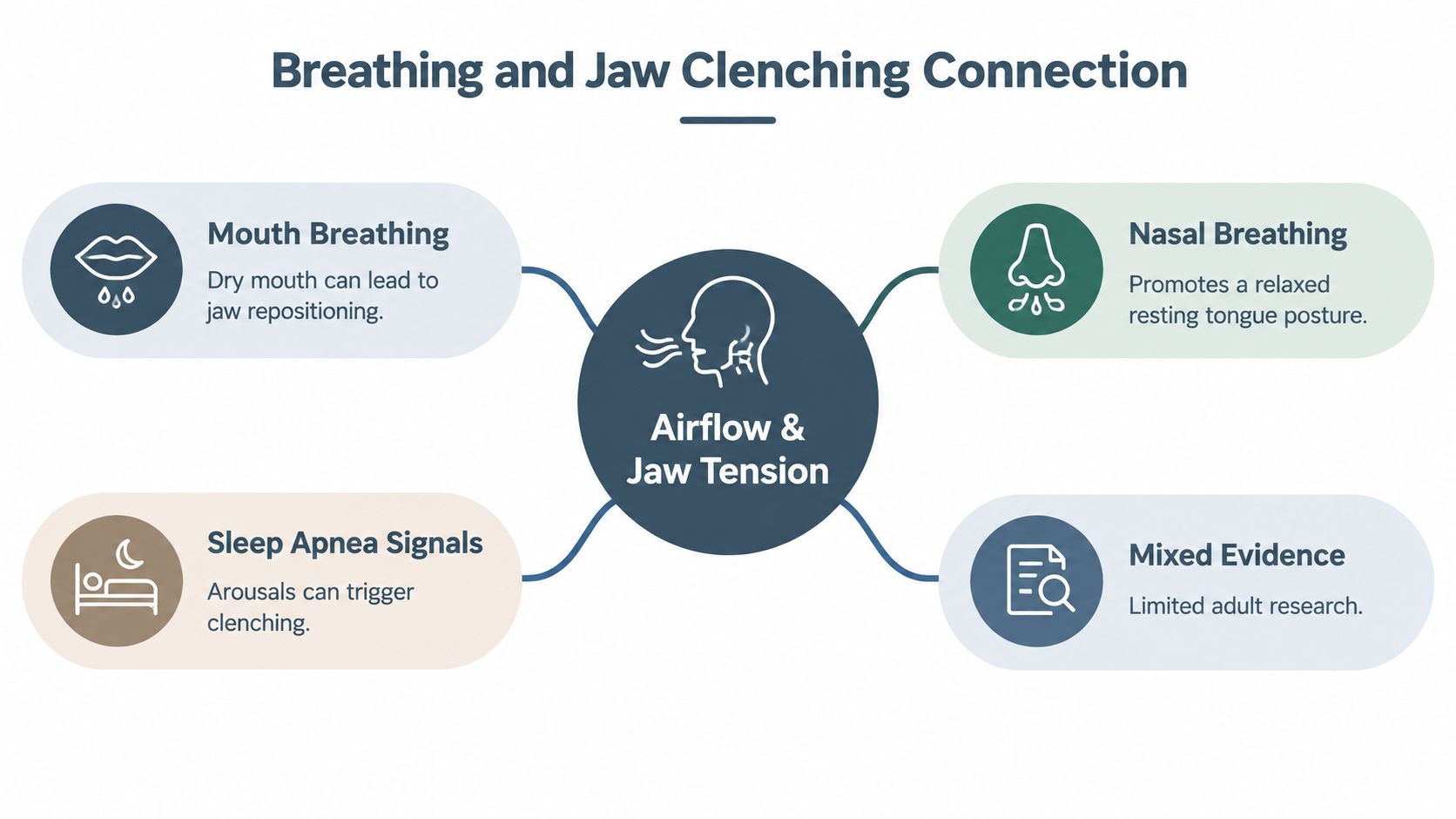
Some newer findings suggest that certain phasic bruxism episodes may follow respiratory events in mild-to-moderate apnea. This remains a hypothesis, not proof that apnea causes every episode of clenching. Nasal blockage, mouth breathing, disrupted sleep, and jaw activity can appear in the same person while still having different causes.
Let breathing symptoms guide the next step
Arrange evaluation with a clinician or sleep specialist if you have:
- Loud habitual snoring
- Witnessed breathing pauses
- Gasping or choking during sleep
- Morning headaches
- Marked daytime sleepiness
These symptoms do not diagnose sleep apnea, but they make a generic appliance or mouth tape a poor first choice. A clinician can decide whether sleep testing is appropriate and whether jaw activity should be assessed alongside breathing. The decision should depend on the full symptom pattern, not on clenching alone.
Nasal airflow tools may help as supportive measures when congestion or restricted nasal passages make breathing uncomfortable. For example, Nasal Strips gently open the nasal passages and may support smoother airflow. They are not a treatment for bruxism, and improved nasal airflow does not establish that breathing caused your jaw tension.
Mouth tape has stricter limitations. Encouraging nasal breathing may feel useful for some people, but sealing the lips is inappropriate if you cannot breathe comfortably through your nose or if sleep apnea is suspected. If an airway problem is present, it should be evaluated rather than masked with a consumer product.
The practical conclusion is conditional. Clenching may coexist with breathing disruption, and breathing symptoms deserve attention, but adult evidence does not justify claiming that nasal aids or mouth taping will stop sleep bruxism. Use self-care for comfort, and seek assessment when the pattern suggests an airway disorder.
Taking the Next Steps Toward Better Sleep
Use a simple hierarchy. Begin with a consistent evening routine, slower breathing, reduced evening stimulants, and the relaxed resting-jaw position. Track morning soreness, headaches, tooth sensitivity, sleep quality, and any partner observations without treating one night as a verdict.
Arrange dental care if symptoms persist, worsen, or involve tooth damage, restricted movement, joint symptoms, or significant tenderness. Seek medical or sleep evaluation for snoring, breathing pauses, gasping, morning headaches, or excessive daytime sleepiness. A fitted stabilization appliance can protect teeth, while professionally supervised biofeedback may be considered when dental protection isn't enough.
Biofeedback deserves realistic expectations. In reviewed randomized and crossover studies, contingent electrical or EMG biofeedback reduced recorded bruxism episodes by approximately 54 ± 14% and 55 ± 17%, with statistical significance at P < 0.001 (biofeedback review). The evidence for long-term remission remains limited, and false alarms or sleep fragmentation can worsen daytime sleepiness, so supervision matters.
No intervention has been proven to eliminate sleep bruxism itself. Aim for fewer consequences, calmer evenings, protected teeth, and a clear evaluation plan.
SleepHabits offers tools for sleep routines and nighttime breathing, including melatonin-free recovery support, mouth tape, and nasal strips, but these products don't replace dental or sleep evaluation. Visit SleepHabits to explore options that may complement a calmer wind-down routine while you address the causes and consequences of nighttime clenching.