

Sleeping six hours is associated with 59% higher odds of inadequate hydration than sleeping eight hours. That doesn't mean drinking more water automatically cures poor sleep, because late-night overhydration can fragment the night too.
You may recognize both sides of the problem. You go to bed tired, wake with a dry mouth and a dull headache, then spend the next day chasing fluids. Or you drink a large glass of water before bed and find yourself awake again soon after, searching for the bathroom instead of moving smoothly through sleep.
The useful answer sits between those extremes. Hydration and sleep quality influence each other, but the relationship isn't a simple instruction to drink as much as possible. Your body needs enough fluid to support normal overnight recovery, while your kidneys and bladder need enough quiet time to keep sleep uninterrupted.
The practical target is a personal “Goldilocks” zone. Drink consistently during the day, respond to genuine thirst, and avoid using bedtime as the moment to catch up on all the fluids you missed. The sections below explain why that balance matters and how to build it into an ordinary evening routine.
Why Your Sleep and Water Balance Are Connected
At 3 a.m., two people can have two very different hydration problems. One wakes with a sticky mouth, thirst, and a headache that makes returning to sleep difficult. The other wakes with a full bladder, checks the clock, and starts calculating how much sleep remains. Both may describe their problem as insomnia, even though fluid balance is adding friction to the night.
Sleep and hydration operate on a two-way street. You lose access to fluids while asleep, so the body has to conserve water and maintain a stable internal environment. At the same time, short or broken sleep can change your routines, appetite, thirst, and ability to make consistent health decisions the next day.
A large population study published in Sleep found that, in the healthier NHANES subgroup, people reporting six hours of sleep had 59% higher odds of inadequate hydration than people reporting eight hours, with an adjusted odds ratio of 1.59 and a 95% confidence interval of 1.25 to 2.03. The study examined more than 20,000 adults across combined U.S. and Chinese samples, giving the relationship a broad population context. The reported sleep and hydration findings show an association, not proof that one poor night directly causes the other.
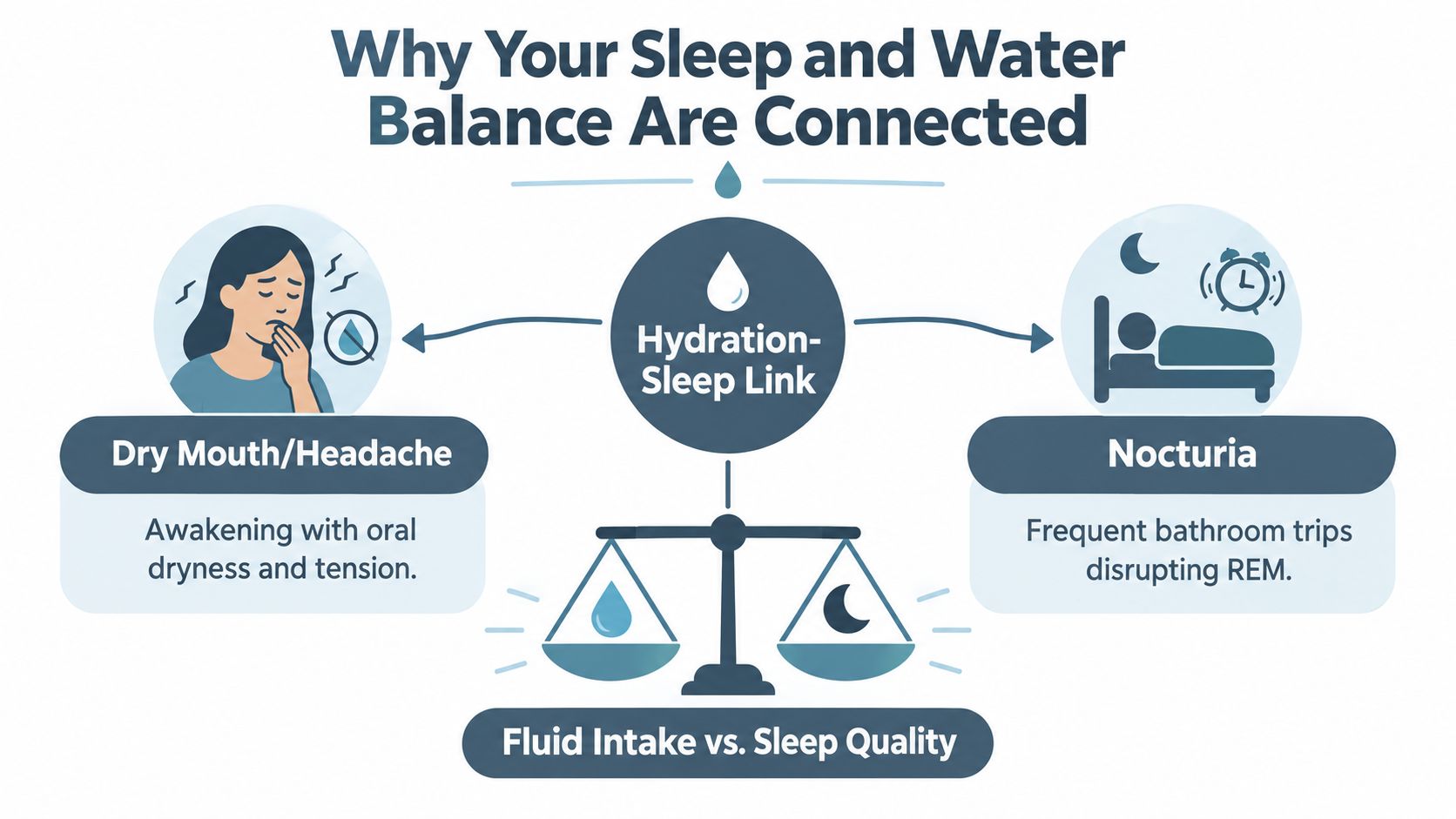
Two common ways fluid balance disrupts sleep
A person who starts the night mildly underhydrated may notice oral dryness, thirst, or physical discomfort. Those sensations don't always reduce total sleep time in a laboratory setting, but they can make sleep feel less refreshing and make an awakening more memorable.
A person who drinks heavily in the late evening creates a different problem. The kidneys continue processing that fluid while the bladder fills, increasing the chance of a bathroom trip during a period when the brain should be consolidating uninterrupted sleep.
The practical perspective: Don't treat every nighttime awakening as evidence that you need more water. First ask whether the problem is thirst, mouth breathing, a late beverage, or a pattern of waking to urinate.
Sleep itself also matters. The body normally coordinates fluid regulation with the sleep-wake cycle, so a consistent sleep schedule can support more consistent drinking habits. For a plain-language overview of the wider changes that occur overnight, see what happens to your body during sleep.
The goal isn't to force a perfect amount of water into your evening. It's to prevent both extremes from becoming a nightly pattern: going to bed thirsty and trying to compensate with a large drink, or drinking so much at bedtime that your bladder becomes the alarm clock.
The Biology of Overnight Hydration
Think of each cell as a small sponge inside a carefully managed environment. When the body lacks fluid, that sponge has less water available for normal work. When you pour in more fluid than the body needs at that moment, the extra water doesn't automatically improve cellular function. The kidneys must filter it, and the bladder must store the result.
Your brain monitors the concentration of dissolved particles in body fluid through a process called osmoregulation. When the body detects a need to conserve water, it increases signals that help the kidneys produce less urine. One of the key hormones involved is antidiuretic hormone, or ADH, also called vasopressin. Its nighttime rise helps reduce water loss while you sleep.
That system works like an overnight conservation setting. It doesn't switch the kidneys off, and it can't fully compensate for a large late drink, alcohol, caffeine, illness, heat exposure, or individual differences in fluid regulation. If the bladder fills enough to create pressure, the brain may move toward wakefulness even when you still need more sleep.
Why sleep can feel worse before sleep metrics change
Hydration affects more than the number of hours displayed by a wearable. Fluid restriction has been associated with lower subjective sleep quality and reduced sleep-time high-frequency heart-rate variability, a measure connected with parasympathetic activity. In a controlled dehydration study, researchers found no significant difference in objective sleep quality or quantity between dehydrated and adequately hydrated conditions, which suggests that the body can feel less recovered before total sleep time clearly changes. The controlled dehydration findings and autonomic recovery observations help explain why someone can say, “I slept long enough, but I don't feel restored.”
This is similar to a car that completes the same journey while the engine runs less smoothly. The trip took the same amount of time, but the system may have worked harder. Mild fluid imbalance can therefore show up as thirst, dryness, fatigue, or a sense of shallow recovery rather than a dramatic change in sleep duration.
Restore+ Sleep Aid is one melatonin-free recovery product positioned around nitric oxide production, nervous system regulation, and overnight oxygen delivery. It should be viewed as one possible part of a broader routine, not as a substitute for addressing thirst, late fluid intake, breathing problems, or a medical sleep disorder.
Why the bladder matters
Nocturia, or waking to urinate, breaks the continuity of sleep. Even if you fall back asleep quickly, repeated awakenings can make the night feel lighter and less coherent. Late fluid volume is only one possible contributor, so persistent nighttime urination deserves medical attention rather than endless self-experimentation.
The best approach respects both sides of the biology. Give your body enough fluid during waking hours, then let the kidneys and bladder enter the night with less work to do.
Timing Your Fluids for Deep Sleep
The most useful hydration change is often not “drink more.” It's move more of your drinking earlier so bedtime isn't the catch-up period.
A large evening drink can be especially disruptive. A 2025 study found that consuming more than 500 mL within two hours of bedtime was associated with lower actigraphy-measured sleep efficiency and more nighttime awakenings. The high-hydration group had sleep efficiency of 82.1% ± 3.8 and averaged 2.3 ± 0.8 nocturnal awakenings per night. The study's full findings on evening fluid intake don't establish that every person will respond identically, but they provide a practical warning about heavy drinking close to sleep.
A simple daily rhythm
Use this sequence as a starting point, then adjust it to your thirst, activity, climate, and health needs.
- Start earlier. Drink regularly through the morning instead of waiting until you feel depleted. This gives the body time to distribute and excrete excess fluid while you're awake.
- Replace what you lose. After exercise, heat exposure, or prolonged sweating, rehydrate during the afternoon and early evening. If you finish training late, take smaller, spaced drinks rather than swallowing a large volume immediately before bed.
- Taper large drinks two hours before sleep. This is a practical cut-off for avoiding a substantial fluid load near bedtime, based on the evening-intake pattern studied above. It isn't a ban on drinking. If you are thirsty, take enough to feel comfortable.
- Use small sips for comfort. A sip with medication or a modest drink for a dry mouth is different from treating bedtime as a hydration challenge. Let thirst guide you rather than following a rigid rule.
- Empty the bladder as part of your wind-down. Do it after your final routine tasks, not as a substitute for managing late fluid volume.
A workable rule: Keep normal hydration earlier in the day, taper substantial drinks at least two hours before bed, and respond to real thirst with a modest amount rather than ignoring it.
Look beyond water volume
Alcohol can make this timing problem worse by affecting sleep continuity and fluid regulation. If drinking is part of your evening, alcohol and sleep quality offers useful context for why a beverage can leave you sleepy at first but less settled later.
Dry mouth doesn't always mean your whole body needs a large glass of water. Mouth breathing, nasal congestion, heated air, and snoring can make the mouth feel parched while the bladder is already adequately full. Mouth Tape is designed to encourage nasal breathing by keeping the lips comfortably sealed during sleep, but it isn't appropriate for everyone, especially anyone who can't breathe freely through the nose or has an untreated breathing disorder.
If you wake thirsty despite sensible daytime hydration, track the pattern for several nights. Note your last substantial drink, alcohol or caffeine intake, nasal congestion, room dryness, and whether the thirst is accompanied by frequent urination. That record gives you a better starting point than just adding more water at bedtime.
Choosing the Right Evening Beverages
“Water is always best” is too broad to be useful at night. Plain water is a sound everyday fluid, but timing, volume, ingredients, and your reason for drinking all change the outcome.
Plain water immediately before bed may seem like the cleanest choice, yet research in middle-aged Japanese men found that it altered REM sleep timing and reduced REM sleep duration, with a significant overall effect. The study examining water intake before bedtime and REM sleep doesn't mean a small sip will damage your sleep. It does challenge the assumption that more water immediately before sleep is always beneficial.
A beverage decision guide
| Your evening situation | More sensible choice | What to watch |
|---|---|---|
| You're normally hydrated and only slightly thirsty | A modest amount of plain water | Avoid turning a small need into a large bedtime drink |
| You've sweated heavily during training | A planned recovery drink earlier in the evening, potentially including electrolytes | Keep the volume and timing compatible with your sleep |
| You want a calming ritual | A caffeine-free herbal tea, finished early enough to avoid bladder pressure | The fluid still counts toward evening intake |
| You're sensitive to stimulation | Avoid caffeine late in the day | A beverage can feel relaxing while still interfering with sleep |
| You're considering alcohol as a nightcap | Choose a nonalcoholic alternative | Alcohol can make sleep less continuous and may increase fluid loss |
Electrolytes aren't a reason to drink endlessly. They may be relevant after substantial sweating because exercise changes more than water content, but the right choice depends on training load, food intake, climate, and your health. Someone who has just forgotten to drink during the day may need earlier, steady hydration rather than a concentrated drink at bedtime.
Caffeine deserves a separate check because it can keep the nervous system alert and may encourage bathroom trips in sensitive people. Alcohol is also a poor sleep aid, even when it makes falling asleep seem easier. The question isn't only whether a beverage feels soothing during the first few minutes. Ask whether it supports an uninterrupted second half of the night.
Make the ritual smaller and earlier
If you enjoy a warm drink, keep the ritual while changing the timing. Reading about winding down with chamomile can help you create a caffeine-free option that signals the transition toward sleep, provided you don't use a large mug immediately before getting into bed.
A good evening beverage should solve a real problem. Use water for thirst, electrolytes when your activity has created a genuine need, and herbal tea for a modest calming ritual. None needs to become a sleep treatment, and none should override the basic feedback from your bladder or your body.
Special Strategies for Mouth Breathers and Athletes
A dry mouth on waking can send you straight to the kitchen, but the first cause may be your breathing pattern rather than inadequate daytime fluid intake. People who sleep with an open mouth expose the mouth and throat to moving air for hours, which can increase dryness and make thirst feel urgent in the morning.
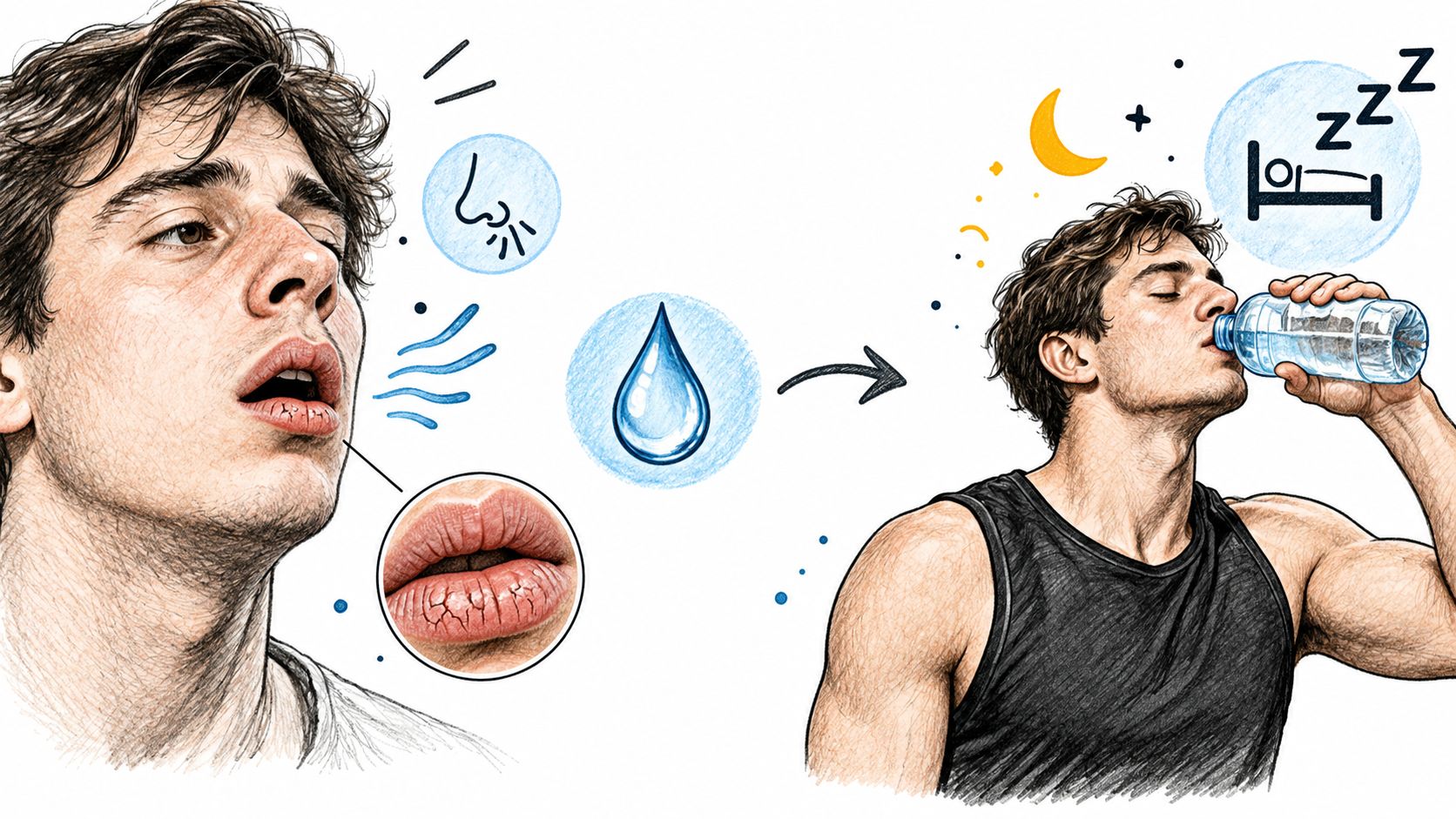
When dry mouth points to breathing
Nasal congestion, snoring, allergies, and an obstructed airway can all encourage mouth breathing. In that situation, drinking a large amount at bedtime treats the sensation but not the source. Work on nasal comfort during the day, keep the bedroom air from becoming uncomfortably dry, and discuss persistent snoring, gasping, or severe morning headaches with a clinician.
Nasal strips can help open the nasal passages for some people. Mouth tape can encourage closed-mouth nasal breathing, but it should only be considered when nasal breathing is comfortable and safe. It isn't a substitute for assessment if you suspect sleep apnea or can't breathe freely through your nose.
For morning dryness: Test the breathing pathway before adding a bedtime water habit. A less irritated mouth may reduce the urge to compensate with late fluid.
Athletes have a different challenge. Training, heat, and sweating can create a real need for water and electrolytes, while a late recovery drink can fill the bladder at exactly the wrong time. The solution is to plan recovery before the final wind-down, take fluids in stages, and avoid waiting until you're already thirsty and fatigued.
For a practical framework that connects training demands with fluid timing, review these HYDAWAY hydration tips for athletes. Your plan should reflect the session, the environment, and your own sweat response rather than copying another athlete's routine.
A late workout may also leave muscles and the nervous system activated. Give yourself a gradual transition, and use sleep recovery for athletes as a broader reference for pairing recovery habits with sleep.
Here's the breathing and hydration sequence I use with active patients: replace meaningful fluid losses earlier, cool down, clear the nose if needed, and reserve only small sips for the final period before bed. Shift workers can apply the same principle to their “biological evening,” even if that occurs during daylight. Their cut-off should follow the intended sleep period, not the clock on the wall.
If dryness, thirst, or nighttime urination persists after you adjust timing and breathing comfort, don't keep escalating home remedies. A clinician can evaluate medications, glucose regulation, kidney function, sleep apnea, and other causes that hydration advice alone won't address.
Building a Restorative Nighttime Routine
Hydration works best as one part of a sequence, not as a standalone cure for insomnia. A person who drinks perfectly but scrolls under bright light, sleeps in an overheated room, or struggles to breathe through a congested nose may still wake unrefreshed.
Start the routine before the bedroom. Finish most meaningful fluid replacement earlier, reduce stimulation, and make the last part of the evening predictable. Dimming lights, cooling the room to a comfortable level, and setting aside screens can help your brain recognize that the demanding part of the day is ending.
Give each habit one job
A restorative routine becomes easier to follow when every step has a clear purpose.
- Hydration timing: Prevent thirst without creating a late bladder workload.
- Breathing support: Improve nasal comfort and reduce the dryness associated with open-mouth breathing.
- Muscle and nervous system recovery: Use a magnesium-based sleep aid only if it fits your needs and health guidance.
- Mental decompression: Journal, read, or practice slow breathing instead of carrying unfinished tasks into bed.
- Environmental control: Keep the room dark, quiet, and comfortably cool.
Nasal Strips are designed to gently open the nasal passages and support smoother airflow during sleep. They may be useful for someone whose nighttime dryness accompanies nasal congestion, but they don't diagnose or treat the causes of snoring or sleep apnea.
The most important distinction is between a helpful adjustment and a forced ritual. If you aren't thirsty, don't drink a large amount because an online routine says you should. If you are thirsty, don't deny yourself a modest drink in pursuit of an inflexible cut-off. Your response should be guided by the pattern you observe over several nights.
Know when self-experimentation ends
Persistent insomnia, repeated nocturia, loud snoring, gasping, severe daytime sleepiness, or unexplained thirst deserves professional evaluation. Hydration changes can improve comfort and continuity, but they won't resolve every sleep disorder.
For the next several evenings, write down your last substantial drink, bedtime, awakenings, bathroom trips, morning thirst, and how restored you feel. Then change one variable, such as moving the final large drink earlier, rather than changing everything at once. That small experiment can reveal whether timing, breathing, or another factor is driving your poor sleep.
The right target isn't maximum hydration at night. It's a stable daytime pattern, a comfortable airway, and an evening routine that lets the kidneys, bladder, brain, and nervous system settle together.
SleepHabits offers melatonin-free recovery support and breathing tools that can complement a well-timed hydration routine, including Restore+, Mouth Tape, and Nasal Strips. Visit SleepHabits to explore options for building a calmer wind-down around nasal breathing, overnight recovery, and more consistent sleep.