

You're drifting off again when a sharp snort jolts you awake. Your mouth feels dry, your partner says you've been snoring, and you're left wondering whether you heard yourself or briefly couldn't breathe.
Waking yourself up snoring is worth noticing, but it isn't a diagnosis. The useful clues are what happens around the noise: gasping, breathing pauses, repeated awakenings, and how you feel the next morning. A quieter night can be welcome without proving that your breathing is normal.
What Causes You to Wake Up Snoring
The sound itself does not show how often your sleep is interrupted. A brief arousal may leave no clear memory by morning, so compare how you feel after waking with what a partner notices. A blocked nose, back sleeping, evening alcohol, sedating medication, and sleep apnea can all contribute, sometimes in combination.
| Cause | Typical signs | First move |
|---|---|---|
| Nasal congestion | Blocked nose, mouth opens during sleep, dry mouth | Try saline and see a clinician if congestion persists |
| Mouth breathing | Dry mouth, snorting, sore throat on waking | Address nasal blockage first; check safety before using Mouth Tape |
| Sleeping on your back | Snoring worse on your back, better on your side | Try side sleeping with a supportive pillow behind you |
| Alcohol or sedatives near bedtime | Snoring worse after evening drinks or sedating medication | Avoid bedtime alcohol; review prescribed sedatives with your clinician |
| Sleep apnea | Gasping, choking, witnessed pauses, daytime sleepiness | Book a sleep evaluation rather than relying on fixes |
A stuffy nose from allergies, a cold, or a deviated septum can make nasal breathing harder. You may wake with a dry mouth and sore throat after breathing through your mouth, while a blocked-nose pattern may include congestion that is still present in the morning. These clues help identify possible triggers, but they do not establish the cause on their own.
Back sleeping can let the tongue and soft palate shift backward. Alcohol relaxes throat muscles, and sedating medicines may also affect nighttime breathing. Don't stop prescribed medication abruptly. Ask the prescriber whether the medicine or its timing needs review.
The NIH's sleep apnea guidance lists relaxed throat and tongue muscles, enlarged tonsils or adenoids, excess neck tissue associated with overweight, a naturally narrow mouth or throat, nasal congestion, and family history as contributors. Smoking can inflame the upper airway. A nasal aid may help when congestion contributes to snoring, but it will not address every cause, including obstruction lower in the throat. For more on common triggers, read this guide to what causes snoring at night.
Why the awakening can feel sudden
With obstructive sleep apnea, airflow becomes restricted or stops even though breathing effort continues. The brain may briefly arouse you to restore airflow, sometimes with a forceful snort or gasp, as described in the NHLBI's healthy sleep guide.
You may remember a dramatic awakening and forget quieter interruptions. Your own memory therefore may not reflect how often your sleep was disrupted. A partner's observations and how you feel in the morning can help put the pattern into context.
Self-check: If waking snoring comes with gasping, choking, or a partner's report of breathing pauses, arrange a sleep evaluation rather than relying on noise-reduction measures alone.
Warning Signs That Point to Sleep Apnea
A snore that wakes you can be easy to dismiss, especially if you forget the brief arousal by morning. Judge the pattern by how you feel after sleep and what a partner observes, not by volume alone. The American Academy of Sleep Medicine identifies excessive daytime sleepiness combined with at least two of diagnosed hypertension, habitual loud snoring, witnessed apnea, or gasping or choking during sleep as a high-risk pattern. This calls for clinical assessment.
Use the checklist to describe what happens. It can help organize symptoms, but a total score from this list cannot diagnose or rule out sleep apnea.
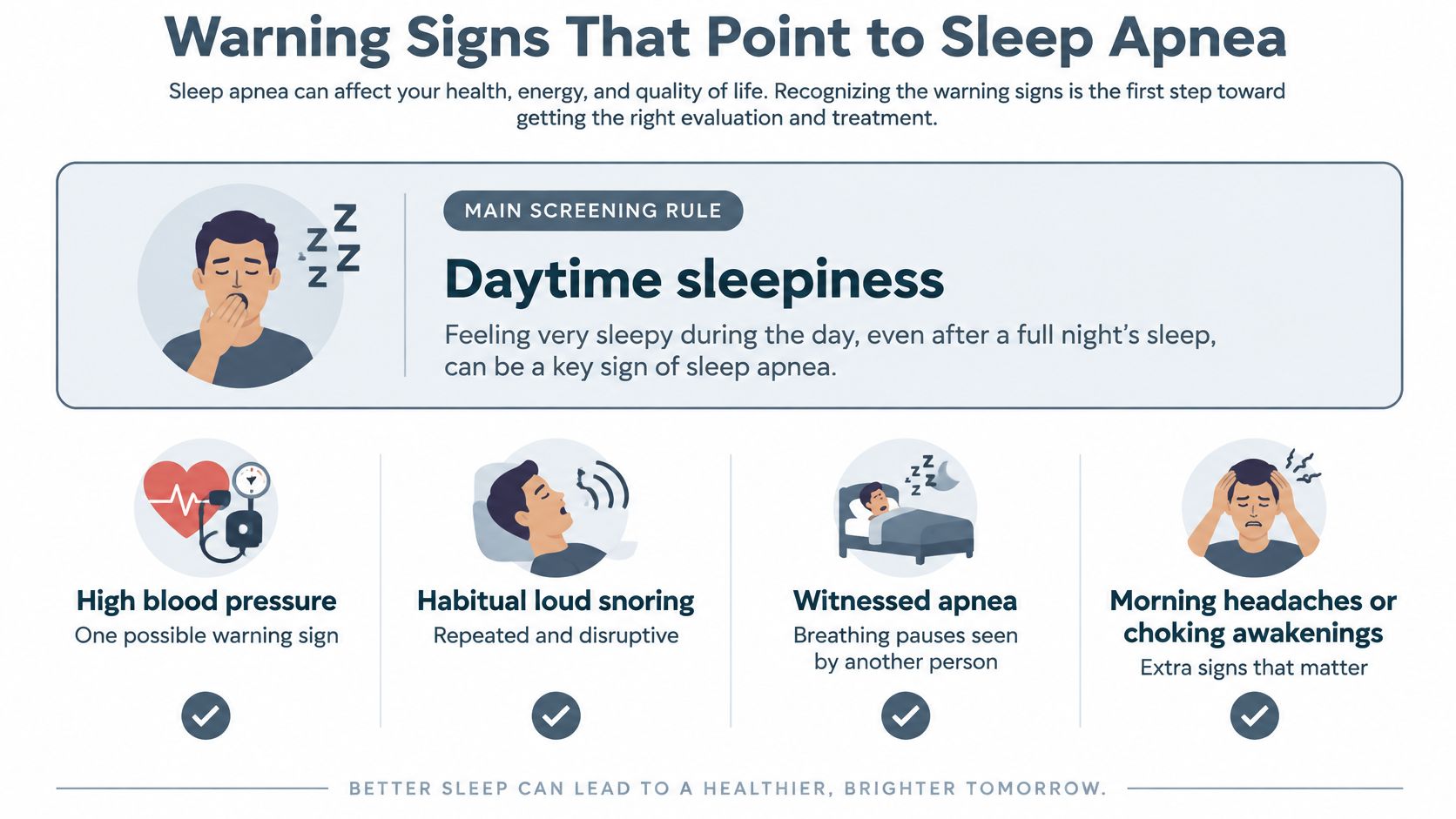
- Waking gasping or choking: Note whether you feel short of breath, startled, or unable to get air.
- Observed breathing pauses: Ask a partner what they notice. You may not remember these interruptions.
- Habitual loud snoring: Repeated, disruptive snoring deserves more attention than an isolated snort.
- Morning headaches: Record when they occur and whether sleep also feels interrupted or unrefreshing.
- Waking unrefreshed: Time spent in bed does not show whether sleep was continuous.
- Dozing during the day: Falling asleep in meetings matters. Sleepiness while driving is an immediate safety concern.
- High blood pressure: Include any diagnosis and your medication list when seeking assessment.
- Nighttime bathroom trips: Mention repeated trips, while keeping in mind that they can have other causes.
Don't wait to feel obviously sleepy
A 48-year-old who wakes choking twice a week, has a partner who notices pauses, and struggles to stay awake after lunch has a pattern that warrants evaluation, even if they describe themselves as a normal snorer.
Sleep apnea can also occur without obvious daytime sleepiness. The Merck Manual's overview of obstructive sleep apnea describes presentations that include fatigue, insomnia, recurrent awakenings, or no obvious daytime symptoms.
A single vague symptom can be logged while you watch for a pattern. Persistent symptoms or breathing warnings merit a prompt appointment with a primary care clinician or sleep clinic. Bring the checklist, including what you feel in the morning and what a partner has observed.
Quick Fixes for the Night You Wake Up Snoring
Start by checking whether you're breathing comfortably now. These steps are for an episode that has settled, not for ongoing breathing difficulty.
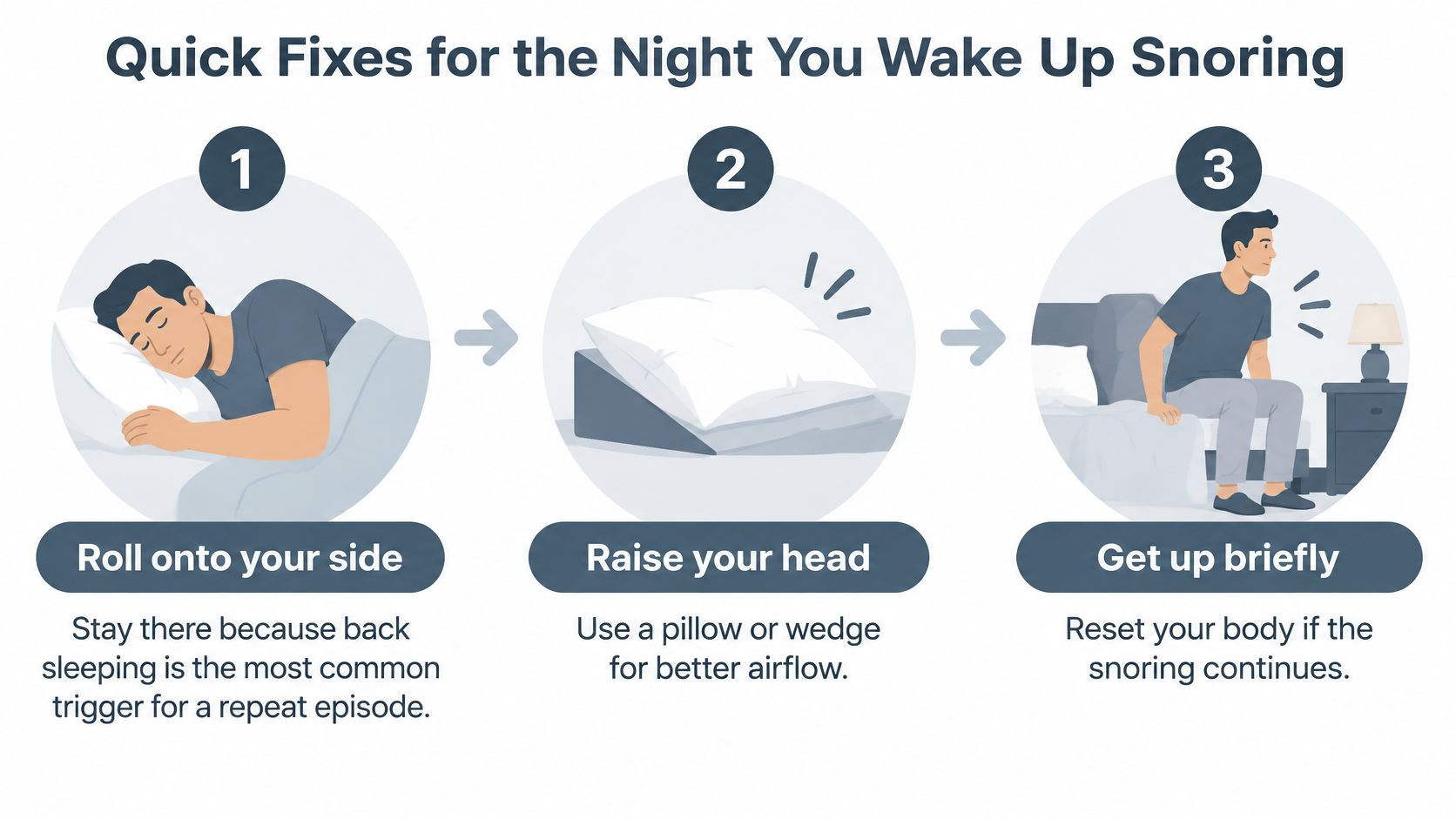
- Roll onto your side and support the position. Put a pillow behind your back if you tend to roll over again. Don't assume that changing position makes an episode harmless, especially if you woke choking.
- Try gentle upper-body elevation. A wedge can support your torso without folding your chin toward your chest. The common mistake is stacking soft pillows until your neck bends awkwardly.
- Let nasal breathing return without forcing it. If you can breathe comfortably through your nose, relax your jaw and take slow breaths. Saline may help congestion, while Nasal Strips gently lift the nasal passages to support airflow; neither approach treats a collapsing throat.
- Sit upright if you feel choked. Wait until your breathing feels comfortable before lying back down on your side. If you can't breathe, have persistent severe breathlessness, or develop chest pain, call emergency services rather than continuing these steps.
- Take a small drink if your mouth is dry. Water can ease discomfort, but it won't correct an airway obstruction. Keep lights low and leave your phone alone so checking the time doesn't turn into an extended wakeful spell.
- Make a brief note. Record the position you woke in, whether there was gasping, and any evening alcohol or sedating medication. Don't spend the rest of the night repeatedly checking recordings or watching the clock.
These position changes are simple comfort measures to try once you're breathing normally.
Judge the result by more than silence
An occasional snort that settles after a position change is different from repeatedly waking in distress. If you're gasping most nights, the useful next step is arranging medical assessment, not finding a stronger adhesive or a taller stack of pillows.
A comfortable night might mean easy breathing, fewer jolts awake, and a better morning. Still, less audible snoring isn't proof that breathing events have stopped.
Don't ask a partner only whether you were quieter. Ask whether they noticed pauses, struggling breaths, or a gasp after a silent interval.
If you're alone, focus on the sensations you remember and how you function the following day. You don't need a witness before bringing recurrent awakenings to a clinician.
Nightly Habits and Devices That Reduce Snoring
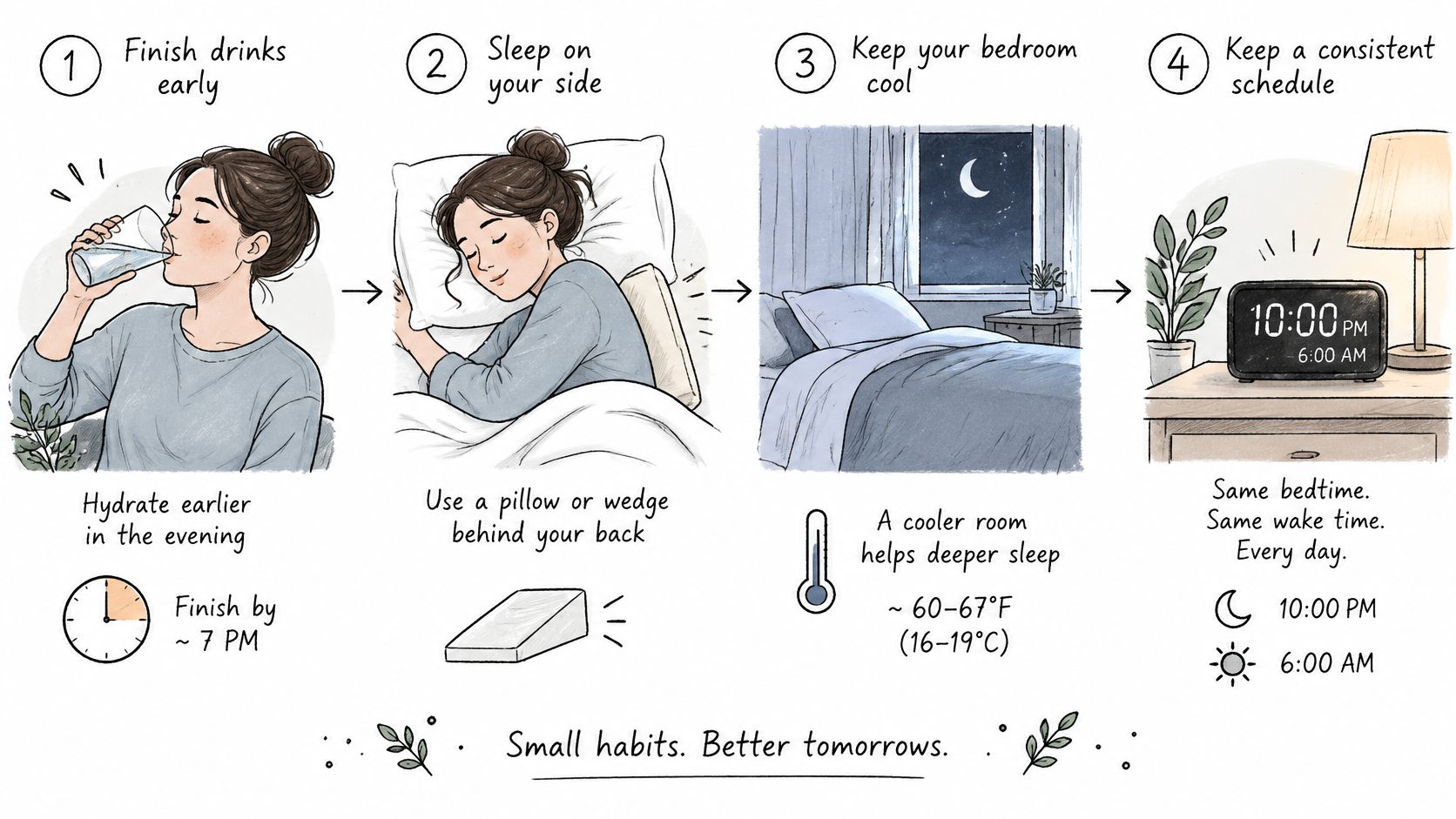
Repeated snoring can fragment sleep even when you do not remember waking. A partner may notice the pattern, while your clues may be a groggy morning or repeated overnight arousals. Keep a comfortable side-sleeping position, avoid alcohol close to bedtime, maintain a cool room, and aim for consistent sleep and wake times. If medication makes you drowsy, ask your prescriber about it rather than changing the dose yourself.
Habits and devices compared for snoring
| Option | How it helps | Limits |
|---|---|---|
| Side sleeping | May reduce backward movement of the tongue and soft palate | May help less when nasal blockage is prominent |
| Nasal strips | Gently lift and open nasal passages to reduce resistance and improve airflow | Do not treat throat collapse or sleep apnea |
| Mouth tape | Gently encourages nasal breathing during sleep | Avoid if your nose is blocked or you experience gasping, choking, or skin irritation |
| Head elevation | May reduce airway crowding while lying down | Does not establish or treat the cause of repeated awakenings |
| Wind-down ritual | Dim lights, limit screens, and keep bedtimes consistent | Supports sleep habits, but may not reduce snoring itself |
Match the tool to the problem
Nasal strips are most relevant when nasal airflow is restricted. Read about nasal strips for snoring to understand how they may improve airflow, and where their limits lie. They cannot address every cause of snoring.
For head elevation, DME Superstore's wedge pillow guide explains wedge positioning. Choose a setup that keeps your neck comfortable and does not push your head forward.
Mouth tape gently encourages nasal breathing, but skip it if you have nasal blockage, gasping, choking, or skin irritation. Repeated unexplained awakenings call for attention to the pattern, not just a tighter seal.
SleepHabits' Restore+ is designed to work as part of a nightly ritual that includes a cool room, nasal breathing, limited screens, and consistent sleep and wake times. Use the video below to review these evening habits.
Run a short, controlled trial
If you have no concerning breathing symptoms, observe changes over a two-week period. Adjust one factor at a time, such as sleep position or a nasal aid, and note awakenings, comfort, and morning alertness. The aim is to see whether a particular change helps, not to assume quieter snoring means better breathing.
A single good night is weak evidence. If the awakenings continue over the following weeks, arrange an assessment instead of adding more devices. If warning signs appear, seek medical advice without waiting for the trial to end.
How Doctors Confirm Sleep Apnea and What Tests Show
Bring a record of what happens, not just a conclusion that you snore. A practical starting point is a one- to two-week sleep diary recording bedtime, awakenings, morning headaches, daytime sleepiness, alcohol or sedative use, and observed breathing pauses, alongside the clinical assessment described in the AASM's polysomnography practice parameters.
An audio clip is optional. It can demonstrate a snoring-and-gasping pattern, but it can't establish airflow, sleep stage, or whether an event meets diagnostic criteria. Take the diary and any useful recording to a clinician, who can decide which test fits your symptoms and medical history.
Sleep apnea tests and what each one shows
| Test | What it shows | Best use |
|---|---|---|
| Home sleep apnea test | Breathing and blood oxygen overnight | Confirms a case already highly suspected in an appropriately selected patient |
| In-lab polysomnography | Sleep stages, airflow, effort, oxygen, heart rate, and arousals | Reference standard for diagnosis |
| Audio recording | Snoring and gasping pattern | Helpful clue; cannot diagnose |
What the measurements mean
The apnea-hypopnea index, or AHI, counts apneas and hypopneas per hour of sleep. In-lab testing also lets clinicians connect breathing changes with sleep stages and brief arousals, giving them information that a microphone or limited home device can't provide.
Common diagnostic criteria include at least 15 breathing events per hour, or at least 5 with relevant symptoms, such as sleepiness, unrefreshing sleep, insomnia, or waking gasping, as outlined in the AASM's snoring and sleep apnea patient guide. These are measured breathing events, not the number of snorts you remember.
Feeling fine during the day doesn't automatically remove the need for testing. Repeated awakenings and a partner's report of pauses still deserve review. Our guide to whether snoring is a sign of sleep apnea can help you prepare questions for that visit.
When a home result needs follow-up
A negative home test doesn't always settle the issue. Some devices use recording time rather than verified sleep time, which can underestimate event frequency, and limited devices may miss breathing events associated mainly with arousals.
Bring the mismatch back: If the result looks reassuring but gasping and observed pauses continue, tell the clinician exactly what hasn't changed.
At SleepHabits, we recommend a sleep test to start building better sleep habits. After a confirmed diagnosis, the clinician chooses treatment according to the findings and your circumstances, which may include positive airway pressure rather than consumer anti-snoring tools.
Decide Your Next Step Before Next Bedtime
If snoring wakes you occasionally and you have no other breathing concerns, begin with a simple routine trial. Try comfortable side sleeping, address nasal congestion, and note how you feel in the morning. The sound itself is only part of the picture. Brief arousals may be forgotten, so your morning symptoms and a partner's observations can reveal a pattern that loudness alone cannot.
If you have current breathing difficulty or severe ongoing breathlessness, call emergency services. Severe sleepiness while driving calls for a different immediate action: pull over safely, stop driving, and arrange alternative transport and urgent medical advice. Recurrent nighttime gasping needs prompt assessment, though it is not automatically an emergency after normal breathing has returned.
A month of useful observations
A 30-day plan can make your observations easier to review:
- Week one: Record your nights and try side sleeping. Ask a partner to note specific observations, rather than rating the snoring as loud or quiet.
- Week two: If nasal blockage seems to be the main issue, try one appropriate nasal aid. Keep the rest of your routine steady so you can assess comfort and awakenings.
- Week three: Review the log for morning symptoms and daytime impairment. Contact a clinician promptly if concerning symptoms emerge.
- Week four: Consider whether the awakenings have eased or continue. Ongoing disruptions merit attention even if the snoring has become quieter.
Keep the record simple. A note that you woke choking, slept on your back, and felt exhausted in the morning gives useful context. An elaborate sleep score without those details may tell you less.
Nasal strips and mouth tape can support nasal breathing, but they do not rule out apnea. Mouth tape gently encourages nasal breathing during sleep. Use either product as a comfort aid, not as a substitute for medical assessment when breathing problems continue.
SleepHabits offers nighttime breathing tools and practical education for building a consistent sleep routine. Explore its nasal-breathing support at SleepHabits. Choose the next step by considering how often you wake, how you feel the next morning, and what a partner observes. Aim for breathing that stays quiet and uninterrupted through the night.