

You wake up, swallow, and immediately notice the same unpleasant feeling: a sticky tongue, rough throat, dry lips, and breath that doesn't feel fresh. A glass of water helps for a little while, but the cottonmouth often returns the next morning. If that sounds familiar, you may be wondering what causes cottonmouth in the morning and whether dehydration is really the whole explanation.
Morning dryness often reflects several overnight processes happening together. Saliva production naturally slows during sleep, air can evaporate moisture from your mouth if you breathe through it, and medications, congestion, alcohol, bedroom air, or an underlying sleep disorder may intensify the effect. Understanding which pattern fits your symptoms helps you choose sensible relief and recognize when dry mouth deserves medical attention.
Understanding Morning Dry Mouth
Cottonmouth, clinically called xerostomia or subjective dry mouth, usually appears when your mouth loses moisture faster than your body replaces it. During the day, talking, eating, drinking, and chewing stimulate saliva. At night, those signals become much quieter, so your mouth has less natural lubrication available while you sleep.
Saliva also follows a circadian rhythm. Flow is highest during the day, becomes weak in the morning after sleep, and decreases again at night, according to research on dry mouth and sleep-related breathing published in the National Library of Medicine. That normal nighttime reduction explains why you can wake with a parched mouth even after drinking enough during the day.
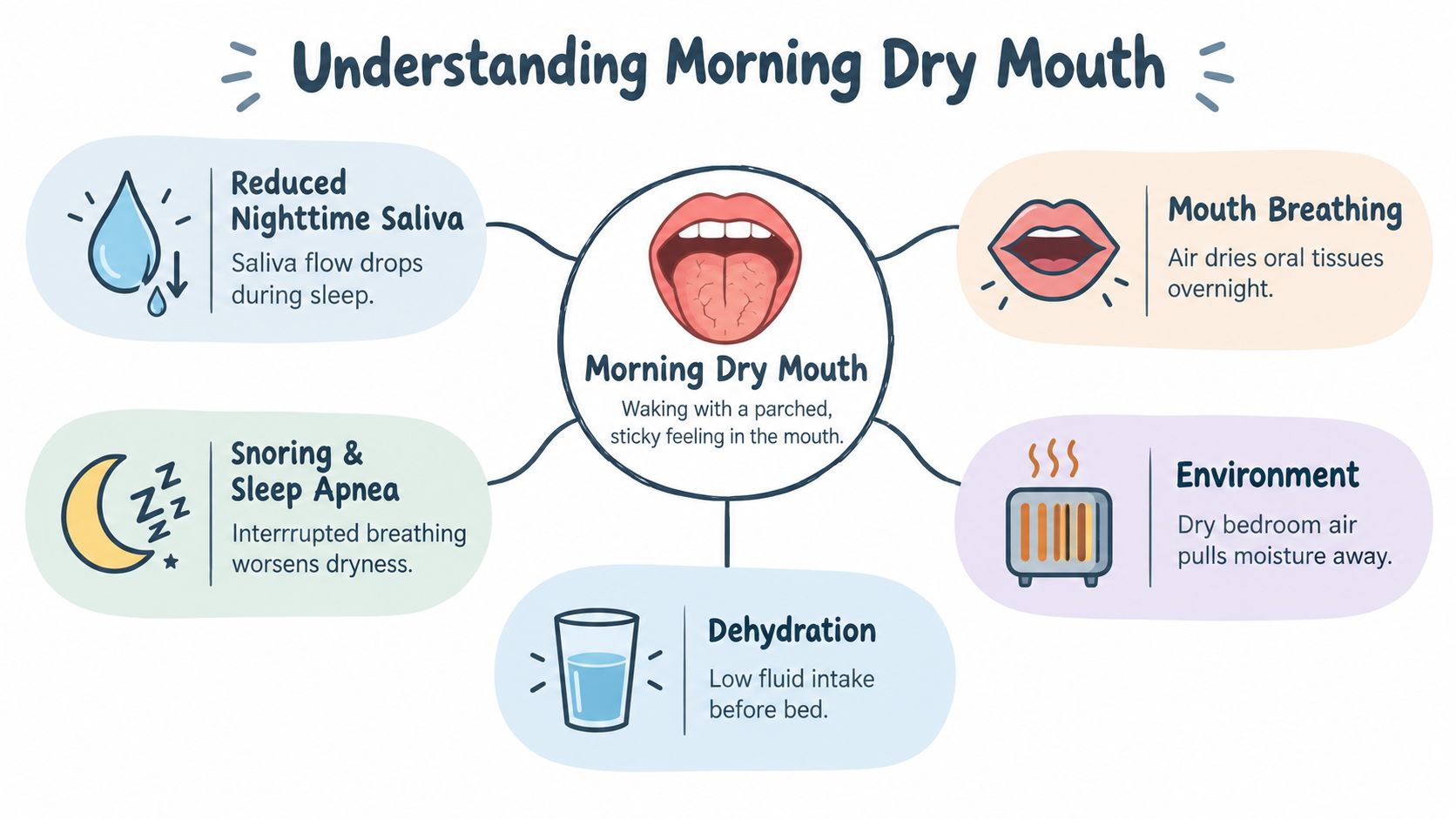
Why a drink may not solve the cause
Water replaces some fluid, but it doesn't automatically restore saliva production or stop air from moving across your oral tissues. If your nose is blocked and your mouth stays open for much of the night, you may keep losing moisture while you sleep. In that case, drinking more after waking treats the sensation, not the process that caused it.
The feeling can range from mild tackiness to a tongue that seems stuck to the roof of your mouth. You might also notice thirst, dry lips, thick saliva, morning bad breath, or difficulty swallowing. These clues point toward overnight dryness, but they don't identify one single cause.
Practical rule: Treat morning water as relief, not proof that dehydration caused the problem.
A useful first question is whether the dryness is occasional or persistent. A dry mouth after alcohol, illness, a salty late-night meal, or an unusually warm bedroom may settle when the trigger passes. Cottonmouth that appears repeatedly, especially with snoring or a blocked nose, deserves a closer look at nighttime breathing.
The Role of Breathing During Sleep
Your nose prepares incoming air by filtering and humidifying it. Your mouth doesn't provide the same enclosed route, so sleeping with your lips open exposes the tongue, gums, cheeks, and throat directly to moving air. A simple analogy is a closed room with a humidifier compared with an open window on a dry night. The first preserves moisture. The second lets it escape.
Nasal congestion, allergies, a cold, swollen nasal tissue, snoring, and sleep-disordered breathing can all shift ventilation from the nose to the mouth. You may not remember opening your mouth, because the change happens while you're asleep. Waking with a sticky tongue and a dry throat, particularly after a congested night, can be a practical clue.
Unstimulated parotid saliva normally flows at approximately 0.4–1.5 mL/min per gland, but oral moisture can fall substantially overnight when congestion, snoring, or sleep-disordered breathing leads to mouth breathing, as described in clinical background on dry mouth and reduced salivary flow. Mouth opening increases airflow over oral mucosa, accelerating water loss while sleep-related saliva reduction limits replacement.
Clues that breathing is involved
Look for a pattern rather than one isolated symptom:
- Nasal symptoms: You went to bed congested, woke with a blocked nose, or experience seasonal allergies.
- Mouth signs: Your lips feel dry, your tongue is sticky, or your throat feels scratchy as soon as you wake.
- Sleep clues: A partner notices open-mouth sleeping, snoring, restless breathing, or frequent repositioning.
- Morning changes: Dryness is worse after nights when congestion or snoring is more pronounced.
You can learn more about the difference between nasal and oral breathing in this guide to breathing through the nose. Improving nasal airflow may reduce one contributor, but it shouldn't be used to dismiss loud snoring, breathing pauses, or significant daytime fatigue.
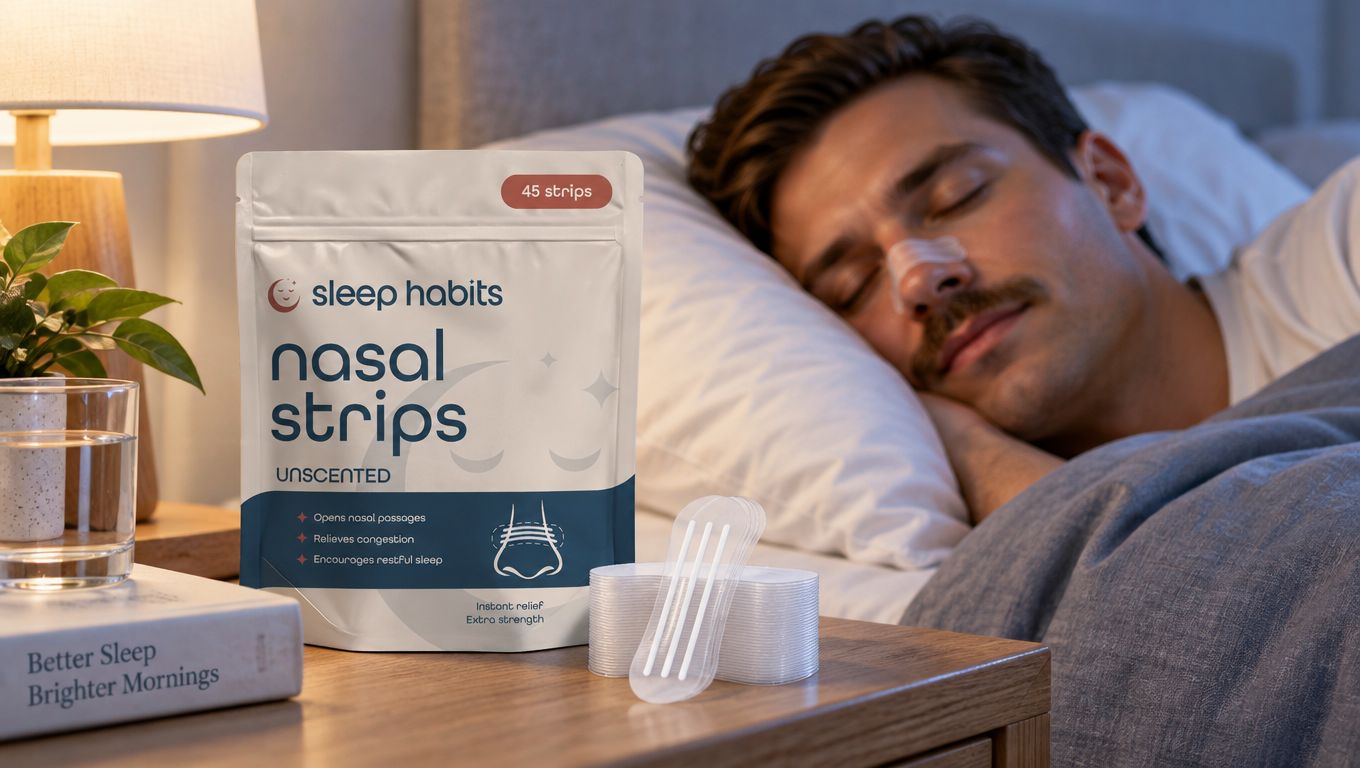
For people whose main issue is restricted nasal airflow, Nasal Strips are designed to gently open the nasal passages and support smoother airflow. They may be relevant when congestion contributes to mouth breathing, but they aren't a diagnostic test or a substitute for evaluation of suspected sleep apnea.
Sleep Apnea and Breathing Disorders
You may wake with a mouth as dry as paper, even after drinking enough water the evening before. If that dryness keeps returning alongside snoring or restless sleep, the pattern may involve overnight breathing rather than thirst alone.
Obstructive sleep apnea, or OSA, repeatedly narrows or blocks the upper airway during sleep. Airflow becomes difficult, so a person may snore, open the mouth to breathe, briefly wake, and then fall asleep again without remembering the event. Each episode can shift breathing from a quiet nasal route to a faster, moisture-losing route through the mouth.
A clinical study of people with OSA reported dry mouth upon awakening in approximately 22.4% to 40.7% of patients, with prevalence increasing as OSA became more severe. The same study found that OSA patients were more likely than controls to spend over half of their sleep time with the mouth open, 55% versus 6.7%. The proportion spending less than half the night mouth-open was 41.7% versus 20%, according to the study indexed by PubMed.
Another clinical study found xerostomia on waking in 45% of patients with sleep-apnea-hypopnea syndrome, compared with 20.4% of controls. Affected patients predominantly breathed through the mouth, as reported in this clinical study of sleep apnea and dry mouth. These findings do not mean that every dry mouth indicates OSA. They do show why repeated cottonmouth can act as a breathing clue.
A practical triage framework
Use the pattern, not one symptom, to decide what to do:
- Likely temporary: Dryness follows a clear short-term trigger, such as alcohol, illness, a dry room, or one congested night, and improves when that trigger resolves.
- Worth discussing: Cottonmouth returns regularly, especially with persistent snoring, open-mouth sleeping, or morning throat irritation.
- Seek medical assessment: Dryness occurs with loud snoring, witnessed breathing pauses, gasping, morning headaches, resistant hypertension, or excessive daytime sleepiness.
In the PubMed-indexed study, morning dry mouth occurred in 31.4% of people with OSA, 16.4% of primary snorers, and 3.2% of controls. In severe OSA, prevalence reached 40.7%, and morning dry mouth helped distinguish OSA from ordinary snoring, with an odds ratio of 2.33.
If this pattern sounds familiar, you can find sleep apnea care through a dental or medical care team. This guide to sleep-disordered breathing explains related airway problems in plain language. Water or a humidifier may ease discomfort, but they cannot explain or treat repeated interruptions in breathing.
Lifestyle Factors and Medical Contributors
Nighttime breathing is only one branch of the explanation. Medication effects, health conditions, fluid balance, and the bedroom environment can all affect how much moisture remains in your mouth by morning. The most useful comparison is whether a factor is temporary and easy to identify, or persistent and better assessed by a clinician.
A 2018 systematic review estimated that xerostomia affects about 22% of the global population, although rates vary with age, health status, and how dry mouth is measured, according to the American Dental Association's overview of xerostomia.
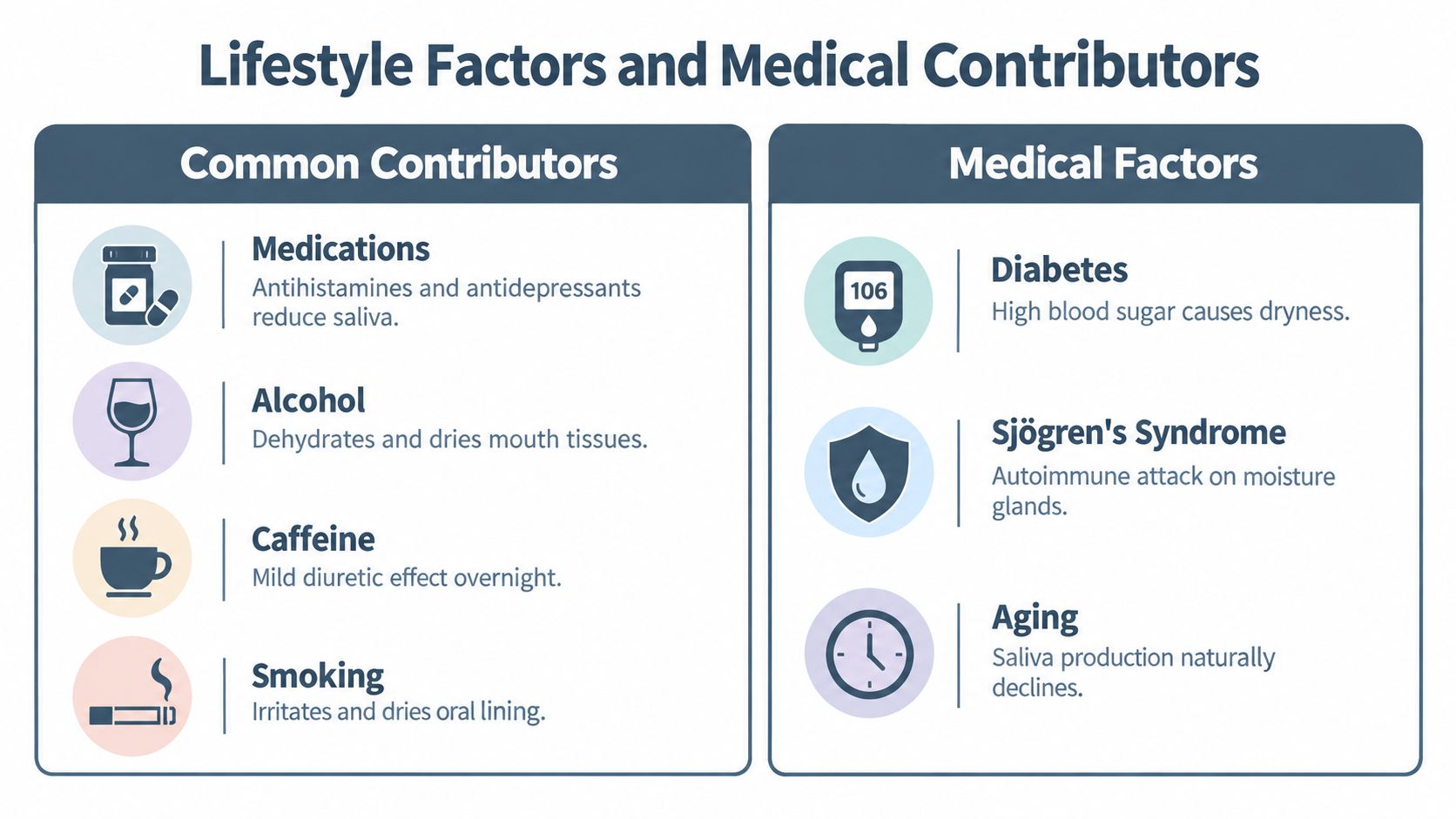
Temporary contributors
Alcohol, dehydration, a dry bedroom, and late-night salty foods can make morning dryness more noticeable. Their advantage is that you can often identify a clear relationship. If symptoms appear after a particular evening habit and ease when you change it, that pattern supports a lifestyle contribution.
Smoking can irritate oral tissues and may worsen dryness. Caffeine and alcohol may also fit into an individual's pattern, but don't assume every morning symptom comes from what you drank the night before. The natural fall in nighttime saliva can make dryness noticeable even when daytime hydration is adequate.
Medical and medication-related contributors
Medications deserve a careful review, especially if cottonmouth began after starting or changing treatment. Anticholinergic medicines can reduce salivary secretion, and one analysis found that each additional anticholinergic medication was associated with 50% higher odds of xerostomia, with an odds ratio of 1.50, according to the ADA resource linked above.
Other recognized contributors include chemotherapy or head-and-neck radiation, autoimmune disease such as Sjögren disease, uncontrolled diabetes, infections, and hormonal changes. Older adults may face greater risk because polypharmacy and chronic conditions can overlap.
| Pattern | More consistent with | Sensible next step |
|---|---|---|
| Appears after a dry or disruptive night | Environment or temporary habits | Adjust the room and observe whether it settles |
| Starts after a new medicine | Medication-related dryness | Review the full medication list with a clinician or pharmacist |
| Continues with thirst or frequent urination | Possible systemic contributor | Arrange medical evaluation |
| Occurs with snoring or breathing pauses | Sleep-disordered breathing | Seek assessment rather than only increasing water |
Mouth Tape is described as a tool that encourages nasal breathing by keeping the lips comfortably sealed during sleep. It shouldn't be used to force the mouth closed when nasal breathing is impaired or when sleep apnea is suspected. Discuss the cause of mouth breathing first, and never change prescribed medication independently.
Practical Solutions for Better Rest
Start with measures that support moisture and make nasal breathing easier, without assuming that one remedy fits every cause. Clinical guidance recommends increasing water intake, using a bedroom humidifier, treating the cause of mouth breathing, sipping water frequently, and using sugar-free gum or lozenges to stimulate salivary flow, as outlined in clinical guidance on dry-mouth management.
Build a simple evening routine
- Hydrate across the day: Sip water regularly instead of trying to compensate with a large drink immediately before bed.
- Check the bedroom: A humidifier can add moisture when indoor air feels dry, particularly when heating is running.
- Support the nose: Address congestion or allergy symptoms with advice from a healthcare professional, and notice whether clearer nasal airflow changes your morning mouth.
- Stimulate saliva safely: Sugar-free gum or lozenges during the day can encourage salivary flow. Sugary sweets aren't an equivalent substitute.
- Keep relief nearby: Water at the bedside can ease symptoms when you wake, while a saliva substitute may provide more sustained lubrication.
Saliva substitutes come as oral gels, sprays, rinses, and lozenges. A gel-type product may be more suitable overnight, while a more fluid product can be convenient during the day. These products ease discomfort, but they won't correct medication effects, nasal obstruction, or untreated sleep-disordered breathing.
For a broader routine focused on reducing overnight dryness, use this guide to prevent nighttime dry mouth. If you already breathe comfortably through your nose and a clinician has ruled out concerning airway problems, a product such as Restore+ Sleep Aid is described as melatonin-free support designed around nitric oxide production, nervous-system regulation, and overnight oxygen delivery. It shouldn't replace assessment or prescribed treatment for a sleep disorder.
A humidifier helps only when dry air is part of the problem. Similarly, nasal support may help congestion-related mouth breathing but won't diagnose why someone snores or gasps. Use each measure as a way to test and reduce a plausible contributor, not as evidence that a serious cause has been excluded.
Give a change enough time to reveal a pattern, and track simple observations such as congestion, alcohol, medication timing, snoring, and how dry your mouth feels on waking. If the symptom remains frequent or combines with breathing warning signs, move from self-care to professional evaluation.
When to Seek Professional Help
Arrange dental or medical advice when cottonmouth is persistent, painful, or accompanied by difficulty swallowing, excessive thirst, frequent urination, or a recent medication change. Those features can point beyond ordinary overnight evaporation and may need a review of your health history, medicines, saliva production, or oral tissues.
Seek assessment sooner when dry mouth appears with loud snoring, witnessed breathing pauses, gasping, morning headaches, resistant hypertension, or daytime sleepiness. That combination raises concern about sleep-disordered breathing, and hydration alone won't address a narrowed airway.
Common questions
Will drinking more water fix morning cottonmouth? It may relieve thirst and support hydration, but it won't necessarily increase nighttime saliva or stop mouth breathing. If the dryness keeps returning, look for the factor that continues overnight.
How quickly should habits help? Some people notice comfort changes after improving room humidity, nasal comfort, or daytime fluid intake, but there isn't one guaranteed timeline. If symptoms don't improve or become more severe, ask a clinician or dentist to investigate.
Can I tape my mouth shut? Don't use mouth tape to conceal snoring, gasping, blocked nasal breathing, or suspected sleep apnea. Identify and address the breathing problem first, and seek professional guidance when warning signs are present.
The central distinction is simple: occasional dryness may reflect normal nighttime saliva reduction plus a temporary trigger, while recurring cottonmouth with breathing symptoms deserves evaluation.
SleepHabits offers educational resources and nighttime breathing tools, including nasal strips, mouth tape, and melatonin-free recovery support, to help you explore practical ways to reduce mouth breathing. Visit SleepHabits to learn more, while seeking professional care if your morning dryness comes with signs of sleep apnea or another medical condition.