

Professionally fitted mandibular advancement devices can reduce snoring in many adults, with pooled research reporting an average 45% reduction, but generic over-the-counter mouthguards aren't equivalent to medically effective oral appliances. The key question isn't whether a product is called a mouthguard, but whether it advances the lower jaw in a controlled way and whether obstructive sleep apnea has been excluded.
The Mouthguard Myth That Needs Debunking
A mouthguard made for sports, teeth grinding, or general protection isn't automatically a snoring treatment. The popular advice that “any mouthguard can help” skips the feature that matters most: controlled mandibular advancement. A generic guard may cushion the teeth without changing the position of the jaw, tongue, or soft tissues around the throat.
That distinction matters because snoring happens when relaxed tissues vibrate as air moves through a narrowed upper airway. A therapeutic mandibular advancement device, or MAD, is designed to alter that airway space. An ordinary night guard may feel comfortable and reduce tooth contact, yet do nothing for the anatomical narrowing that produces snoring.
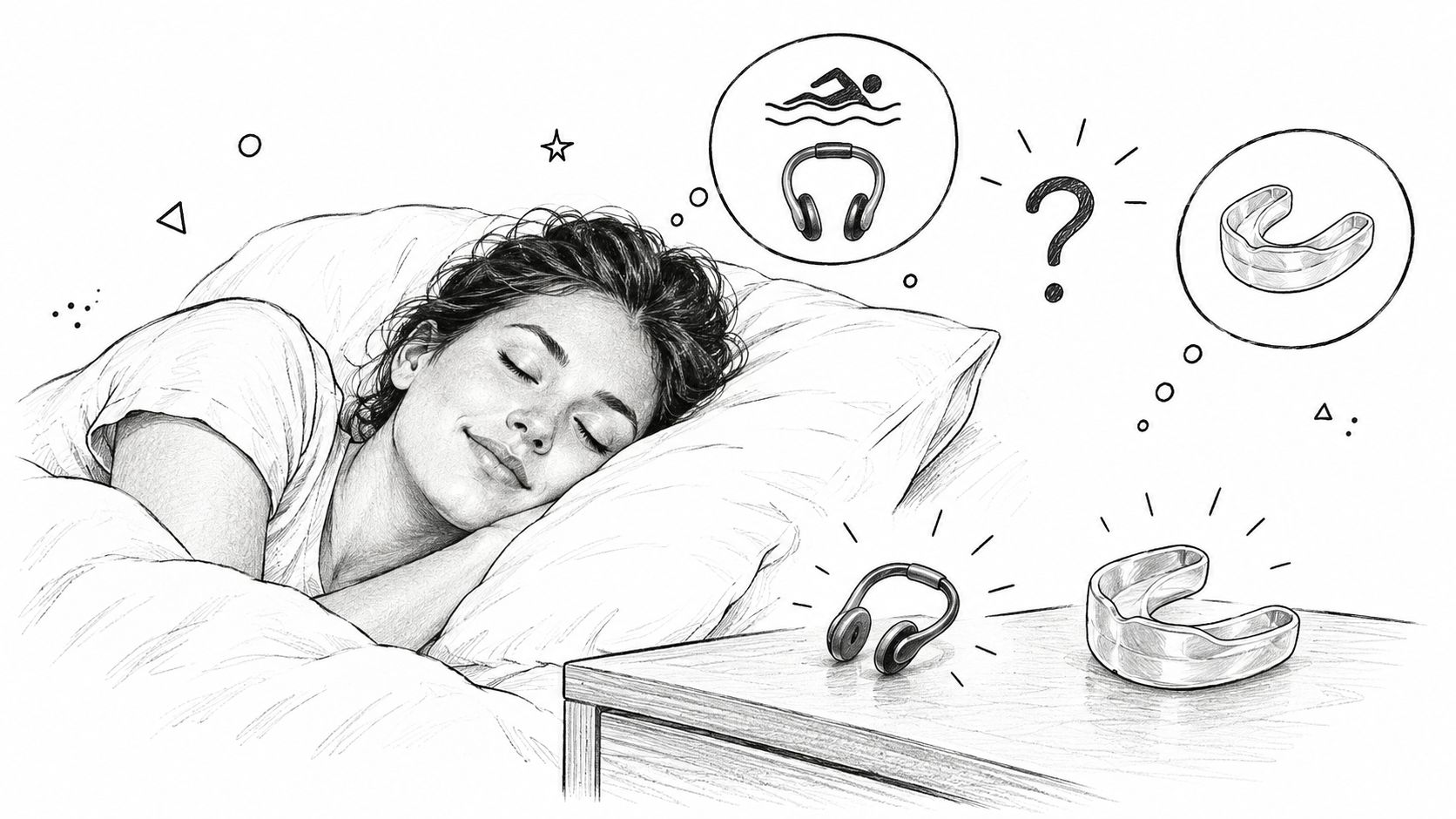
A systematic review screened 905 publications and included 18 studies evaluating mandibular advancement devices for primary snoring and related sleep-breathing disorders. Reported outcomes improved across the included patient populations, although relatively few studies focused only on primary snoring. The devices generally advanced the mandible to approximately 50% to 70% of its maximum protrusion, while temporomandibular-joint discomfort and increased salivation were the most frequent adverse effects and commonly became less severe over time (systematic review of mandibular advancement devices).
Practical rule: A product's label is not enough. Ask whether it advances the lower jaw, allows adjustment, and comes with appropriate clinical supervision.
The risk of choosing the wrong product goes beyond wasted money or an uncomfortable night. Persistent snoring can accompany obstructive sleep apnea, and a device that makes the sound quieter may leave nighttime breathing interruptions untreated. For background on possible causes, see this guide to what causes snoring at night.
How Mandibular Advancement Devices Work on Your Airway
A true MAD works by moving the lower jaw forward while you sleep. The tongue base is usually attached to the lower jaw, so bringing the jaw forward also draws that part of the tongue and nearby soft tissues away from the back of the throat. The resulting space can reduce the tendency of relaxed tissues to vibrate during inhalation.
Think of the throat like a flexible hose. If the walls move closer together, airflow becomes noisier and less stable. Advancing the jaw can help widen the passage, although the effect varies with anatomy, sleep position, muscle tone, and the presence or absence of sleep apnea.
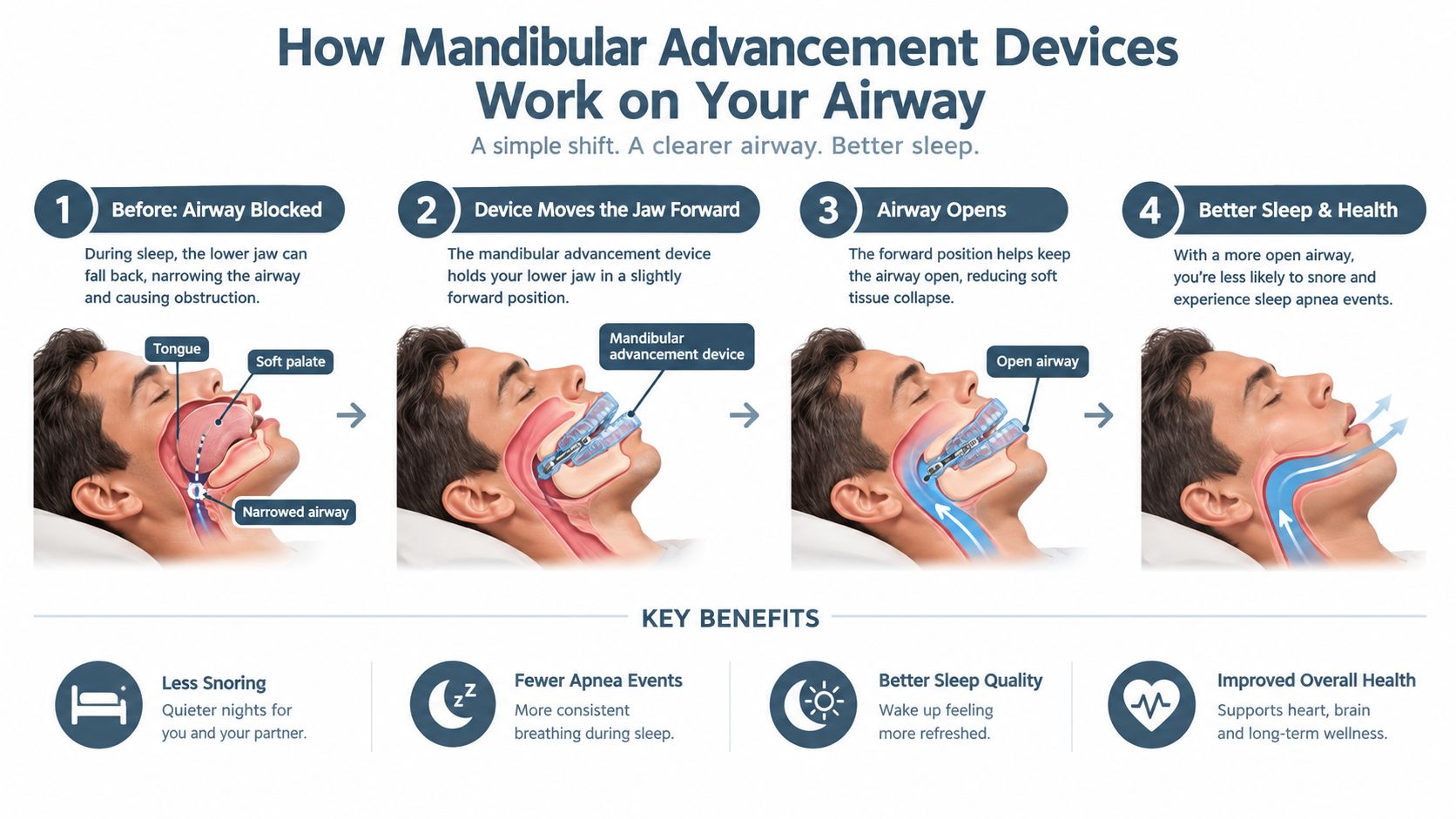
The American Academy of Sleep Medicine recommends oral appliances over no treatment for adults with clinically confirmed primary snoring, but only after obstructive sleep apnea has been excluded. That recommendation applies to a genuine mandibular-advancement appliance, not just any guard. Devices that only separate the teeth or increase vertical opening may fail to improve airway mechanics, and some studies found that vertical opening without advancement could worsen the apnea-hypopnea index (AASM clinical guidance).
Nasal airflow can also influence how someone breathes at night. Congestion or allergies may encourage mouth breathing, which can contribute to snoring and restless sleep. A product such as Nasal Strips is intended to gently open the nasal passages, but it doesn't reposition the jaw and shouldn't be treated as an alternative to a MAD or sleep-apnea evaluation.
What Clinical Evidence Says About Snoring Reduction
The answer to “do mouthguards help snoring?” depends on which device is being studied. Some oral appliances reduce snoring, but results differ between people and devices. In pooled randomized, placebo-controlled research, oral appliances produced an average 45% reduction in snoring. Outcomes varied, and custom appliances generally had stronger support than generic, non-adjustable guards (pooled oral-appliance evidence).
That average is a group result, not a promise for every user. Someone whose snoring comes mainly from jaw-related airway narrowing may respond to mandibular advancement. Nasal obstruction, soft-tissue collapse, central apnea, or another sleep disorder can require a different treatment. Less noise in the bedroom is helpful, but it does not show that overnight breathing has become medically safe.
Snoring control is not the same as apnea treatment
Research comparing mandibular-advancement splints with continuous positive airway pressure found treatment success of approximately 56% for mandibular-advancement splints and 60% for CPAP in non-severe cases. In severe cases, the figures were approximately 50% and 75%, respectively. The comparison shows why a therapeutic appliance and a generic mouthguard cannot be treated as equivalent (review comparing oral appliances and CPAP).
These findings support oral appliances for primary snoring and for selected mild-to-moderate obstructive sleep apnea. They do not justify replacing clinical evaluation with an inexpensive guard, particularly when breathing pauses, gasping, or daytime sleepiness occurs.
Restore+ Sleep Aid is a separate, melatonin-free product described as supporting nitric oxide production, nervous-system regulation, and overnight oxygen delivery. It does not mechanically open the airway or replace evaluation and treatment for suspected sleep apnea.
Custom Appliances Versus Over-the-Counter Mouthguards
The practical difference is adjustment. A custom, titratable appliance can be fitted to the patient's teeth and advanced gradually. A generic thermoplastic guard may mold around the teeth, but it usually can't reproduce the same retention, controlled jaw movement, or professional monitoring.
| Feature | Custom mandibular-advancement appliance | Generic mouthguard |
|---|---|---|
| Main purpose | Advances the lower jaw to affect airway space | Often protects teeth or separates them |
| Adjustment | Incremental advancement is possible | Usually limited or absent |
| Retention | Designed around the patient's dentition | Fit may be variable |
| Monitoring | Dentist can assess symptoms, bite, and side effects | User generally manages the device alone |
| Evidence relevance | Matches the mechanism studied in oral-appliance research | Evidence can't be assumed from the label |
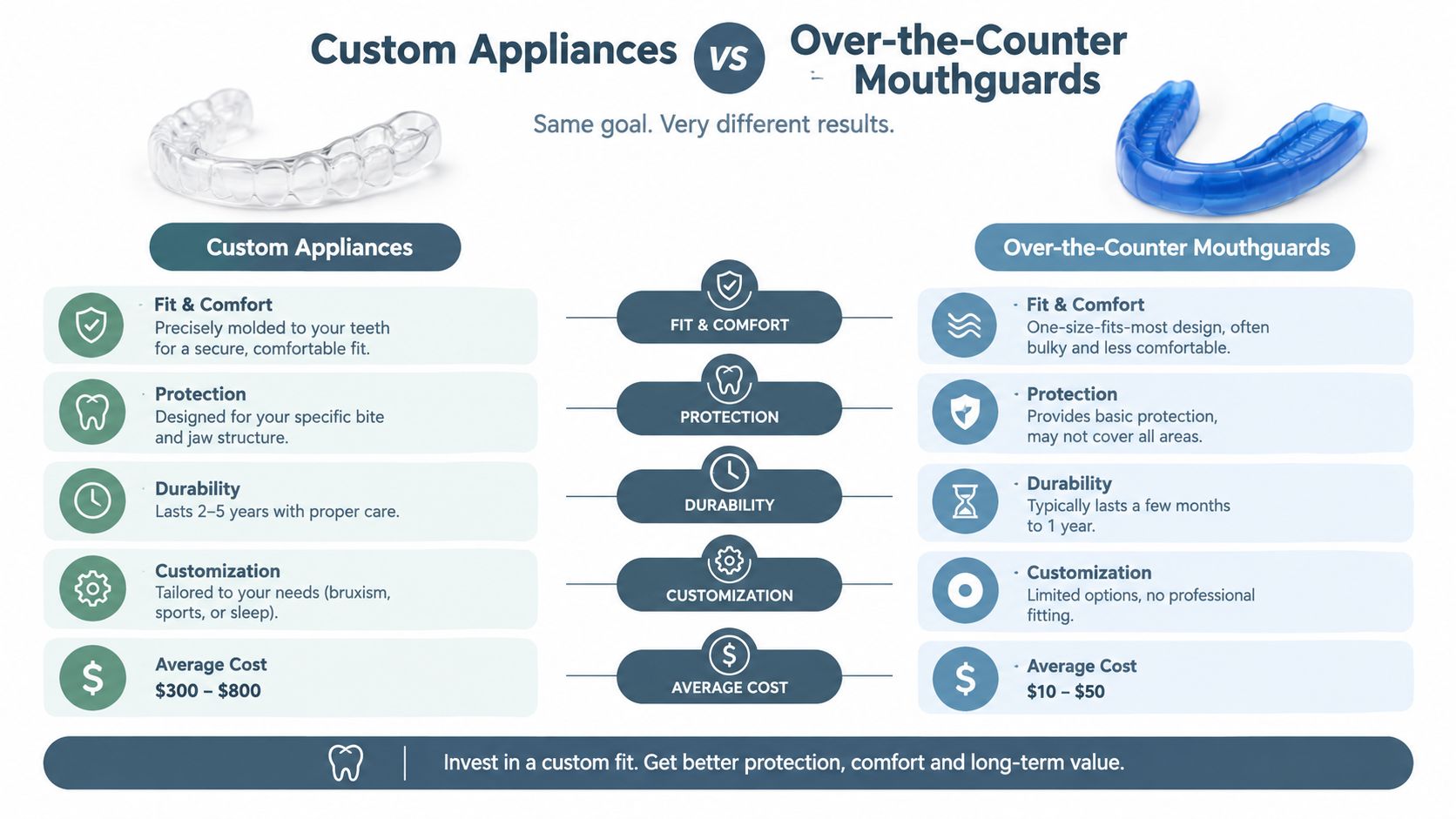
A systematic review of 14 randomized controlled trials found that MADs improved polysomnographic indices compared with inactive appliances. That supports mandibular advancement as the active therapeutic feature, rather than the mere presence of plastic in the mouth. Dental guidance commonly begins advancement around 50% of maximum comfortable protrusion. Moving toward 75% can help selected patients, but adverse effects increase as protrusion exceeds roughly 50% (evidence on design and titration).
Readers comparing custom night guards vs store bought should also ask what the device is designed to do. A custom grinding guard may fit better than a store-bought product, but a better fit alone doesn't make it a mandibular-advancement device.
A Mouth Tape product is intended to encourage nasal breathing by keeping the lips comfortably sealed. It doesn't advance the jaw, and anyone with suspected airway obstruction should resolve that concern before trying to alter nighttime breathing with a consumer product. For a broader discussion of device categories, see do anti-snore mouthpieces work.
Fitting, Titration, and What Professional Care Looks Like
Professional therapy usually starts with an assessment of the teeth, gums, jaw movement, bite, and symptoms. The dentist needs to determine whether the appliance can be retained securely and whether advancing the jaw is likely to be tolerated. This is different from heating a sports guard and biting into it at home.
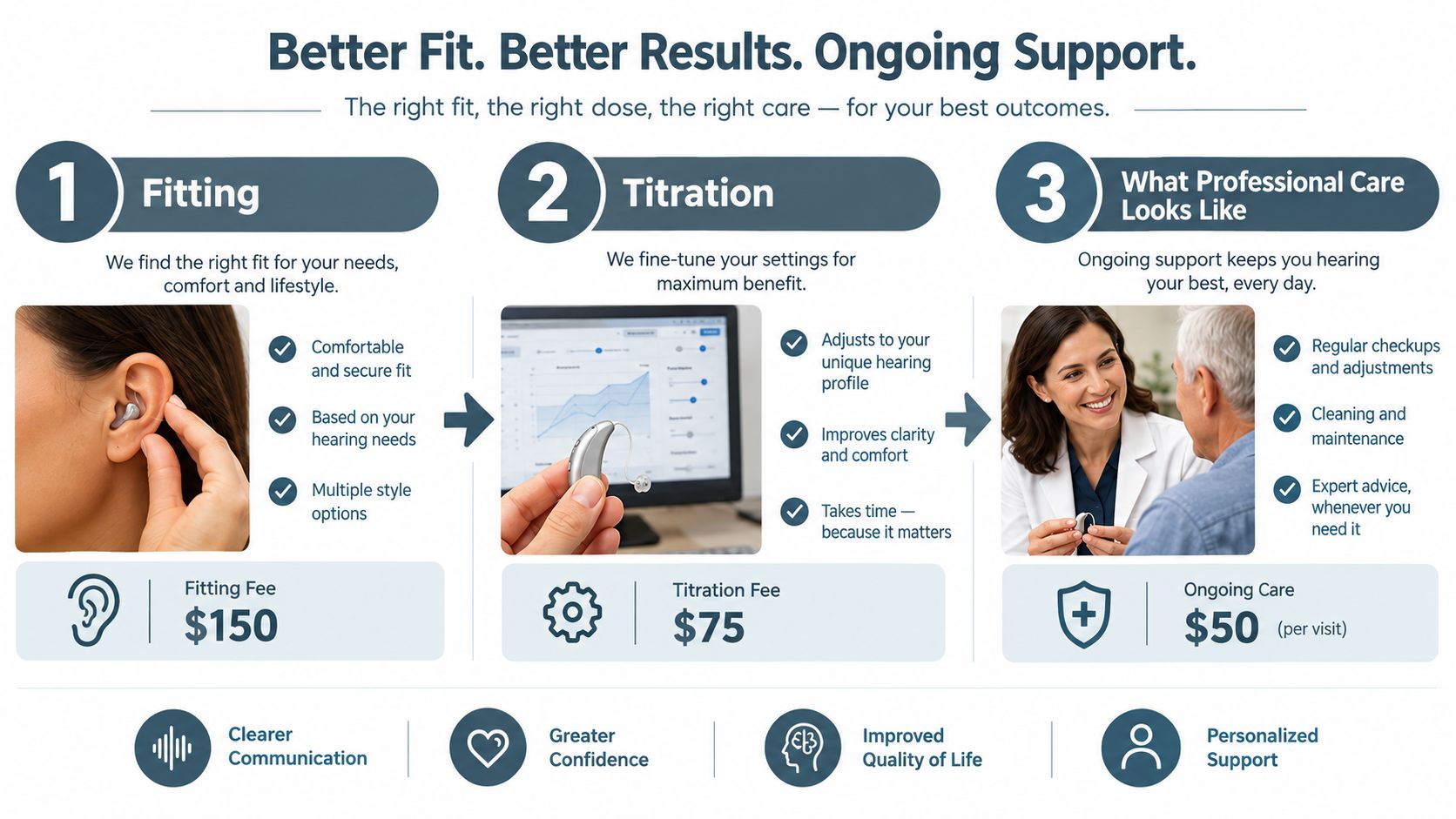
A professional appliance should allow advancement in small increments, typically 1 millimeter or less, with a total protrusive adjustment range of at least 5 millimeters. Clinical protocols commonly use approximately 0.5-millimeter adjustments for snoring or 1-millimeter adjustments when obstructive events are present, increasing the setting gradually while monitoring comfort and breathing (clinical titration guidance).
What follow-up is meant to verify
The goal is not just to make the appliance feel acceptable. A clinician may review snoring, sleepiness, jaw symptoms, tooth contacts, bite changes, and continued breathing symptoms. If apnea is suspected, symptoms persist, or the device is being used for diagnosed obstructive sleep apnea, objective reassessment with home sleep-apnea testing or polysomnography can help determine whether the airway is being treated.
A sports mouthguard protects teeth from impact. It doesn't reposition the jaw through a controlled titration process. If a product has no meaningful advancement mechanism, it can't be evaluated by the same therapeutic standard as a MAD.
Who Should Avoid Mouthguards or Seek Medical Evaluation First
Oral appliances require a stable dental foundation. Clinical guidance states that users need adequate teeth or implant-supported restorations for retention, and dental and periodontal health should be assessed before construction. Loose teeth, advanced gum disease, limited jaw movement, and temporomandibular disorders can make treatment unsuitable or limit how far the jaw can advance.
Jaw pain and oral dysfunction are also common reasons for discontinuation. A device that causes persistent soreness, changes the bite, loosens teeth, or produces new jaw symptoms needs professional review rather than continued use in the hope that the problem will disappear.
Situations that deserve extra caution
People with obesity class 2 or 3, REM-predominant obstructive sleep apnea, high hypoxic burden, central apnea, or insufficient dentition may respond less reliably to oral-appliance therapy. These factors don't create a universal rule that no appliance can work, but they make screening, fitting, and objective follow-up especially important (clinical review of patient selection and limitations).
Seek a sleep evaluation before self-treating if you or a bed partner notices:
- Loud, persistent snoring: Especially when it continues across sleep positions.
- Witnessed breathing pauses: Stopped breathing can signal airway obstruction even if the person doesn't remember it.
- Gasping or choking: These events suggest more than ordinary vibration in the throat.
- Morning headaches or excessive daytime sleepiness: These symptoms can accompany disrupted nighttime breathing.
A home sleep study may be one route for evaluating suspected apnea. The Hosmane Longevity Center information on sleep studies can help readers understand what that type of assessment involves, but a qualified clinician should determine which evaluation is appropriate.
Oral Appliances Within the Broader Snoring-Treatment Landscape
For confirmed primary snoring, an oral appliance can be a reasonable treatment option because it targets jaw and airway mechanics. In 2015, the American Academy of Sleep Medicine and the American Academy of Dental Sleep Medicine issued a joint guideline based on a systematic review in which 51 articles met the criteria for evidence extraction, meta-analysis, and grading. The guideline recommends an oral appliance rather than no treatment for adults requesting primary-snoring therapy, provided obstructive sleep apnea has first been excluded (joint AASM and AADSM guideline).
The same guidance separates snoring management from apnea management. For obstructive sleep apnea, it recommends a custom, titratable appliance fitted and monitored by a qualified dentist when oral-appliance therapy is selected. CPAP generally performs better at reducing sleep-disordered breathing, arousals, and impaired oxygen saturation, although an oral appliance may suit people who can't tolerate CPAP or prefer another treatment.
Other measures can address different contributors. Nasal support may help when congestion limits nasal airflow, positional changes may matter for some sleepers, and broader health or dental care may be necessary when anatomy or medical risk is involved. A mattress can influence comfort and sleep position, so readers can browse snoring relief mattresses, but bedding can't replace apnea testing when red-flag symptoms appear. More general ideas are collected in this guide to the best ways to stop snoring.
Making an Informed Decision About Snoring Treatment
The answer to “do mouthguards help snoring” is yes, but only for the right kind of device and the right clinical situation. A custom, titratable mandibular-advancement appliance can reduce snoring for some adults because it changes jaw and tongue position. A sports guard, grinding guard, or generic boil-and-bite product shouldn't be assumed to provide the same airway effect.
Start by identifying the symptom pattern. If snoring is persistent, worsening, or accompanied by pauses, gasping, morning headaches, or daytime sleepiness, arrange a sleep evaluation before self-treatment. If primary snoring has been confirmed, ask a qualified dentist about retention, jaw advancement, adjustment increments, dental risks, and how effectiveness will be checked.
Don't judge success by sound alone. Ask whether the device improves breathing, remains comfortable, protects the teeth and jaw, and receives follow-up when symptoms or objective testing indicate that reassessment is needed.
SleepHabits offers tools focused on nighttime breathing and restorative sleep, including nasal strips, mouth tape, and a melatonin-free Restore+ sleep aid. Visit SleepHabits to explore those options, while seeking dental or sleep-specialist guidance if your snoring includes signs of possible airway obstruction.