

Waking up with a dry tongue is more often a breathing or medication issue than simple dehydration, and drinking water alone rarely solves it. Xerostomia affects approximately 22% of the global population, while objectively reduced saliva production is a different problem that may or may not be present.
You wake before the alarm with a tongue that feels rough and sticky, a dry throat, and an immediate need to reach for water. By breakfast, the discomfort may fade, but the same pattern returns the next morning. The useful question isn't only “How much water did I drink?” It's what happened to my breathing and saliva while I slept?
The Morning Mystery of a Dry Tongue
You wake before the alarm with a tongue that feels rough, sticky, and almost glued to your palate. The sensation may fade after breakfast, yet its pattern can reveal whether overnight airflow is the main driver or whether something deserves medical attention.
Dry tongue on waking is commonly understood as xerostomia, the subjective feeling of having too little saliva. It does not show that the salivary glands have stopped working. A 2018 systematic review estimated that xerostomia affects approximately 22% of the global population, although reported rates vary with age, health status, medication use, and how dryness is measured (American Dental Association overview of xerostomia).
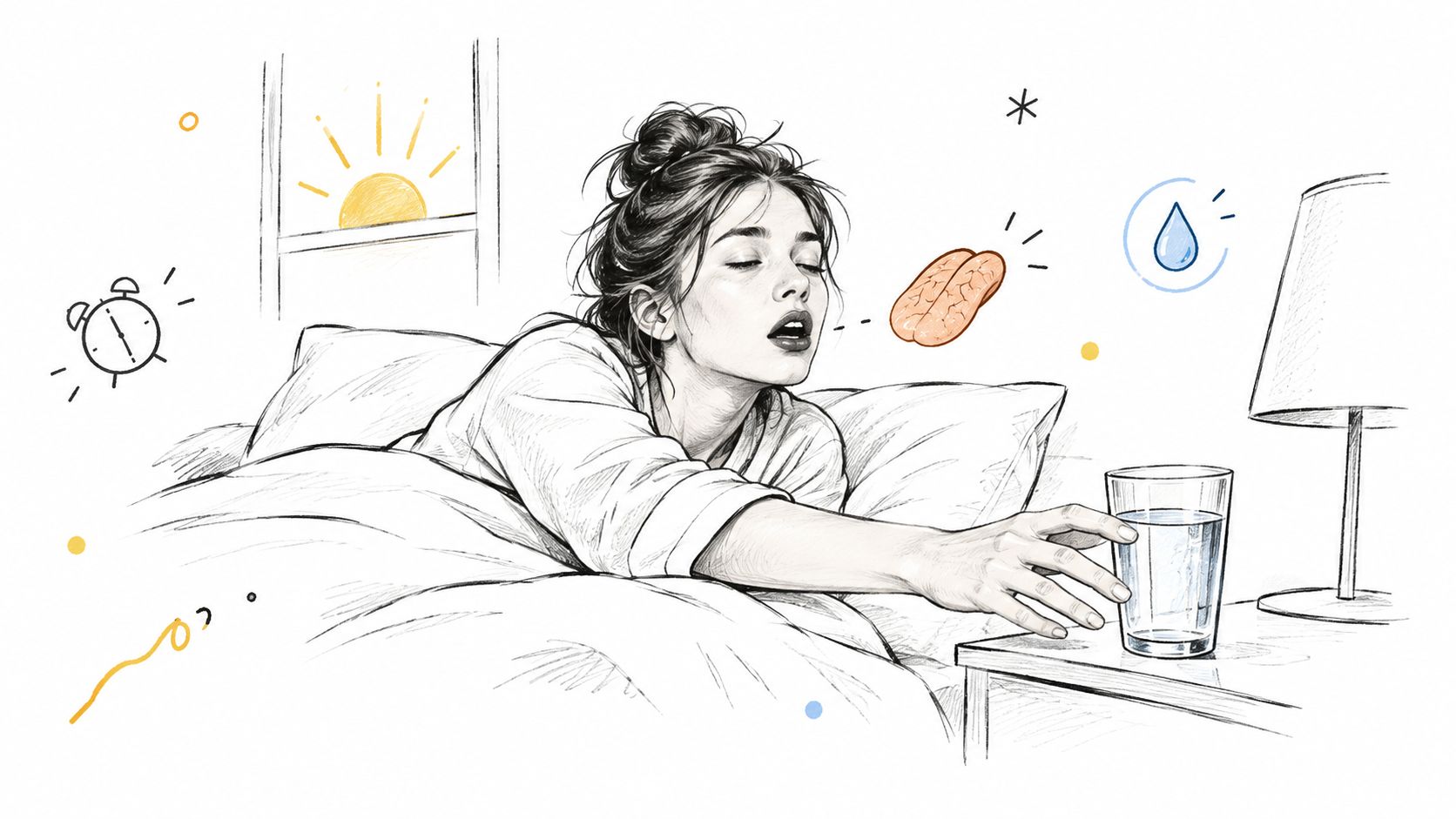
During sleep, saliva naturally decreases. If your mouth falls open, each breath sweeps air across the tongue and throat, much like wind drying a wet surface. Congestion, snoring, a dry bedroom, medication effects, dehydration, and sleep-disordered breathing can intensify the effect. Occasional dryness may be minor, while persistent symptoms can affect speaking, swallowing, taste, teeth, and gums.
Use the symptom pattern as a decision guide. Dryness with a blocked nose suggests mouth breathing. Dryness with loud snoring, gasping, or witnessed pauses warrants attention to possible obstructive sleep apnea. Dryness that continues during the day, particularly after a medication change, points more strongly toward reduced saliva or another medical cause. The morning sensation is therefore a clue, not a diagnosis.
Understanding Overnight Saliva Production
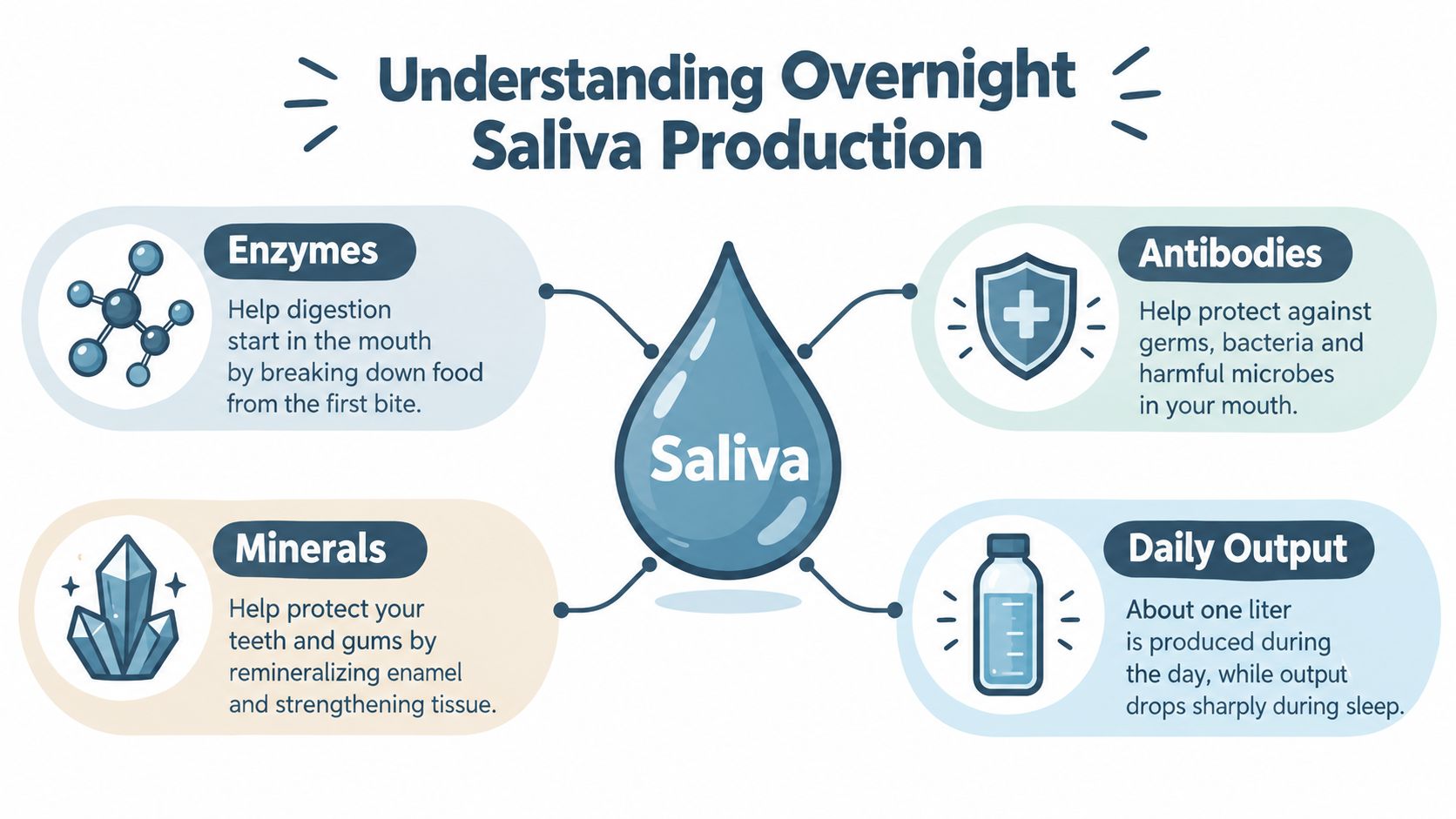
Saliva does several jobs while you sleep. Its enzymes begin digestion, antibodies help limit germs, and minerals support teeth and oral tissues. Saliva production normally falls overnight, leaving less fluid to protect the mouth from moving air.
That decrease alone does not indicate disease. Dryness becomes more likely when reduced saliva meets an open mouth. Nasal breathing filters and humidifies incoming air before it reaches the throat. Mouth breathing sends air directly over the tongue, cheeks, and throat for hours, like wind passing over a wet surface. By morning, the tongue may feel coated, rough, or stuck to the palate.
Feeling dry and producing too little saliva are different problems. An updated meta-analysis of older adults found pooled xerostomia prevalence of 21%, with a 95% confidence interval of 19% to 23%. It estimated objectively measured hyposalivation at 12% using unstimulated whole saliva and 13% using stimulated whole saliva. These findings distinguish a personal sensation from measurable gland output.
That distinction helps with morning symptom decisions. A dry tongue that clears after waking can fit overnight airflow exposure, while daytime dryness suggests a broader reduction in saliva or another cause. The mouth is balancing supply against loss: sleep lowers supply, and mouth breathing increases loss.
Common Causes of Morning Dry Tongue
You wake with your tongue rough against the roof of your mouth, yet drinking water soon makes the feeling fade. Another morning brings a dry tongue alongside snoring, a headache, or heavy daytime fatigue. The better question is which combination of causes matches your symptoms, since dehydration and sleep-disordered breathing can coexist.
Mouth breathing
Dryness that is strongest on waking and eases during the day often points to overnight mouth breathing. Allergies, a cold, or another blocked-nose problem can redirect airflow through the mouth. A relaxed jaw may also leave the lips slightly open without waking you. A sore throat, chapped lips, and a dry or coated tongue support this explanation.
Dehydration
Fluid loss can contribute after fever, heavy sweating, vomiting, diarrhea, blood loss, or burns. Several hours without drinking also reduces available fluid overnight. Dehydration is more plausible when morning dryness comes with an illness, unusually low intake, or another clear source of fluid loss. Dark urine, dizziness, or thirst may add context, although the tongue alone cannot identify the cause.
Medication effects
The U.S. National Institute of Dental and Craniofacial Research says hundreds of medicines can reduce salivary-gland output. Possible contributors include treatments for high blood pressure, depression, and bladder-control problems. The American Dental Association also lists antihistamines, decongestants, diuretics, pain medicines, muscle relaxants, antidepressants, antihypertensives, and some GLP-1 receptor agonists (NIDCR information on dry mouth).
Do not stop a prescribed medicine because your tongue feels dry. Ask a prescriber or pharmacist whether one of your medicines may contribute and whether a change is appropriate.
Sleep-disordered breathing
A dry tongue deserves closer attention when it appears with loud snoring, gasping, choking, witnessed breathing pauses, morning headaches, or daytime sleepiness. In a study of 668 adults referred for polysomnography, awakening dry mouth occurred in 31.4% of patients with obstructive sleep apnea, compared with 16.4% of primary snorers and 3.2% of general-health controls. Prevalence increased with disease severity (study of awakening dry mouth and obstructive sleep apnea).
A dry tongue alone is nonspecific. Add disrupted breathing, and airway assessment becomes more relevant than hydration alone.
Jaw clenching can add morning soreness or headaches. If those symptoms accompany dryness, All Stars Dental on TMJ headaches may help explain when dental or orofacial evaluation belongs in the picture.
Immediate Relief Strategies for Tonight
Relief starts with reducing the amount of drying that occurs while you sleep. These steps won't diagnose the cause, but they can make the next morning more comfortable.
- Sip water gradually. Drink consistently through the day and evening rather than forcing a large glass immediately before bed. Keep water beside the bed for small sips if you wake thirsty.
- Add moisture to the room. A cool-mist humidifier can help when heated or otherwise dry bedroom air aggravates your nose, tongue, and throat. Clean the device according to its instructions.
- Support nasal airflow. Saline nasal spray may help with congestion. Nasal strips can gently open the nasal passages, but they don't treat sleep apnea or every cause of obstruction. Nasal Strips are one example of a non-drug option designed to support nasal airflow when congestion contributes to mouth breathing.
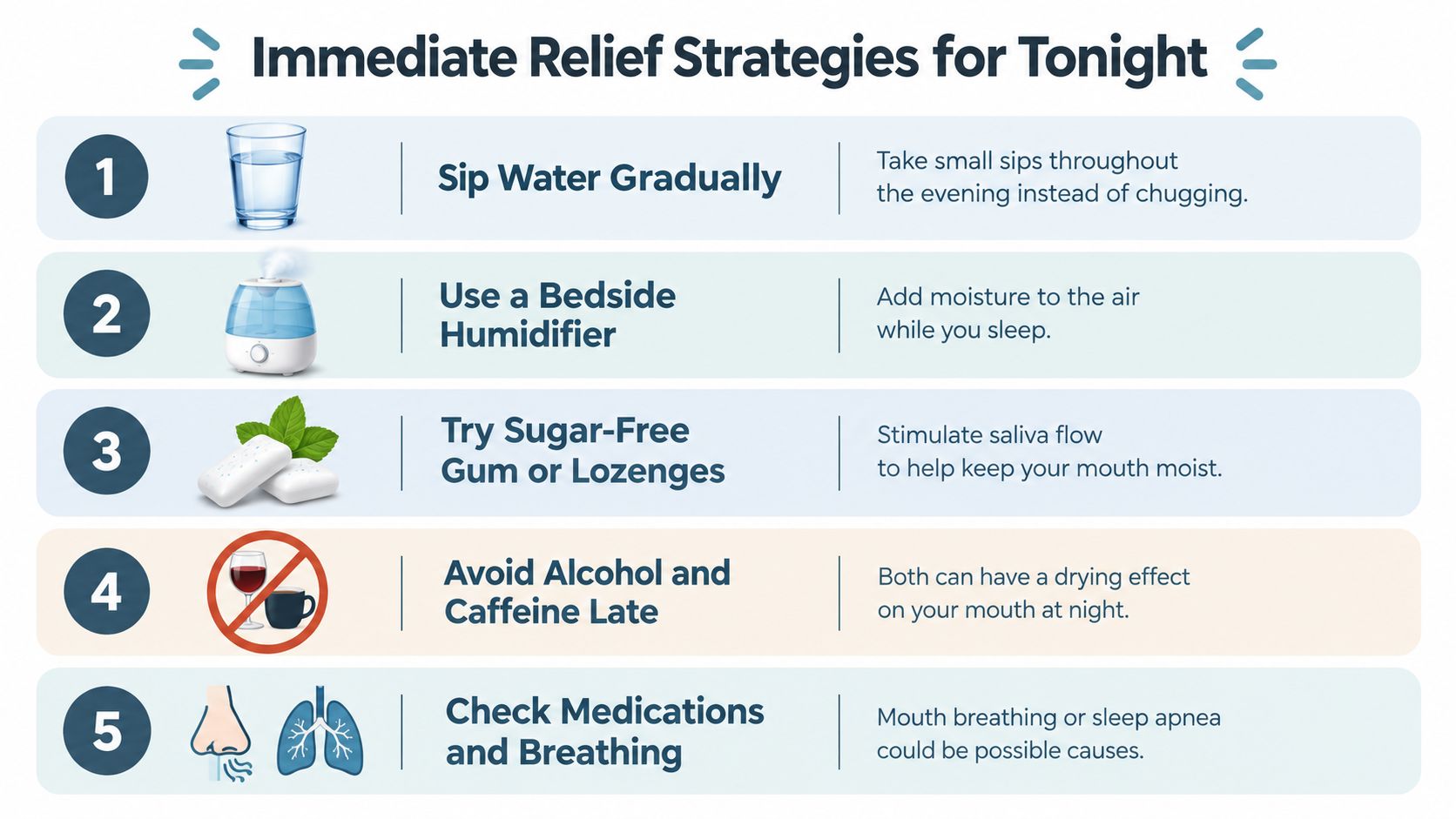
- Stimulate saliva while awake. Sugar-free gum containing xylitol or sugar-free lozenges can encourage saliva flow. Avoid frequent sugary drinks, which add decay risk when saliva's protective effect is reduced.
- Be cautious with mouth closure. Don't use mouth-sealing products if you have significant nasal obstruction, suspected untreated sleep apnea, or unexplained nighttime gasping. Read more about mouth tape for sleeping, and discuss persistent breathing symptoms with a clinician first.
Alcohol and caffeine late in the day may worsen dryness or disturb sleep for some people. If your tongue remains dry despite these changes, treat that persistence as useful information rather than a reason to keep drinking more water.
Prevention Through Better Nighttime Breathing
Morning dryness becomes easier to prevent when you identify the overnight mechanism first. Congestion can push you toward mouth breathing, while reduced saliva leaves less moisture to protect the tongue. Snoring, gasping, or witnessed pauses point to an airway problem that needs assessment rather than a product placed over the mouth.
Start with the simplest evening adjustments: drink normally during the day, manage suitable nasal congestion, choose a comfortable sleep position, and avoid an excessively dry bedroom. Side sleeping may reduce mouth opening for some people, although it cannot reliably correct an obstructed airway. The goal is to keep air moving through the nose, like directing traffic through the clearer route instead of sending it through the mouth.
Medication review matters because many medicines can reduce salivary output. As covered in the medication section above, hundreds of drugs may contribute, so reviewing your complete list with a clinician is more useful than focusing on individual categories. Changing or stopping a medicine without guidance can create other problems.
Use breathing aids carefully
Nasal strips may support airflow when congestion narrows the nasal passages. Mouth tape works differently by encouraging the lips to stay closed. Consider it only when you can breathe comfortably through your nose and have addressed warning signs such as gasping or witnessed pauses. Mouth Tape is described as gently encouraging nasal breathing, but it cannot replace evaluation for suspected sleep apnea.
People who need clinician-guided care for obstructive sleep apnea can review a digital sleep apnea device workflow to understand mandibular advancement devices and the steps involved. That context helps distinguish a fitted treatment pathway from an improvised mouth-closure solution.
For practical steps on improving nasal airflow, read how to breathe through your nose while sleeping. Improve nasal breathing first, then decide with appropriate guidance whether any mouth-closure strategy fits your symptoms.
Red Flags Requiring Medical Evaluation
Occasional dryness after congestion or an unusually dry night is usually less concerning than a repeated pattern. Arrange a dental or medical assessment when the symptom persists, becomes severe, or affects normal function.
Seek professional advice if you have:
- Swallowing or speaking difficulty: Dryness that interferes with eating, talking, or moving food comfortably may reflect more than overnight evaporation.
- Oral soreness or burning: Burning, altered taste, lesions, or persistent irritation deserve inspection.
- Dental changes: New cavities, gum problems, tooth sensitivity, or repeated bad breath can indicate that reduced saliva is affecting oral protection.
- Breathing clues: Loud snoring, witnessed pauses, choking, gasping, morning headaches, fragmented sleep, or daytime sleepiness raise concern for sleep-disordered breathing.
- Persistent daytime dryness: Dryness that continues after waking points toward medication effects, dehydration, diabetes, Sjögren disease, salivary-gland problems, or other medical causes.
Mayo Clinic includes waking with a dry mouth or sore throat among symptoms associated with obstructive sleep apnea (Mayo Clinic symptom guidance). A 2025 cross-cultural study found that subjective xerostomia in people with obstructive sleep apnea correlated with time spent below 90% oxygen saturation, oxygen-saturation nadir, and tonsil size. Those correlations don't prove that every dry tongue signals apnea, and they don't make dryness a reliable measure of severity.
A dentist can assess cavities, gums, lesions, and saliva-related damage. A physician or sleep specialist can review medications, nasal obstruction, diabetes, autoimmune disease, and possible apnea. For a broader reference on symptoms that may accompany oral problems, see these oral infection warning signs from Paul L. Gregory, DDS.
Why Drinking More Water Isn't the Answer
Water helps when fluid loss is part of the problem, but it can't close an open mouth, restore medication-suppressed saliva, or treat obstructive sleep apnea. If air has been moving across your tongue for hours, another glass before bed may only give you a bathroom trip without changing the underlying evaporation.
A better strategy is steady daytime hydration plus targeted breathing changes. Keep water available for small sips, use sugar-free gum while awake to stimulate saliva, and address nasal congestion rather than relying on a large drink at bedtime. MedlinePlus gives a general reference of 8 to 12 glasses of water daily, but individual needs vary with body size, diet, activity, climate, illness, and medical restrictions (Merck Manuals guidance on dry mouth and fluids).

The more useful question is not “Can I drink more?” It's “Why is my mouth losing moisture overnight?” Guidance on hydration and sleep quality can help you think about timing without turning bedtime hydration into the only solution.
Putting It All Together for Restful Sleep
Start with a short symptom log. Record whether your tongue is dry every morning or only after congestion, whether you snore, whether anyone notices breathing pauses, whether you wake with a headache, and whether a medication recently changed. Also note whether your mouth remains dry during the day.
That record creates a simple decision guide:
- Occasional dryness with a blocked nose: Improve nasal comfort, consider room humidity, and watch whether the pattern resolves.
- Dryness with medication exposure: Ask a prescriber or pharmacist for a review. Don't stop treatment independently.
- Repeated dryness with snoring or gasping: Request medical assessment for sleep-disordered breathing.
- Dryness with cavities, soreness, or swallowing difficulty: Arrange a dental evaluation and address the oral-health consequences.
The aim isn't merely a wetter tongue. It's a night in which air moves through the nose when possible, saliva protects the mouth, and an underlying breathing disorder isn't overlooked. If you use a supplement for sleep, Restore+ Sleep Aid is described by its manufacturer as melatonin-free and designed to support nitric oxide production, nervous system regulation, and overnight oxygen delivery. It shouldn't be used as a substitute for evaluating snoring, gasping, medication effects, or persistent oral dryness.

Tonight, begin with small sips earlier in the evening, comfortable nasal airflow, and a water bottle nearby. Tomorrow, decide whether the pattern points to your nose, your medicines, your bedroom, your teeth, or your sleep breathing, then choose the professional who can evaluate that cause.
SleepHabits offers tools focused on nighttime nasal breathing and restorative sleep, including nasal strips, mouth tape, and the melatonin-free Restore+ formula. Visit SleepHabits to explore those options alongside practical sleep education, but seek medical or dental evaluation first if dry tongue occurs with breathing pauses, significant soreness, or persistent daytime symptoms.