

You wake with a dry mouth, a faintly sore throat, and the suspicion that your open mouth has been disrupting sleep all night. A strip of tape across the lips can look like a simple answer, but the underlying question is whether your nose can handle the breathing work once the mouth is gently discouraged from opening.
Mouth tape is used primarily as a behavioral cue for nasal breathing. It may help some adults reduce habitual mouth opening, oral dryness, or mouth-related snoring. It isn't a treatment for obstructive sleep apnea, and it shouldn't replace a sleep evaluation, prescribed positive-airway-pressure therapy, or treatment for nasal blockage.
What Mouth Tape Actually Does at Night
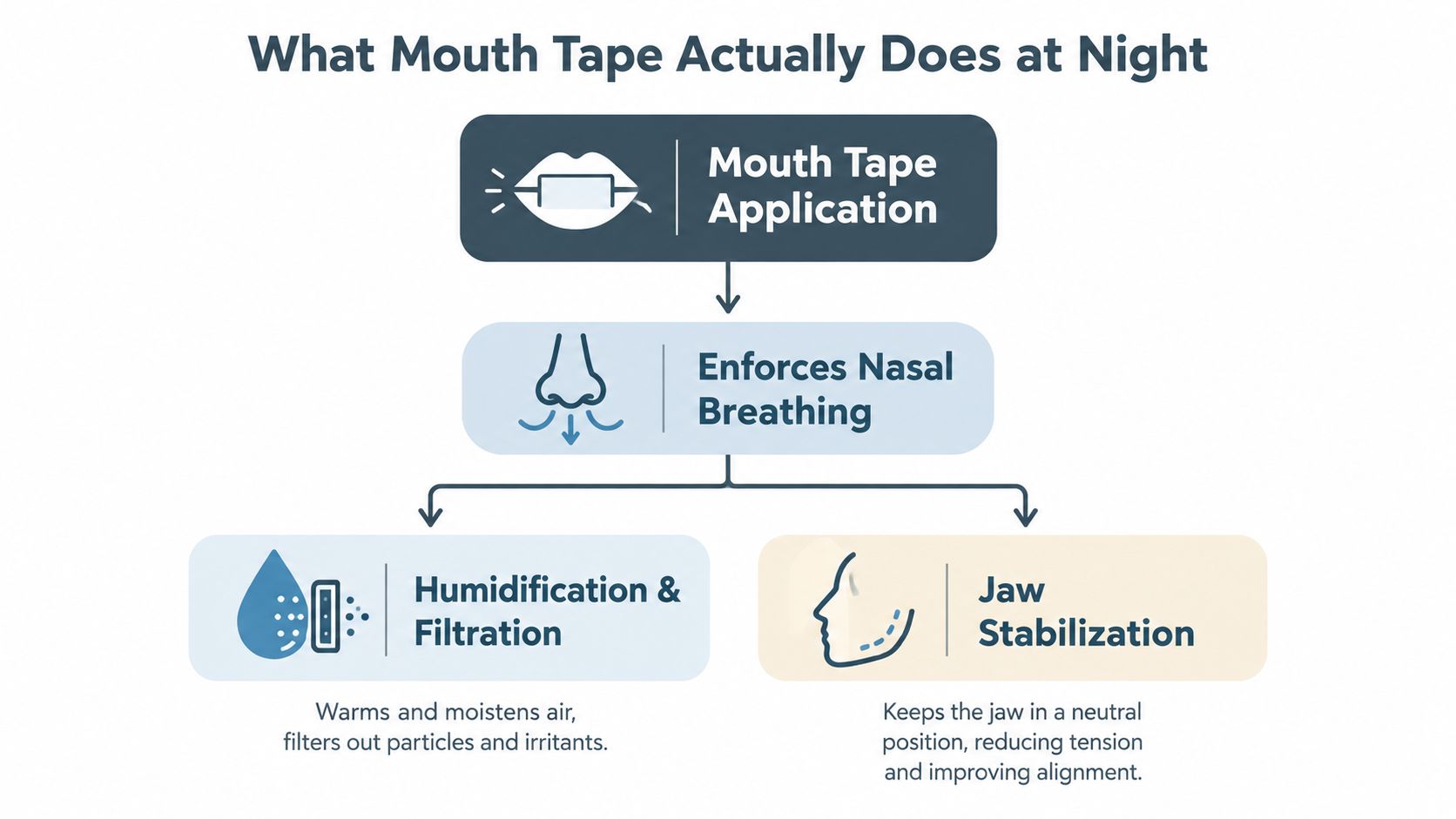
Mouth tape is a small adhesive strip placed over the lips during sleep to gently limit mouth opening. The intended effect is straightforward: reduce the easy oral route for airflow and encourage the sleeper to breathe through the nose instead.
That makes it a habit aid, not a breathing machine. It doesn't push air into the lungs, hold the throat open, or correct every cause of snoring. It also can't diagnose why your mouth opens at night. Some people open their mouths because nasal breathing is restricted, while others do it from habit, sleeping position, or upper-airway anatomy.
The practical purpose
When nasal airflow is comfortable and unobstructed, mouth tape may serve as a physical reminder to keep the lips together. That can reduce evaporation from the mouth and may reduce the vibration associated with mouth-open snoring. The experience is different from forcing the jaw shut. A properly chosen strip should provide a gentle cue and come off quickly if you feel distressed.
The most useful way to think about it is as a biological experiment. You're testing whether your sleep improves when habitual mouth opening is reduced, but only after confirming that the nose can provide a reliable route for air.
If you regularly wake with a dry mouth, review possible triggers such as congestion, allergies, medication effects, or persistent mouth breathing. This guide to mouth breathing causes and solutions can help you consider those causes rather than treating the open mouth as the problem by default. You can also read about what happens when you breathe through your mouth to understand why the breathing route matters.
Practical rule: If you can't breathe freely through your nose while awake, don't cover your mouth at night.
Mouth tape also isn't a cure for loud snoring, choking, gasping, or witnessed pauses in breathing. Those symptoms deserve clinical assessment because sealing the mouth may change airflow without addressing collapse deeper in the airway.
Why Nasal Breathing Changes Your Sleep Quality
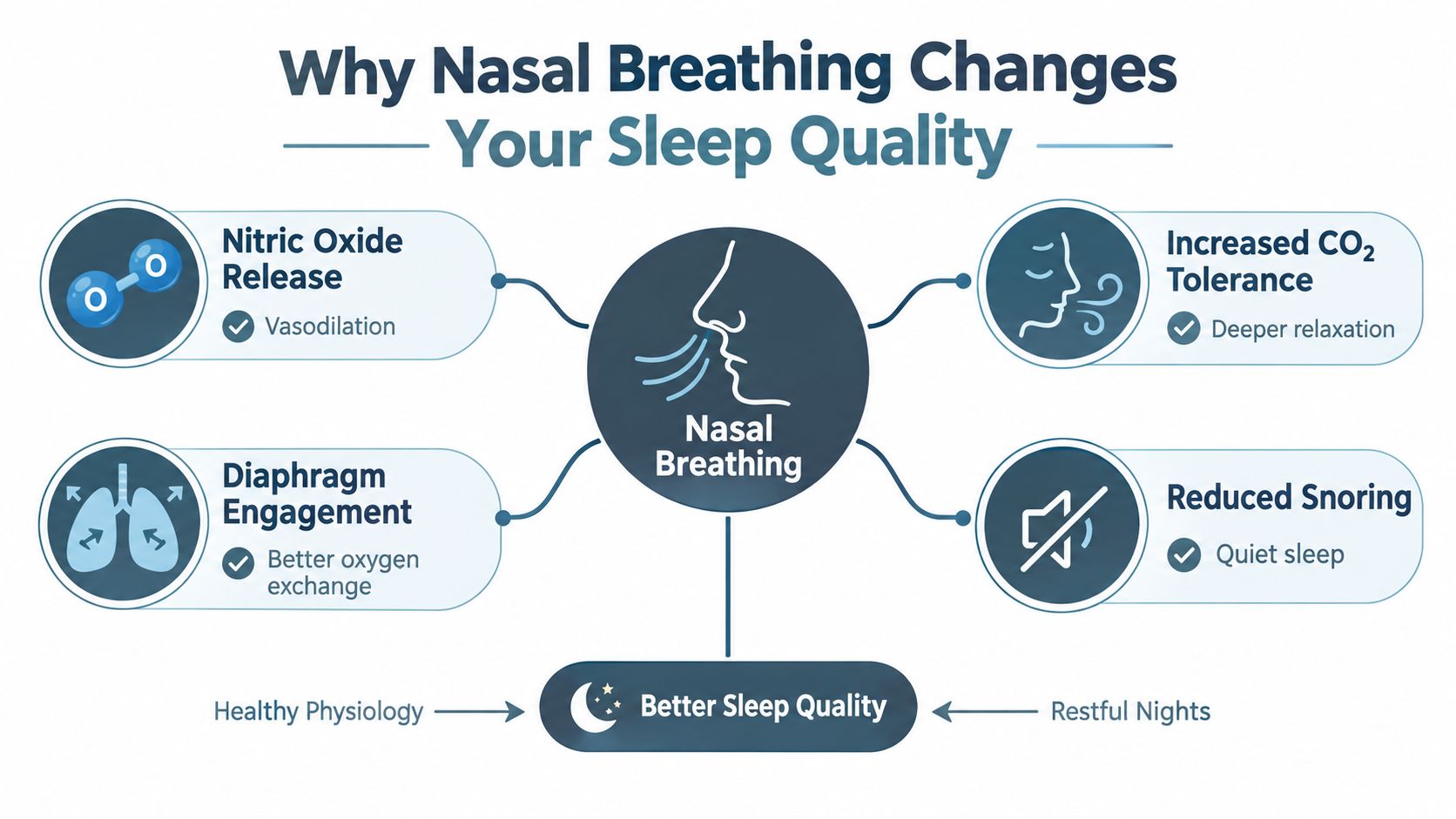
The nose does more than provide an alternative opening for air. As air passes through the nasal passages, the tissues warm, humidify, and filter it before it reaches the lower airway. That preparation can make breathing less irritating than drawing larger volumes of unconditioned air through the mouth.
Nasal breathing also changes the mechanics of the breath. The nasal passages offer more resistance than the mouth, which can encourage slower airflow and support more controlled breathing. Nasal airflow is associated with nitric oxide production in the upper airway, and nitric oxide participates in circulation and oxygen delivery. That doesn't mean every person who tapes their mouth will sleep better, but it explains why the breathing route can influence more than morning mouth dryness.
From airflow to sleep comfort
Open-mouth breathing can dry the tongue, lips, and throat. It can also increase the amount of airflow passing across relaxed tissues in the mouth and throat, which may contribute to snoring in some sleepers. Reducing oral airflow may therefore improve comfort or quiet certain types of snoring, but it won't correct every form of upper-airway vibration.
Nasal breathing may also support a calmer breathing pattern. A slower, quieter breath can make it easier to settle during a wind-down routine, particularly when paired with relaxed diaphragm movement and a consistent sleep schedule. These effects are physiological possibilities, not guarantees that tape will improve sleep architecture or oxygen levels.
A useful test is to observe the difference between dry-mouth relief and restorative sleep. If you wake with less dryness but remain exhausted, snore loudly, or have breathing pauses, the tape hasn't solved the underlying problem. Comfort is valuable, but it isn't proof that nighttime breathing is safe.
This overview of the benefits of nasal breathing during sleep provides additional context on the route of airflow. Some people also consider Restore+ Sleep Aid, which the product information describes as a melatonin-free supplement designed to support nitric oxide production, nervous system regulation, and overnight oxygen delivery. It shouldn't be used to disguise symptoms of sleep-disordered breathing or to replace medical care.
A short visual explanation can make the mechanics easier to follow:
What the Research Actually Shows About Mouth Taping
The evidence is narrower than social media claims suggest. A 2025 systematic review identified 10 studies involving 213 participants, and most studies were rated poor quality, with only one randomized study included (PLOS ONE review). Findings varied, so mouth tape is better described as a behavioral aid under selected conditions than as a proven treatment for insomnia, snoring, or obstructive sleep apnea.
The clearest positive findings come from carefully defined groups. In a preliminary 2022 study of 20 adults with mild OSA who predominantly breathed through their mouths, mouth taping reduced both the apnea-hypopnea index and snoring index by approximately half (American Academy of Dental Sleep Medicine). That result is interesting, but the sample was small and doesn't establish effectiveness for people with unexplained snoring or moderate-to-severe OSA.
Another small study involved 21 people with mild-to-moderate OSA who were already using a mandibular advancement device. Adding adhesive mouth tape reduced the apnea-hypopnea index compared with the oral appliance alone, according to the evidence summarized by WebMD. This tests mouth tape as an addition in a specific treatment context, not as a stand-alone therapy for the general population.
Why the results don't apply to everyone
A 2020 drug-induced sleep endoscopy study of 18 mouth-breathing patients with OSA found that 7 of 18 participants, or 40%, showed improvement in the location or severity of upper-airway obstruction after mouth closure (European Archives of Oto-Rhino-Laryngology). The responders tended to have more severe apnea, with an average apnea-hypopnea index of 39.4 events per hour versus 32.8 among nonresponders. That contrast illustrates how unpredictable the response can be.
A separate 2024 nonrandomized clinical trial involving 54 patients with OSA compared airflow with the mouth open and manually closed during drug-induced sleep. Overall total inspiratory flow increased by 27.8 percentage points, approximately 1.0 L/min, with a 95% confidence interval of 0.4 to 1.9 L/min. Among 32 participants with moderate oral airflow, closure increased airflow by 53.1 percentage points, about 2.0 L/min, while people who normally breathed through the nose showed no meaningful change (JAMA clinical study).
The same trial found that closure worsened airflow in 12 participants who relied most heavily on mouth breathing, reducing airflow by about 1.86 L/min, with a 95% confidence interval of -3.1 to -0.6 L/min. Importantly, researchers manually closed the mouth. They didn't test one commercial tape design, so the findings can't be transferred directly to every product or user.
If your goal is mainly snoring relief, this discussion of whether mouth tape helps snoring can help separate plausible effects from promises. Nasal Strips may support smoother airflow through the nasal passages when the nasal valve is narrow or mildly restricted, but they don't treat deeper airway collapse or establish that mouth tape is safe.
When Mouth Tape Becomes Risky Instead of Helpful
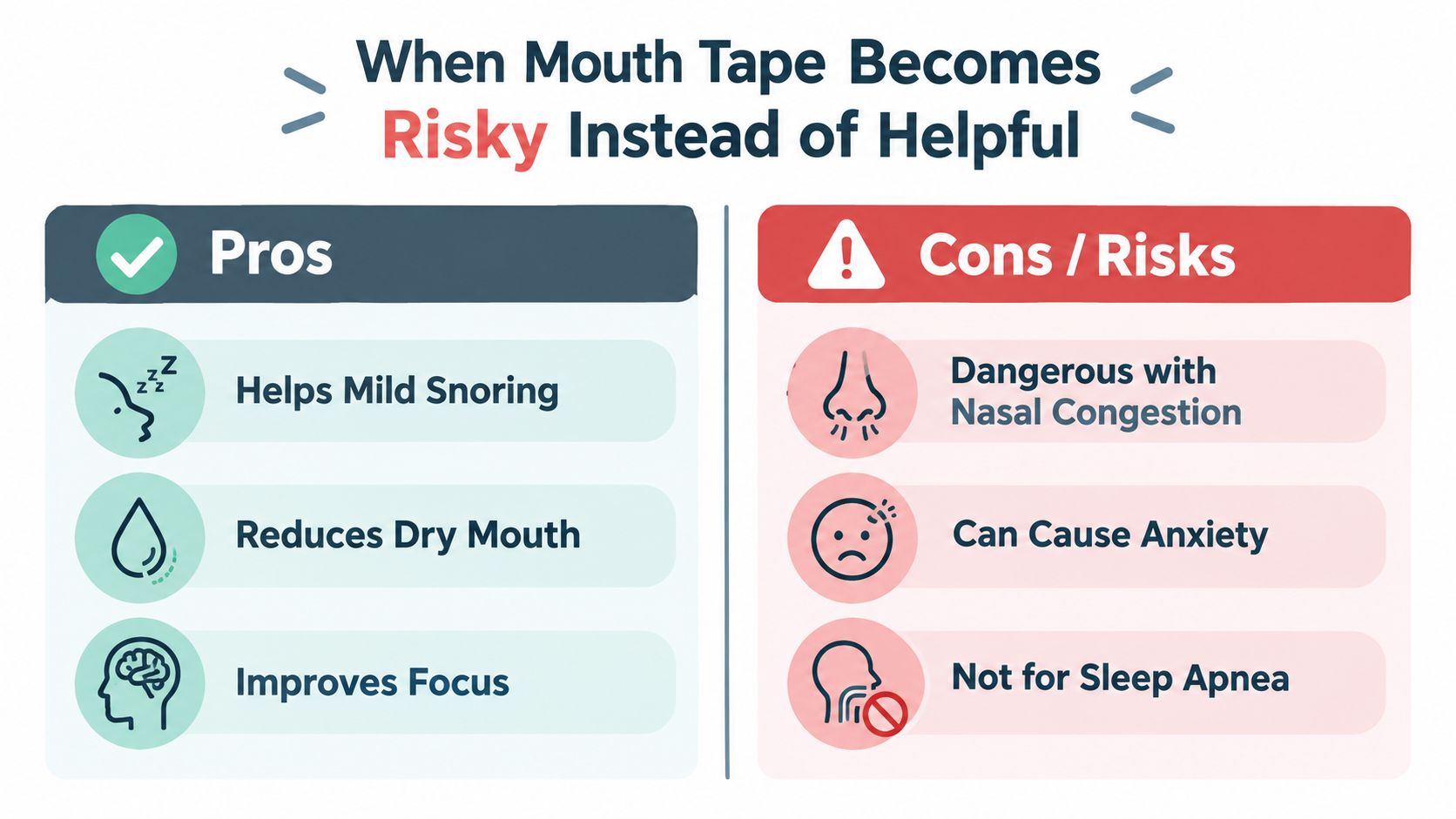
The central safety question isn't whether the tape is breathable. It's whether your nose and upper airway can reliably move enough air throughout the night. Closing the mouth removes an alternative route, so a blocked nose can turn a mild habit intervention into a serious breathing problem.
Nasal obstruction may come from allergies, a cold, chronic congestion, a deviated septum, nasal polyps, or other structural problems. Respiratory conditions such as asthma, chronic obstructive pulmonary disease, and emphysema can also make nighttime breathing less predictable. Cardiovascular disease and substantial sleep-disordered breathing warrant professional guidance rather than an unsupervised experiment.
Symptoms that change the decision
Don't use mouth tape as a workaround for loud snoring, witnessed breathing pauses, choking, gasping, morning headaches, or excessive daytime sleepiness. Those signs can point to OSA, and tape may delay diagnosis while giving you a false sense that the cause has been addressed.
The risk also extends beyond apnea. If you could regurgitate or vomit during sleep, sealing the mouth may interfere with safe expulsion and create an aspiration hazard. The 2025 systematic review identified possible asphyxiation risks when nasal obstruction is present, and the American Academy of Sleep Medicine has described mouth taping as an unproven viral trend that can be dangerous (systematic review).
Use this decision screen before considering a trial:
- Nasal breathing: Can you breathe comfortably through both sides of your nose while awake and relaxed?
- Current illness: Do you have a cold, significant allergy flare, asthma symptoms, or another condition affecting breathing?
- Nighttime warning signs: Has anyone observed pauses, gasping, choking, or unusually loud snoring?
- Emotional response: Does the sensation of restricted mouth movement trigger panic or claustrophobia?
- Medical context: Have you been evaluated for suspected OSA or chronic nasal obstruction?
A “yes” to nasal blockage or nighttime warning signs should move you toward clinical evaluation, not stronger adhesive. Even apparently unrelated purchasing decisions, such as how to compare firmness for sleep apnea, shouldn't distract from the primary issue, which is diagnosing and managing the breathing disorder itself.
How to Choose and Apply Mouth Tape Correctly
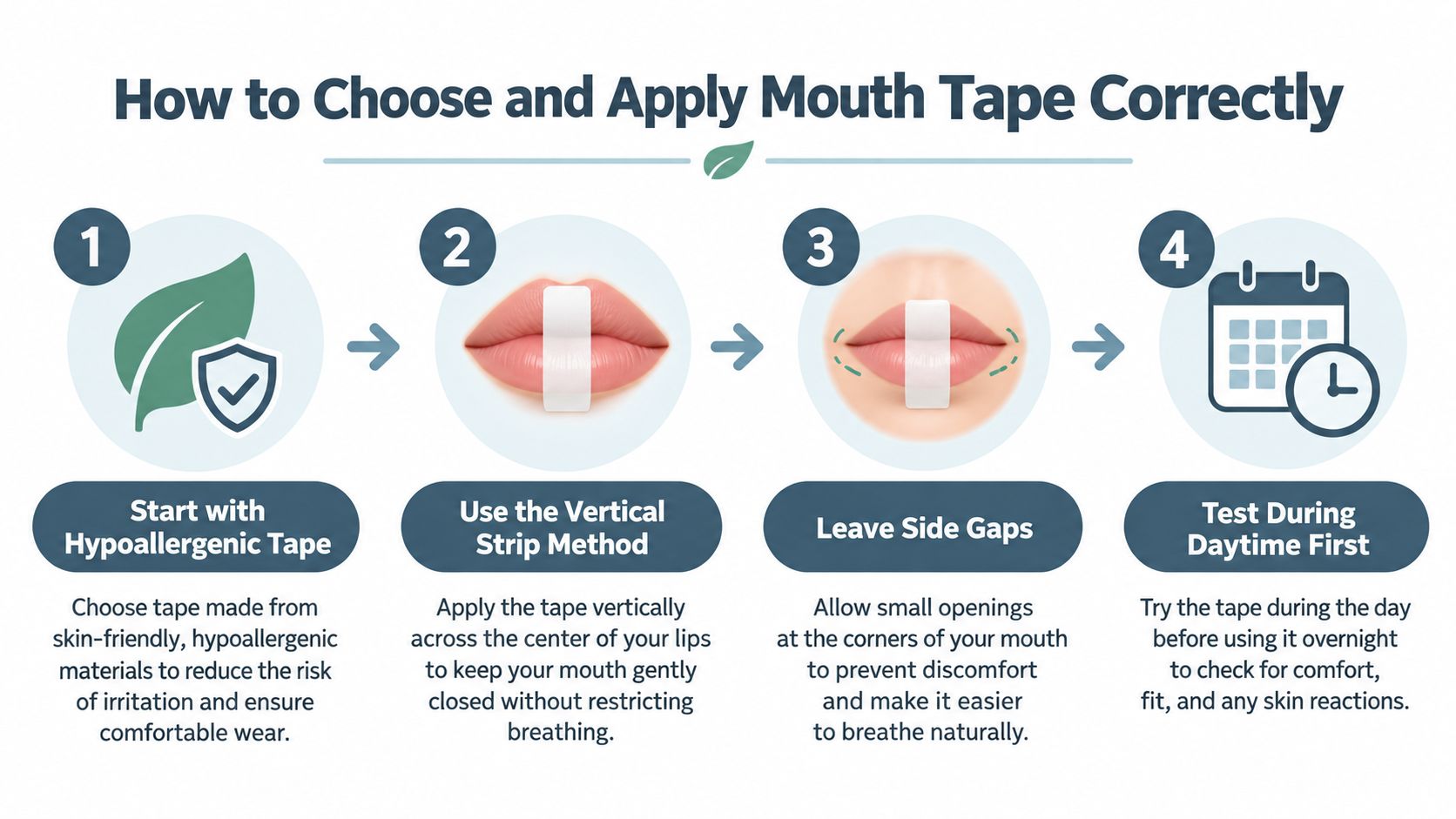
If a clinician has helped rule out significant obstruction and your nasal breathing is comfortable, product selection should focus on skin tolerance, easy removal, and a gentle hold. Use tape made for human skin, not household tape. People with sensitive skin may prefer hypoallergenic materials, while medical-grade silicone designs can feel less aggressive during removal, but no material makes mouth taping safe in the presence of restricted nasal airflow.
A cautious trial
Start during the day, while sitting or relaxing, so you can judge nasal airflow without sleep removing your awareness. Apply a small, approximately 2-inch piece of thin medical-grade tape, rather than covering the entire mouth, following the conservative approach summarized by CNN (CNN safety guidance).
A vertical strip over the center of the lips can act as a cue while leaving the corners less restricted. Avoid stretching the tape tightly. Before applying it, clean and dry the surrounding skin, and test the adhesive on a small area if you react easily to skin products.
Keep removal simple. Fold over a corner or use a skin-safe removal method so you can take it off quickly. Stop immediately if you feel air hunger, panic, chest discomfort, worsening congestion, or poorer sleep.
Troubleshooting without forcing the habit
- Redness or burning: Remove the tape and stop until the skin settles. A different hypoallergenic adhesive may be better, but persistent reactions deserve medical or dermatological advice.
- Peeling during sleep: Check that the skin is clean and dry. Don't compensate by applying a larger strip or using a stronger adhesive.
- Residue: Loosen the tape slowly rather than pulling it sharply across the lips. Residue isn't a reason to tolerate pain or irritation.
- Morning fatigue: Treat this as a failed experiment, not a challenge to overcome. Review nasal airflow, sleep position, snoring, and possible sleep apnea.
Mouth tape should never be a full, permanent seal. Its purpose is to provide a removable behavioral prompt, and the trial should end if it creates breathing concern.
Building a Safer Sleep Routine Around Nasal Breathing
Mouth tape only makes sense when nasal breathing is already possible. Support that foundation by addressing congestion with a clinician, keeping a regular sleep schedule, dimming lights before bed, reducing screen exposure, and practicing slow nasal breathing during your wind-down.
Use the tape, if appropriate, as one small part of the routine rather than the centerpiece. If you snore loudly, wake choking or gasping, have witnessed pauses, experience morning headaches, or remain excessively sleepy during the day, request a sleep evaluation instead of escalating the tape. A practical bedtime routine for better sleep can help you build consistency without treating a breathing symptom as a lifestyle failure.
The most useful conclusion is conditional: mouth tape may help some clear-nosed adults reduce habitual mouth opening, but it won't explain why the mouth opened in the first place. Verify nasal airflow, monitor your response, and seek care when warning signs appear.
SleepHabits offers educational resources and products designed around nighttime breathing, including mouth tape and nasal strips that encourage nasal airflow, plus the melatonin-free Restore+ Sleep Aid. Visit SleepHabits to compare these options and build a breathing-focused routine without treating mouth tape as a substitute for diagnosis or prescribed care.